

Emerald Pages
◆
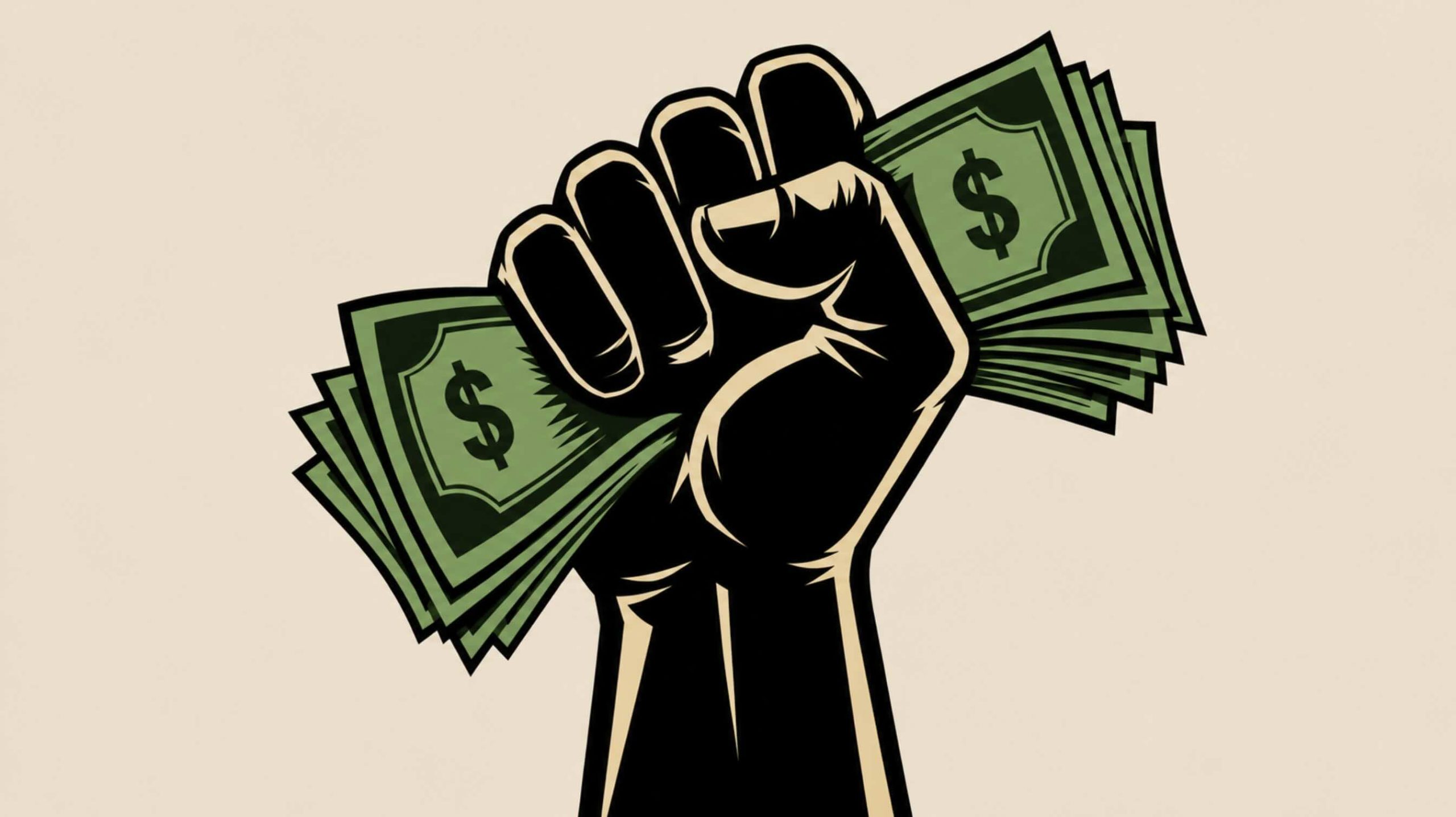
Photo: Emerald Book Image
For centuries, the arc of the Black freedom struggle in America has been defined by distinct eras—each marked by unique targets, strategies, and forms of resistance. From the abolition of chattel slavery to the legal victories of the Civil Rights Movement, each phase carried a promise of progress. Yet each was followed by a fierce backlash that systematically dismantled those gains.
Historians and political scientists now agree that the election of Donald Trump to a second term represents a defining pivot point. If the 2010s and early 2020s—the period scholars like Peniel E. Joseph have called the Third Reconstruction—was characterized by decentralized, digital-era organizing against structural racism, then his second administration marks an active era of what historians call "Redemption."
This new era of Redemption is characterized by the systematic rollback of civil rights infrastructure: the dismantling of Diversity, Equity, and Inclusion (DEI) programs via federal investigations; executive orders removing "race-centered ideology" from federal properties; and a judicial branch that has weakened voting rights protections and ended affirmative action. The state has been inverted—once a tool for protection, now a weapon for erasure.
The Structural Weakness of Legal-First Progress
The core vulnerability of the Civil Rights era was its heavy reliance on federal legislation and judicial goodwill. The movement successfully outlawed de jure (legal) discrimination but failed to secure the asset base—land, capital, infrastructure—required to defend those rights. Laws without independent economic leverage are fragile. Once the Supreme Court shifted ideologically, federal guardrails like voting rights protections and affirmative action were dismantled, proving that political representation does not automatically translate to economic equity.
- The Racial Wealth Gap: The typical White family maintains roughly six to eight times the net worth of a typical Black family—a gap that has remained virtually unchanged for five decades.
- The Siphoning of Capital: Under segregation, the Black dollar circulated within Black communities for weeks. Integration allowed Black consumers to spend in White-owned establishments, but White consumers did not reciprocate, draining the economic base.
- Extraction of the Talented Tenth: Top Black professionals took their talents to corporate America, defunding the leadership and economic base of historic Black commercial districts.
This reality has forced a profound realization: the pursuit of a seat at someone else's table is insufficient. A new era must be initiated—one defined not by political permission, but by economic sovereignty.
Blueprint for the New Era: Economic Sovereignty
Economic sovereignty replaces the fragile pursuit of political permission with the permanent security of asset ownership. When a community controls its own housing, food production, financial institutions, and supply chains, it gains non-negotiable leverage that external political shifts cannot strip away. This framework draws from the historic philosophies of Booker T. Washington, Marcus Garvey, and Malcolm X, modernized for a digital economy.
The four pillars of this new era are:
1. Closed-Loop Financial Infrastructure
Political equality is impossible when a community's capital is immediately extracted. True sovereignty requires keeping money internal through a closed-loop banking system. Black-owned banks and Community Development Credit Unions (CDFIs) must serve as primary repositories for community wealth, allowing local deposits to be recycled directly into mortgages, small business loans, and commercial developments. Shifting from individual wealth-building to collective syndicates—pooling resources through formal investment clubs and Real Estate Investment Trusts (REITs)—allows communities to purchase large-scale commercial property and land, preventing gentrification and displacement.
2. Supply Chain and Intellectual Property Ownership
Black consumers drive multi-billion-dollar global trends, yet the manufacturing, distribution, and licensing of those products are overwhelmingly owned by outside corporations. Sovereignty means owning the entire vertical pipeline. In industries heavily influenced by Black culture—entertainment, fashion, beauty—the focus must shift from signing talent contracts to owning the master recordings, digital distribution platforms, apparel factories, and chemical manufacturing facilities.
3. Food, Energy, and Land Autonomy
True independence is impossible if a community relies on an indifferent or hostile system for its basic survival needs. Community Land Trusts (CLTs) remove land from the speculative market and place it into community-governed trusts, ensuring permanent affordable housing and commercial spaces. Investing in Black-owned farms, urban agricultural cooperatives, and independent grocery distribution networks eliminates systemic food deserts and improves baseline health outcomes.
4. Alternative Education and Technical Skill Mastery
The traditional university system often saddles students with predatory debt without offering a guaranteed path to wealth generation. A sovereign economy requires an educational system designed for production—revitalizing high-yield technical training in manufacturing, software engineering, and agricultural tech, while building independent academies that teach financial literacy and corporate governance.
The Emerald Book Infrastructure: Operationalizing the Era
Emerald Book and our Emerald Economic Index System (EEIS) provide the exact structural blueprint required to operationalize this new era. By shifting focus away from political permission and toward data-driven asset ownership, this framework tackles the core vulnerabilities of one-way integration by mapping, tracking, and consolidating the power of the Black dollar.
The EEIS is the only index system measuring the Black economy in real time. It establishes a sovereign economic dashboard, allowing the community to treat its collective market power as a distinct economy. The Black Business Map, Black Community Map, and Black Bank Directory serve as the physical navigation system for a closed-loop economy—directing deposits to Black-owned financial institutions, directing consumer purchasing to internal producers, and identifying geographic hubs for inter-city trade networks.
The Top 100 Black Businesses establishes a visible benchmark for institutional excellence, capable of acquiring supply chains and funding alternative networks. And by maintaining a Complete History of Black Oppression alongside these economic tools, our platform uses history as a diagnostic manual—understanding the precise legal and physical tactics used to dismantle past wealth is the only way to build modern structures that can withstand the current political and legal backlash.
The new era has begun. The shift from demanding political permission to building economic sovereignty is no longer just an idea—it is an active infrastructure being built by systems like Emerald Book. True freedom cannot be voted in, but it can be financed, built, and protected through asset ownership. The 21st century Black freedom struggle will not be won at the ballot box alone; it will be won on the balance sheet, the supply chain, and the community land trust.
Your Role in the Grow Black Wealth Era
The architecture of economic sovereignty is being built right now—but it requires your active participation. The Grow Black Wealth Era is not a spectator sport; it is a mass movement of conscious consumers, strategic investors, and community builders. Here is how you can join the movement today:
- Share This Article: Knowledge is the first step to power. Share this article with your network, your family, and your community. Start the conversation about economic sovereignty and the Grow Black Wealth Era.
- Find Your Nearest Black Bank: Use the Black Bank Directory to locate a Black-owned bank or credit union near you. Open an account and begin circulating your capital within the community.
- Follow the Plan: Follow our Free 5-Year Plan—a comprehensive roadmap for building Black economic sovereignty. This plan provides actionable steps for individuals, businesses, and communities to close the wealth gap and build lasting prosperity at no cost.
The time for waiting is over. The federal government is no longer a reliable ally in the fight for Black economic progress—and that reality, while sobering, is also a liberation. It frees us to build what we should have built all along: our own institutions, our own supply chains, our own financial infrastructure. The Grow Black Wealth Era is here. The only question is: will you be part of it?
No Ads. By Us. For Us.
This article was made possible by readers like you. We hope it inspired you to support Emerald Book, so we can continue producing content like this.
We will never show you ads, sell your data, or require a subscription to consume our content. Your gift helps us keep the truth accessible.
Click the Support button to give a gift of any amount today.
Thank you for making this work possible.