

Emerald Pages
◆
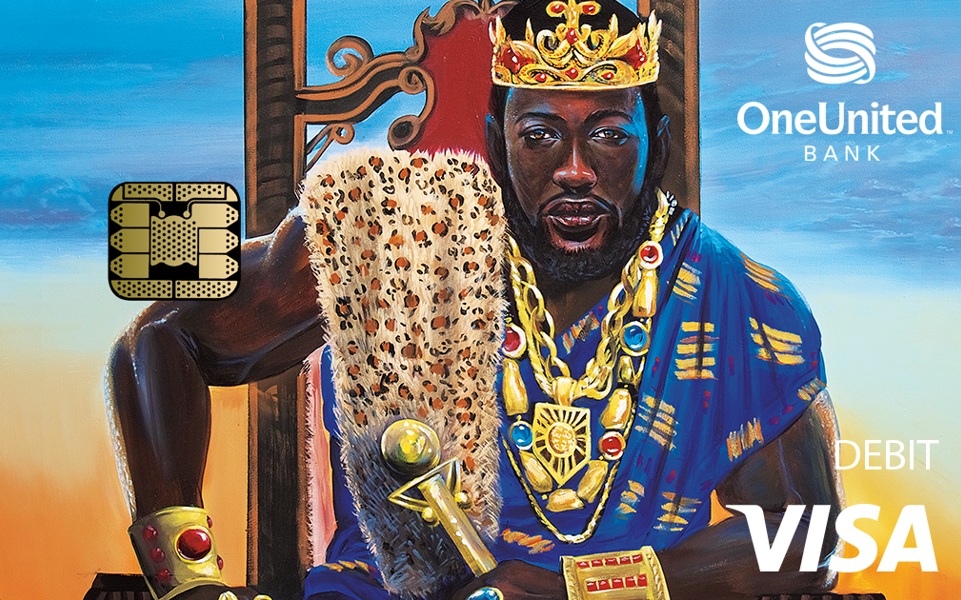
Photo: OneUnited Bank
It sounds like a paradox. Less than 1% of Black Americans primarily bank at the nation's 18 remaining Black-owned banks, despite these institutions having an explicit mission to lend fairly and invest directly into minority communities. The standard narrative blames a lack of capital or consumer apathy. But the real story is far more specific—and the solution is far more achievable than you think. In fact, with a coordinated, household-by-household strategy over the next five years, Black Americans can triple the size of the Black banking sector, unlock billions in fair lending, and fundamentally improve the quality of life for millions, all without spending a single dime. The key is moving money, not spending it.
Today, the math seems impossibly stacked against Black-owned financial institutions. Together, all 18 Black-owned commercial banks hold roughly $6.7 billion in assets, a microscopic 0.027% of the $23.6 trillion U.S. banking system. Meanwhile, nearly 50% of Black households are underbanked, and a staggering 11.3% are completely unbanked, relying on predatory check-cashing services. But these numbers hide a crucial detail: the collective spending power of Black Americans exceeds $1.6 trillion annually. The problem isn't a lack of money in the community; it's a fatal lack of strategic movement of that money.
If the community tried to move all its money at once, the system would break. Federal regulators impose strict "Tier 1 Leverage Ratios," forcing banks to hold a specific capital cushion. A sudden flood of deposits would overwhelm a small bank's ability to lend, triggering federal "Prompt Corrective Action" and forcing the bank to literally turn depositors away. This is why previous #BankBlack movements, while powerful, faced structural ceilings. But a slow, phased, and deliberate migration—treating the transfer like a monthly utility bill—bypasses every single regulatory trap.
The $20 Math: A 5-Year Timeline to Transformation
To scale the existing Black-owned banking sector safely, each Black household would only need to move a tiny, steady amount. Using the baseline of 14.8 million Black households, the "Streaming Subscription Model" ($20 per month) yields explosive, yet safe, growth:
- Year 1: 14.8 million households × $240/year = $3.55 billion in new deposits. The sector expands by 53% in 12 months.
- Year 2: An additional $3.55 billion is deposited. The sector hits $13.8 billion in total capital.
- Year 3: Another $3.55 billion drops in. The sector reaches $17.35 billion.
- Year 4 & 5: The momentum compounds. After five years, the Black banking sector nearly quadruples its original size, passing $25 billion in assets.
However, because wealth is not evenly distributed, a blended model works best. If 70% of households deposit $10/month, 20% deposit $50/month, and 10% deposit $100/month, the sector pulls in nearly $4.8 billion annually. Within three years, the system grows by over 214%, expanding from $6.7 billion to over $21 billion. This is not charity; this is capital migration. And it requires spending zero new money—just redirecting existing cash flow from Wall Street giants to community-led institutions.
From Deposits to Businesses to Jobs: The Domino Effect
This is where the quality of life transformation begins. Unlike white owned banks that extract deposits from Black neighborhoods to fund suburban projects, Black-owned banks are legally and morally bound to reinvest locally. As their capital base steadily grows, they can deploy a massive wave of fair lending.
With $21 billion in assets, the banking engine can comfortably back roughly $14 billion in new home loans. At an average home price of $350,000, that translates directly to 40,000 new Black homeowners building generational equity. Simultaneously, they can earmark $3 billion specifically for commercial business lending, funding 20,000 Black-owned businesses at an average expansion loan of $150,000.
These businesses are statistically the largest employers of Black workers. A local grocery store, tech startup, or construction company funded by a community bank creates immediate, sustainable jobs within the neighborhood. As employment rises, household incomes stabilize. Families can afford home improvements, healthy groceries, and preventative healthcare. Higher local business revenues and homeownership rates mean more local property and sales tax collections, which directly fund neighborhood public schools, parks, and infrastructure. This is the generational shield: parents building equity to pass down, ensuring the next generation never starts from zero.
The Action Plan: Moving Money Without Spending It
The beauty of this blueprint is that it requires no sacrifice, only intention. You are not spending new money; you are simply redirecting where your existing paycheck or savings sits. And thanks to modern mobile banking, you can complete every step below directly from your smartphone in minutes.
- Month 1 (The Test): Open a digital account with a Black-owned bank. All of the institutions below offer fully remote, mobile-friendly account opening. Download their app or visit their website on your phone:
• OneUnited Bank — The nation's largest Black-owned bank. Nationwide online account opening with a $25 minimum deposit.
• Citizens Trust Bank — Operating since 1921. Apply online for their Everyday Savings Account ($50 minimum deposit).
• Liberty Bank & Trust — Fully remote account opening for savings, checking, and CDs.
• Industrial Bank — Complete online application portals for checking and savings products.
• Other Physical Locations — Complete directory of every Black-owned bank in America. - Month 3 (The Bill Payer): Once your account is active, link a single recurring monthly bill—like your Netflix subscription or cell phone invoice—to your new debit card. Most banks let you do this directly through their mobile app.
- Month 6 (The Savings Anchor): Set up your employer direct deposit to automatically route 5% to 10% of every paycheck into a high-yield savings account at the Black bank. This is usually a one-time form you submit to your HR department.
- Year 2-5 (The Wealth Reserve): Move your household's emergency rainy-day fund or Certificate of Deposit (CD) to the Black-owned bank for long-term compounding. Mobile check deposit makes transferring larger sums effortless.
Because you are moving a small amount of money over months and years, the banks have time to deploy the capital, generate interest revenue, and organically grow their regulatory capital cushions. This steady trickle avoids the federal limits that plague sudden flood deposits. It turns everyday consumer habits into an unstoppable tool for collective power. Pick one Black-owned bank, open the account on your phone tonight, and set up a recurring $10 or $20 monthly transfer. That single action, multiplied across millions of households, is the spark that ignites the entire engine of community wealth.
No Ads. By Us. For Us.
This article was made possible by readers like you. We hope it inspired you to support Emerald Book, so we can continue producing content like this.
We will never show you ads, sell your data, or require a subscription to consume our content. Your gift helps us keep the truth accessible.
Click the Support button to give a gift of any amount today.
Thank you for making this work possible.