

Emerald Pages
◆
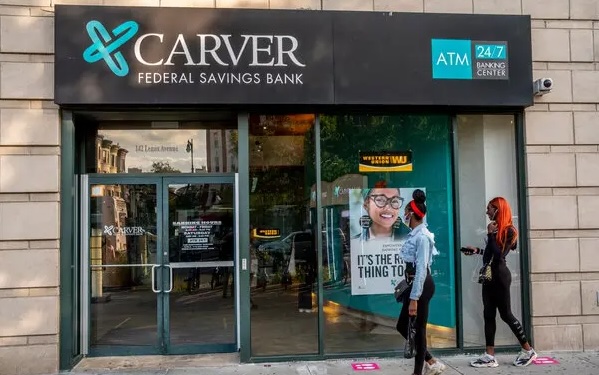
Photo: The New York Times
Less than 1% of Black Americans place their primary deposits or secure loans through Black-owned financial institutions. Despite making up over 13% of the U.S. population, Black Americans funnel the vast majority of their financial activity into mainstream megabanks like JPMorgan Chase, Bank of America, and Wells Fargo. This isn't a matter of convenience—it's a pattern with deep historical roots and devastating modern consequences.
The numbers paint a stark picture of economic isolation. Total assets across all Black-owned commercial banks sit under $7 billion. By comparison, the overall U.S. banking system holds over $24 trillion. Black-owned banks account for less than 1% of all mortgage lending to Black borrowers nationwide. While these institutions are highly concentrated—62% of the population a typical Black-owned bank serves is African American, compared to just 6% for standard metro-area banks—their overall market share remains microscopic.
Credit unions bridge part of the gap but still fall short. While commercial bank usage is extremely low, Black-owned credit unions capture a larger share of the community. According to data tracked by HBCU Money, there are over 205 African American credit unions serving roughly 727,000 members with over $8.15 billion in assets. Even so, these numbers remain a fraction of what's needed to generate meaningful economic parity.
The Unbanked Challenge
A significant bottleneck to financial inclusion is the high rate of unbanked households. An estimated 10.6% of Black American households do not use any traditional banking institution at all, compared to just 1.9% of white households. Advocacy groups like the National Black Bank Foundation highlight that the continued consolidation and closure of community banks heavily restricts local access to capital, leaving entire neighborhoods without a single mainstream or community bank branch.
Why This Matters: The Wealth Drain
The low rate of participation in Black-owned financial institutions creates a compounding "wealth drain" out of Black communities. When Black consumers deposit their money into mainstream megabanks, that capital is reinvested globally rather than locally. This dynamic severely harms community growth through several distinct financial bottlenecks.
The Credit and Loan Bottleneck
- Higher Loan Denials: Mainstream banks deny Black applicants for mortgages and business loans at twice the rate of white applicants, even when controlling for creditworthiness.
- Inferior Loan Terms: A study highlighted by Brigham Young University found that mainstream banks offer Black entrepreneurs inferior loan products and lower customer service, even when they possess stronger FICO scores than their peers.
- The Trust Deficit: Because Black-owned banks use relationship banking—looking beyond rigid automated credit scores to understand an applicant's unique local business potential—their absence leaves a massive funding void.
The Rise of Predatory Alternatives
- Banking Deserts: As mainstream banks consolidate and close physical locations, majority-Black neighborhoods frequently become financial deserts.
- Exorbitant Fees: In the absence of community-focused banks, predatory alternatives like payday lenders, check-cashing storefronts, and title loan companies fill the void.
- Wealth Stripping: These predatory options drain local wealth via triple-digit interest rates and heavy transaction fees, keeping families from building generational savings.
Missing Out on the "Multiplier Effect"
- Capital Velocity: In a healthy local economy, a dollar deposited into a local bank is loaned to a neighbor to buy a home, who pays a local contractor, who then deposits that profit back into the bank. This is the economic multiplier effect.
- Economic Isolation: Without robust Black-owned banks to capture deposits, this cycle is broken. Wealth instantly leaves the community, hindering investment in better homes, local business infrastructure, and community development projects.
A Centuries-Old Extraction Machine
The mainstream financial system has a documented, multi-century history of systematically extracting wealth from the Black community while denying them the tools to build it. Major modern Wall Street institutions—many of which can trace their corporate roots directly to the financing of the transatlantic slave trade—have used a succession of shifting tactics over the decades to maintain this economic gap.
Phase 1: Capitalizing on Enslavement and Theft. Predecessor institutions of banks like JPMorgan Chase and Citibank accepted enslaved people as collateral for loans and took ownership of them when plantation owners defaulted. The Freedmen's Savings Bank, established by Congress in 1865 for newly emancipated Black Americans, amassed tens of millions in deposits. White trustees mismanaged the funds into speculative railroad bonds, collapsing the bank in 1874 and wiping out the life savings of over 61,000 Black depositors—shattering institutional trust for generations.
Phase 2: Systematic Exclusion (Redlining). In the 1930s, the federal government and major banks drew literal red lines on maps around Black neighborhoods, marking them as "hazardous" for investment. For decades, mainstream banks refused to issue mortgages in redlined zones, legally shutting Black families out of the single largest driver of generational wealth in American history. Because banks wouldn't lend, Black buyers were forced into predatory "land installment contracts," where they made monthly payments to private sellers but gained zero equity until the final dollar was paid. One missed payment meant instant eviction and total loss of all invested money.
Phase 3: Predatory Inclusion (Subprime Exploitation). When explicit exclusion became illegal via the Fair Housing Act of 1968, major banks pivoted to targeting Black communities with toxic, high-fee financial products. During the mid-2000s housing bubble, major lenders aggressively steered qualified Black borrowers into high-interest subprime mortgages, even when their credit scores qualified them for prime loans. When the bubble burst, the subprime collapse wiped out an estimated 40% to 50% of total Black wealth through a massive wave of foreclosures—a blow the community's net worth is still recovering from today.
Phase 4: Modern Algorithmic Discrimination. Today, automated credit scoring and AI-driven underwriting algorithms rely on zip codes and historical data that carry the mathematical legacy of past discrimination, resulting in ongoing loan denials. Mainstream megabanks regularly pay multi-million dollar federal settlements to the Department of Justice for ongoing discriminatory lending practices, yet the underlying systemic bias persists.
So Why Do Black People Keep Giving Them Their Money?
The choice to stick with mainstream megabanks despite the existence of Black-owned digital platforms comes down to a mix of aggressive corporate marketing, deep-rooted structural advantages, and past regulatory failures. While the #BankBlack movement has gained significant digital momentum, several massive hurdles prevent the average consumer from easily switching their primary financial relationship.
1. Convenience and Infrastructure Realities. While digital Black-owned banks like OneUnited or Greenwood use shared ATM networks, users frequently worry about out-of-network fees. Mainstream megabanks boast thousands of proprietary, fee-free physical kiosks across the country. Gig-economy workers, small business owners, and individuals who handle physical cash cannot easily deposit money into a purely digital bank. Megabanks also operate as financial supermarkets, offering seamless integration between checking, high-yield wealth management, multi-currency credit cards, and robust investment brokerages that smaller institutions cannot financially scale.
2. Massive Marketing Disparities. Mainstream banks deploy multi-billion dollar marketing budgets specifically targeted at minority consumers. They frequently sponsor cultural events, hire prominent Black celebrities, and fund high-profile community grants. These heavy public relations campaigns create the illusion that the institution has reformed its historical biases, effectively neutralizing community pushback and keeping consumer dollars in place. When a consumer searches online for a new credit card or mortgage, megabank products dominate search algorithms and financial comparison websites through aggressive ad spend.
3. The Generational "Lock-In" Effect. Transitioning a primary bank account is notoriously tedious. It requires moving direct deposits, re-linking automatic utility payments, updating subscription services, and shifting digital wallets. This friction keeps consumers inert. Many consumers simply stay with the bank their parents used. If a family has a multi-decade checking account with a major brand, the default behavior is to keep that account active out of sheer habit.
4. Systemic Capital Underfunding. Federal regulations limit how much money a bank can lend based on its total underlying capital. Because Black-owned institutions have been historically starved of institutional deposits, their lending limits are much lower. If a Black entrepreneur needs a multi-million dollar commercial loan to build an apartment complex or scale a major business, a small Black-owned digital bank may literally lack the legal capacity to fund the entire loan, forcing the business back to a Wall Street megabank.
How to Break the Cycle
You do not have to move 100% of your financial footprint to make an impact. We have already detailed a comprehensive plan that would triple Black banking power in just five years. Other highly effective, balanced strategy used by many advocates includes:
- Keep the Megabank for Utility: Retain a basic checking account at a mainstream bank if you absolutely require a local physical branch, specialized credit cards, or international wire transfers.
- Move the "Wealth Engine": Shift your primary savings, emergency funds, or certificates of deposit (CDs) to a Black-owned digital bank. This forces mainstream capital into minority-led community lending pools without disrupting your daily bill payments.
- Fund Local Projects: Use a Black-owned credit union specifically when securing consumer loans (like auto financing), where underwriting criteria are often more flexible and community-oriented.
- Utilize Black-Owned Digital Platforms: Platforms like OneUnited Bank (the largest Black-owned commercial bank) offer fully digital national banking, allowing you to bypass physical branch deserts.
- Move Your Liquid Capital: Move a portion of your everyday deposits (checking or savings) into a Certified Community Development Financial Institution (CDFI). These are banks and credit unions with a federal mandate to inject 60% or more of their capital directly into underserved communities.
The data is clear. The history is undeniable. The tools are now available. The only question that remains is whether we will continue to feed a system that has spent centuries extracting from us, or whether we will consciously redirect our resources to build the communities we deserve.
No Ads. By Us. For Us.
This article was made possible by readers like you. We hope it inspired you to support Emerald Book, so we can continue producing content like this.
We will never show you ads, sell your data, or require a subscription to consume our content. Your gift helps us keep the truth accessible.
Click the Support button to give a gift of any amount today.
Thank you for making this work possible.