

Emerald Pages
◆
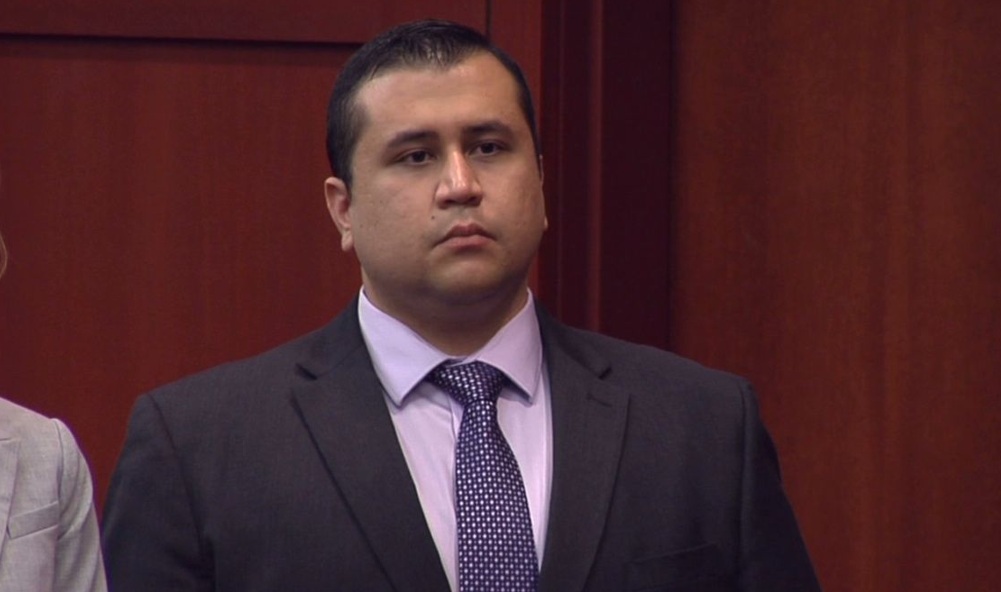
George Zimmerman Photo: CNN
On February 26, 2012, George Zimmerman — a 28-year-old multiracial man who identifies as Hispanic — was a neighborhood watch coordinator in Sanford, Florida. He saw Trayvon Martin, a 17-year-old Black teenager walking home from a convenience store. Zimmerman called police, reported a "suspicious person," and was told not to get out of his vehicle. He got out anyway. He followed Martin. There was a physical confrontation. Zimmerman shot and killed the unarmed teenager. He was not initially arrested. When he finally went to trial, his legal team successfully used Florida's "Stand Your Ground" self-defense law. He was acquitted. And he became a celebrity icon for a political movement. Here is the question that is rarely asked: where is the Black version of George Zimmerman?
The answer is clear. There is no Black version. No Black citizen has ever profiled, stalked, and killed an unarmed person of another race in public as a self-appointed vigilante, successfully used a "Stand Your Ground" defense, and subsequently become a celebrated political celebrity icon. While Black gun owners frequently and successfully use self-defense laws in court, they do so almost exclusively when defending their own homes from intruders — not when initiating public confrontations based on racial suspicion. The absence of a mirror image is not a coincidence. It is the shape of American racism and the differential application of self-defense law.
Let us be precise about what made Zimmerman's case distinct — and why a "Black version" is structurally impossible under the same legal framework. Zimmerman was not defending his home. He was not defending his person from an immediate, unavoidable threat. He was in a public space. He initiated the encounter. He followed Trayvon Martin after being told by a police dispatcher not to do so. And yet, a jury found that his use of deadly force was justifiable under Florida's "Stand Your Ground" law — a statute that broadly expands self-defense claims to public spaces and removes the duty to retreat before using lethal force.
The Legal Asymmetry: How "Stand Your Ground" Applies Differently by Race
Empirical research on "Stand Your Ground" laws reveals a stark racial disparity. A 2015 study published in the Journal of the American Medical Association (JAMA) found that when a white shooter kills a Black victim, justifiable homicide rulings are significantly more likely than when a Black shooter kills a white victim. In other words, the law protects white and white-passing shooters more than it protects Black shooters. Zimmerman's case fits this pattern perfectly: a white-passing Hispanic man killed an unarmed Black teenager and was deemed justified. The legal machinery that exonerated him has rarely, if ever, worked in reverse.
The closest modern structural parallel involving a Black citizen using self-defense laws occurred during the 2020 Breonna Taylor raid in Louisville, Kentucky. Kenneth Walker, Taylor's boyfriend and a Black man, was a legal gun owner. When plainclothes police officers executed a late-night "no-knock" warrant and breached the apartment, Walker believed the apartment was being broken into by criminals. He fired a single shot, wounding an officer. He was initially charged with the attempted murder of a police officer. However, public outcry and aggressive legal defense under Kentucky's self-defense and "Stand Your Ground" statutes led prosecutors to permanently drop all charges against him.
- Zimmerman's context: Public space, self-appointed vigilante, profiled and followed a Black teenager, initiated confrontation, killed unarmed victim → acquitted.
- Walker's context: Inside his own home, apartment being forcibly entered at night, one shot fired at unknown intruders (who turned out to be police) → charges eventually dropped, but only after massive public protest.
- The key difference: Walker was defending his home — the one context where self-defense claims are strongest. Zimmerman was pursuing a stranger in public and still walked free.
- No Black equivalent: No Black citizen has ever profiled and stalked a person of another race in public, killed them, and been celebrated as a hero by a political movement.
The Andrew Scott Case: A Cautionary Tale
Occurring the exact same year as the Trayvon Martin shooting, the case of Andrew "AJ" Scott highlights how differently self-defense laws have historically been applied to Black gun owners. Scott, a Black man, was inside his Florida apartment playing video games late at night when police officers — searching for a suspect — knocked aggressively on his door without identifying themselves. Scott opened the door holding his legal firearm for protection. Seeing the gun, an officer immediately shot and killed Scott. The police were at the wrong apartment. Scott had committed no crime. Unlike Zimmerman, who was acquitted for pursuing a confrontation, Scott was killed inside his own home while exercising his legal right to bear arms. The officers involved were cleared of wrongdoing under qualified immunity.
The contrast could not be starker. Zimmerman followed a teenager in public, got out of his car against dispatcher advice, initiated a confrontation, shot and killed the teen, and was acquitted. Scott stayed in his own apartment, opened his door in response to knocking, held a legal firearm for protection, and was killed by police. The officers were cleared. The asymmetry is not a bug in the system. It is the system.
Why No Black Zimmerman? The Structural Answer
The absence of a "Black version" of George Zimmerman is because the legal and cultural framework of American self-defense law is not neutral. It is built on a foundation of racial suspicion: Black bodies are presumed threatening; white and white-passing bodies are presumed justified when they use force against Black bodies. A Black citizen who profiled, stalked, and killed an unarmed white person in public would not be acquitted. They would be arrested, charged, convicted, and likely sentenced to decades in prison — if they survived the encounter at all.
Zimmerman became a political celebrity. He was celebrated by far-right movements, sold memorabilia, and was even invited to speak at political events. The gun that killed Trayvon Martin was auctioned online. No Black citizen who killed an unarmed person of another race in public has ever received such celebration. They would be labeled a monster, a thug, a criminal. The same act, performed by different races, produces opposite outcomes. That is not a failure of Black people to produce a "version." It is the definition of structural racism.
Black citizens do use "Stand Your Ground" laws successfully — Kenneth Walker is an example. But they do so in contexts that juries and prosecutors find sympathetic: defending one's own home from intruders. The public, vigilante, race-based profiling that defined Zimmerman's case has no Black mirror. Because the law — and the society that enforces it — would never permit a Black citizen to walk free after profiling and killing a white person in public. The permission slip that Zimmerman received was printed on white privilege. No Black person has ever been handed that document.
No Black Zimmerman — No Mirror for Vigilante Anti-Black Violence
The question "is there a Black version of George Zimmerman?" has a clear answer: no. No Black citizen has ever profiled, stalked, and killed an unarmed person of another race in public as a self-appointed vigilante, successfully used a "Stand Your Ground" defense, and become a political celebrity icon. The closest parallels — Kenneth Walker and Andrew Scott — involve Black gun owners defending their own homes, not initiating public confrontations. And in Scott's case, he was killed by police for the same act that exonerated Zimmerman.
The correct response to "no Black Zimmerman" is not to ask why Black people haven't produced such a figure. It is to recognize that the legal framework that produced Zimmerman — "Stand Your Ground" laws, racial profiling, jury sympathy for shooters of Black victims — is designed to protect white and white-passing shooters. A Black Zimmerman would not be acquitted. He would be incarcerated or dead. The absence of a Black version is not a gap. It is evidence of a two-tiered justice system. And that system has a name: white supremacy.
No Ads. By Us. For Us.
This article was made possible by readers like you. We hope it inspired you to support Emerald Book, so we can continue producing content like this.
We will never show you ads, sell your data, or require a subscription to consume our content. Your gift helps us keep the truth accessible.
Click the Support button to give a gift of any amount today.
Thank you for making this work possible.