

Emerald Pages
◆
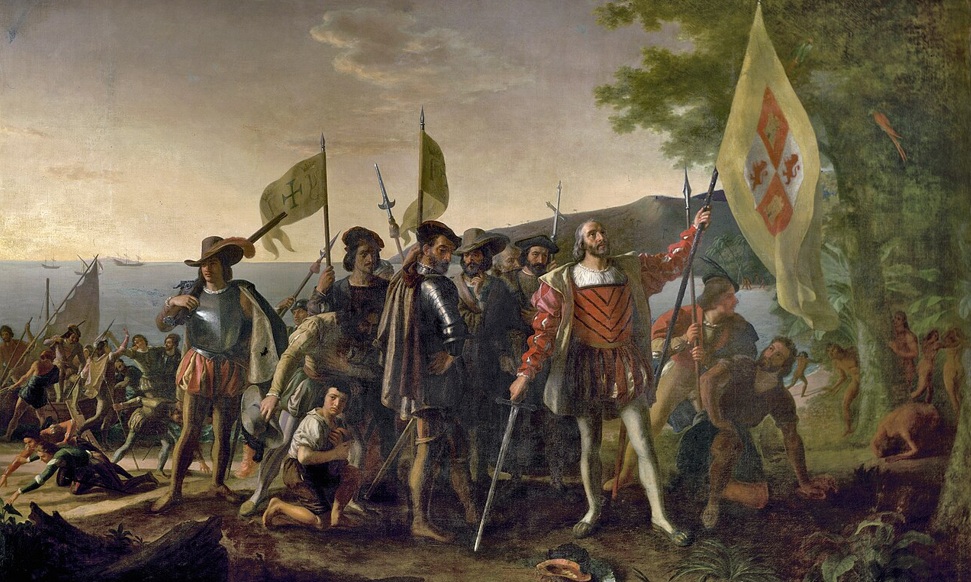
Photo: Wikipedia
The standard definition of colonization — from the Oxford Dictionary and mainstream historical scholarship — requires a foreign power to take control of an area, establish its own governance, and physically send its own citizens to live there as permanent settlers. By this definition, European powers colonized the Americas, Africa, Asia, and Oceania. Spanish fleets crossed the Atlantic. British ships landed in North America and Australia. French, Portuguese, Dutch, and Belgian empires carved up continents. And here is the question that is almost never asked: where is the Black version of this global, transoceanic colonization?
The answer is unequivocal. A Black version does not exist. No sovereign Black nation has ever launched fleets across oceans to conquer a foreign continent, permanently settle its own citizens there, and establish a global empire to rule over a different race. While history contains examples of regional African conquest — powerful kingdoms conquering neighboring kingdoms — and the unique case of Americo-Liberian settlers in Liberia, a global, transoceanic system of racialized settler-colonialism remains entirely unique to European history.
Let us be precise about what is being claimed — and what is not being claimed. African empires waged wars of conquest. The Asante Empire expanded through military force. The Zulu kingdom under Shaka conquered neighboring peoples. The Mali and Songhai empires controlled vast territories through trade and military power. But these were regional conquests within the African continent. They were not transoceanic. They did not involve building a fleet, crossing a sea, and planting permanent settlers on a different continent to rule over a racially distinct population. The distinction is not semantic. It is structural.
The Exception That Proves the Rule: Liberia
The closest historical anomaly to a "Black settler colony" is Liberia. In 1822, the American Colonization Society (ACS) — a white-led organization in the United States — began shipping free Black Americans back to West Africa. In 1847, these settlers declared independence, creating the Republic of Liberia. Historians explicitly classify the Americo-Liberian ruling class as a settler colonial elite. They copied the structures of the antebellum U.S. South: plantation-style mansions, top hats, heavy Western clothing in the tropics. They denied voting rights to the 16 indigenous African tribes living there. They forced native populations into grueling labor. This exact settler-colonial dynamic directly fueled Liberia's brutal civil wars a century later.
But does Liberia constitute a "Black version" of European colonization? No. For three reasons. First, the Americo-Liberians were not an independent Black nation that launched its own colonial expedition. They were transported by a white-led American organization. Second, they were returning to Africa — the continent of their ancestry — not conquering a foreign, racially distinct continent. Third, their entire framework — plantation agriculture, Western dress, legal discrimination against indigenous peoples — was copied from the white American South. They were imitators, not originators. The system they used was invented by white Europeans and Americans. They did not build a Black colonization empire. They built a small, dependent mimicry of the white empire that had enslaved their ancestors.
- Transoceanic fleets: European powers built massive navies to cross oceans. No Black nation has ever launched a transoceanic invasion fleet to colonize another continent.
- Permanent settler populations: Europeans sent millions of settlers to the Americas, Australia, and Africa. No Black nation has ever planted permanent settler colonies on a foreign continent.
- Racialized governance: European colonial empires explicitly ruled based on racial hierarchy — whites above all others. No Black empire has ever established a global racial hierarchy with Black people at the top ruling over white populations.
- Global imperial reach: The British, French, Spanish, and Portuguese empires spanned multiple continents. No Black empire has ever had intercontinental reach.
- Indigenous displacement: European colonization systematically displaced and exterminated indigenous populations (e.g., Native Americans, Aboriginal Australians). No Black nation has ever done this on a transoceanic scale.
The Second Exception: Afro-Brazilians in West Africa (The Agudas)
During the 19th century, thousands of emancipated Black slaves from Brazil left South America and returned to coastal West Africa — primarily modern-day Benin, Nigeria, and Togo. Known as the Agudas or Tabom people, they arrived as a distinct, heavily Westernized, Portuguese-speaking Catholic population. Because they possessed advanced Western literacy, technical skills, and trade connections, they rapidly established themselves as an elite mercantile class. While they did not use state military force to formally "annex" land, they economically dominated local African populations and functioned under a privileged, culturally separate colonial-style framework until European empires fully took over the region.
Does this constitute a "Black version" of colonization? No. The Agudas were not a sovereign Black nation launching a colonial expedition. They were individuals returning to Africa from Brazil — again, returning to the continent of their ancestry, not conquering a foreign continent. They did not arrive with a navy. They did not plant permanent colonies under a Black imperial flag. They integrated (however unequally) into existing West African societies. Their story is fascinating and complex, but it is not a Black equivalent of Spanish conquest of the Americas or British colonization of Australia.
Why No Black Colonization? The Structural Answer
The absence of a "Black version" of transoceanic colonization is not a coincidence. It is not because Black people are morally superior or lacked the capacity for violence. It is because the historical conditions that enabled global colonization — the development of oceanic navigation technologies, gunpowder empires, capitalist joint-stock companies, and racial ideologies of white supremacy — were concentrated in Europe. By the time any Black nation might have theoretically developed such capacities, the European powers had already colonized Africa itself. The continent was carved up by Berlin Conference (1884–85). The possibility of a Black transoceanic colonial empire was foreclosed by European colonization before it could ever emerge.
Consider the counterfactual: imagine a powerful West African kingdom in the 15th century that had developed oceangoing ships, navigational technology, and a desire to colonize South America. Could such a kingdom have sent fleets across the Atlantic, conquered indigenous populations, and planted permanent Black settlers? Theoretically, perhaps. But historically, this did not happen. By the time any African kingdom had the resources for such an endeavor, European ships were already landing on African coasts — not as equals, but as slavers and colonizers. The direction of power was set. And it has never been reversed.
What about African colonization of other parts of Africa? The Omani Empire — which was Arab-led, not Black — colonized parts of East Africa, including Zanzibar. But the key phrase is "Arab-led." That is not a Black empire. Black African kingdoms conquered neighbors within Africa, but that is regional conquest, not the transoceanic, racialized settler-colonialism that defines modern usage of the word "colonization." When people say "colonization" in historical and political discourse, they almost always mean what Europeans did to the rest of the world. And no Black nation ever did that.
No Black Colonization — No Black Transoceanic Settler Empire
The question "is there a Black version of colonization?" has a clear answer: no. No sovereign Black nation has ever launched fleets across oceans, conquered a foreign continent, permanently settled its own citizens there, and established a global empire to rule over a different race. The closest exceptions — Americo-Liberians in Liberia and Afro-Brazilian Agudas in West Africa — were themselves products of European and American colonization. They were not independent Black imperial powers. They were people who had been forcibly displaced by white colonization, returning (or being sent) to Africa, the continent of their ancestry.
The correct response to "no Black colonization" is not to point to African kingdoms that conquered their neighbors — that is regional warfare, not transoceanic settler-colonialism. It is to recognize that the global, racialized, transoceanic colonization of the modern era was a uniquely European phenomenon. No Black empire ever built a fleet to cross the Atlantic and conquer Europe. No Black empire ever planted permanent settlements in Asia to rule over Asian populations. Those crimes belong to European history. Asking for a "Black version" misunderstands the nature of the crime — and the direction of power that made it possible.
No Ads. By Us. For Us.
This article was made possible by readers like you. We hope it inspired you to support Emerald Book, so we can continue producing content like this.
We will never show you ads, sell your data, or require a subscription to consume our content. Your gift helps us keep the truth accessible.
Click the Support button to give a gift of any amount today.
Thank you for making this work possible.