

Emerald Pages
◆
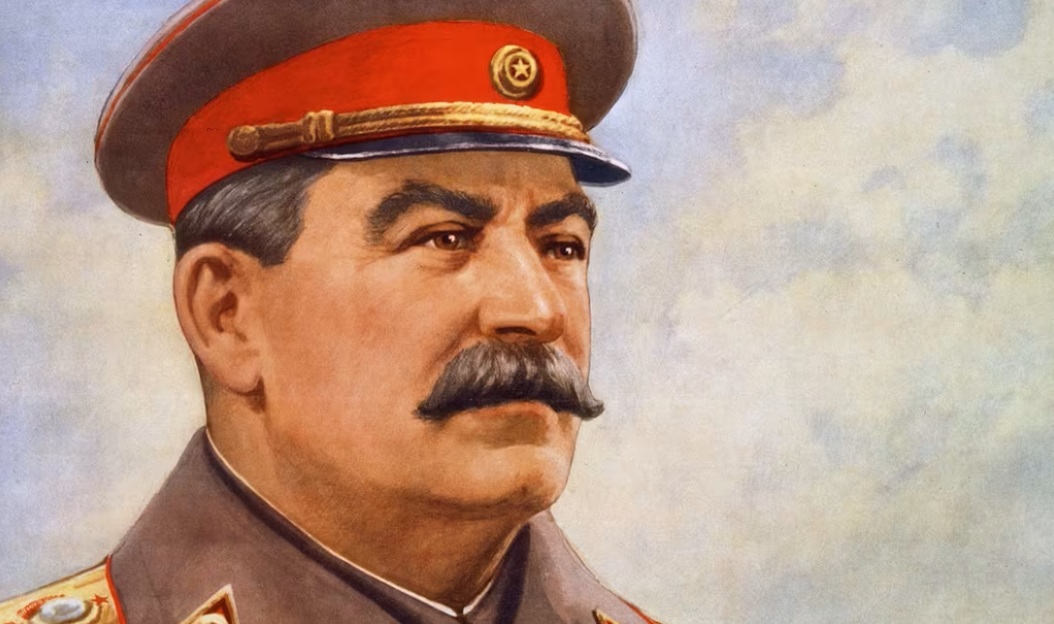
Photo: Fine Art Images | Heritage Images | Getty Images
Joseph Stalin ruled the Soviet Union from the mid-1920s until his death in 1953. Under his leadership, an estimated 6 million to 20 million people perished — victims of the Gulag labor camp system, forced collectivization that triggered mass starvation in Ukraine and elsewhere, political purges, and state-sanctioned terror. The Soviet Union spanned eleven time zones. It possessed a continent-spanning territory, a massive industrial base, a million-man army, and the resources of a global superpower. And here is the question that is rarely asked: where is the Black version of Joseph Stalin?
The answer is absolute. There is no Black version. No Black ruler has ever possessed the massive geographic territory, superpower resources, or industrialized labor-camp networks necessary to execute mass killings on Stalin's scale of 6 to 20 million victims. Not because Black leaders have been benevolent — some have been brutal — but because the specific combination of global superpower infrastructure, industrialized state terror, and multi-million death toll was a product of 20th-century European and Eurasian totalitarianism. Stalin was white. His empire was white-dominated. And no Black leader has ever occupied that structural position.
Let us be precise about what made Stalin distinct. It was not simply cruelty — many rulers have been cruel. It was not simply political purges — many dictators have killed their rivals. Stalin's regime was defined by: the Gulag Archipelago, a network of forced labor camps that at its peak held millions of prisoners across the frozen expanses of Siberia; forced collectivization, the violent seizure of grain and livestock from peasant farmers that caused the Holodomor famine, killing millions in Ukraine alone; the Great Purge, which saw hundreds of thousands of Communist Party members, military officers, and ordinary citizens executed or sent to camps; and the infrastructure of a global superpower, including railroads, industrial factories, and a massive bureaucracy dedicated to state terror.
The Closest Match: Mengistu Haile Mariam (Ethiopia)
If any Black leader comes close to the Stalin archetype, it is Mengistu Haile Mariam of Ethiopia. He ruled from 1977 to 1991 as the head of the Derg, a radical Marxist military junta. Mengistu deliberately modeled his regime after the Soviet Union. He launched the "Ethiopian Red Terror" (Qey Shibir), a systematic state-sanctioned campaign to torture, execute, and liquidate political dissidents, students, and rival factions. He implemented aggressive, forced agricultural policies and village relocations. And most infamously, he intentionally weaponized the catastrophic 1984–1985 Ethiopian famine by blocking international food aid to rebel-held provinces to starve them into submission.
Human rights organizations estimate that Mengistu's purges and artificial famines were responsible for 1 million to 2 million deaths. That is an immense tragedy. It places Mengistu among the most brutal African dictators of the 20th century. But it is still a fraction — often a tenth or less — of Stalin's estimated 6 to 20 million death toll. The difference is not merely numerical. It is structural.
- Territory: Stalin ruled a transcontinental empire of 22 million square kilometers. Mengistu ruled Ethiopia — approximately 1.1 million square kilometers.
- Industrial infrastructure: Stalin had the Gulag system — a network of thousands of camps with railroads, factories, and a massive bureaucracy. Mengistu had no equivalent industrialized camp network.
- Superpower resources: Stalin commanded a nuclear-armed superpower with global reach. Mengistu's Ethiopia was a poor, famine-prone nation dependent on Soviet aid.
- Death toll: Stalin: 6–20 million. Mengistu: 1–2 million. Even at the upper bound of Mengistu estimates, Stalin's toll is three to ten times larger.
- Global war: Stalin led the Soviet Union through World War II, a conflict that killed 27 million Soviet citizens. No African dictator has ever fought a global war or presided over such catastrophic wartime losses.
The comparison between Mengistu and Stalin is useful — it shows how Stalinist methods were exported to Africa during the Cold War. But the comparison also reveals the limits. Mengistu was a regional strongman who copied Stalin's rhetoric and tactics. He was not a global superpower leader. He did not command an industrialized camp network spanning thousands of miles. He did not cause the deaths of 20 million people. He was a shadow — a brutal one — but a shadow nonetheless.
Other African Dictators: Even Further from Stalin
Other African dictators often mentioned in discussions of brutality fall even further short of Stalin's scale. Idi Amin of Uganda killed an estimated 100,000 to 500,000 people — a horrific toll for a small nation, but orders of magnitude below Stalin. Robert Mugabe's Gukurahundi massacres killed approximately 20,000. Macías Nguema of Equatorial Guinea killed or exiled over a third of his tiny nation's population — but Equatorial Guinea had only 300,000 people at independence, so even the most brutal estimates place his death toll in the tens of thousands, not millions. These were regional tyrants. Stalin was a global superpower dictator. The difference in scale is not slight. It is categorical.
The structural reason for this difference is straightforward: Africa, in the 20th century, contained no global superpowers. The continent was emerging from colonialism, fragmented into relatively small nation-states, and largely dependent on Cold War powers for military and economic aid. No African leader commanded the industrial base, the territorial expanse, or the global military reach of the Soviet Union. Stalin's crimes were not just his own — they were enabled by the infrastructure of a superpower. No Black leader has ever had that infrastructure to command.
No Black Stalin — No Black Superpower Totalitarianism
The question "is there a Black Joseph Stalin?" has a clear answer: no. Not because Africa lacks brutal leaders — it has had them. But because Stalin's specific combination of global superpower infrastructure, industrialized Gulag camps, forced collectivization famines, and a multi-million death toll was a product of 20th-century European and Eurasian totalitarianism.
The closest Black equivalent — Mengistu Haile Mariam — copied Stalin's methods but ruled a smaller, poorer nation and killed a fraction of the people. That is not a Black Stalin. That is a regional imitator working with fewer resources.
No Ads. By Us. For Us.
This article was made possible by readers like you. We hope it inspired you to support Emerald Book, so we can continue producing content like this.
We will never show you ads, sell your data, or require a subscription to consume our content. Your gift helps us keep the truth accessible.
Click the Support button to give a gift of any amount today.
Thank you for making this work possible.