

Emerald Pages
◆
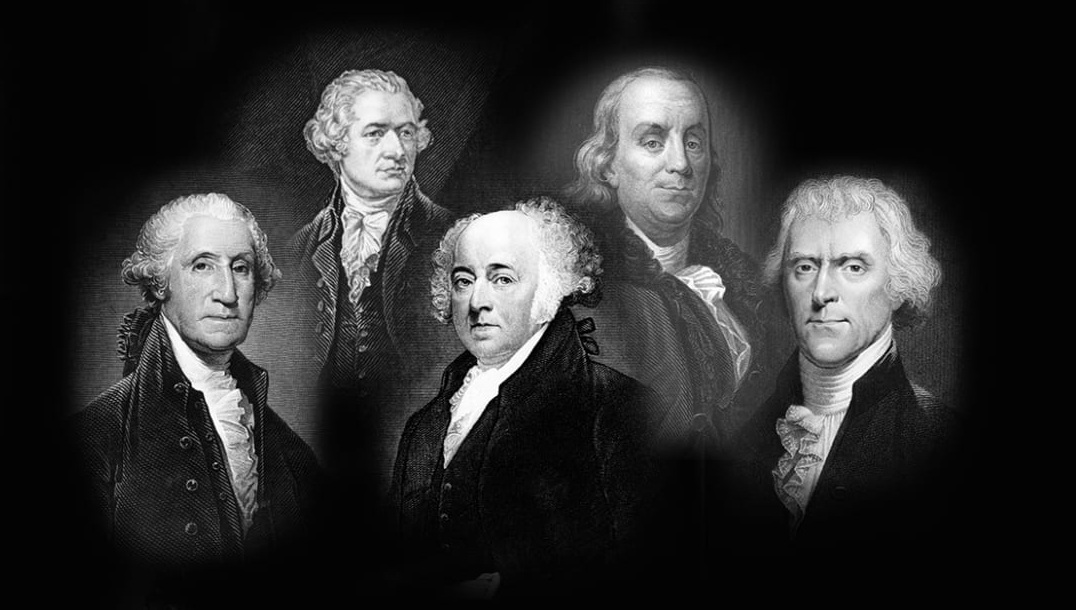
Photo: Hulton Archive | National Archive | Getty Images
The Transatlantic slave trade lasted more than 400 years. It forcibly transported an estimated 12.5 million Africans across the ocean. Of those, roughly 10.7 million survived the Middle Passage — a journey so brutal that mortality rates reached 10 to 15 percent per voyage. The system was industrial: European ships, European financing, European insurance markets, European ports, and European colonies designed around racialized chattel slavery. And here is the question that is rarely asked directly: where is the Black version of this system?
The answer is absolute. There is no Black version. No Black nation or group ever built a transoceanic empire that weaponized racial supremacy to commodify a foreign race as legal property across generations. The Transatlantic chattel slave trade — a system defined by multi-generational inheritance of slave status, absolute commodification of human beings as legal property, and an ideology of systemic racial inferiority — was a uniquely European and white American creation. That is not to say Black people never participated in slavery. They did. But participation in an existing system is not the same as building that system from scratch. And the distinction is everything.
Let us be precise about what the Transatlantic system actually was. It was not slavery in the abstract — forced labor has existed in nearly every human society. It was chattel slavery plus racial ideology plus industrial scale plus intercontinental empire. Enslaved people were legal property, inheritable like furniture. Their children were born enslaved. Their race was deemed proof of natural inferiority. And the entire machinery — ships, forts, credit markets, plantations, navies — was owned, operated, and defended by European states and their colonial offshoots. No Black kingdom ever built a fleet to cross the Atlantic and enslave Europeans. No Black empire ever wrote racial supremacy into law to justify enslaving white people. The direction of power was singular.
The Role of African Kingdoms: Participation, Not Creation
It is historically accurate that powerful West African kingdoms — the Asante Empire (Ghana), the Kingdom of Dahomey (Benin), and others — engaged in highly organized warfare to capture neighboring populations and sell them to European traders at coastal ports. This fact is often presented as a moral equivalence: “Africans sold Africans, so slavery was not just a white crime.”
But this argument collapses under structural examination. European traders did not march into the interior of Africa to capture millions of people themselves. They did not need to. They had something more efficient: demand. European ships arrived at coastal forts with manufactured goods, textiles, and firearms. African kingdoms, motivated by local political power, tribal warfare, and economic greed, captured their rivals and sold them. The concept of “Blackness” or “African identity” did not exist among competing kingdoms — ethnic and political loyalties were local. Selling a rival tribe’s people to Europeans was not seen as “selling out the race.” It was seen as defeating an enemy and profiting from it.
But here is what those African kingdoms did not do. They did not build the ships. They did not finance the voyages. They did not develop the insurance markets. They did not create the racial ideology that justified chattel slavery. They did not establish colonies across the Atlantic. They did not pass laws making slavery inheritable for generations. When European demand for slaves ended, the African supply trade collapsed. The system did not depend on African kingdoms. It depended on European capital, European navies, and European racial science. Remove the European demand, and the African supply vanishes. Remove the African supply, and Europeans find another way — as they did when they turned to colonization and forced labor systems within Africa itself.
- European ships: No Black kingdom built a transatlantic slave fleet. The ships came from Liverpool, Nantes, Lisbon, and Amsterdam.
- European financing: Slave voyages were funded by European banks, insurance companies, and investors — not African treasuries.
- European colonies: The plantations in the Americas were European-owned. No Black kingdom established a colony on another continent to exploit forced labor.
- European racial ideology: The concept that Black people were naturally inferior and suited for chattel slavery was invented by European scientists, clergy, and philosophers.
- Generational chattel status: African systems of bondage often allowed integration, marriage, and manumission. The rigid, inheritable chattel system was a European colonial innovation.
What About Black Slave Owners in America?
A small class of free Black slave owners existed in the Antebellum South. In Louisiana, planters like Andrew Durnford and Antoine Dubuclet owned sugar plantations and held dozens of Black slaves. Court records show they treated their slaves with the same legal harshness as white plantation owners to ensure their businesses succeeded. Does this constitute a “Black version” of the slave system?
No. The existence of Black slave owners — estimated at roughly 3,700 individuals in 1860, owning approximately 12,000 slaves — is not a mirror of the Transatlantic system. These individuals operated within a white-created legal and economic framework. They did not create chattel slavery. They did not write the laws that made slavery inheritable. They did not build the ships or finance the trade. Many — possibly most — of these so-called “Black slave owners” had actually purchased their own family members to protect them from white slave catchers, as Southern laws often made it legally impossible or dangerous to officially emancipate relatives. The commercial slave owners were a tiny minority who assimilated into the existing white plantation economy. They did not build a rival system. They were tenants in a house built by others.
Other Slave Trades: The Trans-Saharan and Indian Ocean Networks
For over a thousand years, Arab-led networks trafficked millions of Black Africans across the Sahara Desert and the Indian Ocean. Under the Abbasid Caliphate in the 9th century, enslaved East Africans — known as the Zanj — were forced into brutal, chattel-like agricultural labor draining salt marshes in modern-day Iraq. This system was so oppressive it triggered the massive Zanj Rebellion (869–883 CE), one of the largest slave revolts in human history. Does this constitute a “Black version” of the Transatlantic trade?
No. The Arab-led slave trades were brutal, massive, and lasted longer than the Transatlantic system. But they were not Black systems. They were led by Arab and Berber traders, not Black Africans. The victims were Black Africans. The direction of enslavement was from Black bodies to non-Black owners. This is not a “Black version” of white chattel slavery. It is a different slave system — one in which Black people were the commodity, not the commodifiers. If anything, it reinforces the pattern: across global history, Black people have far more often been the enslaved than the enslavers when the system crosses racial lines.
The Pre-Colonial African Internal Slavery Distinction
Before, during, and after European contact, many African societies practiced their own forms of bondage. Traditional African servitude was highly varied — often functioning more like debt bondage, pawning, or the European serf system. Enslaved people were frequently integrated into the captor's family over generations, could marry, and could sometimes earn their freedom. This was not chattel slavery. It was not inheritable in the same way. It was not justified by a global ideology of racial supremacy. And it was not intercontinental.
The insatiable European demand for labor fundamentally transformed West African warfare. What was once localized tribal conflict — with prisoners sometimes ransomed, integrated, or killed — became a massive commercial kidnapping industry designed to supply the Western hemisphere. European guns tipped the balance of power, incentivizing African kingdoms to raid their neighbors constantly to feed the trade. The transformation was not African in origin. It was a European demand shock that distorted African political economy for centuries.
No Black Empire of Chattel Slavery
The Transatlantic chattel slave trade was a uniquely white-built system. European ships, European financing, European colonies, European racial ideology, and European legal structures created a machine that transported millions of Black people across an ocean and held them and their descendants in perpetual, inheritable bondage. No Black kingdom or empire ever built an equivalent. Not because Black people are morally superior — though the moral record of African societies on slavery is complex — but because the specific combination of industrial capitalism, oceanic empire, and scientific racism was a European invention. You cannot have a Black version of a European crime. The crime is defined by whiteness.
The correct response to “no Black version of the Transatlantic slave trade” is not to point to African kingdoms that sold prisoners of war to Europeans. It is to recognize the difference between building a system and participating in a system built by others. African kings were collaborators, not architects. Black slave owners in America were tenants, not landlords. The Arab-led slave trades victimized Black people; they were not Black-led. When we ask for a “Black version” of the Transatlantic chattel system, we are asking for something that history does not contain — because the system was structurally dependent on whiteness from its first voyage to its last.
No Ads. By Us. For Us.
This article was made possible by readers like you. We hope it inspired you to support Emerald Book, so we can continue producing content like this.
We will never show you ads, sell your data, or require a subscription to consume our content. Your gift helps us keep the truth accessible.
Click the Support button to give a gift of any amount today.
Thank you for making this work possible.