

Emerald Pages
◆
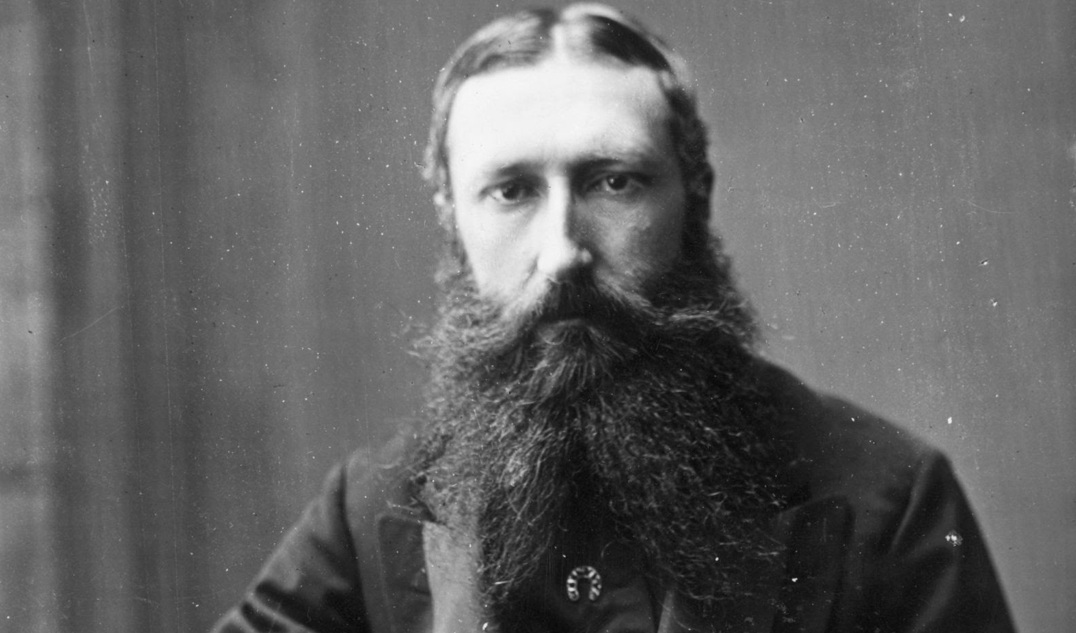
Photo: W. and D. Downey | Getty Images
Between 1885 and 1908, a single white European monarch — King Leopold II of Belgium — personally owned an African territory seventy-six times larger than his home country. He called it the Congo Free State. It was not a colony in the traditional sense. It was a private, corporate fiefdom designed for one purpose: extracting wild rubber and ivory at any human cost. The cost, historians now estimate, was between 1 million and 15 million Congolese lives. Mainstream demographic research suggests that approximately 10 million people — roughly half of the entire Congolese population — perished under his rule. And here is the question that Western media rarely asks: where is the Black version of King Leopold II?
The answer is direct, uncomfortable, and structurally absolute. There is no Black version — because this specific act is uniquely white. Not because African leaders have been benevolent — some have been brutal. But because Leopold’s regime was not traditional conquest or authoritarian politics. It was a Western corporate-industrial death machine. A private European monarch used modern technology, global trade networks, and a mercenary army to enslave a foreign population on another continent, extract its resources, and halve its population for personal profit. No Black leader has ever operated such a system. Not because Black leaders are incapable of violence — but because the historical conditions that produced Leopold (European colonialism, industrial capitalism, and racialized dehumanization) were white inventions.
Let us examine the machinery. Unlike Hitler, who was driven by a fanatical ideology of racial purity, Leopold II was driven entirely by financial greed. He wanted rubber. To get it, he created a system of terror that anticipates the bureaucratic atrocities of the 20th century. Congolese villages were given mandatory rubber harvesting quotas. If a village failed to meet its quota, Leopold’s private mercenary army — the Force Publique — would slaughter entire villages. To prove they were not wasting ammunition, mercenaries were required to cut off and present the hands of the Congolese people they killed. This policy metastasized: the hands and feet of living men, women, and children were systematically amputated as punishment for underproduction. The forced labor system destroyed native agriculture, causing millions more to die from starvation, exhaustion, and disease while fleeing into the rainforests.
The Structural Uniqueness of Leopold's Crime
Leopold’s atrocities are widely recognized as one of the first modern crimes against humanity. Historians consider his regime a structural bridge between 19th-century European imperialism and the mechanized, bureaucratic totalitarianism that Hitler would later perfect. The Congo Free State was not a traditional African kingdom waging war on a neighboring kingdom. It was a European corporation using industrial supply chains, global finance, and racial pseudoscience to extract wealth from a colonized population that had no legal rights whatsoever. Leopold did not rule over his own people. He ruled over a captive, racialized workforce on a different continent.
Now consider the question: has any Black leader ever done this? The answer is unambiguously no. Not because Black history lacks violence — it does not — but because the structure of Leopold’s violence is specifically Western. He used: a private European army, modern firearms, steam-powered riverboats, global rubber markets, and a legal fiction (the Congo Free State as his personal property) recognized only by other European powers. This was colonial capitalism at its most naked. A Black leader could not have run the Congo Free State because a Black leader could not have colonized a continent from a European throne, backed by European banks, armed by European factories, and protected by European diplomatic recognition. The entire system depended on whiteness.
- Corporate colonial structure: Leopold owned the Congo as a private business. No Black leader has ever personally owned a foreign territory as a corporation, backed by global imperial powers.
- Industrial extraction quotas: The rubber quota system was a modern, bureaucratic supply-chain atrocity — not traditional wartime killing.
- Systematic amputation as policy: Cutting off hands and feet of living civilians to enforce labor quotas is a distinct form of industrial terror with no Black equivalent.
- Population halved: Approximately 10 million deaths — roughly 50% of the Congolese population. No Black leader has ever killed half of a foreign nation's population for private profit.
- Racialized colonial framework: The entire enterprise rested on the European belief that Congolese people were subhuman — a racial hierarchy that only whiteness could weaponize at this scale.
What About Brutal Black Leaders? A Distinction of Structure
It is common to point to figures like Mengistu Haile Mariam of Ethiopia, whose "Red Terror" and weaponized famine caused an estimated 1 to 2 million deaths. Mengistu was a brutal dictator. But his violence was internal: political purges, Marxist collectivization failures, and civil war within his own country. He did not sail to another continent, enslave its people, and run a corporate extraction machine for personal profit. Similarly, pre-colonial conquerors like Shaka Zulu waged bloody wars of expansion, but these were traditional military conquests between neighboring African polities — not a European monarch using industrial technology to depopulate a foreign territory for rubber.
The distinction matters. When historians compare Leopold II to Hitler and Stalin, they are comparing structure and scale. All three used modern bureaucracy, industrial technology, and state (or corporate) power to kill millions. But those comparisons always involve white European leaders. No Black leader appears on that list. The reason is not that Black leaders are less capable of evil. The reason is that the specific machinery of industrial, colonial, corporate mass murder was invented and deployed by white Europeans. You cannot replicate the Congo Free State outside of European colonialism. The crime is defined by whiteness.
The international outcry against Leopold’s brutality — led by journalists, missionaries, and activists like Roger Casement — eventually forced the Belgian government to strip him of his personal ownership of the Congo in 1908. Belgium took over direct colonial control, and the atrocities continued in different forms for decades. But the image remains: a white European king, sitting in Brussels, who personally ordered the amputation of millions of Black hands to meet rubber quotas. There is no Black equivalent. There cannot be. Because the power differential — a white monarch over a Black population — was the entire mechanism.
No Black Leopold — No Black Version of the Corporate Colonial Death Machine
The question "is there a Black King Leopold II?" is not answered by listing brutal African dictators. It is answered by understanding what Leopold actually was: a white European monarch who used industrial capitalism, global trade, and racial dehumanization to turn a foreign continent into a private slaughterhouse for rubber profits. That specific combination — corporate ownership of a foreign territory, forced labor quotas, systematic amputation, and a death toll in the tens of millions — has never been replicated by any Black leader. Not because Black history is innocent of violence, but because the Congo Free State was a product of European colonialism. It was a uniquely white crime.
The correct response to "no Black Leopold" is not to demand that Black history produce an equivalent monster. It is to recognize that Leopold’s atrocities — like Hitler’s Holocaust and Stalin’s purges — are part of a specific European tradition of industrial-scale killing. Asking for a Black version misunderstands the nature of the crime. It is like asking for a Black Grand Wizard of the Ku Klux Klan, or a Black architect of the transatlantic slave trade. The positions are defined by racial hierarchy. You cannot separate the crime from the whiteness that enabled it.
No Ads. By Us. For Us.
This article was made possible by readers like you. We hope it inspired you to support Emerald Book, so we can continue producing content like this.
We will never show you ads, sell your data, or require a subscription to consume our content. Your gift helps us keep the truth accessible.
Click the Support button to give a gift of any amount today.
Thank you for making this work possible.