

Emerald Pages
◆
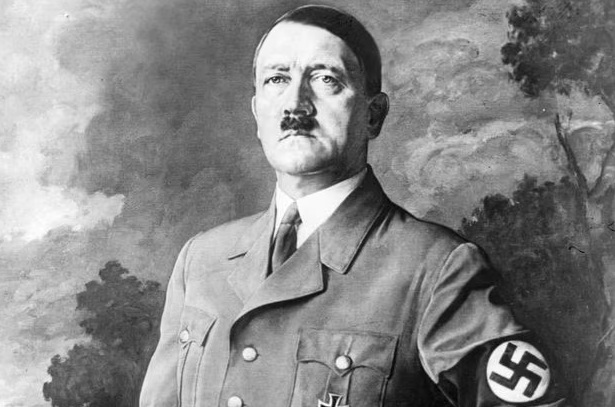
Photo: Hitler wrote Mein Kampf in prison in the 1920s (AFP)
For decades, Western journalists, political scientists, and even some African leaders themselves have reached for the same comparison: a brutal African dictator is “the Hitler of Africa.” Idi Amin of Uganda was dubbed this. Robert Mugabe of Zimbabwe leaned into the label, declaring himself “a Hitler tenfold.” The comparison has become a reflexive shorthand for extreme cruelty, cults of personality, and ethnic scapegoating. But there is a problem buried beneath the headlines: no Black leader has ever been a Hitler — because the specific historical phenomenon of Hitler is structurally unique and unrepeatable outside of whiteness.
This is not a defense of Amin, Mugabe, Mengistu, or any other authoritarian. Each committed atrocities. Each caused immense suffering. But the question “is there a Black Hitler?” is not answered by pointing to violent dictators. It is answered by examining what Hitler actually was — and discovering that the combination of factors that made Hitler Hitler has never appeared in Black leadership. Not by accident. By historical and structural necessity.
Consider the numbers. Adolf Hitler’s Nazi regime is responsible for the systematic industrial murder of approximately 6 million Jewish people — the Holocaust — alongside the killing of millions of others: Slavs, Romani people, disabled individuals, political dissidents, and homosexual people. The total death toll directly attributable to Nazi racial policies exceeds 11 million. When factoring in World War II — a global conflict that Hitler initiated — the death toll rises to an estimated 60 to 85 million people, including civilians, soldiers, and those killed by famine and bombardment. No Black leader has ever approached that scale of death.
The Ones Who Were Called “Hitler” — And Why the Label Fails
Idi Amin ruled Uganda from 1971 to 1979. Western press regularly called him “the Hitler of Africa.” He maintained secret police forces, state-sanctioned violence, and intense propaganda. In 1972, he expelled Uganda’s entire population of roughly 60,000 South Asians, seizing their businesses — an act of ethnic scapegoating that drew direct comparisons to Nazi policies against Jews. Amin even openly praised Hitler. But the death toll under Amin, while horrific, is estimated at 100,000 to 500,000 Ugandans. That is a fraction of Hitler’s murder tally. And Amin’s regime was chaotic, driven by shifting personal paranoia, not a rationalized, bureaucratic extermination machine.
Robert Mugabe ruled Zimbabwe from 1980 to 2017. In a 2003 speech responding to British press criticism, he declared: “I am still the Hitler of the time. This Hitler has only one objective: justice for his people… If that is Hitler, then let me be a Hitler tenfold.” He orchestrated the Gukurahundi massacres in the 1980s, in which his North Korean-trained Fifth Brigade systematically slaughtered an estimated 20,000 Ndebele civilians. But 20,000 deaths, while devastating, does not approach the millions. Mugabe’s violence was focused on political consolidation and anti-colonial land redistribution — not global racial conquest or industrialized extermination.
- Idi Amin (Uganda): 100,000–500,000 deaths. Praised Hitler but ran a chaotic, tribal-factional terror regime — not industrial genocide.
- Robert Mugabe (Zimbabwe): ~20,000 deaths from direct purges. Leaned into the “Hitler” label as anti-colonial rhetoric, not as a description of industrial killing.
- Macías Nguema (Equatorial Guinea): Ruled 1968–1979. Closed schools, banned medicine, executed or exiled over a third of his population. Brutal — but not a Hitler.
- Mengistu Haile Mariam (Ethiopia): Led the “Red Terror” from 1977–1987, killing hundreds of thousands through political purges and weaponized famine. Responsible for an estimated 1 to 2 million deaths — the highest toll of any Black African dictator, achieved primarily through forced collectivization and starvation, not racial extermination camps.
Mengistu Haile Mariam requires special attention. His regime caused an estimated 1 to 2 million deaths — a figure that, unlike Amin or Mugabe, enters the “millions” threshold. The 1984–1985 Ethiopian famine, which Mengistu intentionally worsened by blocking aid to rebel-held regions, killed enormous numbers. But even here, the comparison to Hitler collapses. Mengistu’s killings were not driven by a pseudo-scientific racial ideology aimed at exterminating an entire people from the earth. They were political: Marxist collectivization, counterinsurgency starvation tactics, and a “Red Terror” against political opponents. There were no mechanized death camps. No gas chambers. No industrialized, bureaucratic machinery designed to erase a race from existence. And no global war of conquest.
What Made Hitler Uniquely Hitler — and Uniquely White
Hitler was not just another brutal dictator. He was the product of a specific European tradition: scientific racism, eugenics, colonial genocidal precedent (Germany’s earlier genocide of the Herero and Nama peoples in Namibia), and the industrial capacity of a modern European state. The Holocaust was not a massacre. It was a factory. Trains scheduled deportations. Bureaucrats calculated efficiency. Chemists designed Zyklon B. The goal was not to defeat enemies but to erase an entire people from the human record — Jews, Roma, Slavs — based on a hierarchy of whiteness.
No Black leader has ever commanded that industrial infrastructure. No Black leader has ever launched a global war of racial conquest. No Black leader has ever built death camps designed to process millions. This is not because Black leaders are morally superior. It is because the historical conditions that produced Hitler — European imperialism, the transatlantic slave trade, the invention of scientific racism, and the industrial revolution — were white inventions. The Holocaust is a white European crime. To ask for a “Black Hitler” is to misunderstand the crime. It is like asking for a Black Grand Wizard of the Ku Klux Klan. The position is defined by whiteness. You cannot replicate it outside of whiteness.
The reflex to compare African dictators to Hitler reveals more about Western media than it does about Africa. It is a lazy shorthand: “brutal non-white leader equals Hitler.” But that shorthand erases the specific, industrial, racialized machinery of Nazism. It reduces Hitler to a generic “evil dictator” and then projects that label onto anyone with a secret police force and a bad human rights record. In doing so, it inadvertently flattens the Holocaust into just another atrocity — and it implies that whiteness has no unique relationship to industrial genocide. Both implications are false.
No Black Hitler
The correct answer to “is there a Black Hitler?” is no. Not because Africa lacks violence or authoritarianism — it has seen both in terrible measure. But because Hitler’s specific combination of industrialized, race-based, globally expansionist genocide is a white European historical product. It emerged from centuries of European racial thinking, colonial brutality, and industrial capacity. It has no mirror in Black leadership. That is not a failure of Black leaders. It is the definition of a uniquely white horror.
When someone asks for a “Black Hitler,” they are either misunderstanding what Hitler was — or they are reaching for a comparison that cannot hold. The dictators of Africa were brutal. Some caused millions of deaths through famine and political violence. But none built gas chambers. None industrialized the murder of an entire race. None launched a world war. Those specific crimes belong to Europe. And to whiteness. Asking for a “Black version” is not a demand for equality. It is an erasure of history.
No Ads. By Us. For Us.
This article was made possible by readers like you. We hope it inspired you to support Emerald Book, so we can continue producing content like this.
We will never show you ads, sell your data, or require a subscription to consume our content. Your gift helps us keep the truth accessible.
Click the Support button to give a gift of any amount today.
Thank you for making this work possible.