

Emerald Pages
◆
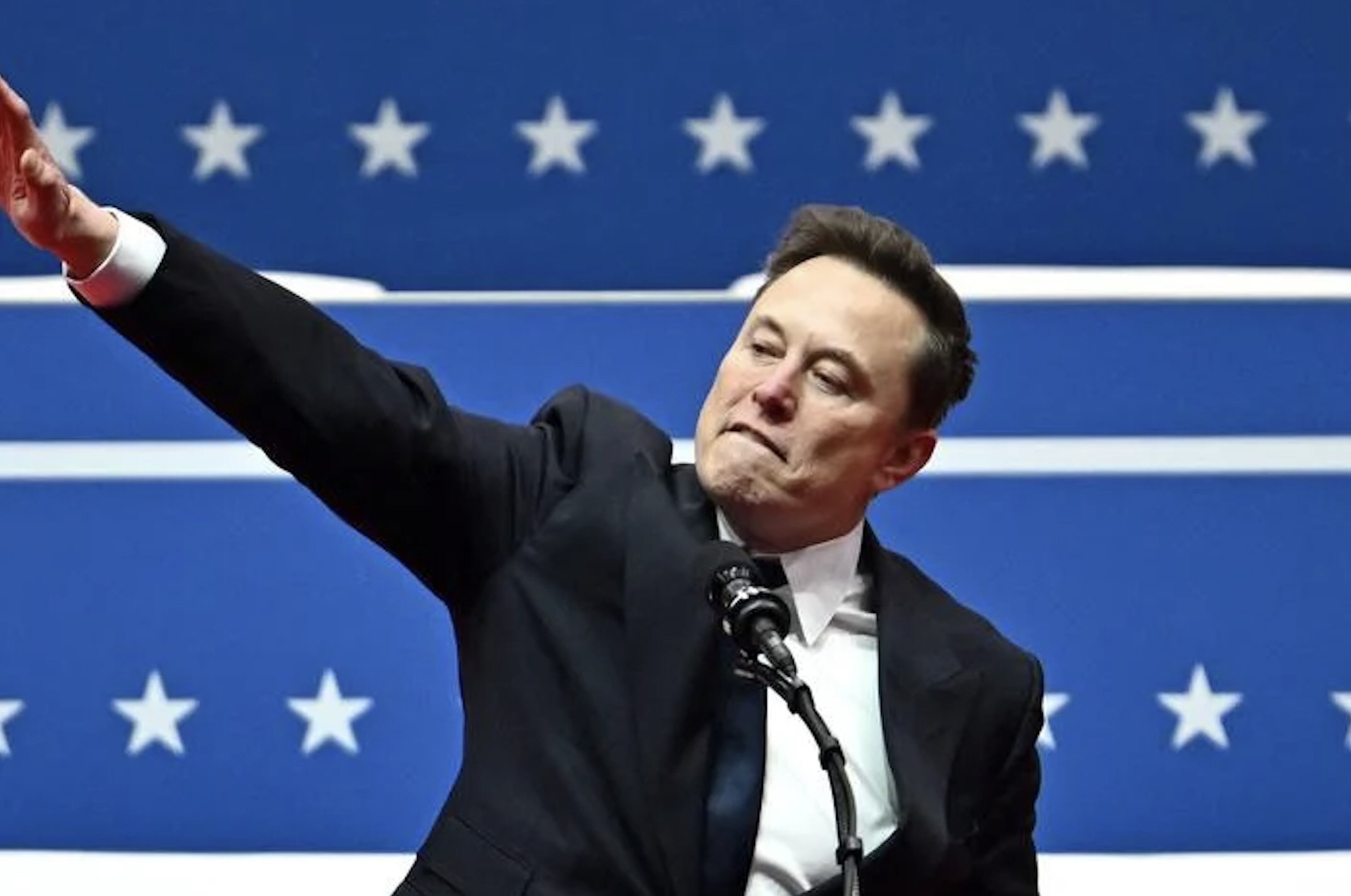
Photo: AFP
The argument landed in the courtroom like a grenade. Tesla's lead defense attorney, Tyree Jones, stood before Judge Peter Borkon in September 2026 and told the court that the most charged racial slur in American English could function as a "term of respect and endearment" among Black people. He quoted Kanye West and Jay-Z. He argued California regulators were unfairly attacking a word that some workers use as a greeting.
It was not an offhand remark. It was a calculated legal strategy—one that rests on a simple premise: if the word isn't inherently hostile, then Tesla isn't responsible for the hostile environment thousands of Black workers say they endured at the Fremont factory.
But the evidence presented by the California Civil Rights Department tells a different story. Swastikas scrawled on factory walls. Drawings of nooses. Non-Black supervisors calling Black workers "porch monkeys" and "slaves." Complaints that went uninvestigated for months. Whistleblowers who were written up, demoted, and fired. And a workforce where Black employees—roughly 10% of Tesla's total U.S. staff—hold just 4% of leadership roles while earning approximately $1,533 less per month than their white peers.
The bench trial, which began in September and is expected to conclude by October 30, 2026, has exposed a pattern that extends far beyond a single factory floor. From Tesla's assembly lines to the digital square of X, the evidence suggests a consistent executive philosophy: systemic discrimination is an administrative annoyance, and the solution is for victims to grow "thick skin."
"Thick-Skinned" and Told to Accept Apologies
The state's case hinges on proving that Tesla's toxic environment was not the work of a few bad actors, but the deliberate product of corporate leadership. And the single most damaging piece of evidence may be an email Musk sent to all Tesla employees in 2017.
As racial complaints mounted at the Fremont plant, Musk did not issue a strict zero-tolerance directive. Instead, according to the email presented in court, he told workers that employees from less-represented groups should be understanding of unintentional slights. He explicitly said they needed to be "thick-skinned" and accept an apology if someone was "being a huge jerk."
This memo set the tone from the very top. It signaled to factory-floor supervisors that racial slurs were minor social friction—not fireable offenses. It told Black workers that if they wanted to keep their jobs, they needed to absorb abuse rather than report it.
The Machinery of Retaliation
The California Civil Rights Department alleges that Tesla didn't just tolerate a hostile environment. The state claims the company actively penalized the workers who tried to fix it.
Ryan Edwards, the state's first witness, testified that after a non-Black coworker threatened to beat him and called him the N-word, he reported it to management. Instead of disciplining the coworker, Edwards says managers issued a formal write-up against him. He was subsequently passed over for more than 100 internal promotions.
The U.S. Equal Employment Opportunity Commission (EEOC), which filed a parallel federal lawsuit, found a similar pattern: Tesla routinely terminated Black employees using fabricated performance issues to mask the real reason—they had complained about racial harassment.
Former regional security manager Ozell Murray testified that his direct supervisor told him to warn a newly hired Black Marine veteran: "Just be sure he knows he'll be called those words." The implication was unmistakable—accepting racial abuse was a condition of employment.
And the retaliation allegedly continued into the courtroom itself. On the first day of trial, the state requested an emergency protective order after a witness revealed that an in-house Tesla lawyer had called him days before he was scheduled to testify, allegedly misrepresenting himself as a state representative and steering the witness to praise Tesla's culture. The state says at least four other key witnesses have gone silent.
The Pattern Across Musk's Empire
- Tesla (2017-2026): Black workers concentrated in the most physically demanding assembly roles; 10% of workforce but 4% of leadership; $1,533 monthly pay gap; HR investigators who validated complaints were fired or forced out.
- X / Twitter (2022-2026): N-word usage surged nearly 500% in the 12 hours after Musk's takeover; daily uses of the slur jumped from 1,282 to 3,876; 67% of Black users reported taking a break or abandoning the platform within the first year.
- Legal strategy: X sued New York to block the Stop Hiding Hate Act, which required platforms to report how they moderate racism and extremism. A federal judge dismissed the suit.
- X vs. Media Matters: After the watchdog documented ads appearing next to white nationalist content, Musk sued the group rather than address the algorithmic amplification of hate speech.
The pattern is not subtle. When Tesla's own internal HR investigators validated Black workers' complaints, senior leaders allegedly rejected the findings, ordered staff to rewrite reports to protect the company, and pushed out the compliance managers who refused. When X's Trust and Safety teams flagged the surge in hate speech after Musk's acquisition, he gutted those teams within days.
The unifying thread is a CEO who views corporate compliance as bureaucratic overhead and minority protections as obstacles to speed. At Tesla, the mandate was production quotas at all costs. At X, it was engagement and "free speech absolutism" at all costs. In both cases, the cost was borne disproportionately by Black people.
What the State Is Asking For
The California Civil Rights Department is not seeking a simple fine. Because California's Fair Employment and Housing Act has no cap on damages, Tesla faces potentially massive exposure. The state is asking Judge Borkon to order:
Financial relief: Back pay for the $1,533 monthly wage gap, compensatory damages for emotional distress, and punitive damages designed to punish Tesla for knowingly suppressing internal compliance reports.
Structural overhaul: An independent external monitor with full access to Tesla's servers and factory floors, reporting directly to the court—not to Musk or the board. A centralized, independent HR apparatus stripped of factory-floor supervisors' power to investigate themselves. A court order requiring immediate removal of all racist graffiti. Transparent promotion and pay metrics to eliminate job segregation.
The state's argument is straightforward: if the culture is top-down, the fix must be too. A fine won't change Elon Musk's philosophy. But a court-appointed monitor with contempt-of-court powers just might force the company to behave differently—whether Musk believes in the change or not.
Tesla's defense maintains that the terminations and write-ups were justified by performance and attendance issues unrelated to race. The company argues it has zero-tolerance policies and disciplined offenders when complaints were formally filed. But the state's witnesses have testified that reported graffiti stayed on walls for months, fired offenders were quietly rehired as contractors, and HR staff were ordered to delete or "reframe" verified complaints.
The bench trial is scheduled to conclude by October 30, 2026. Judge Borkon will decide whether Tesla's toxic culture was the product of individual bad actors—or the deliberate policy of a company that told Black workers to be "thick-skinned" and then punished them when they weren't.
If the state prevails, the ruling could set a precedent not just for Tesla, but for how courts treat tech platforms and manufacturing giants whose CEOs view civil rights compliance as optional.
No Ads. By Us. For Us.
This article was made possible by readers like you. We hope it inspired you to support Emerald Book, so we can continue producing content like this.
We will never show you ads, sell your data, or require a subscription to consume our content. Your gift helps us keep the truth accessible.
Click the Support button to give a gift of any amount today.
Thank you for making this work possible.