

Emerald Pages
◆
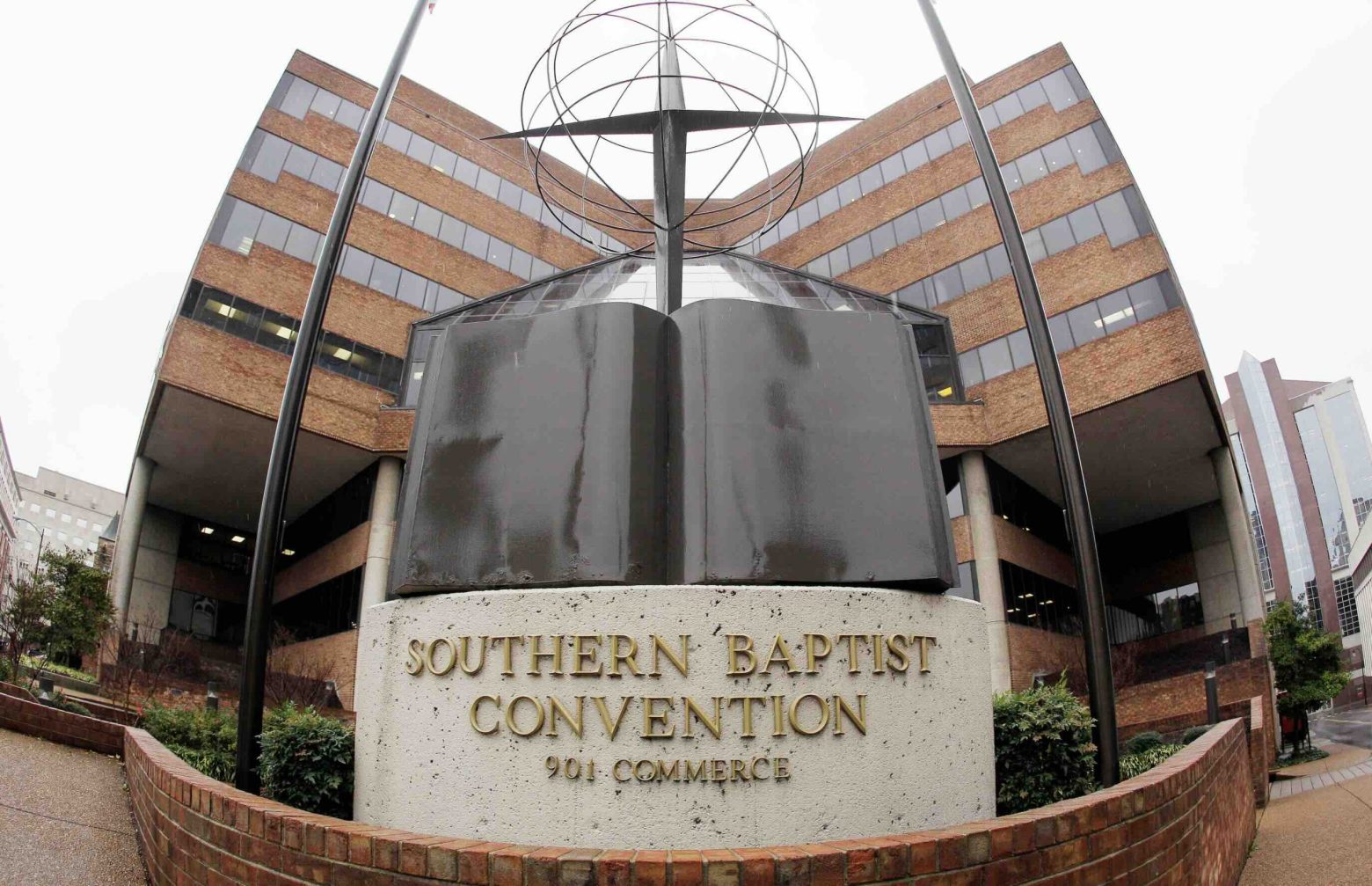
Photo: AP
Far from merely providing moral or biblical justifications for slavery, many white-led churches, religious orders, and denominations actively owned, bought, and sold Black people during the era of transatlantic slavery. They operated as major slaveholders to build wealth, fund their ministries, and sustain their operations. The institutional church was not a bystander to the slave economy; it was a central architect and beneficiary.
In the United States, this was not a fringe phenomenon. Entire religious orders owned plantations and enslaved labor. When religious institutions faced financial hardship, they sold enslaved people as commercial assets. The most prominent historical example occurred in 1838, when Jesuit priests sold 272 enslaved men, women, and children for $115,000—equivalent to millions today—to pay off debts and save the college known today as Georgetown University.
Historical records show that nearly all orders of Catholic sisters established in the United States by the late 1820s owned, bought, and sold human beings to sustain their convents, schools, and charitable works. Many Protestant denominations—including the Baptists, Presbyterians, Episcopalians, and Lutherans—directly profited from slavery. Churches frequently accepted tithes and taxes from congregants in the form of tobacco or cotton cultivated by enslaved labor.
White religious leaders argued that slavery was a "noble Christian duty," asserting that bringing Africans to a Christian nation allowed them to be saved from paganism. They used selective Bible passages to command enslaved people to obey their earthly masters. This theological justification was not incidental—it was the spiritual fuel that kept the economic engine of slavery running smoothly for centuries.
The Mechanics of Profit: How Churches Extracted Wealth
White-led churches profited from slavery through direct labor, human trafficking, financial investments, and institutional fundraising. Enslaved Black people were treated not just as workers, but as capital, liquid currency, and real estate assets on church balance sheets. Here is exactly how churches extracted financial profit from the system of slavery:
- Direct Agricultural and Domestic Labor: Religious orders like the Jesuits and the Church of England owned vast tobacco, sugar, and cotton plantations. Enslaved people grew the cash crops that were sold on international markets, with 100% of the profits going directly into church coffers. Enslaved laborers also cut timber, baked bricks, and physically built early American churches, cathedrals, and universities.
- High-Value Financial Asset Liquidation: When a church faced a financial crisis, it liquidated enslaved people for cash. The famous 1838 sale of 272 enslaved people by the Jesuits netted $115,000—instantly erasing the debts of Georgetown College.
- Leasing and Renting Human Beings: Under a system known as "slave-jobbing" or hiring out, a church would lease an enslaved person to local businesses or neighboring plantations. The renter paid the church directly, providing the parish with a reliable stream of cash revenue. Some congregations used this income to pay the pastor's salary.
- Tithing, Endowments, and Wills: In the South, church members frequently paid their mandatory tithes in hogsheads of tobacco or bales of cotton—all cultivated by enslaved labor. Wealthy slaveholders frequently left human beings to churches in their wills, giving the church the right to either extract their labor or sell them for an immediate cash infusion.
Through these combined methods, human bondage functioned as the primary financial engine that allowed many of America's oldest religious institutions to survive, grow, and accumulate the generational wealth they hold today.
The Great Denominational Splits: A Church Divided Over Human Property
By the 1840s, the issue of slavery became so volatile that the largest Protestant denominations in America violently fractured. White southern church leaders refused to accept any restrictions on slaveholding, leading to splits that defined American religion for over a century.
The Baptists (1845): The Triennial Convention refused to appoint an owner of enslaved people as a missionary. In response, southern Baptists broke away to establish the Southern Baptist Convention (SBC), explicitly organizing the new denomination to defend the right to own enslaved people. The Methodists (1844): The Methodist Episcopal Church split when the General Conference attempted to discipline a Georgia bishop who had acquired enslaved people through marriage. The Presbyterians (1857/1861): The Presbyterian Church fractured into northern and southern branches over theological debates regarding whether slavery was inherently sinful.
What Churches are Worth Today
Historians generally agree that the Catholic Church and the Southern Baptist Convention (SBC) are the two religious bodies today whose current size, wealth, and institutional power were most directly shaped and benefited by the economics of American slavery. They benefited in different ways: the Catholic Church through direct institutional asset building, and the Southern Baptists through massive demographic expansion fueled by defending the slaveholder class.
The Catholic Church—and specifically the Jesuits—arguably received the most concentrated, traceable financial benefit. In the colonial and antebellum eras, the American Catholic Church did not have a wealthy base of donors. To finance its expansion, the Church relied on plantation networks. Enslaved labor physically built and financially funded the nation’s first Catholic archdiocese, first cathedral, and first seminary. The global net worth of the Roman Catholic Church is estimated to be anywhere from $300 billion to over $1 trillion. The U.S. Jesuits, the specific order that operated the slave-holding plantations, holds a net worth estimated at over $1 billion to $2 billion.
The Southern Baptist Convention was explicitly founded in 1845 to protect the right of southern white Christians to own Black people. It parlayed that early alignment with the wealthy Southern planter class into becoming the largest Protestant denomination in America. At the national executive level, the core agencies and mission boards of the SBC hold combined total assets of over $2.6 billion. When you expand beyond the national executive board to include the actual real estate, mega-churches, local assets, and land owned by the thousands of individual Southern Baptist churches across the United States, the total network asset value is estimated between $8 billion and $12 billion.
Apologies, Pledges, and the Fight for Reparations
In recent years, major religious organizations and universities have formally acknowledged this history and begun creating financial reparations programs to atone for their historic ties to slavery. The Jesuit Conference of Canada and the United States pledged $100 million to a racial reconciliation fund to benefit the descendants of those they enslaved. As of late 2023, the Jesuits had contributed an initial $15 million, followed by an additional $17 million, alongside a separate $10 million contribution from Georgetown University, bringing the total money actually paid into the trust up to $42 million.
The Southern Baptist Convention has taken a different path. In 1995, the SBC passed an historic resolution officially apologizing to African Americans for its foundational defense of slavery and its later opposition to the Civil Rights Movement. However, the SBC has refused to pay financial reparations. In 2019, after a 139-page report confirmed that all four original founders of the Southern Baptist Theological Seminary owned enslaved people, a local interracial coalition of pastors called on the seminary to donate a 10% "biblical tithe" of its $100 million endowment to a neighboring historically Black college. The seminary president and board chair formally rejected the request, stating that "financial reparations are not the appropriate response."
Critics and Black clergy have argued that apologizing for slavery without offering financial repair is inadequate, noting that the immense wealth, land, and institutional footprint the SBC enjoys today were secured by the very system they apologized for. The question of what is owed—and by whom—remains one of the most contentious and unresolved legacies of American religious history.
The church's ledger is still being balanced. The descendants of the 272 people sold by the Jesuits are still fighting for the full $100 million pledge. The Southern Baptist Convention is still debating whether financial repair is a theological mandate. And the institutions built on the backs of enslaved Black people—the universities, the cathedrals, the seminaries, the mega-churches—still stand, their foundations literally and figuratively laid by human beings who were treated as property.
No Ads. By Us. For Us.
This article was made possible by readers like you. We hope it inspired you to support Emerald Book, so we can continue producing content like this.
We will never show you ads, sell your data, or require a subscription to consume our content. Your gift helps us keep the truth accessible.
Click the Support button to give a gift of any amount today.
Thank you for making this work possible.