

Emerald Pages
◆
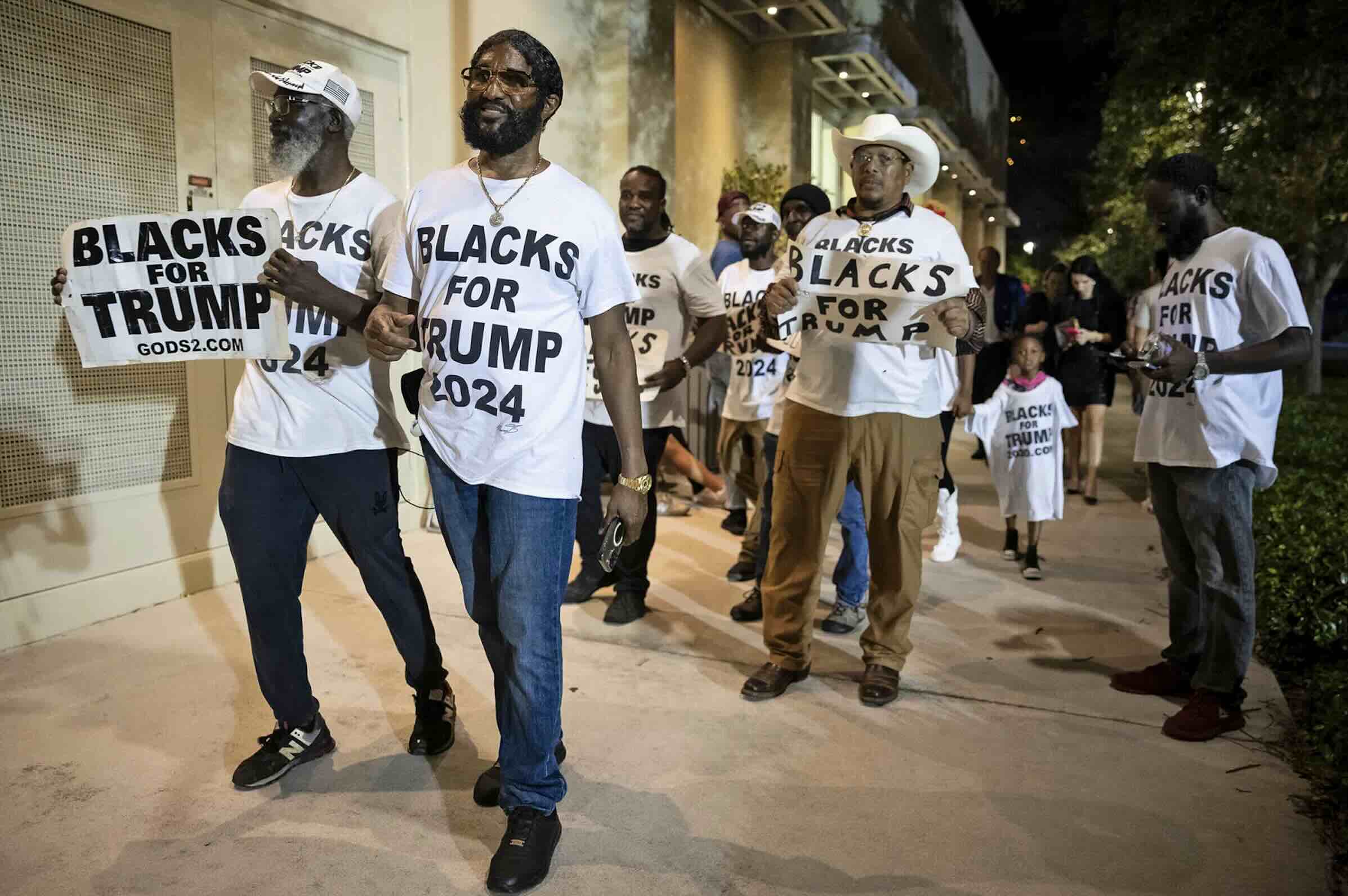
Photo: MS Now
For centuries, the term "race-baiting" has carried a specific, damning definition: the deliberate use of racially charged language, stereotypes, or provocations to stir up anger, fear, or prejudice between racial groups for political or social advantage. It is, by any honest accounting, a weapon of division—a tactic designed to exploit racial anxieties for power.
But in modern American discourse, something strange has happened. The accusation of race-baiting has been flipped on its head, aimed not at those who exploit racial divisions, but at those who dare to point them out. This inversion is not accidental. It is the logical endpoint of a system built on racial hierarchy, where the architects of division now accuse their critics of the very crime they perfected.
Bacon's Rebellion and the Invention of Division
Bacon's Rebellion united thousands of poor Black and white Virginians against the wealthy landowning elite. They burned Jamestown to the ground. The colonial ruling class realized that a unified, multi-racial working class posed an existential threat to their power and wealth.
To prevent future rebellions, the Virginia Assembly and other colonial legislatures began a deliberate campaign to divide and conquer. Between 1660 and 1705, they passed a series of laws that legally invented racial categories to separate the working class. The Virginia Slave Codes of 1705 officially stripped Black people of all property and civil rights, while giving poor white servants new legal privileges, land potential, and authority over Black individuals.
This is where the legal construction of whiteness becomes crucial to the story. Whiteness was not defined by any positive, independent characteristic. It was defined entirely in the negative—as not Black, and as not Indigenous. Blackness had existed as a social condition long before whiteness existed as a legal category. What the colonial lawmakers did was codify Blackness as a permanent, hereditary, and absolute state of bondage while simultaneously creating whiteness as a legal status defined only by the exclusion of Blackness. To be white was, quite literally, to be legally incapable of being enslaved—to be not Black.
By giving poor white colonists a slightly higher legal status, the ruling class successfully broke multi-racial solidarity. Poor white people began to identify with the wealthy elite based on shared "Whiteness" rather than with Black laborers based on shared economic hardship. This was the original race-baiting: the deliberate use of racial provocation to divide the working class and protect elite power.
- 1662: Virginia decrees that a child's status follows the condition of the mother, ensuring African slavery became permanent and hereditary.
- 1667: Lawmakers decree that baptism does not alter a person's bondage, shifting the justification for slavery from religion to skin color.
- 1705: The Virginia Slave Codes officially strip Black people of all property and civil rights while granting poor white servants new legal privileges.
Once racism was written into law for economic purposes, intellectual structures were created to defend it. Religious myths like the "Curse of Ham" were popularized to argue that God destined Black people for servitude. During the Enlightenment, thinkers and early scientists began classifying human beings into hierarchical "races," publishing pseudoscientific studies claiming that white people were naturally superior. This transformed a man-made economic system into a false law of nature.
The 2024 Election: Adapting the Blueprint
The 2024 presidential election provided a masterclass in how the original colonial blueprint has been adapted for modern politics. Rather than trying to convert the majority of Black voters, the traditional power structure executed a highly sophisticated, two-pronged strategy focused on chipping away at the edges of the Democratic base.
Political analysts and data from institutions like the Pew Research Center show that Donald Trump made historic gains by winning 16% of the Black vote—nearly doubling his 2020 numbers—by weaponizing three specific narratives designed to spark division.
A primary modern example of race-baiting was the deployment of the immigrant threat narrative. During debates and campaigns, Trump repeatedly claimed that millions of undocumented immigrants crossing the southern border were taking "Black jobs."
This is a classic colonial blueprint: taking economic anxiety (inflation, lack of wage growth) and blaming it on another marginalized group. By framing Latino immigrants as a direct economic threat to Black workers, the rhetoric attempted to disrupt multi-racial solidarity, shifting the blame for economic hardship away from the wealthy elite and onto a newly manufactured rival group.
Another tactic was the active effort to undermine the identity and authenticity of the opposition, specifically targeting Vice President Kamala Harris's racial background. Trump publicly questioned her identity, claiming she "became a Black person" for political expediency.
This form of race-baiting aimed to exploit internal cultural nuances regarding heritage (as Harris is of Jamaican and South Asian descent). The goal was not necessarily to make Black voters love the Republican ticket, but to demoralize the base and breed deep cynicism. Media strategists noted this was designed to make younger Black voters believe that the entire political establishment was fake and manipulative, leading them to either stay home on election day or vote third-party.
As we discussed previously, the most potent weapon of the system is using class struggle to obscure racial realities. The 2024 campaign heavily capitalized on the post-pandemic economic frustration of younger Black men.
Targeted outreach events—like the "Congress, Cognac and Cigars" tour—framed the Democratic party as an elite, overly academic establishment obsessed with "woke" cultural issues rather than the material struggles of everyday working men. By aligning conservative messaging with hyper-masculine, entrepreneurial "hustle culture," the campaign successfully convinced roughly 21% to 24% of Black men (and nearly 30% of Black men under 45) that their economic survival mattered more than supporting a party that claimed to protect civil rights.
The inventors of the system did not use race-baiting to scare Black voters back into submission; instead, they adapted the weapon into a modern tool of division. They pitted Black workers against Latino immigrants, stoked cultural exhaustion with identity politics, and capitalized on economic pain to convince a historic slice of the Black electorate to walk away from traditional political coalitions.
The Internalization Problem: When the Oppressed Adopt the Logic of Their Oppressors
The original blueprint was designed by white colonial elites, but its most durable victory is that its logic has been internalized by the very people it was designed to oppress. Black people in America have not been immune to the psychological and cultural machinery of a system built to define them as lesser.
This is not a moral failing of Black people. It is the outcome of a system that has spent centuries embedding racial hierarchy into every institution, every media narrative, every school curriculum, and every economic structure. When you are born into a society that has been telling itself a story about race for four hundred years, that story shapes your self-perception, your aspirations, your politics, and even your understanding of who your allies are.
The 2024 election data illustrates this vividly. The campaign that made historic gains with Black men did not do so by appealing to white supremacy. It did so by speaking the language of the system the colonists built: pitting the Black working class against immigrants, framing civil rights advocacy as elite condescension, and offering hyper-masculine, individualist "hustle culture" as an alternative to collective struggle. Some Black voters heard that message and found it convincing—not because they had abandoned their own interests, but because the system had successfully taught them to see their interests through a framework the system itself designed.
This is the ultimate race-baiting: not the overt use of slurs or hateful rhetoric, but the successful propagation of a worldview in which the inventors of racial division are seen as neutral arbiters, the beneficiaries of racial hierarchy are seen as victims, and the targets of that hierarchy are taught to blame each other. When Black people internalize this logic, the colonial blueprint achieves what no law could ever achieve on its own: it convinces the oppressed to help maintain their own oppression.
This is also why the "race-baiter" accusation is so effective against Black people who speak out. It is not just white commentators who wield it. It has become a weapon that anyone can use—including Black people against other Black people—to silence discussions of systemic inequality. The system was built by white elites, but its enforcement has become distributed. Everyone, regardless of race, can become a defender of the status quo.
The Historical Irony
There is a profound historical irony at the center of this dynamic. The very legal and social architecture of race in America was constructed by a dominant white power structure to divide, control, and protect economic assets. Today, when modern commentators or politicians use the term "race-baiter" to attack those pointing out systemic racial disparities, it flips that history on its head.
The group that constructed the system created the ultimate blueprint: they injected race into the legal and social fabric of the country to divide the population, and that division continues to be weaponized for political gain today. The deep frustration comes from watching the beneficiaries of a system turn the very tools designed to oppress or divide people into rhetorical weapons against the victims of that system.
Sociologists and political scientists call this tactic rhetorical inversion—taking a concept invented by a dominant group and flipping it to make that group appear to be the actual victims. This strategy is highly effective because it exploits a massive historical amnesia. Because many people are unaware of the legal engineering behind whiteness and blackness—how whiteness was constructed as a negative category defined only by the exclusion of Blackness—they treat racism as if it is just a natural, unfortunate human tribalism, rather than a specific, manufactured political technology.
By pretending the system was never invented in the first place, it becomes incredibly easy to accuse the people demanding justice of being the ones who are weaponizing race. The continuous problem is that uneducated white people truly believe racism is over and somehow other people can use something they invented and continue to use. What is actually happening is that Black people want equality and respect, but equality and respect is threatening to the white power structure.
And now, the circle closes even tighter. White people invented racial divisions. They built the hierarchy, wrote the laws, and created the psychological wages of whiteness to buy off poor white solidarity. But the system has become so powerful that even Black people—the very people it was designed to subjugate—have internalized its logic. They, too, sometimes accuse those who name the system of "race-baiting." They, too, sometimes view immigrants as threats. They, too, sometimes believe that the solution is to align with the architects rather than to dismantle the architecture.
Race-baiting is a weapon used by its inventors to galvanize their base. It always has been. The only question is whether we will continue to let the myth of race-baiting silence the truth about the system that created it—and whether we will ever learn to recognize that the system is working exactly as designed when even those it crushes begin to defend it.
No Ads. By Us. For Us.
This article was made possible by readers like you. We hope it inspired you to support Emerald Book, so we can continue producing content like this.
We will never show you ads, sell your data, or require a subscription to consume our content. Your gift helps us keep the truth accessible.
Click the Support button to give a gift of any amount today.
Thank you for making this work possible.