

Emerald Pages
◆
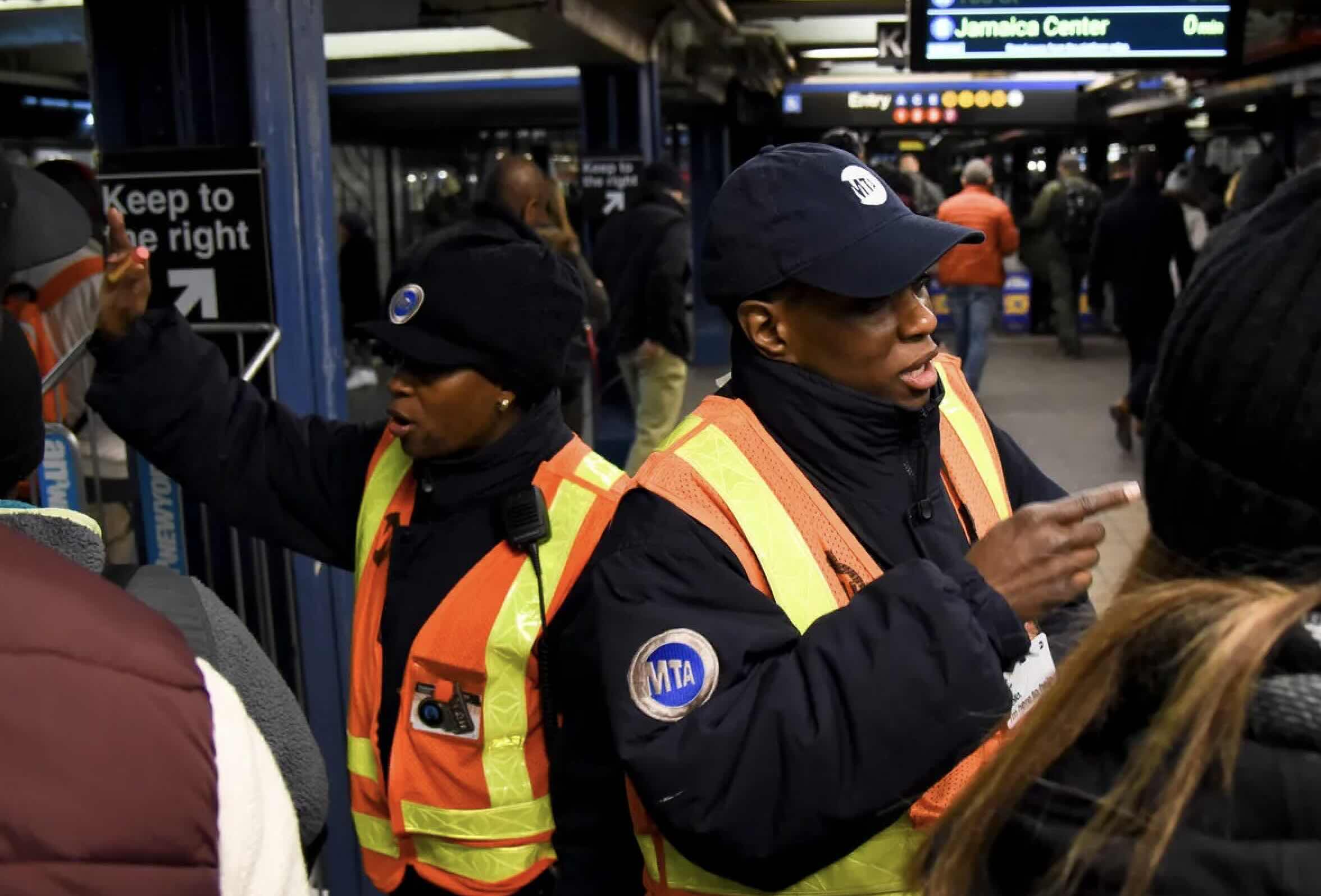
Photo: The New York Times
When we think of critical American infrastructure, we tend to picture power grids, internet cables, and oil pipelines. We rarely picture the 143,200 Black bus drivers and transit operators who move millions of people every single day. Yet the data is unambiguous: Black workers make up approximately 40% of the total public transit workforce in the United States, according to the Mineta Transportation Institute. In major cities like New York, Chicago, and Atlanta, that figure climbs to 45% or even higher. They are not just a demographic within the workforce — they are the workforce.
This is not a matter of pride or representation alone. It is a matter of structural economic power. Because these workers are concentrated in frontline operational roles — driving buses, operating subways, maintaining rail lines — they control the physical circulation of the American labor force. If they all quit, the economy does not just slow down. It collapses. And unlike a typical recession, the damage would be indefinitely unrecoverable.
The numbers tell the story. Black workers make up roughly 13% of the overall U.S. labor force. But they are 36.6% to 37% of all transit and intercity bus drivers, according to the Bureau of Labor Statistics. Across the combined category of transit and school bus drivers, that is nearly 143,200 Black workers — nearly 1 in 3 bus drivers in America. In cities like New York, where Black workers comprise 46% of the MTA workforce, the entire subway and bus system depends on their daily presence.
The Choke Point Economy
Modern cities operate on a "just-in-time" model. Grocery stores keep only a few days of food on shelves. Hospitals staff to exact patient capacity. Corporations expect employees to arrive on precise schedules. There is no buffer. Public transit is the literal choke point through which the entire urban labor force flows. If software workers strike, the company loses revenue but the city keeps moving. If transit workers stop, the city stops. Highways suffocate under gridlock. Hospitals lose their nurses and medical assistants. Airports lose baggage handlers and security staff. Schools close because millions of students rely on municipal transit rather than yellow buses.
Within days, the service economy — restaurants, retail, hospitality — begins to fracture. Low-wage workers cannot afford $80 rideshares to get to their shifts. Small businesses, already operating on thin margins, face a revenue vacuum and begin filing for bankruptcy. Within two weeks, White House economic models project that up to 765,000 workers could be laid off or furloughed. Within a month, the cumulative damage easily passes $10 billion to $20 billion nationally, and the broader U.S. economy tips into a severe recession.
- 40% of the U.S. public transit workforce is Black — vastly exceeding their 12–13% share of the overall labor force.
- 143,200 Black bus drivers are employed across the United States, representing nearly 30% of all bus drivers nationwide.
- Less than 20% of managerial and executive positions in transit agencies are held by Black workers — despite their dominance in frontline roles.
- 2 to 5 years is the minimum time required to replace 40% of the transit workforce, due to federal CDL requirements, background checks, and months of safety training.
Why Recovery Would Be Unrecoverable
A mass walkout is not a strike that ends with a signed contract. It is a permanent rupture. Transit positions require Commercial Driver's Licenses, federal background checks, drug testing, and months of rigorous safety training. You cannot hire temporary gig workers or scabs to operate a subway train. The 1981 PATCO strike — when 11,300 air traffic controllers were fired — took nearly three years to restaff, even with round-the-clock training pipelines. Scaling that to a 40% loss across the entire U.S. transit system means the disruption would last for half a decade.
During that time, transit agencies would face a "death spiral." Deprived of farebox revenue, they would be forced to permanently cut lines and delay infrastructure repairs. Commercial real estate values in downtown centers would plunge as corporations rethink the viability of urban offices. City governments, facing severe budget shortfalls from lost sales and property taxes, would be forced to cut public safety, education, and sanitation. The economy might eventually stabilize, but its growth would be stunted for years — and the communities that depend most on transit would bear the deepest scars.
A Response Doomed to Fail
The government would not stand idle. Within hours of a mass walkout, the response would escalate through a series of emergency measures, each more drastic than the last. But none of them would be able to quickly undo the damage.
Emergency Declarations. Governors and the federal government would immediately declare states of emergency in affected metropolitan areas. This would unlock emergency funding, allow for the suspension of certain procurement rules, and give agencies temporary authority to bypass normal hiring procedures — though the underlying CDL and safety requirements could not be waived.
National Guard Deployment. The government would likely deploy the National Guard to assist with basic logistics and emergency transportation. However, Guard members lack the specialized training required to operate complex heavy rail and subway systems. They could help with bus routes in limited capacity, but they could not replace subway conductors, signal operators, or maintenance crews. Their role would be supplementary at best.
Forced Return-to-Work Laws. Under federal laws like the Railway Labor Act (which governs commuter rail) and state-level Taylor Laws (which ban public employee strikes), the government would attempt to legally compel workers back to work. Courts could issue injunctions, and workers who refused could face mass fines or arrests. But forcing 40% of the workforce back under threat of legal punishment would be logistically impossible and politically explosive — and it would not address the underlying conditions that caused the walkout.
Military and Emergency Transit Operations. In the most extreme scenario, the federal government could federalize transit systems or deploy military transportation units. But the U.S. military does not maintain a standing fleet of transit buses or subway operators. Training military personnel to operate civilian transit systems would take months — time the economy would not have.
Emergency Funding and Concessions. Ultimately, the government's most effective tool would be money. Federal emergency funding could be released to transit agencies to offer immediate wage increases, benefits, and other concessions to entice workers back. But this would be a reactive measure — a bailout after the collapse, not a prevention of it. And it would not address the longer-term labor shortage that would persist for years.
The fundamental problem is that no government response can conjure trained transit operators out of thin air. The law can force workers back to their posts, but it cannot make them operate trains and buses safely. The military can assist with logistics, but it cannot replace the specialized skills of the civilian transit workforce. Emergency funding can address grievances, but it cannot rebuild a workforce that has already dispersed. The government would be left managing a crisis it could not quickly solve — and the economy would pay the price for years.
The Threat Alone Is Catastrophic
In logistics and labor economics, this is known as the "pre-strike penalty." A credible threat of a transit walkout triggers a preemptive cascade of economic damage days before a single worker stops working. Logistics companies halt hazardous materials shipments. Food processors stop loading perishable goods onto transit lines. Commuters pre-book rental cars and parking passes, draining productivity. Hospitality businesses lose bookings as people cancel plans out of fear of getting stranded. The system is so fragile that just forcing a city to look into the abyss of a total standstill is usually enough to bring management to the negotiating table.
This is why Black transit workers hold immense structural power. They are not just employees. They are the literal backbone of the American economy — the ones who move the labor force that moves everything else. Their concentration in frontline roles, their irreplaceability, and their strategic position at the choke points of urban infrastructure give them a form of leverage that few other workers possess. And because the system was designed to rely on a massive, highly synchronized flow of human labor, their absence would not just be a crisis. It would be an unrecoverable one.
The question is not whether they are vital. The data proves they are. The question is whether the nation understands just how much it depends on them — and what it would take to truly value their labor.
No Ads. By Us. For Us.
This article was made possible by readers like you. We hope it inspired you to support Emerald Book, so we can continue producing content like this.
We will never show you ads, sell your data, or require a subscription to consume our content. Your gift helps us keep the truth accessible.
Click the Support button to give a gift of any amount today.
Thank you for making this work possible.