

Emerald Pages
◆
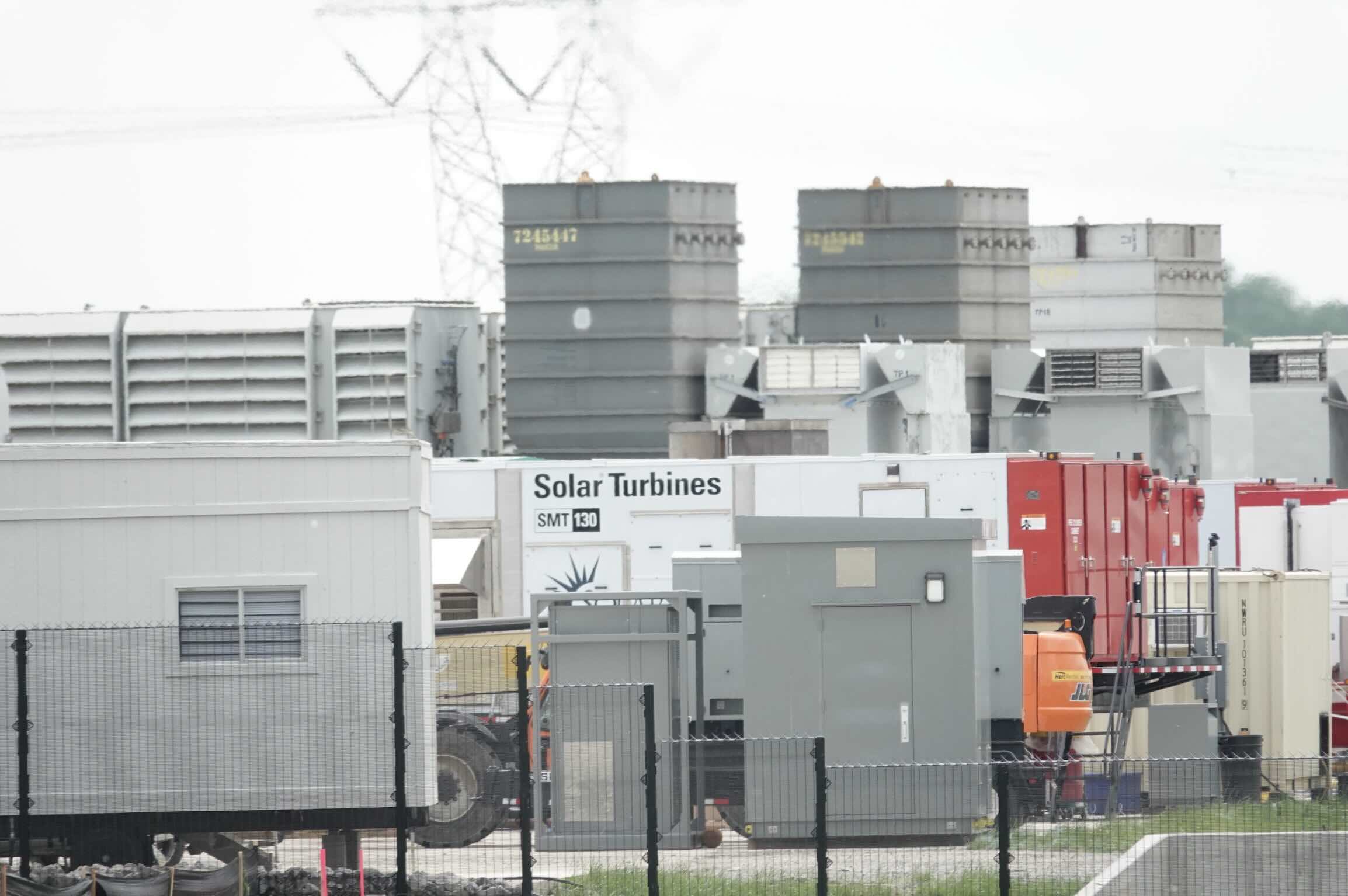
Elon Musk's xAI supercomputer in a predominantly Black Memphis neighborhood. | Photo: Tennessee Lookout
In the chaotic landscape of modern American politics, finding an issue that unites a Trump voter in rural Texas with a progressive activist in Portland feels like a political impossibility. Yet, in town halls, zoning meetings, and state legislatures across the country, an unlikely alliance is forming. The issue is not a culture war or a debate over abstract ideology—it is the massive, windowless, humming warehouse being built at the edge of town. The AI data center has become the rare, unifying force in American politics.
Public polling confirms what local activists have known for months: opposition to AI data centers is a cross-partisan phenomenon. While politicians in Washington, D.C., remain deeply divided over how to balance the geopolitical race for AI supremacy against domestic anger, their constituents are in near-total agreement. According to recent surveys, 69% to 83% of Democrats, 57% to 66% of Republicans, and 71% to 80% of Independents oppose these projects in their communities. This is not a typical partisan split; it is a unified front.
The intensity of this backlash makes more sense when you consider the broader context: Americans don't particularly like AI itself. Pew Research found that 52% of Americans are more concerned than excited about AI, and Gallup reports that 39% believe it does more harm than good. The data center has become a physical target for abstract anxieties about the technology—a building people can protest, unlike a software algorithm.
But the unity is not as simple as it appears. Democrats and Republicans may both oppose data centers, but they are not fighting for the same reasons—and they are not equally motivated. Understanding this asymmetry is key to understanding where the movement is headed, and why it may not hold.
The Core of the Backlash: Personal Harm
The reasons for this unprecedented unity are as practical as they are profound. Voters from all walks of life are furious over skyrocketing electricity bills, immense strain on local power grids, and massive water consumption. They reject the construction of gargantuan, noisy warehouses near residential neighborhoods that provide very few permanent local jobs. The grassroots movement is also fueled by a broader, existential dread over AI automating human jobs—a fear that transcends party lines.
But make no mistake: the engine of this movement is not abstract ideology. It is direct, personal, tangible harm. People are not marching because they have a philosophical objection to artificial intelligence. They are marching because their electric bills have doubled, their wells are running dry, and they cannot sleep at night because of the constant industrial hum from a facility that employs twelve people.
A Shared Outrage, Different Fears
While the opposition is united, the underlying motivations reveal distinct partisan flavors that, remarkably, point in the same direction. For Democrats, the concerns are largely anchored in environmental justice and corporate accountability. They object to the immense water depletion—up to 5 million gallons a day for a single facility—and the way data centers derail clean energy goals by forcing states to delay the retirement of polluting coal and gas plants. They also oppose giving billions in tax breaks to multi-trillion-dollar tech giants while local schools go underfunded.
Republicans, on the other hand, are driven by property rights, populism, and grid security. Conservative voters are deeply concerned about energy independence and stability, viewing data centers as a direct threat that could cause rolling blackouts. They heavily oppose the use of eminent domain to seize private land or force high-voltage power lines across family farms to connect "Big Tech" facilities to the grid. For many, the data center has become the physical manifestation of an unchecked, elite tech industry that is automating away blue-collar jobs.
But here is the uncomfortable truth that the "unlikely alliance" narrative tends to gloss over: Republican opposition is fundamentally more self-interested, more transactional, and more fragile than Democratic opposition. Democrats have a baseline ideological framework—environmental justice, corporate accountability, climate change—that makes their opposition to data centers consistent with everything else they already believe. Republicans, by contrast, are not opposing data centers because they suddenly care about water conservation or the climate crisis. They are opposing them because their electricity bills went up, their land is being seized, and their sleep is being disrupted.
Put simply: Democrats oppose data centers because they oppose what they represent. Republicans oppose data centers because they are being personally inconvenienced by them. That is a crucial distinction.
- The Utility Bill Spike: Residents are furious as utilities pass the multi-million dollar costs of grid upgrades directly onto homeowners. This is the single most powerful driver of Republican opposition.
- "Not In My Backyard" (NIMBYism): Rural and suburban towns reject the replacement of quiet farmland with brutalist, noisy concrete warehouses. Republicans frame this as a property rights issue; Democrats frame it as environmental justice.
- Secret Backroom Deals: Tech giants using shell companies and non-disclosure agreements have left voters of all stripes feeling blindsided and betrayed—a rare point of genuine agreement.
- Eminent Domain Abuse: For Republicans, the seizure of private land for transmission lines is the single most galvanizing issue. It transforms a local zoning dispute into a constitutional fight.
From Local Protests to National Politics
The timeline of this backlash has been hyper-accelerated. What began as a few local skirmishes in 2023—like the recall of port officials in Cascade Locks, Oregon—has erupted into a national political force. By mid-2026, over 500 jurisdictions had enacted severe constraints or outright bans on data centers. In a stunning display of bipartisanship, the U.S. House of Representatives voted 417 to 3 to pass the Ratepayer Protection Act, forcing data centers to pay the full, upfront cost for the power plants and grid upgrades they require.
The political establishment has been caught off guard. Out of public statements made by elected officials opposing data centers, the split is virtually even: 55% are Republicans and 45% are Democrats. Progressive Democrats like Bernie Sanders and Alexandria Ocasio-Cortez have proposed a full federal halt on building data centers. Republican Governors like Texas's Greg Abbott have halted new approvals until grid impact audits are completed. Both sides are rapidly moving away from previous tax incentives to pause or heavily regulate developments.
But look closer at the motivations. When Alexandria Ocasio-Cortez brings jars of contaminated brown water to congressional hearings, she is making a systemic critique. When Greg Abbott halts data center approvals, he is responding to constituent anger about grid reliability—a narrow, practical concern. The former is an ideological position; the latter is a reaction to political pressure.
The Corporate Arms Race Collides with Local Anger
This grassroots fury is now colliding with the trillion-dollar corporate arms race for AI dominance. Tech giants, gripped by a "Fear Of Missing Out" (FOMO), are spending more on data centers than the U.S. spends on new residential housing. But their breakneck speed has bypassed normal local zoning laws, making residents feel like Big Tech is trampling over their communities.
The result is a rare moment of political clarity: while federal leaders debate the geopolitical race for AI, the people they represent have found a common cause in saying "not here, not like this." But that common cause is held together by duct tape. The moment Republicans feel their electricity bills stabilize, or the moment a Republican governor successfully negotiates a data center deal that brings jobs and tax revenue, the alliance will fracture.
Why? Because Republican opposition is fundamentally defensive, not proactive. It is a reaction to harm, not a vision for a different future. Democrats, by contrast, have a positive vision—a future where AI infrastructure is publicly owned, environmentally sustainable, and democratically controlled. That vision may be unrealistic, but it provides a durable foundation for opposition that personal inconvenience does not.
The Fragile Future of the Unlikely Alliance
The AI data center has become an unlikely unifier, bridging the gap between red and blue America. It is a testament to the power of local, tangible concerns—water, power, noise, and money—to overcome the abstract divisions of national politics. The movement is no longer just about stopping a building; it is about demanding a say in the future of one's own community. And in that demand, Americans from all political persuasions are finding a shared voice.
But we should be honest about what this unity is and what it is not. It is not a sign that America has found a new consensus on technology, the environment, or corporate power. It is a sign that when people are personally harmed—when their bills go up, their water runs low, and their land is taken—they will put aside their differences and fight back. That is not a political movement. It is a survival instinct.
The real test will come when the first data center company offers a small town a deal that includes real tax revenue, real jobs, and real infrastructure investments. When that happens, the alliance will be tested. Democrats will demand environmental impact studies and community benefits agreements. Republicans will ask whether the deal is good for their town, their property values, and their electric grid. And the two sides will discover that they were never really fighting for the same thing after all.
That is the paradox of the AI data center backlash. It is the rare issue that unites Americans across the political spectrum—but only because it harms them in ways that are impossible to ignore. The moment the harm stops, or the moment the harm is compensated, the unity will evaporate. And the country will go back to being as divided as it has always been.
No Ads. By Us. For Us.
This article was made possible by readers like you. We hope it inspired you to support Emerald Book, so we can continue producing content like this.
We will never show you ads, sell your data, or require a subscription to consume our content. Your gift helps us keep the truth accessible.
Click the Support button to give a gift of any amount today.
Thank you for making this work possible.