
Emerald Pages
◆
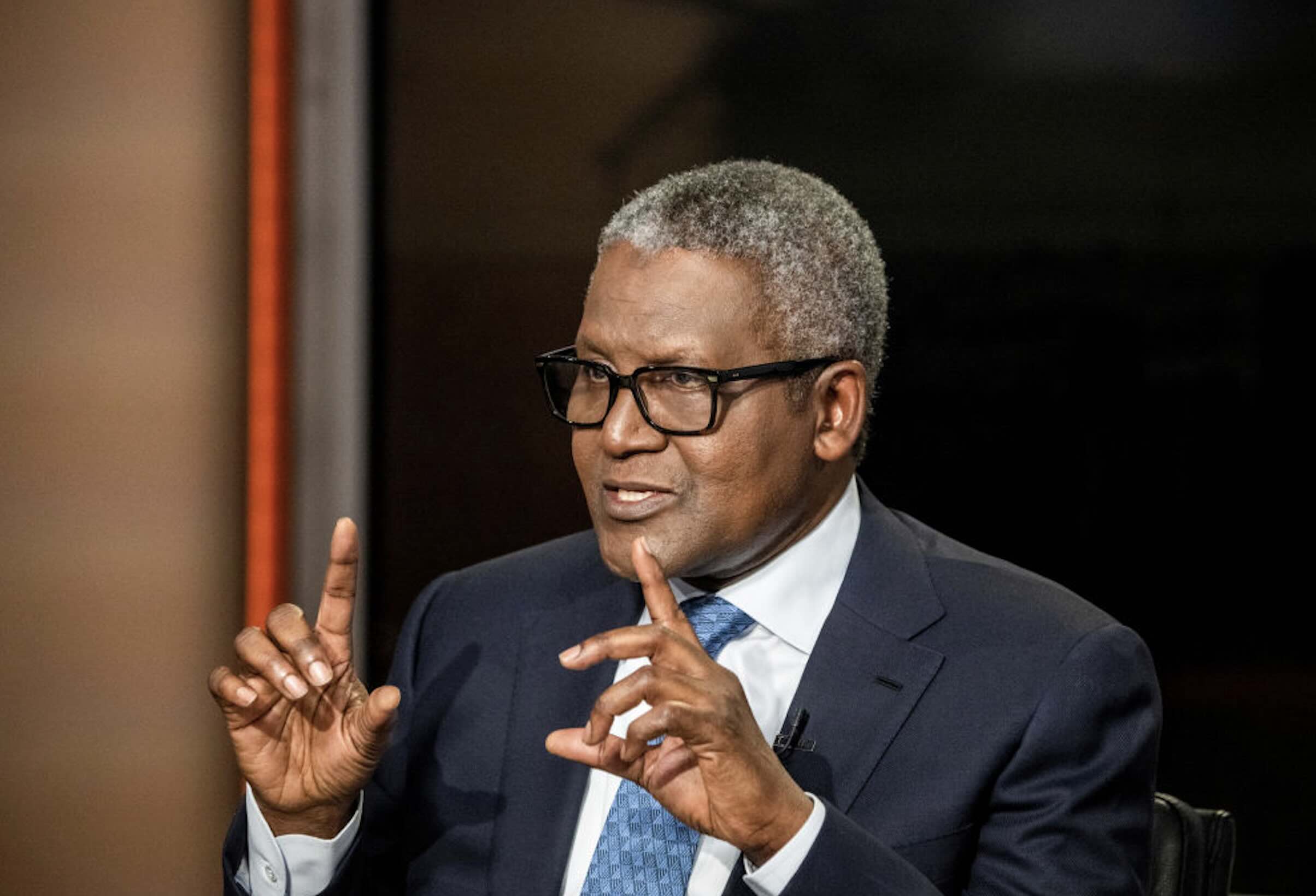
Aliko Dangote, President and CEO of Dangote Group | Photo: Getty Images
Aliko Dangote declared war on a century-old paradox that had crippled his country, and he put every asset he owned on the line to win it. "It was the biggest risk of my life," he told Forbes. "If this didn't work, I was dead." That was not hyperbole. If the $23 billion Dangote Petroleum Refinery failed, cross-default clauses would have triggered a cascade of financial ruin, wiping out the cement, sugar, and flour empire he had spent 45 years building. He risked it all anyway.
For decades, Nigeria—Africa's largest crude oil producer—was trapped in a humiliating cycle. It exported raw crude to Europe and then spent billions importing refined gasoline back. The paradox was not accidental. It was engineered by a powerful "oil mafia" of domestic politicians and international traders who made fortunes keeping Nigeria dependent on foreign fuel.
Dangote announced his plan in 2013. The world laughed. Analysts called it a "white elephant" that would bankrupt him. Costs ballooned. Delays mounted. He ignored it all, diverting every spare dollar from his other businesses into the project and taking on billions in debt.
The Financial Gamble: "All In"
No international engineering firm would take the risk of building a project this scale in Nigeria. So Dangote built it himself. His team dredged 65 million cubic meters of sand from the Atlantic to create solid land in the Lekki swamps. They built a private deep-sea port to unload 3,000-ton distillation columns. They built a 300-megawatt power plant, paved their own roads, and constructed dedicated welding and concrete facilities. He had to build the entire industrial ecosystem from scratch.
To fund the $23 billion project, Dangote took staggering personal risks. He secured $5.5 billion in commercial loans. He sold 3% stakes in his profitable cement business. Most critically, he poured in a $10 billion intercompany loan from his own holding company, anchoring his entire sugar, flour, and cement empire to the refinery's success. If it failed, everything failed.
The resistance was not just financial. Powerful figures restricted his access to local crude, stalled regulatory approvals, and tried to sabotage his supply chains. Dangote fought back by designing the refinery for maximum flexibility. When local crude was unavailable, he bought shipments on the open global market, processed them in Lagos, and sold the refined fuel back to West Africa. It was a crucial hedge against the forces trying to starve him out.
The Vindication: Doubling His Fortune
The gamble paid off in one of the most dramatic wealth explosions in modern history. The refinery began commercial operations in early 2024. By early 2025, Forbes tracked his net worth nearly doubling from $13.4 billion to $23.9 billion. The true spike came in September 2026, when two events formalized the refinery's value.
- The Private Placement: A heavily oversubscribed share sale to institutional investors valued the refinery at over $40 billion.
- The Historic IPO: The refinery launched on the Nigerian Exchange, billed as an "IPO for the people," allowing retail investors to buy shares for as little as $3. It formalized the refinery's valuation at roughly $50 billion.
- The Result: Forbes valued Dangote at $51.3 billion, ranking him #35 in the world—the only African in the top 40. Bloomberg, more conservative on private assets, pegged him at #65 with $35.3 billion.
The performance numbers are staggering. In the first half of 2026 alone, the refinery generated $13.91 billion in revenue and $1.82 billion in net profit. It now supplies over 70% of Nigeria's domestic fuel consumption, slashing the country's fuel imports from Europe from 400,000 barrels per day to just 83,000. Dangote is no longer just the "cement king." He is a global oil tycoon with geopolitical leverage traditionally reserved for OPEC ministers.
The wealth explosion was not limited to oil. Dangote Cement generated $1.79 billion in revenue and $456 million in net profit in H1 2026, controlling 60–65% of the Nigerian market. Dangote Sugar brought in $297 million in revenue. NASCON, his salt and seasoning unit, recorded ₦152.6 billion Naira in revenue in 2025. Cumulatively, his core operations are on pace to generate over $30 billion in annualized revenue. His companies hold nearly $5 billion in cash, with the refinery alone holding $4.27 billion.
The Structure of an Empire
Dangote's empire is a highly integrated conglomerate designed for strict family control. At the very top sits Greenview International Corporation, a little-known entity registered in the Cayman Islands. IPO disclosures revealed that Greenview owns 99.9% of Dangote Industries Limited (DIL) and directly owns 90% of the Dangote Oil Refining Company. Below Greenview, DIL serves as the Nigerian-based umbrella providing governance and logistics for all subsidiaries.
The empire is split into sector-specific units, each publicly listed on the Nigerian Exchange once it reaches scale. Dangote Cement Plc is the original engine of his wealth and Africa's largest producer. The Dangote Petroleum Refinery & Petrochemicals FZE is the newest and largest asset, with ownership split across DORC (65.83%), DIL (14.90%), and Greenview (6.5%). State-owned NNPC retains 6.82%, with the rest held by public float. Dangote Sugar Refinery and NASCON Allied Industries form the consumer food pillar, while Dangote Fertiliser produces 3 million tons of urea and ammonia annually. Through Dangote Sugar, he commands 80% of the Nigerian sugar market.
While Aliko Dangote remains the ultimate controlling entity, the group operates with decentralized boards and independent directors. To ensure the empire outlives him, he has placed his daughters—Halima, Mariya, and Fatima—in major executive positions, with Fatima serving as Group Executive Director for Commercial Operations across the entire Oil & Gas sector.
The Man Behind the Bet
Dangote's rise was forged over 45 years through family pedigree, political maneuvering, and high-stakes bets. He began in 1977 with a $3,000 loan from his grandfather to trade rice and sugar. But he was born into the Dantata family—one of West Africa's wealthiest merchant dynasties—giving him access to elite credit lines and political credibility that ordinary entrepreneurs could never access.
His real genius was aligning his business goals with the political survival of Nigeria's leadership. In the early 2000s, he convinced the government to ban imports of finished cement, sugar, and flour, giving tax holidays only to companies that built local factories. Because Dangote already had the capital to build those factories, the bans essentially criminalized his foreign competitors overnight. It was a masterclass in using government policy to build an unassailable competitive moat.
In 1999, he pivoted from trading to manufacturing, building local refineries for sugar and buying state-owned cement plants during privatization. He out-built and out-scaled every rival. The final piece was the refinery—a decade-long gamble that critics called a "white elephant." When it opened, it structurally shifted his wealth from a regional African fortune into a global energy empire. He had built a moat no competitor could cross.
What Comes Next
Dangote's success has fundamentally altered West Africa's economic landscape. Nigeria, for the first time, is refining its own oil on a massive scale, transitioning from net importer to net exporter. Dangote now has leverage previously reserved for OPEC ministers, influencing fuel prices and energy security across the region.
The refinery's IPO is expected to close on October 13, 2026, seeking to raise approximately $1.6 billion. Full processing could add up to $22.9 billion more to his profile on Bloomberg's index. His "Vision 2030" roadmap aims to expand the conglomerate into a $100 billion revenue empire, with a potential U.S. refinery listing under consideration.
But for all the numbers, the core story remains the same. Aliko Dangote bet his entire existence on a single, audacious vision to industrialize his nation, and he won. The oil mafia could not stop him. The skeptics were proven wrong. The $23 billion gamble paid off. And Nigeria, for the first time in its history, is refining its own oil. It is a story of risk, resilience, and the kind of all-in gamble that cements legacies.
No Ads. By Us. For Us.
This article was made possible by readers like you. We hope it inspired you to support Emerald Book, so we can continue producing content like this.
We will never show you ads, sell your data, or require a subscription to consume our content. Your gift helps us keep the truth accessible.
Click the Support button to give a gift of any amount today.
Thank you for making this work possible.