

Emerald Pages
◆
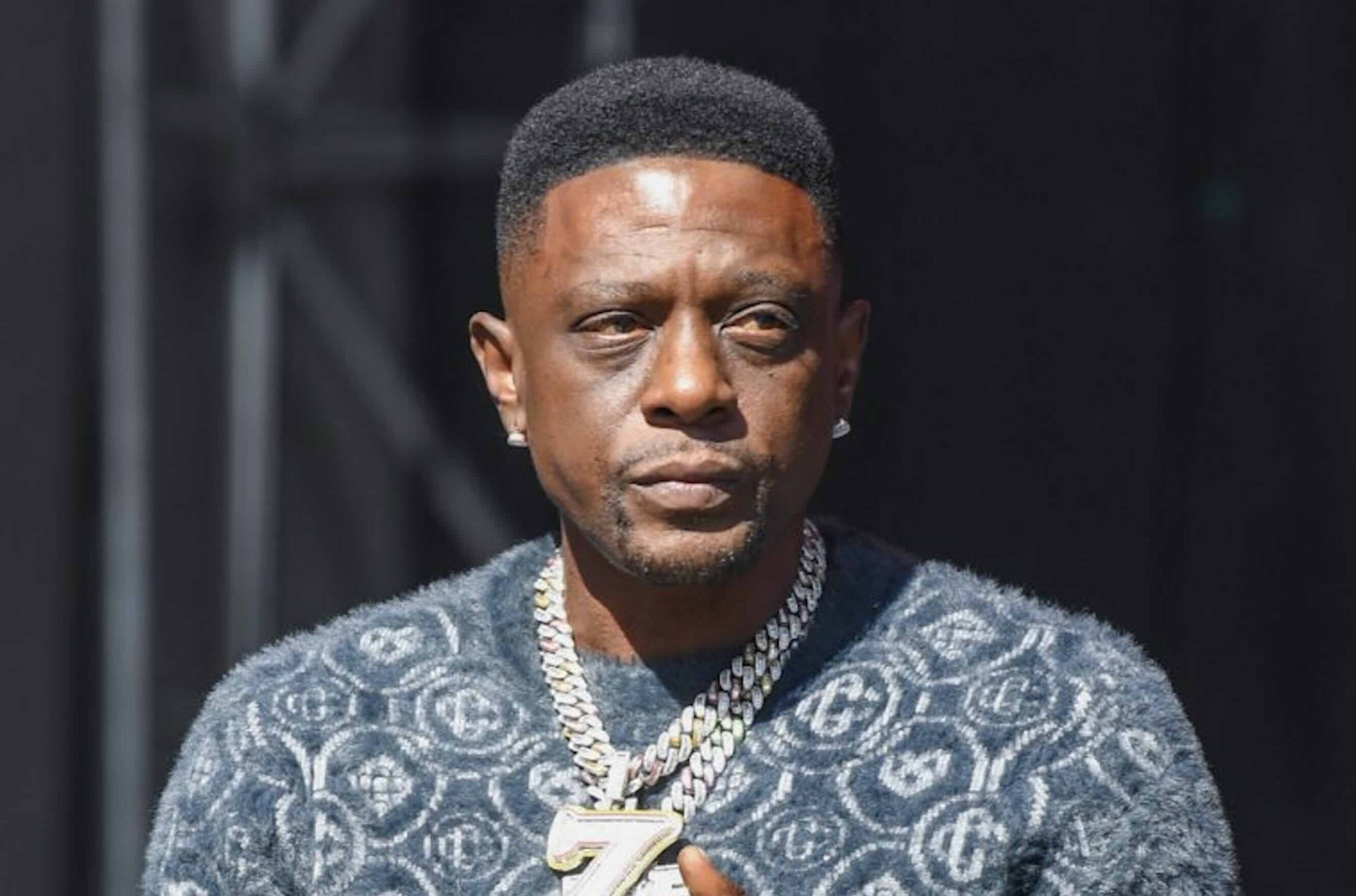
Photo: Shutterstock
When news broke that Boosie Badazz had paid $600,000 to a pair of political operatives in a failed bid for a presidential pardon, the immediate reaction from many was confusion. Why would a rapper with a reported net worth in the millions hand over such a massive sum to Jacob Wohl and Jack Burkman—two men with a long, documented history of political fraud? The answer lies not in naivety, but in desperation. Boosie wasn't trying to buy influence. He was trying to buy his freedom back.
The root of that desperation is a 2023 federal gun conviction. Stemming from an Instagram Live stream where he was seen with a firearm during a music video shoot in San Diego, the charge—felon in possession of a firearm—carried consequences that went far beyond the courtroom. Because of a previous felony record dating back to a 2011 marijuana and gun conviction, federal law barred him from possessing a firearm. His defense team aggressively fought the case, and a judge even briefly dismissed it in 2024 based on evolving Second Amendment precedents. But federal prosecutors immediately refiled the charges, leading a fatigued Boosie to plead guilty to finally end the costly legal battle.
In January 2026, he was sentenced to three years of supervised release, 300 hours of community service, and a $50,000 fine. He had avoided prison, but he had walked into a different kind of cage. For an independent artist like Boosie, federal probation is a financial death sentence. He owns his masters, runs his own label (Bad Azz Music Syndicate), and has built a lucrative career on relentless touring and live performances. But his probation terms barred him from leaving the country. As he explained in interviews, his music is loved globally—in Europe, Africa, and the Caribbean—and those international markets represented his highest-earning potential. A single overseas festival run could net him between $750,000 and $1.5 million. A presidential pardon would have wiped his record clean, lifted the travel ban, and unlocked that revenue stream immediately.
The Receipts: Demand Was Never the Question
Boosie didn't guess that there was demand for his music. He had concrete, multimillion-dollar proof. In mid-2026, when critics on social media accused him of being broke or irrelevant, he went viral by posting a $959,999.95 physical check he received from his independent music distribution—a payout for a single period that didn't even include secondary royalties like SoundExchange. Even without a major label, he draws roughly 3.7 million monthly listeners on Spotify, with classics like "Wipe Me Down" and "Set It Off" still pulling in tens of thousands of streams daily.
His independent film My Struggle racked up 26 million streams on platforms like Tubi. He openly bragged that investing $150,000 into the project flipped into a $6.5 million return. And his catalog's value was confirmed by none other than Rod Wave, who reportedly offered a $100,000 settlement over an unauthorized sample of Boosie's song "Long Journey"—proving that even modern A-list hitmakers recognize the worth of his music.
The Domestic Tightrope
Even within the United States, Boosie's life on supervised release was a constant legal minefield. To his credit, he didn't stop working. Since being placed on federal probation, he successfully booked and performed at over 50 U.S. shows. But every single domestic performance required his legal team to submit travel requests to his federal probation officer for approval. A minor clerical error over a trip to Houston led federal officials to file a violation to revoke his release and send him back to prison—a move he only survived by producing email receipts proving the trip had been approved. His career, and his freedom, hung on paperwork.
The fear of slipping up was compounded by the threat of new charges. A separate aggravated assault charge in Houston in May 2026 prompted federal authorities to move to revoke his supervised release. A pardon would have insulated him entirely, removing the federal microscope and the constant risk of re-incarceration.
- International Touring Ban: Federal probation barred him from leaving the U.S., cutting off his most lucrative revenue stream—$50,000 to $100,000+ per overseas show.
- Probation Hassles: Every domestic show required pre-approval from a probation officer, with a minor mix-up nearly sending him back to prison.
- New Legal Threats: A May 2026 assault charge in Houston triggered a federal move to revoke his supervised release.
- The Math of Freedom: He viewed the $600,000 fee as a business investment to unlock millions in future global touring income.
He Tried the Right Way First
What makes the scam even more tragic is that Boosie had already taken legitimate steps to seek clemency. He sat down directly with the official White House pardon czar to explain his case. He initially hoped that criminal justice advocate Alice Marie Johnson—whose own life sentence was commuted by Donald Trump in 2018—would help advocate for him. He knew Trump had previously pardoned rappers like Lil Wayne and Kodak Black. In his mind, if they could get relief, he could too.
But after his gun case was dropped and then aggressively refiled, a panicked Boosie and his lawyers began looking for a firm that could mount a major political pressure campaign. That is when they crossed paths with J.M. Burkman & Associates, the legally registered Washington D.C. lobbying firm operated by Jacob Wohl and Jack Burkman. The operatives targeted Boosie's vulnerability by pitching themselves as ultra-connected Trump loyalists who could bypass the slow-moving Department of Justice review process. They sent a paper trail of texts to Boosie's attorney falsely claiming they had already recruited massive political figures—like Speaker of the House Mike Johnson and Trump's close assistant Natalie Harp—to personally slide the pardon onto the President's desk.
Even the Lawyers Got Fooled
Boosie had a multi-person legal team handling different aspects of his troubles. His primary defense attorney in the federal gun case was Meghan Blanco, a high-profile white criminal defense lawyer based in California. She had aggressively fought the feds in San Diego, initially got the case thrown out before it was refiled, and ultimately negotiated the plea deal that kept him out of prison. It was Blanco who received the deceptive, fabricated text updates from the scammers claiming the White House had signed the pardon. When she verified with the White House directly, she discovered the horrifying truth: no pardon application had ever been received.
Jill Craft, a well-known white civil litigation attorney based in Baton Rouge, was later hired specifically to handle the arbitration process to claw back the $300,000 refund. Even with their extensive legal backgrounds, they were handed a contract by a legally registered D.C. lobbying firm. The agreement stated that Boosie would pay $600,000 upfront, but if a presidential pardon wasn't secured by January 31, 2026, they contractually owed him a $300,000 refund. Boosie's legal team viewed this partial refund clause as a financial safety net, not realizing the duo was already completely broke and planning to use bankruptcy protection to avoid ever paying it back.
Who Are Wohl and Burkman?
Jacob Wohl and Jack Burkman have been running high-profile scams and media hoaxes together for nearly a decade. Wohl joined Burkman's lobbying firm in 2017. They initially gained notoriety by staging bizarre, easily debunked press conferences to smear political figures—fabricating sexual assault allegations against Special Counsel Robert Mueller in 2018 and Pete Buttigieg in 2019. In 2020, they orchestrated a massive, illegal robocall campaign targeting predominantly Black neighborhoods to scare people away from mail-in voting. This landed them a criminal conviction for telecommunications fraud in Ohio, multiple state prosecutions, and millions of dollars in civil fines.
Facing crushing financial debt and bankruptcy from their court fines, the duo pivoted to the lucrative presidential pardon industry around late 2025. In November 2025, they reportedly charged former nursing home tycoon Joseph Schwartz nearly $1 million to lobby for his pardon. Right after that, they ensnared Boosie Badazz, extracting $600,000 upfront. Their operation finally imploded publicly in September 2026 when a 60 Minutes investigation caught them on a hidden camera trying to charge an undercover client $300,000 for a pardon package.
When confronted, Burkman cockily stated, "We don't work for free. There's nothing corrupt about it. It's legal lobbying and advocacy." They claimed they ran a massive advocacy campaign and therefore "earned" the money—despite the White House confirming they never even submitted an application. The White House completely distanced itself from the brokers, issuing a statement warning that "anyone spending money to lobby for pardons is foolishly wasting their money."
The Aftermath
Boosie took the dispute to legal arbitration to claw back his money. But Wohl and Burkman refused to return the $300,000 refund—reportedly citing bankruptcy—and their legal team has argued in court that the refund contract was never officially finalized or signed. The situation gained massive public attention after being featured on a 60 Minutes investigation into "pardon brokers." Following the broadcast, Boosie expressed frustration on social media that the program edited out key context from his hour-long interview, including his initial direct discussions with the White House pardon czar before he hired the two operatives.
The $600,000 was an act of financial desperation from an artist who could see the money waiting for him overseas, and who was legally forbidden from going to collect it. Boosie wasn't trying to become famous again. He was trying to unlock the international markets he was banned from entering—and he paid a steep price for trusting the wrong people.
No Ads. By Us. For Us.
This article was made possible by readers like you. We hope it inspired you to support Emerald Book, so we can continue producing content like this.
We will never show you ads, sell your data, or require a subscription to consume our content. Your gift helps us keep the truth accessible.
Click the Support button to give a gift of any amount today.
Thank you for making this work possible.