

Emerald Pages
◆
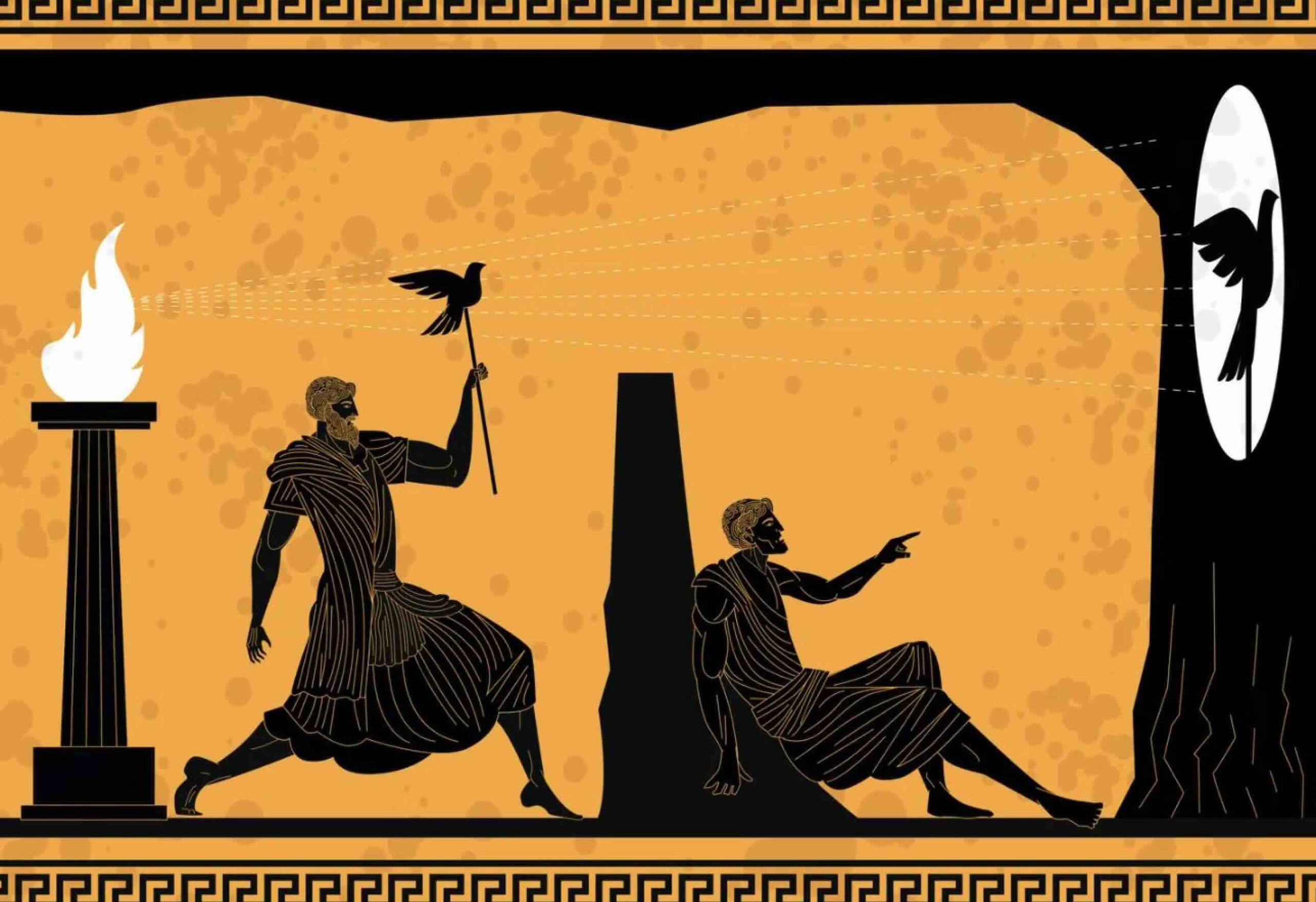
Photo: 1000 Word Philosophy
In 1647, a Jesuit priest named Baltasar Gracián published a book of aphorisms called The Art of Worldly Wisdom. Among its 300 maxims, one stands out as eerily prophetic for our digital age: "Ignorance never gets beyond wonder." Gracián was warning the intellectually curious not to be like "the mob"—the easily distracted crowd that gapes at spectacle without ever bothering to understand how the trick works. Four centuries later, his warning has become the blueprint for the most powerful attention-harvesting machine ever built.
Social media platforms—TikTok, Instagram, X, and Facebook—have turned Gracián's observation into a multibillion-dollar industry. They have engineered a "wonder drug" that keeps users in a permanent state of passive amazement, endlessly scrolling past fragments of information without ever stopping to read, analyze, or truly understand. The result is a population that is not getting dumber, but is becoming profoundly less interested in understanding—trapped in a loop where curiosity never matures into knowledge.
The philosopher's original meaning was simple: the crowd stays trapped in a state of open-mouthed awe, never moving past superficial questioning to find real answers. The wise person, by contrast, looks past the spectacle to understand the mechanics beneath. Today, the "trick" is not a street magician or a court politician—it is the algorithm, the infinite scroll, and the behavioral psychology embedded in every social media app.
The Architecture of the Trap
Social media companies did not stumble into this arrangement. They hired behavioral psychologists and neuroscientists to design platforms that deliberately prevent users from getting beyond wonder. Every feature is optimized to keep you scrolling, because your unresolved curiosity is their primary source of revenue. If you ever felt satisfied, understood a topic completely, and closed the app, the platform would lose money.
Consider the Infinite Scroll. In the physical world, media has natural stopping cues—a chapter ends, a magazine runs out of pages, a film plays credits. Apps deliberately destroyed these boundaries. Before your brain can process what it just saw—before you can pause to analyze or get beyond the wonder—the next piece of content is already loading. Your brain remains in a state of continuous reaction, blocking the reflection required for actual comprehension.
Then there is the variable reward schedule, a mechanism borrowed directly from slot machines. When you pull down to refresh a feed, you never know what you will get—sometimes boring content, sometimes a shocking headline, sometimes a hilarious video. This unpredictability floods your brain with dopamine, keeping you in a state of anticipation. You keep scrolling not because the content is good, but because you are wondering if the next post will be better. Wonder becomes a permanent treadmill.
The War on Reading
If infinite scroll is the bait, then video is the final lock on the cage. Major platforms have systematically shifted from text to short-form video because video requires almost zero cognitive effort to consume. When you read, you control the pace—you can pause, re-read, cross-reference, and think deeply. Reading forces your brain to generate its own mental images and construct logic. Video, by contrast, dictates the pace for you, bombarding your senses with images, jump cuts, and music that leave no bandwidth for critical analysis.
Video creates what researchers call the illusion of competence. You can sit back and listen to someone explain a complex geopolitical or scientific issue in 90 seconds. Because it is easy to consume, your brain confuses ease of consumption with actual understanding. You finish the video feeling smart and worldly—the feeling of wonder—but if someone asked you to explain the concept deeply five minutes later, you likely couldn't. You haven't learned; you've merely been entertained.
The economic incentive is staggering. Video commands vastly higher ad rates than text. Algorithms are explicitly programmed to bury text-heavy posts and amplify video, because video makes more money per second of your attention. Companies have engineered an environment where reading a text link feels like a chore, while sinking into a video rabbit hole feels effortless.
The Walled Gardens
Even when a user does encounter text, the platforms fight to keep them from escaping. This is what tech companies call building a "walled garden." When you click a link on Instagram, TikTok, or Facebook, it doesn't open your default browser. It opens a clunky, stripped-down browser inside the app—one that loads slowly, messes up formatting, and feels frustrating to use. Subconsciously, your brain associates leaving the app with annoyance, making you more likely to close the article and return to scrolling.
- External links are suppressed — Algorithms actively hide posts that include direct links to outside sources, forcing creators to play hide-and-seek with phrases like "link in bio."
- Preview cards are killed — Platforms have stripped links down to tiny, unappealing text URLs, making them look boring or suspicious to lower the chance you will click.
- Text is replaced with frictionless formats — Instead of letting users read a blog post, platforms encourage creators to put the text directly into a video caption or an in-app slide deck.
They want to absorb all external human knowledge, chop it into bite-sized pieces, and serve it to you on their terms. The moment you leave the app to read a long-form article, they stop making money off you. So they make leaving as difficult and unappealing as possible.
The Institutional Irony
Perhaps the most perverse layer of this system is the weaponization of the term "misinformation." Media companies, corporate algorithms, and political organizations frequently use the label not as a tool for objective truth, but as a competitive weapon to flag, suppress, or shadowban independent content creators and alternative viewpoints that threaten their monopoly on attention. By labeling anything outside their ecosystem as dangerous, they trick the public into staying within their "safe" walled gardens.
The rise of institutional fact-checking often creates a false sense of security. When an app puts a warning label on a post, the user is conditioned to think, "Ah, the platform is looking out for me, so everything else on my feed must be true." This lowers natural skepticism. The platform effectively tells the user: "Don't worry about getting beyond wonder on your own; we will do the thinking for you."
Breaking the Spell
By recognizing this architecture for what it is—a deliberate, multi-billion-dollar engineering effort to rewire your attention—you have already begun to break its power.
The antidote is not willpower alone. It is a deliberate restructuring of your information environment. It means reclaiming the cognitive space for deep reading. It means choosing to read a book instead of watching a 60-second summary. It means recognizing that choosing to read—and acknowledging how hard the system fights to stop you—is itself an act of resistance.
Gracián warned that ignorance never gets beyond wonder. Today, that warning is the single most important description of our digital condition. The "mob" he wrote about is no longer standing in a town square watching a street magician. They are staring at screens curated by multibillion-dollar entities whose sole purpose is to keep them there—forever wondering, never knowing.
No Ads. By Us. For Us.
This article was made possible by readers like you. We hope it inspired you to support Emerald Book, so we can continue producing content like this.
We will never show you ads, sell your data, or require a subscription to consume our content. Your gift helps us keep the truth accessible.
Click the Support button to give a gift of any amount today.
Thank you for making this work possible.