

Emerald Pages
◆
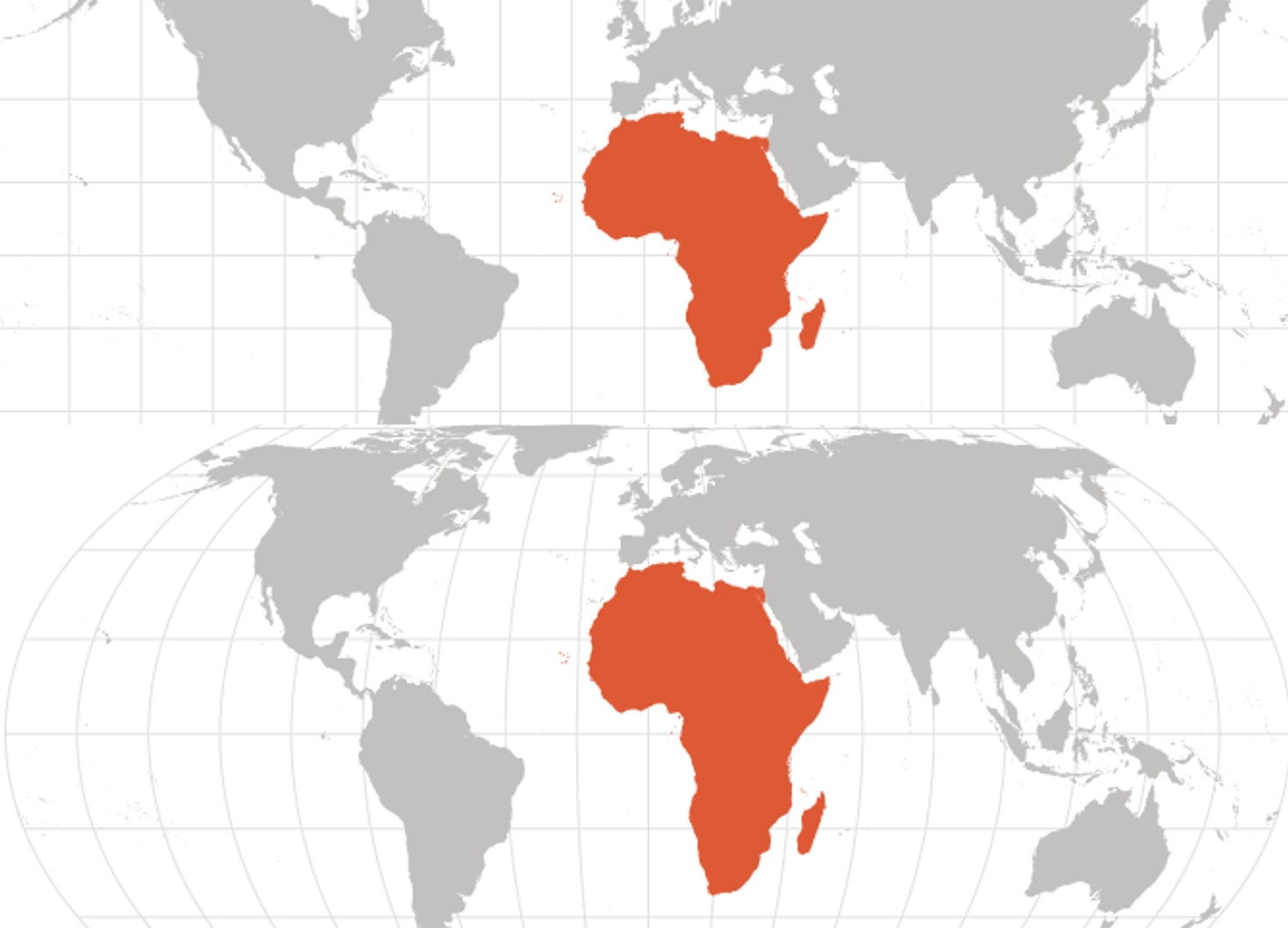
Photo: The New York Times
On Friday, the United Nations General Assembly voted 164 to 1 to adopt a new world map projection, finally reflecting the true size of Africa. The only country standing in opposition to the "Correct the Map" initiative? The United States.
The resolution, championed by Togo on behalf of the African Group, calls for transitioning away from the 500-year-old Mercator projection—which distorts landmasses near the poles and shrinks areas near the equator—toward an equal-area representation. The BBC reported that the U.S. called the debate a "distraction" from world peace, but the vote represents a single, consistent obsession of the U.S.: avoiding reparations.
This is not an isolated incident. In March 2026, the U.S. was one of only three countries (joining Israel and Argentina) to vote against a Ghana-led resolution declaring the transatlantic slave trade the "gravest crime against humanity." The U.S. Mission to the U.N. explicitly rejected what it called a "legal right to reparations for historical wrongs."
The Map as a Legal "Trojan Horse"
The U.S. State Department labeled the recent map initiative part of a "radical ideological project." But the issue is not the geometric math showing Africa's true size. The issue lies in the words attached to it.
The "Correct the Map" resolution introduced concepts like "cognitive justice," arguing that the Mercator map carried "unfair connotations of power and privilege." To U.S. lawyers, this language is a legal foothold. The Washington Post noted that U.S. representatives argued the resolution mocked the purpose of the U.N., but internally, the threat is precedent.
If the U.N. can successfully pass a resolution telling the U.S. how to print its maps to achieve "justice," the next logical step is resolutions telling the U.S. how to distribute its federal budget to achieve justice. By voting "no," the U.S. signals it rejects the entire framework that could lead to financial liability.
- Blocking Customary International Law: Voting "no" prevents terms like "historical justice" from entering international legal doctrine, which human rights lawyers could use in court.
- Defending Sovereign Immunity: A "no" vote reinforces the principle that no international body can dictate U.S. domestic budgets or laws.
- Denying Moral Leverage: The U.S. sees these resolutions as cynical efforts to build momentum for the reallocation of modern resources.
A Historical Pattern of Protection
This behavior is not new. During the Cold War, the U.S. repeatedly blocked U.N. sanctions against apartheid South Africa to protect a geopolitical ally. The pattern of U.S. voting behavior on resolutions concerning global Black interests is driven by specific policy positions.
Historically, U.S. opposition in this arena centers around three recurring topics: combatting global racism and the Durban Declaration (which the U.S. has repeatedly boycotted or voted against due to First Amendment free speech concerns); reparations and legal liability (the primary reason for opposing the March 2026 resolution on slavery); and decolonization (prioritizing Cold War alliances over African sovereignty).
Deputy U.S. Representative Yaryna Ferencevych argued that accepting these resolutions would create an "unmanageable international precedent." For the U.S., the cost of losing the moral argument (by being the lone dissenter) is vastly outweighed by the cost of accepting the legal argument.
The Incentive Structures at Play
Nation-states and the politicians who lead them do not operate in a vacuum; they respond directly to intense internal and external pressures. Several powerful incentive structures lock these voting patterns into place.
- Domestic Political Incentive: Agreeing to a U.N. resolution that opens the door to reparations or international legal oversight is a political non-starter in the United States. No administration wants to be accused of giving billions in American taxpayer dollars to foreign entities—unless that country is Israel.
- Legal Risk Mitigation: Government attorneys are incentivized to treat every U.N. document like a binding corporate contract. They aggressively block any phrase that could eventually create a legal precedent, safeguarding the state's treasury from future litigation.
- Superpower Incentive: The U.S. does not rely on the U.N. for its security or economic survival. Its massive military and control of the global financial system mean it faces almost zero practical penalties for standing alone on a vote.
The Global Shift Continues
While the U.S. will likely keep the incorrect map for its federal agencies, the rest of the world is moving on. The 164 countries that voted "yes" will phase out the Mercator projection in schools and institutions. Al Jazeera reported that France will immediately transition to a more accurate representation. Even tech companies like Google have already switched their desktop interface to a 3D globe to eliminate Mercator distortions.
Ultimately, whether you view this as a necessary defense of national sovereignty or a blatant refusal to acknowledge historical wrongs, the U.S. position is clear: protecting the state's treasury and legal liability from international claims remains a higher priority than justice for Black people, no matter how isolated the nation becomes.
No Ads. By Us. For Us.
This article was made possible by readers like you. We hope it inspired you to support Emerald Book, so we can continue producing content like this.
We will never show you ads, sell your data, or require a subscription to consume our content. Your gift helps us keep the truth accessible.
Click the Support button to give a gift of any amount today.
Thank you for making this work possible.