

Emerald Pages
◆
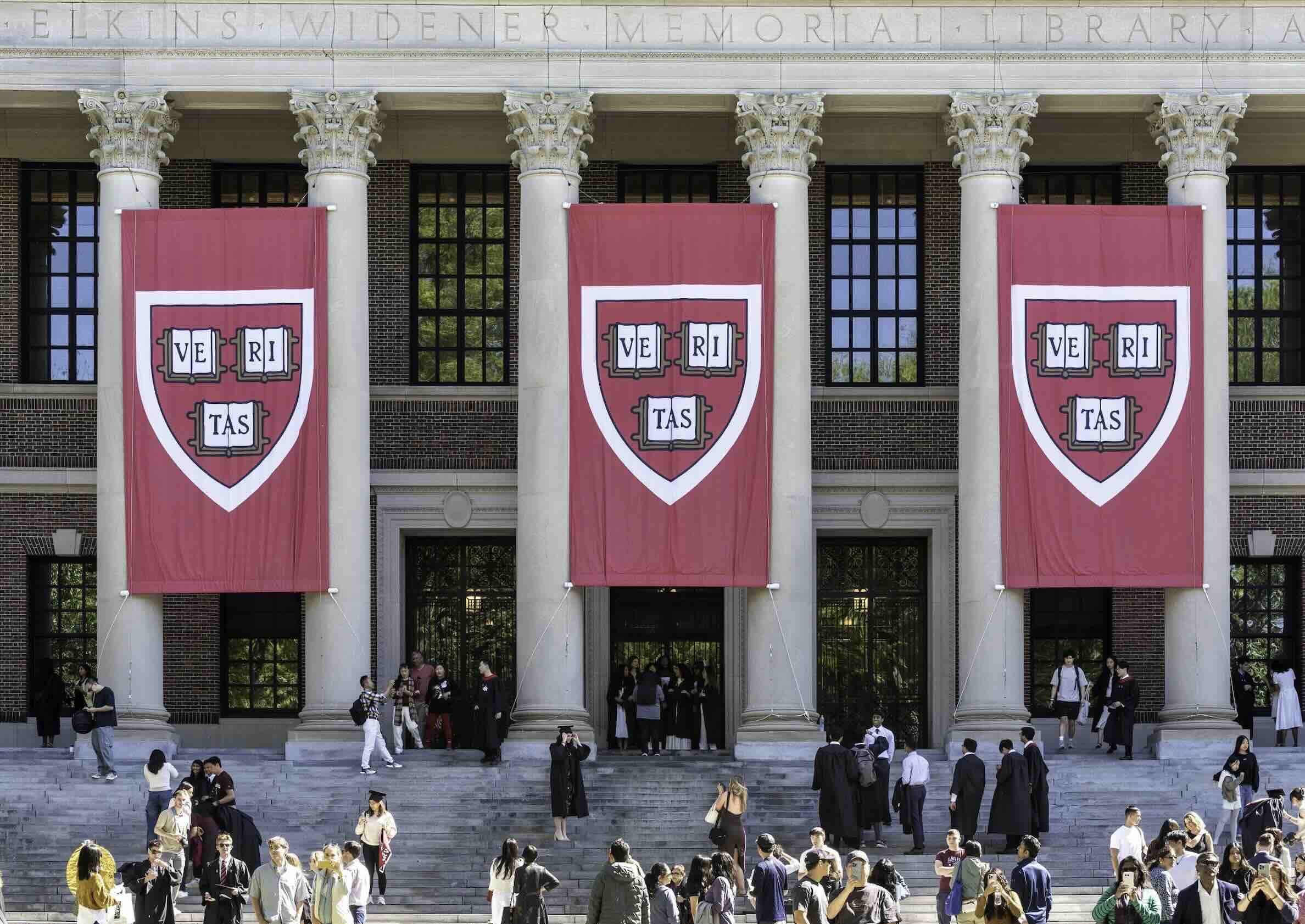
Photo: Getty Images
When you look at Harvard University today—its manicured lawns, its historic brick buildings, its $53 billion endowment—you are looking at the product of stolen labor. The university's rise from a small colonial college to the wealthiest academic institution in the world was not built by brilliant academics alone. It was built on the backs of enslaved African and Indigenous people who cleared the land, cooked the meals, built the infrastructure, and generated the wealth that made everything else possible.
Harvard's own landmark 2022 report, "Harvard & the Legacy of Slavery," confirmed what historians had long suspected: the university was deeply intertwined with slavery from its founding in 1636 well into the 19th century. The report documented at least 1,613 enslaved individuals connected to the university—a number that researchers admit is almost certainly an undercount.
To understand how enslaved people built Harvard's wealth, you have to look at three distinct categories: literal campus labor, financial foundations, and intellectual justification—each of which contributed to the university's rise.
Literal Campus Labor: Building the Physical Harvard
From Harvard's inception until slavery was abolished in Massachusetts in 1783, enslaved people performed the grueling physical labor required to turn a wilderness settlement into a functioning college.
Clearing the Land and Building Infrastructure: Enslaved people cleared the land that Harvard occupies today. They hauled timber and stones, built the earliest campus structures, and maintained the grounds where students lived and studied. The university simply would not have had the physical infrastructure to operate without this uncompensated labor.
Daily Campus Operations: Enslaved individuals cooked meals, cleaned dormitories, served Harvard presidents, and took care of daily campus operations. They chopped firewood, carried water, tended to livestock, and groomed the university grounds—tasks essential to keeping the institution running.
Living in University Housing: Enslaved people like Venus, Bilah, and Juba were forced to live and work inside Wadsworth House, the official residence of several early Harvard presidents. They were not just laborers; they were human property housed within the university's walls, their existence a constant reminder of the institution's reliance on bondage.
Financial Foundations: The Money That Built Harvard
The physical labor of enslaved people was only part of the story. Harvard's financial rise was fueled by capital derived directly from the slave trade and slave labor. Without this wealth, the university would not have survived economic crises, let alone become a global powerhouse.
During the 18th and 19th centuries, a vast portion of Harvard's major donations came from merchants who made fortunes from Caribbean sugar plantations, Southern cotton, and the transatlantic slave trade. Donors like Benjamin Bussey—a sugar, coffee, and cotton merchant—left Harvard estates that funded campus expansions. The Arnold Arboretum, one of Harvard's prized properties, was built on land Bussey acquired through slave-generated wealth.
In the 18th century, the Royal family—who accumulated immense wealth through brutal slave plantations in Antigua—donated land to Harvard. The sale of this land directly funded the university's first professorship of law, effectively seeding Harvard Law School. The school's very existence is a product of Caribbean slavery.
For roughly a century, Harvard operated as a financial lender, generating significant income by issuing loans to Caribbean sugar planters and investing heavily in New England textile mills that relied entirely on slave-produced Southern cotton. The university was not a passive beneficiary of slavery—it was an active participant in the slave economy.
- At least 259 Harvard presidents, deans, board members, and faculty members were slaveholders.
- This includes five early Harvard presidents—including Increase Mather and Benjamin Wadsworth.
- The university's ties to slavery spanned 229 years (1636–1865).
- Harvard's modern endowment of $53 billion was seeded by slave-generated wealth.
- The $100 million redress fund represents less than 0.2% of Harvard's total wealth.
Intellectual Justification: Weaponizing Harvard's Prestige
Harvard didn't just passively benefit from slavery; it actively worked to protect and justify it. During the 19th century, prominent Harvard faculty members and presidents used the university's prestige to promote "race science" and eugenics, providing the intellectual and legal cover that slave owners needed to keep human beings in chains.
Harvard professor Louis Agassiz championed polygenism—the false theory that different races were separate biological species. He argued that white people were naturally superior, while Black people were inferior. Southern plantation owners celebrated Agassiz and used the "Harvard science" stamp of approval to justify slavery as a natural necessity.
In 1850, Agassiz traveled to a South Carolina plantation and forced seven enslaved men and women—including a man named Renty and his daughter Delia—to strip naked so he could take detailed photographs of their bodies for "further study." These images, known as the Zealy daguerreotypes, were used to promote racist pseudo-science.
In 1850, Harvard Medical School admitted its first three Black students, including the legendary Black nationalist Martin Delany. White students protested, claiming that sharing a classroom with Black men diminished their status. The Dean of the Medical School, Oliver Wendell Holmes Sr., caved to the pressure and expelled the Black students, declaring that their presence was "highly injurious" to the school.
Even after slavery ended, Harvard transitioned smoothly into championing eugenics. Harvard's longest-serving president, Charles William Eliot, actively promoted eugenics, racial segregation, and strict immigration restrictions to prevent the "dilution" of white American bloodlines.
The Stolen Labor: Billions in Modern Value
The financial scale of Harvard's stolen labor is staggering. When economists calculate the compounding value of 229 years of free labor, stolen wages, and real estate investments, the economic footprint of slavery at Harvard transitions from millions of dollars into billions of dollars in modern currency.
The "snowball effect" is crucial to understanding this: when Harvard took money generated by slave labor (like the donations from Caribbean sugar plantations) and invested it into New England textile mills, real estate, and financial stocks in the 1700s and 1800s, that money began to compound. A significant portion of Harvard's modern $53 billion endowment can be traced directly back to the seed money provided by early slave-trading donors and the institutional loans Harvard gave to Southern slaveholders.
The Physical Footprint of Slavery
Enslaved people cleared the land and built the infrastructure in Cambridge that Harvard still owns today. The physical footprint they established has skyrocketed in value over the last 300 years. Land that was maintained by forced colonial labor for "free" is now some of the most expensive and valuable real estate in the United States.
When you look at Harvard's historic buildings today, you are looking at structures that were funded by the slave trade, maintained by enslaved people, and built to house an elite class whose wealth depended entirely on stolen human labor.
Why This Matters Today
The legacy of slavery continues to shape Harvard's present in profound ways. The university's $53 billion endowment—the largest academic endowment in the world—was seeded by slave-generated wealth. The university's global prestige was built on that wealth. The legacy admissions preferences that still favor wealthy white families were explicitly designed in the early 20th century to keep the student body white and wealthy.
The same instinct to protect the university's prestige over human rights is visible in the recent scandals surrounding its Slavery Remembrance Program. When internal researchers started moving too fast, uncovering 1,613 enslaved people and tracing 600 living direct descendants, senior administrators reportedly panicked and sought to limit the scope. They laid off the in-house staff and outsourced the project to a private genealogy nonprofit—slowing down the process and keeping the living families at arm's length.
Activists and economists argue that Harvard's $100 million pledge to redress its ties to slavery is a drop in the bucket compared to the actual financial bounty the university reaped from centuries of uncompensated human bondage. True reparations, they argue, would require a commitment measured in billions—not millions.
Read Why Harvard Hasn't Contacted the 600 Descendants of the Slaves They Owned.
No Ads. By Us. For Us.
This article was made possible by readers like you. We hope it inspired you to support Emerald Book, so we can continue producing content like this.
We will never show you ads, sell your data, or require a subscription to consume our content. Your gift helps us keep the truth accessible.
Click the Support button to give a gift of any amount today.
Thank you for making this work possible.