

Emerald Pages
◆
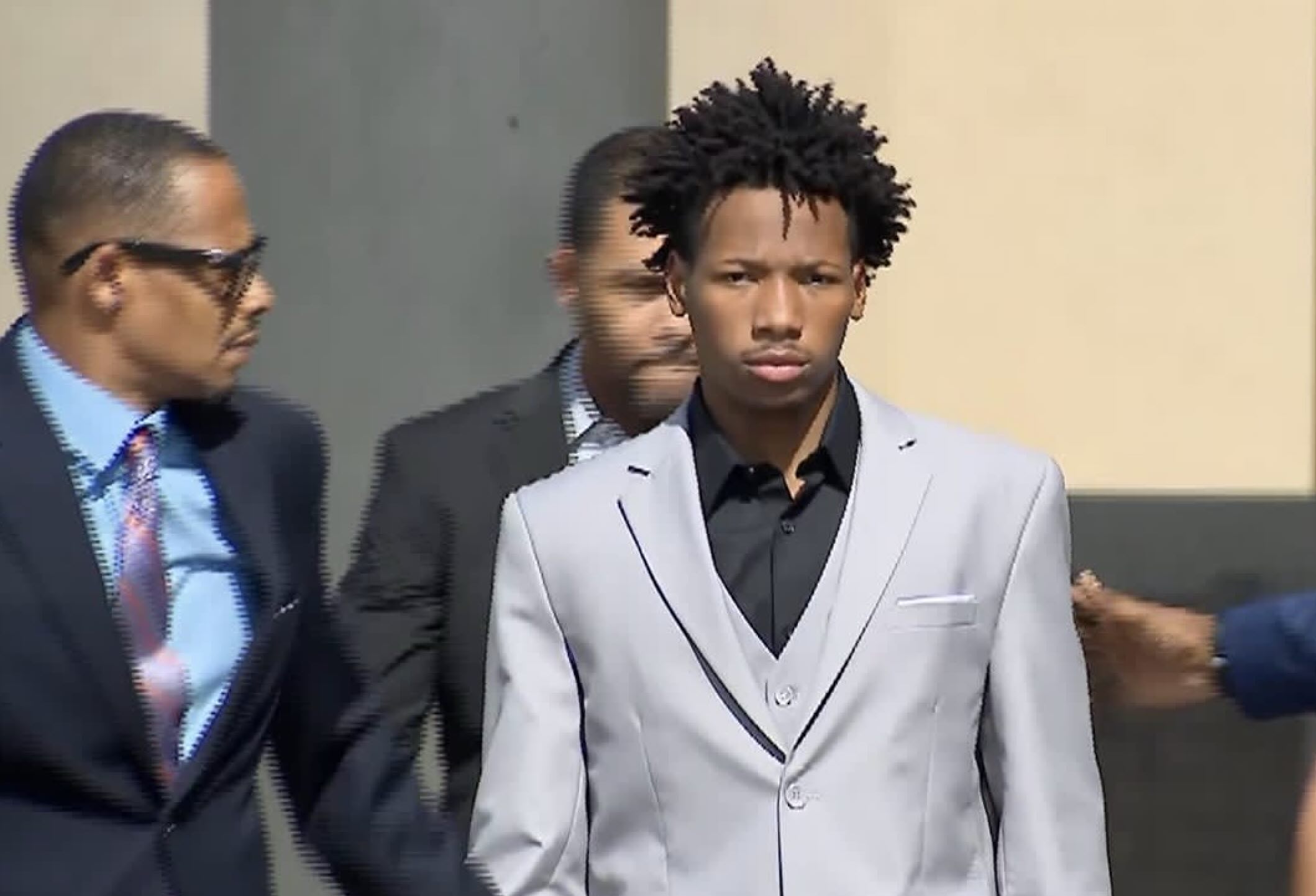
Photo: NBC Dallas-Fort Worth
On April 2, 2025, a 17-year-old high school senior and team captain named Austin Metcalf was fatally stabbed under a track team tent at a Frisco, Texas, high school meet. The accused was Karmelo Sincere Anthony, also 17, a Centennial High School student who had moved to the affluent Dallas suburb just three years earlier. What followed was a legal saga that would expose the raw nerves of race, justice, and community solidarity in America. But it was the unsealing of private text messages in August 2026—messages in which Anthony expressed hatred for Black women and parroted white supremacist tropes—that would deliver the most devastating blow, not to the legal system, but to the very people who had fought hardest to save him.
For months, Black women had been the backbone of Karmelo Anthony's defense. They organized rallies, packed courtrooms, raised over $400,000 for his legal fund, and amplified his story as a case of a young Black man being crushed by a racist justice system. They saw in him a son, a brother, a reflection of their own struggles. Then, the texts were made public, and that reflection shattered.
The Making of a Fractured Identity
To understand how Karmelo Anthony came to despise the very community that would later fight for his freedom, one must first understand the geography of his life—and the jarring cultural whiplash that defined his adolescence.
Born in Baton Rouge, Louisiana, on May 10, 2007, Anthony spent his early childhood in a city that is over 50% Black. He was surrounded by Black teachers, doctors, business owners, and peers. This environment serves as a critical buffer against internalized racism. It normalizes success, complexity, and humanity across a wide spectrum of Black experience, making it far more difficult for harmful stereotypes to take root.
But in 2021, at age 14, his family relocated to the broader North Texas area. In 2022, when he was 15, they officially settled in Frisco—a booming northern suburb that represented a demographic and cultural universe apart from Baton Rouge. According to U.S. Census data, Black residents make up only 9.1% of Frisco's population. The city is majority-minority, but its non-White population is overwhelmingly Asian (33.6%), with Hispanic residents at 10.4% and White residents at 45.5%.
At Centennial High School, the isolation was even more acute. Black students made up just 6.5% to 7.0% of the student body—roughly 1 out of every 15 students. Meanwhile, Asian students comprised over 51%, and White students nearly 28%. Moving from a majority-Black city to a school where Black students were a tiny minority represented a profound and disorienting shift.
This abrupt transition stripped away the everyday reflection that a young person needs to develop a healthy racial identity. Without a broad, real-world community to counter harmful narratives, isolated teenagers are far more likely to let the internet—or the dominant peer dynamics of their new environment—fill the void.
The Digital Incubation of Hate
The isolation Anthony felt in Frisco was not filled by community—it was filled by algorithms. Court documents and forensic analysis of his phone revealed a young man who had been deeply radicalized by online subcultures, adopting talking points that bore no connection to his lived experience.
The text messages that would ultimately undo his public support were not sent to strangers or online trolls—they were sent to his inner circle.
His derogatory remarks about Black women—including the specific comment that "wig glue is getting to their heads"—were sent to his Black girlfriend, the very person he was supposed to be closest to. He also texted "I hate gay ppl" in separate threads and sent numerous messages displaying violence against women, including repeatedly threatening to murder his girlfriend.
On the morning of the track meet stabbing, his girlfriend was so terrified by his escalating threats that she went to her school's assistant principal to report that he was stalking her and wouldn't let her end the relationship. This is not the profile of a young man acting in simple self-defense; it is the profile of someone whose personal volatility had metastasized into active, targeted hostility.
Beyond the text messages, authorities discovered a note saved in Anthony's Apple Notes dating back to May 2023. Prosecutors described it as a long, inflammatory racist rant categorizing Black people, white people, and Mexicans using various racial tropes and slurs. This note wasn't sent to anyone—it was a private manifesto, a digital record of a worldview he had fully absorbed.
Sociologists and cultural commentators noted that Anthony's rhetoric was a textbook example of what happens when vulnerable, isolated teenagers are fed a steady diet of internet radicalization. The "manosphere," incel culture, and alt-right forums don't care about a person's race—they target angry, alienated boys based on watch time and engagement. They provide ready-made scripts for resentment, offering a false sense of belonging to those who feel rejected by their physical surroundings.
The Buried Truth
The irony of the case is that neither Anthony's hatred nor Austin Metcalf's documented racism was presented to the jury during the initial June 2026 trial. Both sides—the prosecution and the defense—had agreed to an informal "gentleman's agreement" to keep highly inflammatory character evidence out of the courtroom. They chose to focus narrowly on the physical confrontation under the track tent.
But the records that were withheld painted a devastating picture of both teenagers.
On one side was Karmelo Anthony, whose phone contained misogynistic rants, threats against his girlfriend, and a hate filled Apple Note. On the other side was Austin Metcalf, whose documented history included:
- 53 distinct incidents of violence and racism, compiled by Anthony's defense team.
- Racist and antisemitic graffiti, including "KKK kill all blacks," "Heil Hitler," and the N-word, which led to 12 months of juvenile probation for Austin and his twin brother.
- Text messages in which Austin used the N-word with a hard "r" up until the day before he was killed.
- Explicit instructions to another student to "kill that mf" in reference to a Hispanic student at a track meet.
- School records from 2023 documenting Austin using racial slurs and targeting a Black classmate for bullying.
The "gentleman's agreement" meant that the jury never heard about Austin Metcalf's background. They never learned that the White teenager Anthony encountered under that tent had a documented history of white supremacist rhetoric and violence against minorities. They could not fully evaluate the level of fear Anthony may have felt.
The records were only unsealed in August 2026 when Anthony's new legal team—arguing that withholding this information prevented him from establishing a proper self-defense claim—pushed for a new trial. But by then, the damage was already done.
The Devastating Betrayal of Black Women
When the text messages were finally made public, the reaction was immediate and visceral. The Black women who had led the charge for Anthony's freedom—the organizers, the fundraisers, the courtroom observers—felt used, humiliated, and betrayed.
They had poured their hearts into a cause, believing they were protecting a young Black man from a system that wanted to destroy him. They had raised hundreds of thousands of dollars, organized rallies, and amplified his story. And all the while, the teenager they were fighting for harbored a deep, contemptuous hatred for them.
Had they known this information, would they have fought so hard? The sentiment was echoed across social media and in public statements. Many prominent advocates openly distanced themselves from Anthony's case, and the vocal, organized defense campaigns dissolved almost immediately.
The revelation forced a painful national conversation—one that Black women have been having in private for generations—about the cultural expectation to unconditionally protect and support Black men, even when that support is met with deep, internalized hostility and misogyny.
The very people Anthony had targeted with his imported talking points—Black women, including his own mother and family members—were the exact people leading the public rallies on his behalf.
The Legal and Moral Complexity
The unraveling of public support did not mean the case was legally settled. Some civil rights commentators and Anthony's formal legal team continued to advocate for him, but on entirely different grounds.
For legal purists, the issue was never about Karmelo Anthony as an individual. It was about the principle of a fair trial. The "gentleman's agreement" to hide Austin Metcalf's severe history of white supremacist graffiti and racial violence fundamentally compromised the fairness of the proceedings. Even a deeply flawed individual who harbors hateful views, they argued, is constitutionally entitled to a transparent trial where the victim's own documented history of racial aggression is put before a jury.
But for the community that had rallied around him, the distinction was academic. The emotional investment was gone. The trust was shattered. The solidarity—the idea that Black women would always show up for Black men, no matter what—had been tested and found wanting.
Anthony was ultimately sentenced to 35 years in prison—a sentence many legal observers considered severe for a teenage conflict, especially given the hidden context of Metcalf's racism. He is currently serving his sentence at the Wallace Pack Unit, a Texas state prison near Navasota, just outside Houston.
What the Case Reveals About America
The tragedy of the Karmelo Anthony case is that it is not a simple story of good versus evil. It is a story of how a young man can be both a victim and a perpetrator—a victim of a harsh, heavy-handed justice system, and a perpetrator of a toxic, radicalized worldview that he imported from the internet and his hostile new environment.
It is a story of how abrupt demographic shifts and algorithmic radicalization can strip away a young person's sense of identity, causing them to adopt the very beliefs that weaponize their environment against them.
And it is a story of how unconditional community support can be exploited, leaving the very people who gave the most feeling the most betrayed.
For the Black women who fought for Karmelo Anthony, the lesson is a painful one: Protecting a community means holding it accountable, even when—especially when—the person who needs accountability is the one you love.
The case leaves behind a complicated reality: a young man can be both a victim of a deeply flawed legal system and a product of a radicalizing environment that completely warped his identity. But it also leaves behind a question that will haunt the community for years to come: When solidarity is weaponized against those who offer it, what does true support look like?
No Ads. By Us. For Us.
This article was made possible by readers like you. We hope it inspired you to support Emerald Book, so we can continue producing content like this.
We will never show you ads, sell your data, or require a subscription to consume our content. Your gift helps us keep the truth accessible.
Click the Support button to give a gift of any amount today.
Thank you for making this work possible.