

Emerald Pages
◆
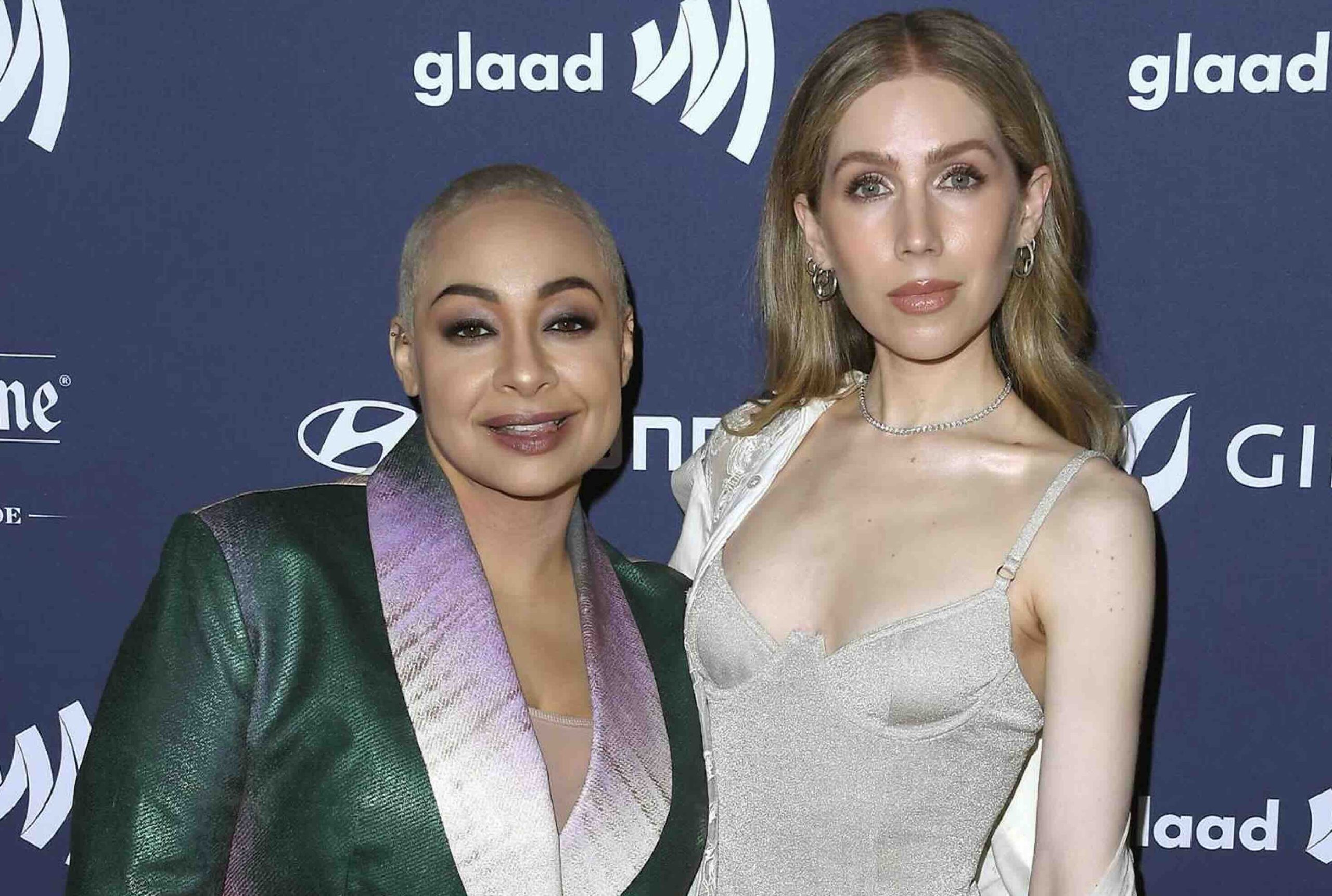
Photo: Steve Granitz | FilmMagic
The current backlash against Raven-Symoné is not a new phenomenon. It is the latest, loudest chapter in a 12-year saga of public confusion, outrage, and defensiveness regarding her racial identity. From her 2014 declaration to Oprah that she is "an American, not an African-American," to her 2026 viral podcast clip questioning if her iconic character, Raven Baxter, even "felt Black," the public has grown increasingly frustrated and baffled by her comments.
To many, her words appear to be a rejection of her heritage—a willful attempt to distance herself from the Blackness that gave her career its historic significance. However, beneath the surface of the online outrage lies a far more complex and tragic reality. A deep dive into her life trajectory reveals that her controversial stance is not born from malice, but from a profound, lifelong isolation from the very community she is accused of rejecting. This isolation, which began in her earliest childhood, systematically prevented the development of a healthy, resilient racial self-esteem, leaving her with a fractured sense of identity that she continues to grapple with on a public stage.
The Root of the Fracture: A Childhood in Isolation
The seeds of Raven-Symoné’s identity crisis were sown long before she became a household name. Born in Atlanta, Georgia—a city that is over 47% Black and a cultural epicenter of Black life—she was uprooted from this environment at the age of three when her family relocated to Ossining, New York, to pursue her burgeoning acting career. While Ossining offered opportunity, it also presented a jarring demographic shift. The village's Black population hovered around 20% in the early 1990s, a stark contrast to the cultural immersion of Atlanta.
This was only the first step in a pattern of displacement. Just four years later, at the tender age of seven, Raven-Symoné moved to Los Angeles to work full-time in Hollywood. This move was a complete submersion into a corporate ecosystem. Her "community" was no longer a neighborhood, a church, or a school, but a television set. Her daily interactions were with a rotating cast of studio executives, agents, publicists, and directors—a world that was overwhelmingly white and defined by corporate marketability.
- Birthplace: Atlanta, GA (47% Black) – A culturally rich Black environment.
- Early Childhood: Ossining, NY (~20% Black) – A suburban environment with a small Black minority.
- Formative Years: Hollywood Studio System – A corporate and predominantly white bubble with a "colorblind" philosophy.
This "Hollywood bubble" was the defining feature of her upbringing. She didn't attend public schools with a diverse peer group; she was educated by private tutors on set. Her identity wasn't shaped by the collective experiences of her community, but by the narrow lens of the entertainment industry, which valued her as a brand and a commodity. In this environment, she was taught that success came from being universally appealing, which often meant diluting or stripping away specific cultural markers. This is the foundational trauma that set the stage for her adult perspective on race.
"Colorblindness" and Exceptionalism
Growing up as the "only one" in a room for the majority of your life creates a deep psychological need to survive. In sociology, the response to this pressure is often a coping mechanism known as racial assimilation. To avoid being stereotyped or alienated, a person may subconsciously strip away their cultural markers to appear "safe" and to fit in. For Raven-Symoné, this manifested as a fierce embrace of "colorblind" ideology and a deep-seated need to assert her "Americanness" above all else.
Her rejection of the label "African-American" in 2014 wasn't a renunciation of her race, but an attempt to claim the "neutral" and "powerful" default identity of being simply an "American." She wasn't distancing herself from her skin color; she was trying to escape the "hyphen" that she felt reduced her. "I am a Black American," she would later clarify. This distinction in her mind was crucial. She wanted the privilege of being an individual, not a representative of a marginalized group. This was her psychological shield.
This shield, however, became a tool for gatekeeping and inadvertently aligned her with the very systemic biases she believed she was transcending. Her 2015 comment on The View—that she wouldn't hire someone with a "ghetto name" like "Watermelondrea"—was a devastating example of this. By validating a Eurocentric standard for professional worth, she was not exhibiting independent thought, but rather echoing the language of economic discrimination. The irony, which fans were quick to point out, was that she herself is a Black woman with a uniquely stylized, hyphenated name, revealing a deep disconnect between her own reality and the biases she had internalized.
This pattern continued with her defense of the host who compared Michelle Obama to an ape and her opposition to putting Harriet Tubman on the $20 bill. In each case, she prioritized "universal" or "compliant" values over protecting or celebrating her own community. To the public, this was hypocrisy. To a psychologist, it is a textbook example of a person with low racial self-esteem trying to distance themselves from a perceived burden, unknowingly adopting the views of the system that places them in that position.
Erasing the "Black" from Raven Baxter
The resurgence of this debate in September 2026, triggered by a podcast clip where she asked, "Was she Black? Why did she feel Black to you?", struck a nerve because it was the perfect distillation of her entire fractured worldview. To her, asking to "take away the color" was a plea for her character's humor and personality to be recognized as "universal." However, to the millions of Black millennials who grew up watching That's So Raven, this request was a profound act of erasure.
The show wasn't just a sitcom to many; it was a landmark. It featured a successful, middle-class Black nuclear family and explicitly tackled anti-Black racism in an episode titled "True Colors." In this episode, Raven aces a job interview but is denied the position because the manager declares, "The truth is, I don't hire Black people." To ask the audience to "take away the color" from that legacy feels to many like a denial of its cultural impact and the vital representation it provided.
While she may have been referring to the show's early development phase, when the concept was "colorblind," the reality is that the show that aired was undeniably, beautifully Black. Her inability or unwillingness to acknowledge this, and her insistence on a "universal" narrative, reveals her complete detachment from the collective experience that the Black community celebrated. It highlights the tragedy of her isolation: she truly cannot see what others see because she was never allowed to see her Blackness as a source of collective pride.
The Cost of a Cultural Mirror
The core of this entire saga is a singular, heartbreaking truth: Raven-Symoné grew up without a cultural mirror. Without the daily presence of other Black children, mentors, and community elders to reflect the beauty and normalcy of Blackness back to her, her understanding of Black identity was formed by the biases of white Hollywood and the stereotypes she was desperate to avoid.
High racial self-esteem is built when a child is taught that their hair, features, and culture are inherently beautiful and normal. It creates a psychological armor against societal bias, teaching the child that the problem is the racist system, not their Blackness. Raven-Symoné was denied this armor. Instead of being grounded in a community, she was launched into a system that forced her to see her identity as a liability to be managed, not a strength to be celebrated.
Her comments, whether about "ghetto names," "compliant" historical figures, or removing the "color" from her historic character, are not just random acts of hypocrisy. They are the logical, painful outcomes of a life lived in a cultural vacuum. She is a product of her environment—a "colorblind" industry that taught her to see herself as a commodity, and a system that rewards exceptional individualism over collective struggle.
While the public may continue to see her as a villain trying to escape her Blackness, a closer look reveals a tragic figure who, through no fault of her own, was never given the tools to love the very thing that makes her who she is.
No Ads. By Us. For Us.
This article was made possible by readers like you. We hope it inspired you to support Emerald Book, so we can continue producing content like this.
We will never show you ads, sell your data, or require a subscription to consume our content. Your gift helps us keep the truth accessible.
Click the Support button to give a gift of any amount today.
Thank you for making this work possible.