

Emerald Pages
◆
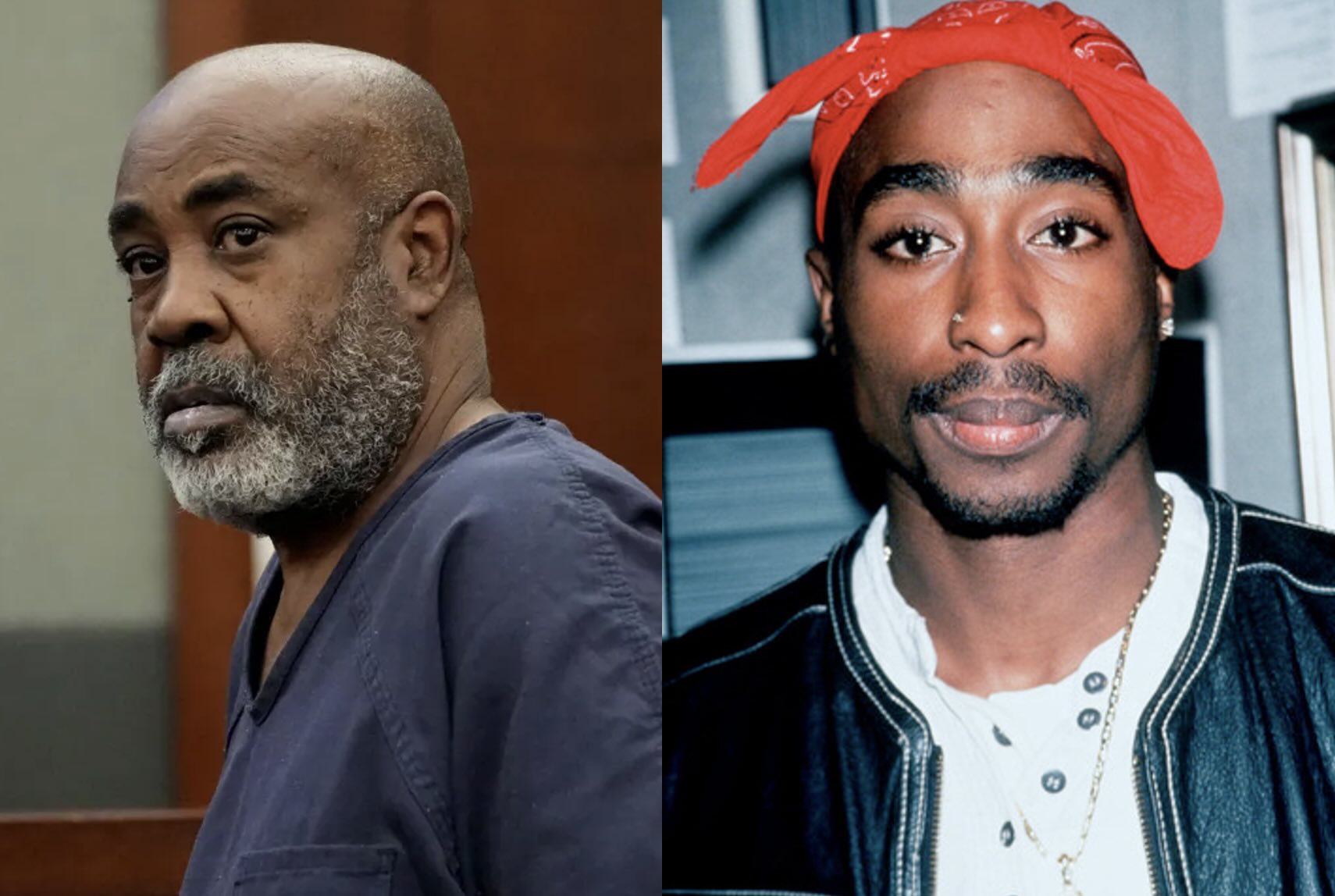
Photo: Duane "Keefe D" Davis (left) convicted for the murder of Tupac Shakur (right) | Emerald Book Image
On August 31, 2026, a jury in Las Vegas found Duane "Keffe D" Davis guilty of first-degree murder for orchestrating the 1996 drive-by shooting of Tupac Shakur. The verdict marked the end of a nearly 30-year odyssey of silence, legal hurdles, and dead ends. While the outcome was decisive, it begs a question that has haunted hip-hop for a generation: why did it take three decades to secure a single conviction?
For years, investigators knew the broad strokes of what happened on the night of September 7, 1996. Tupac and Death Row Records co-founder Suge Knight were leaving the MGM Grand after a Mike Tyson fight when a white Cadillac pulled up, and gunfire erupted. But despite a clear narrative, the case remained cold—until one man's ego and a catastrophic misunderstanding of the law provided prosecutors with the missing piece.
Four Major Road Blocks
The road to justice was blocked by four major obstacles, all of which Davis's own public boasts eventually helped dismantle.
The shooting immediately ignited a violent gang war between the South Side Compton Crips and the Mob Piru Bloods. Las Vegas detectives traveled to Southern California a dozen times but were met with uncooperative witnesses and unreliable informants. Key figures, including Suge Knight, refused to provide accounts that could lead to criminal charges. In gang culture, silence is a code of honor, and for nearly a decade, that code protected the killers.
There was no physical evidence tying Davis to the crime scene. The murder weapon was never recovered, and no DNA or fingerprints linked him to the white Cadillac. Without a paper trail or forensic proof, police had no concrete way to prove his involvement in court.
In 2008, Davis spoke to a joint federal task force under a confidential proffer agreement, meaning his admissions could not be used to prosecute him. He gave another statement to Las Vegas police in 2009. These early interviews created massive legal hurdles, as prosecutors had to spend years negotiating whether any of his prior statements could be legally introduced. Davis catastrophically misunderstood this agreement, believing it gave him blanket immunity. In reality, it only protected that specific interview from federal prosecution—it did not bind the state of Nevada, who held jurisdiction over the murder.
- The Proffer Agreement: Davis signed a "Queen for a Day" letter to save himself from federal drug charges, but the agreement only applied to federal agents, not state prosecutors.
- The Double Jeopardy Myth: He believed that because the alleged gunman, his nephew Orlando Anderson, was dead, the state could no longer prosecute the crime—ignoring conspiracy and aiding-and-abetting laws.
- Financial Greed: By 2018, Davis saw an opportunity to cash in on his legacy, charging up to $150,000 for interviews and self-publishing a memoir.
By 2020, everyone else inside the Cadillac with Davis had died. The alleged gunman, Orlando Anderson, was killed in an unrelated gang shootout in 1998. Deandrae "Freaky" Smith/ "Big Dre" passed away from natural causes in 2004, and driver Terry "Bubble Up" Brown was shot dead at a Compton dispensary in 2015. With all other direct suspects dead and no living witnesses willing to talk, the case went completely cold.
The Turning Point: Self-Snitching For Money
The case was only reinvigorated because Davis began boasting about the murder publicly. Believing his faulty immunity deal protected him forever, his ego took over. He realized his inside knowledge of the world's most famous unsolved murder was a goldmine.
In his 2019 memoir, Compton Street Legend, he gave a detailed, first-hand account of the night. He wrote about securing the Glock, hopping into the Cadillac, and hunting down Tupac and Suge. He described the chase, noting that it looked like Tupac was reaching for a weapon: "It looked like he was ready to bust out... and we was the first ones. Luckiest one I guess."
He also sat for a 2018 BET documentary and countless YouTube and podcast interviews, bragging about his role as the "on-ground commander" and confirming that the shots "came from the backseat." Prosecutors didn't have to rely on forensics; they just played hours of his own media interviews directly to the jury.
What Actually Happened
The murder of Tupac Shakur wasn't a complex conspiracy—it was a swift act of gang retaliation sparked by a fight just hours earlier.
On September 7, 1996, Tupac and Suge Knight attended a Mike Tyson fight at the MGM Grand. Afterward, Tupac spotted Orlando Anderson—nephew of Duane "Keffe D" Davis and a member of the South Side Compton Crips. Months earlier, Anderson had robbed a Death Row affiliate. Seeking revenge, Tupac punched Anderson, sparking a chaotic beatdown by Death Row's crew.
When Davis learned his nephew had been jumped by Death Row—affiliated with the rival Mob Piru Bloods—he mobilized a retaliation crew. He acquired a .40-caliber Glock and packed into a white Cadillac with Anderson, Deandrae "Freaky" Smith, and Terry "Bubble Up" Brown. Davis took the front passenger seat to coordinate the hit. Prosecutors later established that Davis "went hunting" for Tupac and Knight across the Las Vegas Strip.
After hours of searching, the crew spotted Tupac's BMW near Flamingo Road and Koval Lane. Davis ordered the driver to catch up. At a red light, the Cadillac pulled alongside Tupac's passenger side. Davis handed the gun to the backseat, and Anderson opened fire, hitting Tupac four times—twice in the chest, once in the arm, once in the thigh. One bullet pierced his lung.
Tupac was rushed to University Medical Center, where he clung to life for six days before succumbing to his injuries on September 13, 1996. He was just 25 years old.
The Backfire
Davis's defense team tried to argue he was just a "fictional storyteller" fabricating the tale for money, but prosecutors pointed out that the names, hotels, timelines, and street dynamics he boasted about matched police records perfectly. By writing a book and going on podcasts, Davis generated brand-new evidence outside of his police agreement. When Las Vegas prosecutors finally arrested him, they simply bought his book on Amazon and downloaded his public confessions.
The jury deliberated for less than three hours before returning a unanimous guilty verdict. Davis, now 63, is being held without bail and faces a potential sentence of life in prison without parole at his formal sentencing on October 13, 2026.
The verdict strips away all the glamorous Hollywood mythology—the government conspiracies, the "Tupac is alive" hoaxes, the record-label plots—and leaves behind a harsh truth: the street pipeline almost always terminates at a cemetery or a concrete cell. Three out of the four men in that Cadillac died violently. The sole survivor managed to avoid the grave, only to spend his golden years convicted of first-degree murder. Time didn't erase the debt—it just collected it later.
No Ads. By Us. For Us.
This article was made possible by readers like you. We hope it inspired you to support Emerald Book, so we can continue producing content like this.
We will never show you ads, sell your data, or require a subscription to consume our content. Your gift helps us keep the truth accessible.
Click the Support button to give a gift of any amount today.
Thank you for making this work possible.