

Emerald Pages
◆
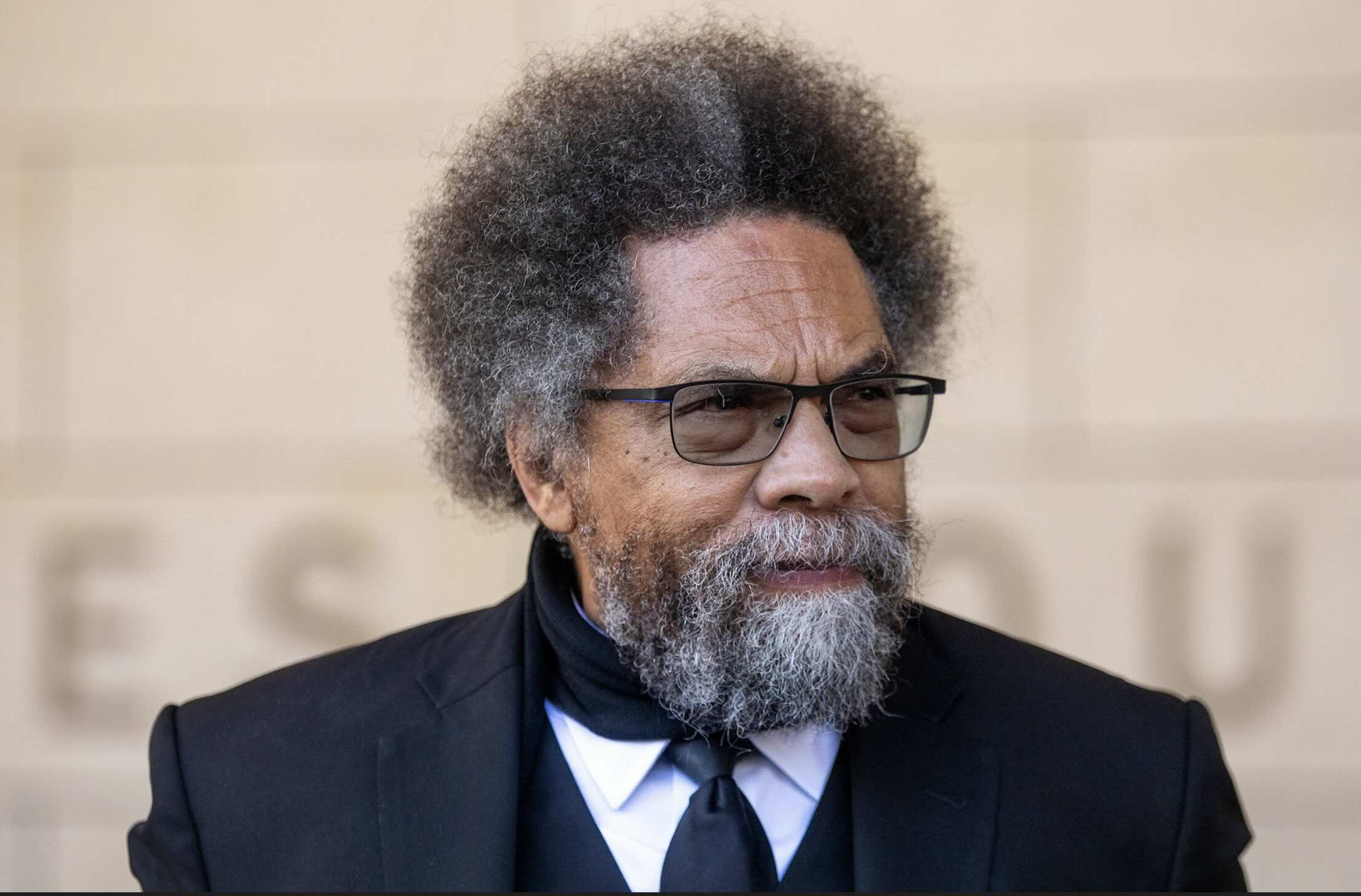
Cornel West | Photo: Getty Images
In the summer of 2024, something strange was happening in North Carolina. Operatives with ties to the Republican Party were collecting signatures to put Cornel West—a prominent democratic socialist, racial justice scholar, and fierce critic of corporate power—on the presidential ballot. It made no ideological sense. It made perfect strategic sense.
New reporting from the investigative outlet Sludge, drawing on tax documents and public disclosures, has now mapped the full financial trail behind that effort. What it reveals is a conservative dark money network—heavily bankrolled by billionaire Elon Musk—quietly attempting to weaponize a left-wing candidate against the Democratic Party. The story of how that money moved, what it was meant to accomplish, and why it collapsed is a case study in how modern American elections are fought through non-profits, shells, and legal loopholes rather than arguments.
The Money Trail
The mechanics were elaborate, and designed to be untraceable in real time. There is no public record of Musk giving money directly to West or to his official campaign committee, Cornel West for President. Instead, the money moved through a chain of non-profits, each step adding a layer of legal distance.
At the top sat Building America's Future, a conservative dark money organization heavily backed by Musk. It granted $10.1 million to a group called Interstate Priorities. Interstate Priorities, in turn, supplied 100 percent of the budget of People Over Party—$7.7 million—the non-profit that actually paid for petition drives to put West on state ballots. Consultants running these non-profits have separately received millions from Musk's America PAC.
The disparity between West's official campaign and the outside effort was stark. West's authorized committee raised just $1,398,321 from individual donors across the entire cycle. The outside non-profit spent $7.7 million on signature gathering alone—roughly five and a half times what the candidate himself raised. The money was never there to elect West. It was there to fragment the left-leaning coalition.
A Strategy, Not a Cause
Political analysts and investigative reports were explicit about the motivation. West's progressive platform—racial justice, economic equality, opposition to U.S. military intervention—appealed to voters who might otherwise support the Democratic ticket. In battleground states decided by tens of thousands of votes, even a small diversion could lower the threshold Donald Trump needed to win.
Trump himself openly praised third-party candidates like West and Green Party candidate Jill Stein, noting at rallies that they take "100 percent" of their support from the Democratic coalition. The logic was arithmetic, not ideological. Conservative operatives did not fund West's petitions to turn liberals into conservatives; they funded them to give dissatisfied progressive voters a progressive option outside the Democratic Party.
This is not a novel maneuver. It is a well-worn, bipartisan tactic. Republican operatives have repeatedly funded signature-gathering or advertising for Green Party candidates and progressive independents to divide the left. Democratic groups have spent millions boosting far-right candidates in primaries, calculating that those candidates would be easier to defeat in a general election. What made 2024 notable was the scale—and the fact that the operation was hidden behind a chain of non-profits rather than conducted in the open.
- The pipeline: Building America's Future ($10.1M, Musk-backed) → Interstate Priorities → People Over Party ($7.7M) → ballot petition drives for West.
- The campaign: Cornel West for President raised just $1.4M directly—roughly one-fifth of the outside spending.
- The complaint: In July 2024, the DNC filed an FEC complaint alleging roughly $240,000 in illegal, undisclosed in-kind contributions from Republican-aligned operatives.
The Complaint and the Legal Shield
In July 2024, the Democratic National Committee filed a formal complaint with the Federal Election Commission. The complaint alleged that the signature-gathering operations amounted to roughly $240,000 in illegal, undisclosed in-kind contributions from Republican-aligned operatives.
The legal architecture behind the effort made such complaints difficult to press. Under U.S. campaign finance law, outside "independent expenditure" groups and non-profits are legally barred from coordinating directly with a candidate's official campaign. Conservative strategists did not need West's permission or knowledge to run signature drives for him; they simply executed the operations independently. And because the millions flowed through a chain of continuous non-profit organizations, the funding was legally hidden from public view during the election cycle itself—the "dark money" shield. There is no evidence West knew where the money came from.
West's campaign denied any coordination or manipulation, maintaining that the signature-gathering groups were acting independently. That denial was, in a narrow legal sense, almost certainly true—and entirely beside the point. The system is built so that a candidate can be used without being consulted.
The Collapse
The strategy failed spectacularly. West's final vote total was statistically negligible in an election where more than 150 million ballots were cast. The state-by-state math makes the failure plain.
In Wisconsin, where the margin was roughly 29,000 votes, West received about 4,000—the margin was seven times larger than his vote count. In Michigan, the margin was about 80,000; West got roughly 8,000. In North Carolina, the margin was roughly 190,000; West got about 12,000. In Pennsylvania, he wasn't on the ballot at all. In no state where he appeared did his vote total come close to the margin of victory.
The operation also ran into legal trouble. In several states where conservative groups paid for signatures—including Pennsylvania and Georgia—courts and election boards disqualified West over technical filing errors and fraudulent signature collection by hired vendors. And even where he made the ballot, the campaign itself was hollow: by August 2024, West had stopped actively campaigning, and his committee was more than $17,000 in debt. Outside groups could buy ballot placement; they could not buy a functioning campaign to turn out voters.
The broader progressive third-party vote did not coalesce around him either. Most left-leaning voters who declined to support Kamala Harris chose Jill Stein, who finished with 782,528 votes—about 0.51 percent—while West's total was smaller still. Voters in the booth, by and large, did not know he was an option.
The 2024 election was decided by a broad shift toward Donald Trump among working-class voters, Latinos, and young men—not by a narrow fracturing of progressive voters. The millions spent on West's ballot access produced no measurable spoiler effect.
What the Headlines Got Wrong
There is a final irony in how the story reached the public. Many headlines announced that Musk "funded" West or that dark money "backed" his campaign, leaving readers with the impression that West had accepted a check from a billionaire or was taking orders from conservative operatives. The reporting underneath was more careful, but the headlines were not.
The distinction matters. The money was spent independently by outside groups on their own signature-gathering efforts. West was not backed by Musk in any direct or personal sense; his official committee never received or accepted money from Musk or his PACs. He was, by all available evidence, used as a tool—his name and platform deployed for a strategic purpose he neither controlled nor, in all likelihood, knew about.
That is the uncomfortable reality of modern campaign finance: outside groups can weaponize a candidate's name and platform for their own goals, completely independent of the candidate's wishes or awareness. In the end, a candidate with no campaign, no money of his own, and no knowledge of the operation behind him turned out to be exactly what the electoral math suggested—a tool that couldn't cut.
No Ads. By Us. For Us.
This article was made possible by readers like you. We hope it inspired you to support Emerald Book, so we can continue producing content like this.
We will never show you ads, sell your data, or require a subscription to consume our content. Your gift helps us keep the truth accessible.
Click the Support button to give a gift of any amount today.
Thank you for making this work possible.