

Emerald Pages
◆
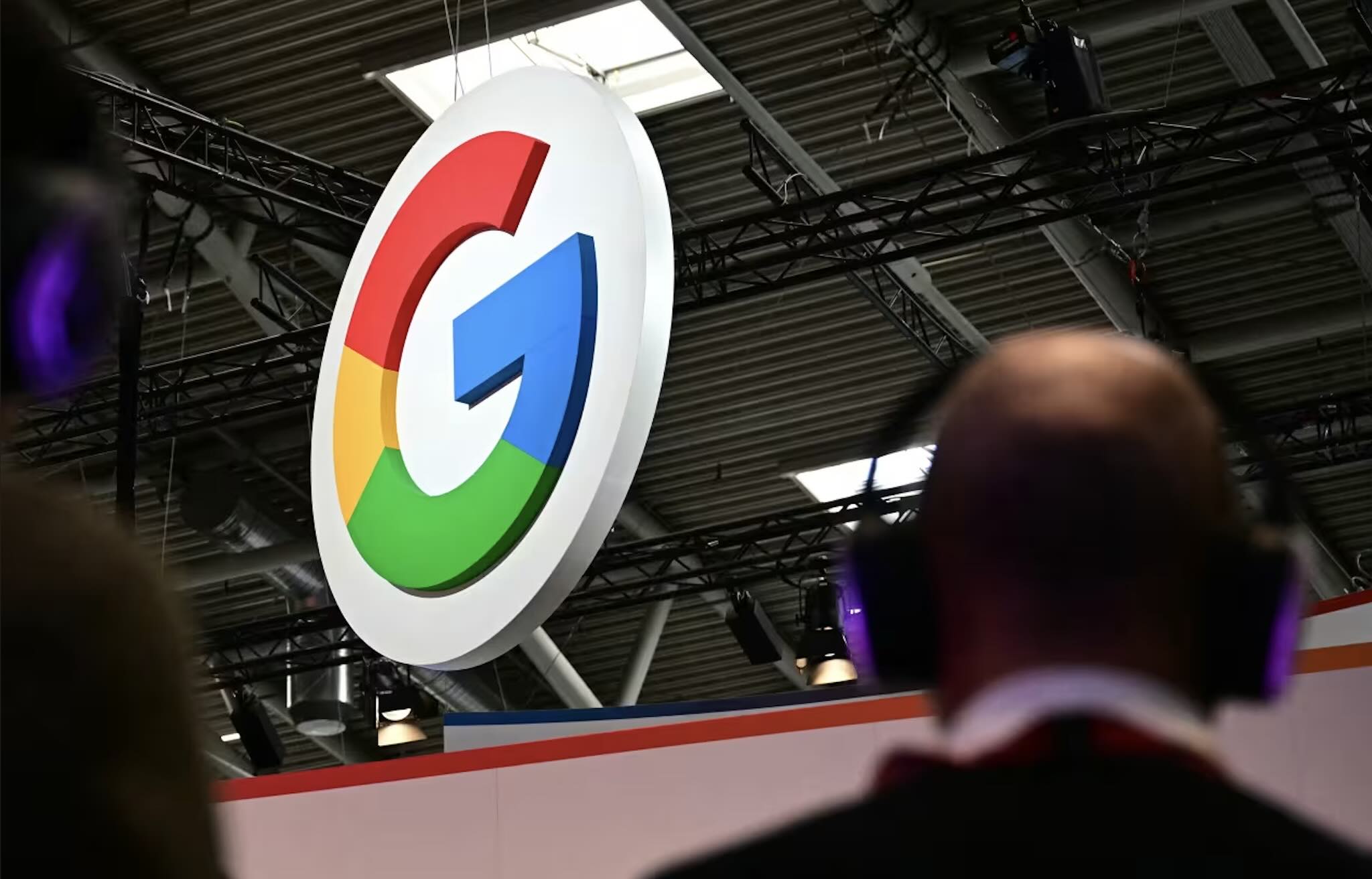
Photo: Getty Images
On Wednesday evening, Alphabet reported Q3 earnings. By Thursday morning, more than $500 billion in market value had evaporated. The stock plunged over 12%, marking the worst single-day percentage drop since Google went public in 2004. The valuation cratered from $3.9 trillion to roughly $3.4 trillion—the second-largest single-day market cap destruction in Wall Street history, trailing only Nvidia's $589 billion drop in 2025.
This wasn't a freak panic. It was a mass repricing.
The numbers laid bare what management had been dancing around for months: AI is not just failing to add to Google's profits—it is actively cannibalizing the core business model that has funded the company for two decades.
The Death of the Click
For twenty years, Google operated one of the most elegant business models in corporate history. A user searches for a term. Google serves a list of ten blue links. Advertisers pay for every click on sponsored results. The margin is astronomical, the capital requirements minimal, and the cash flow so predictable that investors happily awarded the company a premium multiple.
Conversational AI has broken this loop.
When a user searches in AI Mode—Google's chatbot interface—the system doesn't serve a list of links. It generates a single, synthesized answer. The user reads it and leaves. No clicks. No ad impressions. No revenue.
Management admitted as much on the earnings call. Search advertising brought in $82 billion against $83.4 billion projected. Growth decelerated to 12% year-over-year, down from 17% in Q2. The reason? Users are increasingly relying on AI Mode, where queries are three times longer—but Google is still "experimenting" with how to monetize them.
Here's the perverse math: every AI query costs Google significantly more to compute than a traditional search. Yet it generates substantially less revenue. The company is trading an 80%-margin advertising product for an AI interface that may never reach 20% margins due to skyrocketing compute costs.
The $51.4 Billion Quarterly Burn
The capital expenditure number is the one that truly rattled Wall Street. Alphabet poured $51.4 billion into AI infrastructure and data centers this quarter alone. This massive outlay pushed the company into negative free cash flow of $9.1 billion—the first sustained negative quarter in Alphabet's 22-year history as a public company.
For context: Alphabet has never recorded a single quarter of negative free cash flow until a slight dip in July. This quarter's multi-billion dollar burn is not a blip. It's a structural transformation.
And management isn't blinking. CFO Anat Ashkenazi confirmed capital expenditures for 2026 would be $195–205 billion, up from previous guidance of $180 billion. For 2027, she projected a "significant increase" exceeding $300 billion.
Wall Street's fury is understandable. But the sell-off misunderstands the incentive structure that governs hyperscaler behavior. Google cannot pull back on AI spending without risking what management views as corporate suicide.
CEO Sundar Pichai told analysts to think of this as a "long-range planning process, not a short-term allocation exercise." In plain English: Google is willing to lose billions in cash today if it guarantees they dominate the infrastructure of the next 30 years.
They are also weaponizing their $100+ billion cash cushion. Independent AI labs like OpenAI and Anthropic rely on continuous venture funding to pay their compute bills. Google is forcing a war of attrition, knowing it can sustain billions in infrastructure spending far longer than smaller competitors can survive theirs.
The Prisoner's Dilemma of the AI Bubble
This is the single most fragile mechanism in the modern tech economy: the entire AI market relies on a circular revenue loop, and a capital expenditure pullback by just one hyperscaler could trigger a systemic deleveraging event.
The loop works like this: megacaps take equity stakes in frontier labs. Those labs use the cash to rent cloud infrastructure from the hyperscalers and buy chips from Nvidia. The hyperscalers point to booming cloud revenue to justify their enormous infrastructure spend.
If one major player cuts back even 15%, the circle breaks. AI labs lose computing capacity. Chip makers lose their concentrated buyer base. The illusion of self-sustaining demand evaporates. Nvidia, Broadcom, and TSMC orders dry up. Tech sector P/E multiples compress. Trillions in equity value erased.
This systemic risk is exactly why no hyperscaler is willing to blink first. Even though Alphabet and Meta are actively bleeding free cash flow into the negative to support this buildout, they view a temporary stock price crash as preferable to permanent technological irrelevance.
The "Build It and They Will Come" Fallacy
The bear case is straightforward: the tech sector is caught in a classic fear-of-missing-out feedback loop, building infinite capacity for a product that might never reach the necessary level of economic utility.
The parallels to the dot-com telecom bubble are uncomfortable. In the late 1990s, telecoms laid 39 million miles of fiber-optic cable globally based on the speculative belief that internet traffic would double every 100 days indefinitely. Only 5% of that fiber was actually being used. Enron, WorldCom, and Global Crossing went bankrupt. Cisco crashed 90%.
Today, hyperscalers are building hundreds of data centers, targeting $300+ billion in annual capital expenditures, based on the speculative belief that generative AI will scale linearly into AGI and automate all cognitive work. AI queries are massively expensive to run. Ad and software monetization remains heavily constrained. And Alphabet just recorded its worst single-day drop in history as cash flow went negative.
But management has a counterargument: the dark fiber that bankrupted telecoms in 1999 is the exact infrastructure that enabled YouTube, Netflix, the iPhone, and the modern cloud economy a decade later. Google believes it will be the one who survives to harvest the rewards of the cheap, ubiquitous compute grid tomorrow.
The Structural Break
What makes this moment different from the mobile transition—which management frequently cites as a precedent—is that mobile preserved the underlying business mechanism. Google moved its highly profitable text ads from a large desktop screen to a smaller phone screen. Pay-per-click remained identical.
AI is not a screen-size change. It is a structural break in how the internet functions.
Google Search is the most lucrative advertising real estate in human history because it forces users to sort through choices. In conversational AI, the user expects a single, direct answer. There is no natural layout for a list of text ads inside a single paragraph. If Google forces ads into the chatbot response, it ruins the product and drives users to ad-free competitors like Perplexity Pro or ChatGPT Plus.
Google is trading an advertising product with 80%+ gross margins for an AI product that might struggle to reach 20% margins. Every time a user switches from traditional search to AI Mode, Alphabet loses an ad impression but incurs a massive compute cost. They are subsidizing the exact consumer behavior that starves their core business model.
The Repricing
Wall Street is no longer valuing Alphabet as a high-margin, predictable monopoly. It is repricing the company as a high-risk, asset-heavy infrastructure play.
For over a decade, investors valued Google using a premium tech multiple because it was a "cash machine"—it required very little capital to maintain and threw off predictable, massive profit margins. Today's crash is a violent market adjustment to a completely different financial reality: hyper-high capital intensity, volatile free cash flow, and a discounted multiple reflecting margin squeeze.
The message from institutional investors is direct: if you cannot show us a clear timeline for how a conversational AI search query generates a profit, we will value your company like a low-margin cloud infrastructure utility rather than a high-margin tech giant.
Management's response, in effect: the cash burn will continue, and you are just going to have to wait for the profits.
They are betting that AI infrastructure will eventually consolidate into a high-barrier utility oligopoly. Once independent AI labs exhaust their venture capital, they will have no choice but to rent compute from the few hyperscalers left standing. Google Cloud's 103% revenue surge to $30.7 billion this quarter is proof this is already happening.
They are also betting on a future where AI doesn't just answer queries but executes transactions—where a conversational assistant knows your exact size, style preference, and budget, allowing Google to take a cut of the transaction itself rather than a few cents per click.
But that future is speculative. The present is a company burning $51.4 billion a quarter while its core profit engine decelerates. And the market has officially run out of patience.
The Standoff of 2026
We have reached the inflection point where Wall Street's patience has completely run out. Investors are no longer willing to fund a pure act of faith. By violently repricing Alphabet, the market is attempting to physically force a capital pullback.
It won't work. Google's leadership is operating on a completely different timeline than Wall Street's three-month quarterly cycles. They are betting everything that once the massive data center buildout is finished, they will own the ultimate computing platform, forcing the market to eventually value them at a premium once again. The question is whether they can invent an entirely new advertising model—one that doesn't rely on the traditional click—before their cash reserves thin out or investor patience completely fractures.
If they succeed, Alphabet transforms from a search company into the foundational infrastructure layer of the global economy. If they fail, it becomes a low-margin utility company with a market cap that never recovers its former glory.
Either way, the era of Google as a predictable cash machine is over. The AI race has no finish line, no proven payoff, and no exit ramp. And Google has just made clear it will burn through its bottom line to stay in it.
No Ads. By Us. For Us.
This article was made possible by readers like you. We hope it inspired you to support Emerald Book, so we can continue producing content like this.
We will never show you ads, sell your data, or require a subscription to consume our content. Your gift helps us keep the truth accessible.
Click the Support button to give a gift of any amount today.
Thank you for making this work possible.