

Emerald Pages
◆
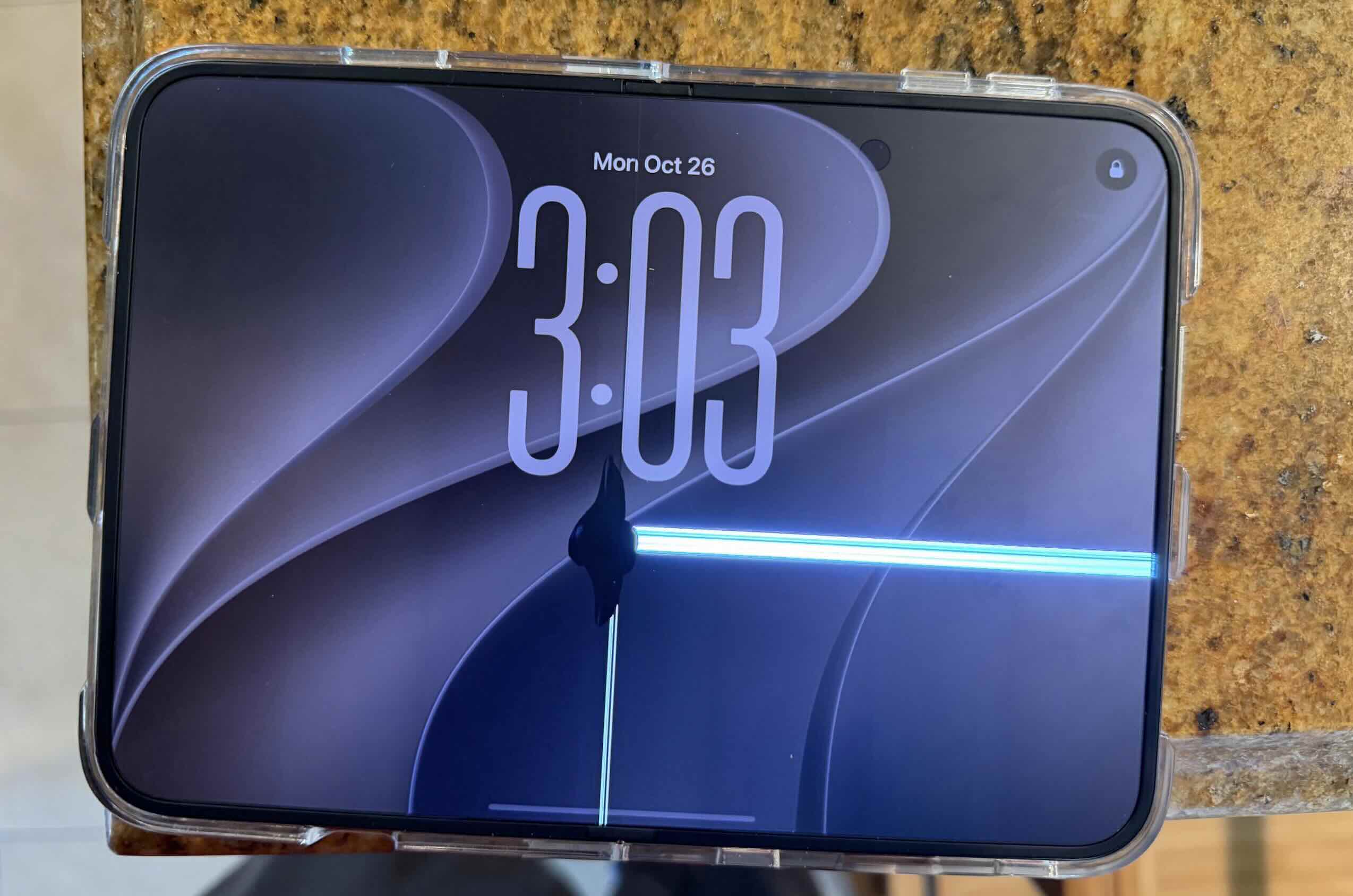
Photo: Surya Mangi
For $1,999, you'd expect perfection. Instead, early buyers of Apple's first foldable iPhone received a device that can crack within 48 hours, lacks Face ID, ships with inferior cameras, and runs hot during basic tasks. The defect has a name now — Crackgate — and it hasn't slowed sales at all. Within an hour of pre-orders opening on October 16, 2026, Apple's entire launch inventory vanished. Delivery estimates slipped to January 2027. Market trackers estimate 6 to 10 million units sold during the launch window.
The iPhone Duo is, by any rational measure, a worse smartphone than an iPhone Pro Max that costs $700 less. So how did Apple convince millions to pay a premium for a device with fewer features and a screen that can fail during initial setup? The answer lies in a masterclass of psychological pricing, scarcity engineering, and lifestyle marketing that bypassed logic entirely.
What Is Crackgate?
Crackgate refers to the wave of inner-display failures that hit the iPhone Duo within days of its October 23 launch. Early owners reported vertical cracks forming along the center crease, permanent bright pixel lines blasting across the screen, and total failure within 24 to 48 hours of unboxing — sometimes during initial setup. iFixit's teardown and 3D hinge simulation pointed to a central metal support bar that may fail to retract properly when the phone folds, creating a concentrated stress point against the fragile OLED panel. Apple acknowledged the issue but emphasized it impacts only a "small number" of units and declined to issue a recall.
The Influencer Seeding Strategy
Apple fundamentally shifted its launch playbook for the Duo. Rather than leading with spec sheets and technical benchmarks, the company flooded TikTok and Instagram with high-energy lifestyle creators demonstrating the phone in aspirational scenarios: doing yoga with the foldable propped open, acting as a miniature café laptop, or functioning as a luxury accessory. By the time the phone launched, the cultural message was unmistakable: look at this cool thing you don't have yet. That message drove intense fear of missing out, or FOMO, across social platforms.
Traditional tech reviewers who might have flagged the missing Face ID, the camera downgrades, or the early Crackgate reports were drowned out by a wave of lifestyle content that never mentioned specifications at all. Apple didn't need to defend the compromises because the conversation never centered on them.
Artificial Scarcity and Social Proof
Apple intentionally kept initial launch day inventory incredibly tight. Pre-orders immediately slipped to late January, generating headlines about unprecedented demand. Lines formed outside global Apple Stores purely from people trying to secure rare walk-in stock. This created the ultimate social proof: if a product is that hard to get, it must be valuable — even if it might crack in two days.
To manage the chaos and combat scalping, Apple limited online orders to two devices per customer. Supply chain leaks later revealed that Apple was caught off guard by the volume of day-one buyers and increased supplier production orders by 30% immediately after launch. The scarcity wasn't entirely manufactured, but it didn't need to be. The perception of scarcity was enough.
Psychologically, the $1,999 price tag worked in Apple's favor. For ultra-wealthy buyers, tech enthusiasts, and status seekers, a high price tag isn't a deterrent — it's a feature. It ensures exclusivity. It signals that the owner belongs to a select group willing to pay for the future before everyone else.
The price also served as an anchor. Against a $1,999 foldable, the traditional $1,299 iPhone Pro Max suddenly looked like a bargain. Apple made every other iPhone in the lineup feel more affordable by comparison.
Perhaps the most effective tool in Apple's arsenal was the perception of safety. Buyers knew that if their screen cracked in three days — the defining symptom of Crackgate — they could walk into a local Apple Store and receive a brand-new replacement under warranty. Apple confirmed that these initial screen failures are manufacturing defects covered free of charge, and the company's vast retail footprint made that promise feel tangible and immediate.
That safety net made people far more willing to take an expensive gamble. The out-of-warranty replacement cost of $999 for the inner display loomed in the background, but early adopters convinced themselves they'd never need it — or that Apple would take care of them if they did.
What Buyers Actually Got
The promises Apple made for the Duo painted a picture of a productivity powerhouse with seamless authentication and pro-level photography. The reality, documented extensively by early reviewers and repair experts, told a different story.
- No Face ID: Apple replaced it with a Touch ID sensor in the power button that shifts position depending on how the phone is held, creating what reviewers called a constant game of hunt-the-button.
- Camera downgrades: The main sensor was scaled down compared to the Pro line, there's no optical telephoto lens, and the under-display selfie camera produces grainy results.
- Software friction: Unoptimized apps trigger a permanent sidebar that consumes roughly 20% of the screen, and some apps crash or leave giant black bars.
- Ergonomics: The device weighs nearly 9 ounces, runs noticeably hot during basic tasks, and demands two-handed operation almost always.
- Crackgate: Inner displays failing within 24 to 48 hours, with vertical crease cracks and bright pixel lines, in a defect Apple attributes to a hinge support bar that fails to retract properly.
Apple acknowledged Crackgate but emphasized that it impacts only a "small number" of units — a phrase that, at Apple's scale, still translates to thousands of broken phones globally. The company did not issue a recall.
Apple didn't need to convince everyone to buy the iPhone Duo. It needed to convince just enough early adopters to clear out initial stock, and it did so by selling a feeling rather than a product. The folding form factor was the feature. The compromises were the cost of admission. And the marketing made both feel like a privilege.
For the average consumer, paying a premium to get fewer features and a screen that might crack in 48 hours remains a terrible trade-off. But for the millions who lined up, the math was never about utility. It was about being first to own the future — Crackgate, missing features, and all.
No Ads. By Us. For Us.
This article was made possible by readers like you. We hope it inspired you to support Emerald Book, so we can continue producing content like this.
We will never show you ads, sell your data, or require a subscription to consume our content. Your gift helps us keep the truth accessible.
Click the Support button to give a gift of any amount today.
Thank you for making this work possible.