

Emerald Pages
◆
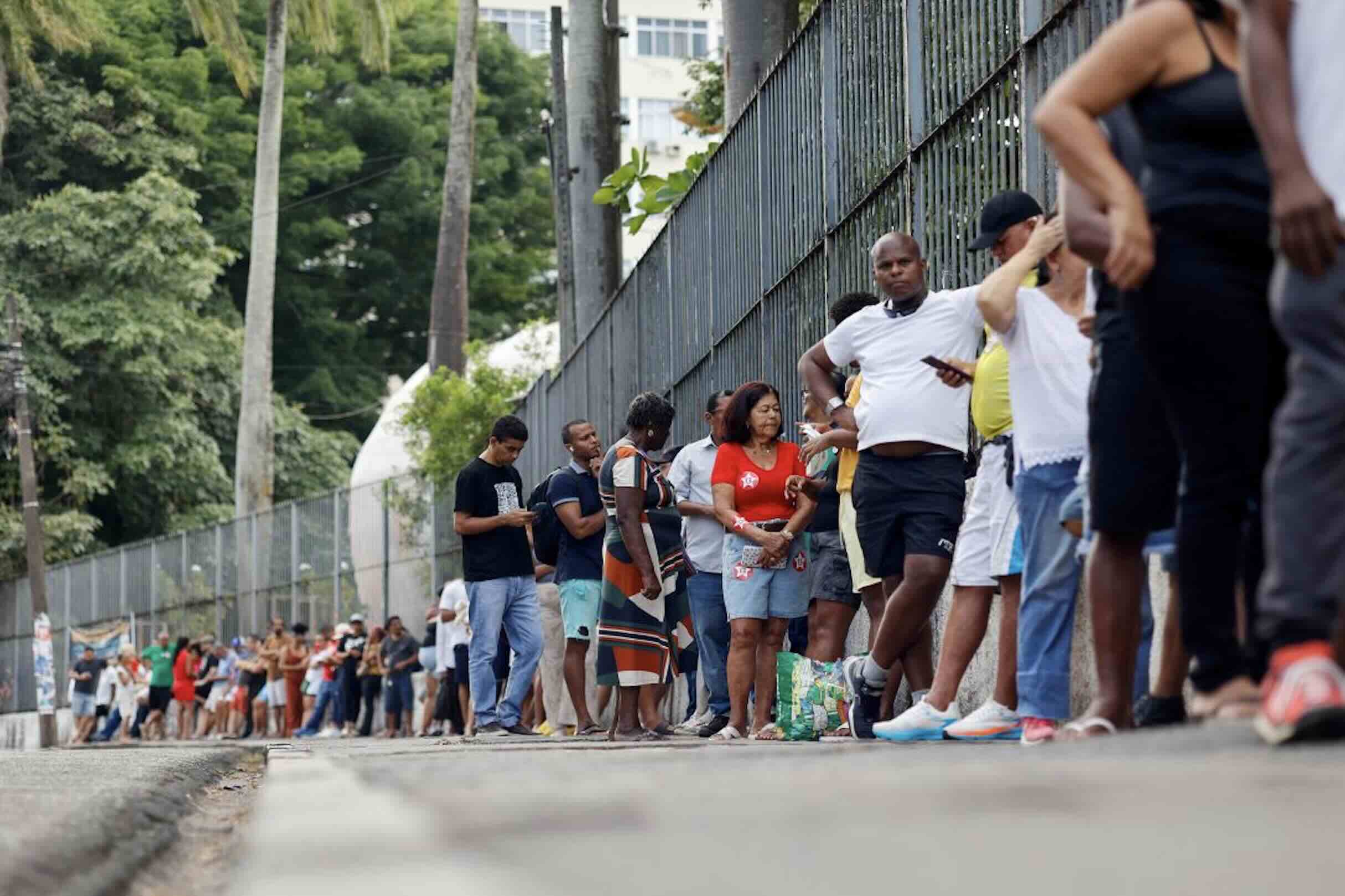
Photo: Reuters
When Luiz Inácio Lula da Silva clawed back a stunning fourth term in Brazil's presidential runoff on October 25, winning 51.8% of the vote against Trump-backed Senator Flávio Bolsonaro by roughly 4.4 million ballots, Washington did not treat it as a foreign story. It treated it as a preview. With the U.S. midterms just over a week away, strategists in both parties are dissecting Brazil's election as a bellwether for how anti-incumbent fury, pocketbook anxiety, and post-election denialism will shape American politics on November 3.
The parallels are hard to ignore. A leftist incumbent, written off after losing the first round on October 4, surged back by hyper-focusing on working-class economic relief. A right-wing populist modeled explicitly on MAGA refused to concede and demanded the results be annulled. And a U.S. president immediately cast doubt on the outcome, telling reporters at Joint Base Andrews that the vote "looked like another rigged election, frankly" — while insisting, without evidence, "I didn't take sides." That phrase will echo through every contested American district in the coming days.
What makes Brazil more than a curiosity is the degree of direct American involvement. This was not a passive observation. The Trump administration imposed double-digit trade tariffs on Brazilian goods, levied targeted sanctions and visa restrictions on members of Brazil's Supreme Court, and appointed a dedicated senior Brazil advisor — Darren Beattie — to align regional policy. Reuters reported that officials inside Trump's State Department led an aggressive behind-the-scenes campaign to return the Bolsonaros to power. Lula channeled the pressure into a nationalist rallying cry, telling voters that "Brazil belongs to Brazilians" and that the country would not accept being "anyone's backyard." The result was a narrow but decisive rebuke delivered directly to the White House.
The Cost-of-Living Playbook
Lula's comeback was not built on abstract national arguments. After finishing first in the October 4 first round but falling short of an outright majority, he shifted hard toward working-class economic relief and family debt relief. That pivot deflated right-wing populist momentum and delivered the runoff by roughly two points. American strategists are studying the sequence closely, because the same dynamic is already shaping the U.S. midterms.
The numbers are stark. In the final New York Times/Siena University national poll, Democrats hold an 11-point lead on the generic congressional ballot, 52% to 41% — a margin no party has won nationally since 2008. Trump's approval rating sits near 40%, and the historical midterm penalty for the incumbent president's party is working against Republicans. Forecasters like Decision Desk HQ give Democrats a 57% probability of reclaiming the Senate, a 78% chance of winning 236 House seats, and a 54% chance of sweeping both chambers. A full sweep is no longer a fantasy; it is a statistical possibility.
The lesson from Brazil is that the national mood is real but not sufficient. Lula won because he converted a broad anti-incumbent wave into a specific, granular economic message. U.S. Democrats are trying to do the same — and the party that owns the cost-of-living crisis owns the suburbs that decide control.
The "Rigged" Playbook Crosses Borders
The most ominous parallel is not economic. It is rhetorical. Flávio Bolsonaro refused to concede and demanded the election results be annulled, sparking widespread concern over potential political unrest. Trump, without evidence, amplified the claim. This sequence is a blueprint for how contested American races will be managed on election night — especially in battleground states like Texas, Ohio, and Georgia, where margins could be razor-thin.
Analysts are already warning of "red mirages" and "blue mirages," where early mail-in or in-person counting skews initial data and fuels accusations before the count is complete. Brazil showed how quickly a refused concession becomes a transnational talking point. Vice President Geraldo Alckmin of Brazil called Trump's claims "totally wrong" and "unfounded" — giving U.S. Democrats ammunition to criticize the White House for undermining global democratic norms. Brazil proved that casting doubt on democratic systems is no longer a domestic strategy. It is an exported one — and it is coming home.
Incumbency Fatigue and the Fracturing Vote
Both elections capture the same anti-establishment wave. Lula narrowly defended his seat under tight fiscal pressure, suffering from public perception that regional economic conditions were worsening. U.S. Republicans are defending a slim 53–47 Senate majority and fragile House control. The "out-of-White-House" party historically enjoys strong midterm advantages — and 2026 is tracking to be no exception.
There is one more warning in the Brazilian data: younger voters drifted away from traditional union-centric left-wing messaging, leaving them highly receptive to right-wing internet campaigns. U.S. Democrats can no longer rely purely on historical coalitions. Both parties are being forced into aggressive, decentralized social media ground games to mobilize disaffected independent voters — a structural break that neither party has fully solved.
- Cost-of-living dominates: Lula won by targeting working-class economic relief; U.S. Democrats are betting on the same strategy, with an 11-point generic ballot lead.
- The "rigged" playbook is global: Bolsonaro's refusal to concede — amplified by Trump — is a preview of election-night denialism in U.S. battlegrounds.
- A sweep is possible: Democrats are favored to flip the House, with a narrow path to a 51-seat Senate majority.
- Younger voters are volatile: Traditional coalitions are fracturing; both parties are fighting for disaffected independents on social media.
What a Democratic Sweep Would Mean
If the models hold, a dual-chamber shift would instantly transform Washington. A Democratic Senate would freeze judicial and cabinet confirmations — the most damaging blow to any president's long-term legacy, since the Constitution grants the Senate sole "Advice and Consent" power over executive nominations. A Democratic House would take control of the Oversight, Judiciary, and Ways and Means committees, unleash subpoena power, launch investigations into the administration's foreign interventions and the reported State Department involvement in Brazil, and hold the power of the purse.
Impeachment would become a live option — though conviction remains nearly impossible. The House can impeach with a simple majority, but removal requires a two-thirds supermajority, or 67 votes in the Senate. Even a 51- or 52-seat Democratic majority would leave the party roughly 15 to 16 votes short, requiring a massive bloc of Republicans to break ranks. As in 2019 and 2021, a hostile Congress can use impeachment as a tool for oversight and messaging, but the constitutional math ensures removal remains one of the highest bars in American governance.
Brazil's election did not just change Latin America's largest democracy. It sent a warning shot across the bow of American politics. The cost-of-living crisis, the rigged-election rhetoric, and the volatile, fracturing electorate are all converging on November 3. The only question is whether American voters — and American institutions — are ready for the same playbook to land on our doorstep.
No Ads. By Us. For Us.
This article was made possible by readers like you. We hope it inspired you to support Emerald Book, so we can continue producing content like this.
We will never show you ads, sell your data, or require a subscription to consume our content. Your gift helps us keep the truth accessible.
Click the Support button to give a gift of any amount today.
Thank you for making this work possible.