

Emerald Pages
◆
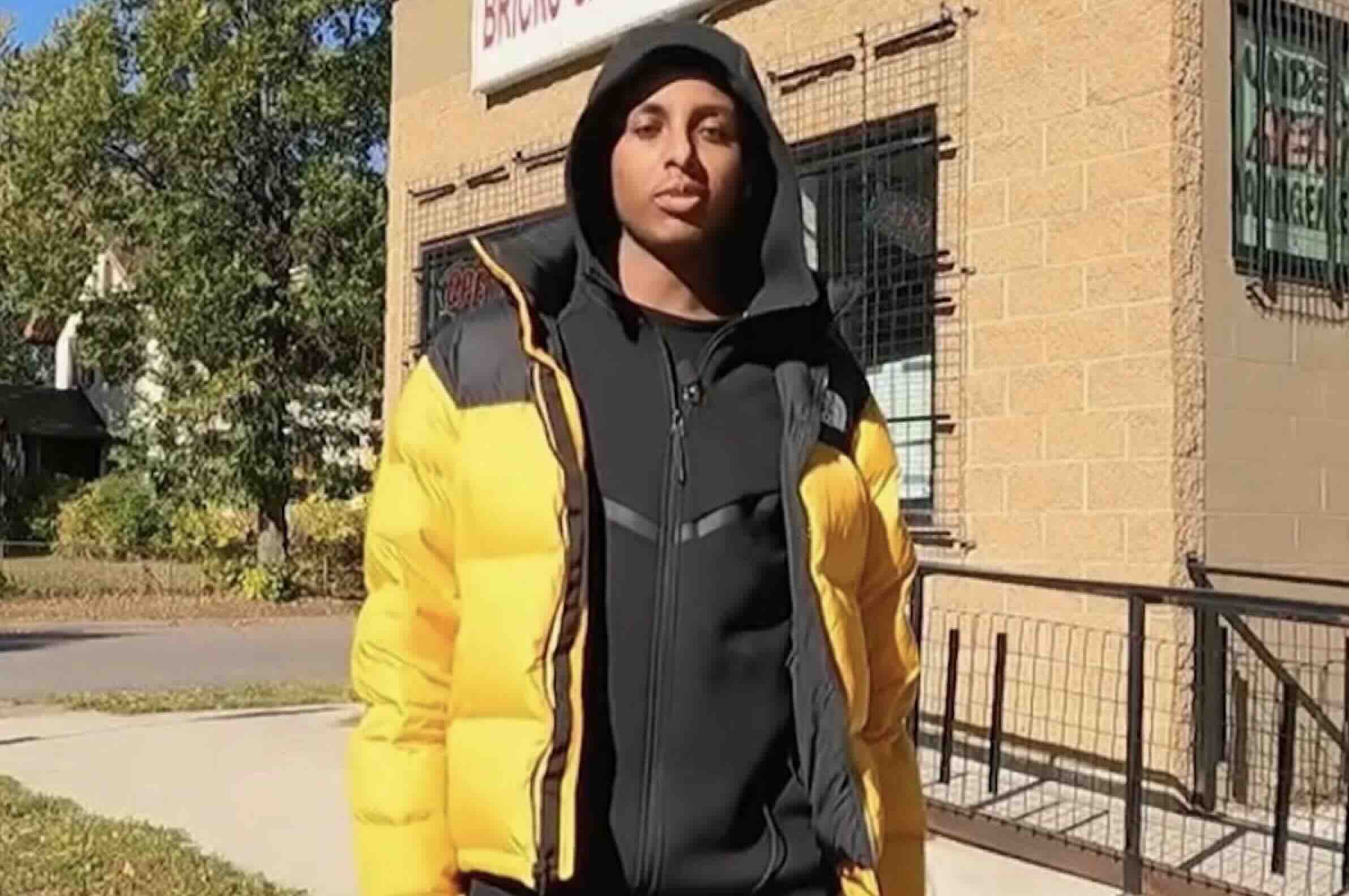
Ebro Ahmed | Photo: KSTP 5 Eyewitness News/Youtube
On October 19, 2026, a 27-year-old Black Muslim man named Ebro Ahmed sprinted toward a runaway school bus in St. Paul, Minnesota, leaping through the open doors to stop the vehicle after the driver suffered a seizure. He saved 18 middle school students and the driver from a potential catastrophe. The act was undeniable. Yet, when the dust settled and the headlines rolled out, a glaring question emerged: Why did almost every major American news organization simply call him a "Minnesota man"?
The answer lies not in a lack of information, but in a systemic application of journalistic guidelines that are applied with staggering inconsistency. While mainstream outlets like ABC News, CBS News, and People Magazine stripped Ahmed of his specific heritage—reducing him to a generic local placeholder—other outlets actively highlighted his identity, sparking a viral debate about how the media frames race, religion, and heroism.
The incident itself was extraordinary. Ahmed was taking a break outside his family's convenience store, Ya Bricks Snacks and Tobacco, when he noticed a school bus rolling slowly down the street at about 10 mph with its hazard lights flashing and front doors wide open. Looking inside, he saw that the driver was incapacitated and actively suffering a medical emergency, which appeared to be a seizure. Ahmed sprinted toward the moving vehicle, jumped through the open doors, and took control of the bus. He later shared that he initially struggled with the controls and mistakenly shifted it into reverse before successfully shifting it into neutral and pulling the emergency parking brake. The bus came to a safe stop just seconds before a potential crash.
The standard defense offered by newsrooms is adherence to editorial style guides, such as the Associated Press Stylebook. These guidelines dictate that a person's race, ethnicity, or religion should only be explicitly named if it is directly central to the core facts of the story. Editors argued that because the emergency on the school bus was a spontaneous event based entirely on proximity, Ahmed's background was not the story—his location was. As a result, he was framed as a neutral citizen.
But media critics and community members point out a glaring double standard in how minority identities are handled in the news. The decision by major networks to use generic framing has caused widespread public frustration and a viral debate online, with many noting that when an immigrant, Black, or Muslim individual performs a profound act of heroism, the media tends to universalize them as a generic "local resident" or "citizen," separating the positive action from their community identity. Conversely, if a person from a marginalized background is accused of a crime, headlines are frequently quick to weaponize and loudly highlight their specific race, religion, or country of origin.
The Double Standard of "Relevance"
The core of the frustration, however, is the perception that these same major news journals frequently break their own stylebook guidelines when the narrative shifts. Media critics and academic studies routinely point out a glaring asymmetry in how minority identities are handled:
- Heroism is Generalized: When a minority individual performs a profound act of heroism, the media tends to universalize them as a generic "local resident" or "citizen," separating the positive action from their community identity. Despite his specific Eritrean roots, major domestic networks completely omitted his background.
- Wrongdoing is Ethnicized: Conversely, when a person from a marginalized background is accused of a crime, headlines frequently weaponize and loudly highlight their specific race, religion, or country of origin—even before a trial or motive is established.
- Visual Double Standards: Academic data shows this extends to imagery. White perpetrators of violence are often shown in smiling yearbook photos that humanize them, while Black suspects are routinely shown in severe mugshots, reinforcing stereotypes before a verdict is reached.
This pattern is perhaps most heavily documented in mass shooting coverage. Peer-reviewed studies, including extensive research from Ohio State University and the University of Missouri, have tracked thousands of articles to prove that media outlets radically shift their language based entirely on a shooter's race and religion. When major news organizations cover mass shootings, they consistently break or bend stylebook rules to create entirely different narratives for white perpetrators versus perpetrators of color. White perpetrators are frequently framed as "lone wolves" or "local residents" and their actions are attributed to mental illness or severe personal stress—roughly 80% of news articles covering white shooters frame them with empathy, focusing heavily on their mental health history. In contrast, perpetrators of color or Muslim perpetrators are labeled "terrorists" or "radicals," with their ideology, culture, or religion blamed for their actions. This sympathetic framing is virtually non-existent for Black or Latino shooters committing similar acts, where the media defaults to a strict "criminality" frame.
This selective application of the rules is what sparked the public backlash. While domestic corporate giants scrubbed all specific racial and religious identifiers from Ahmed's story, international networks and independent media stepped in to fill the void. However, even in celebration, the coverage was fraught with errors. Several prominent platforms, including TRT Afrika, misidentified Ahmed as Somali-American—a common regional stereotype based on Minnesota's large Somali population—rather than fact-checking his actual Eritrean heritage. This reinforces Ahmed's point: the mainstream media rarely asks minority heroes who they are because they treat them as interchangeable, whereas they will carefully map out a person's exact heritage and lineage if they are looking to build a negative or sensationalized headline.
Celebrating the Hero the Media Missed
While the mainstream press maintained their generic filter, independent and Black-owned media took the story into their own hands. Sheletta Brundidge, a prominent Black media entrepreneur in Minnesota, tracked Ahmed down at his family's convenience store, Ya Bricks Snacks and Tobacco, and presented him with a $1,000 reward. Other outlets, like MPR News and The Guardian, explicitly highlighted his Muslim faith, interviewing him about the Qur'anic verse that inspired his actions and his goal to show Eritreans "in a good way."
Ebro Ahmed himself noted that he kept his composure by recalling scenes from the medical drama Grey's Anatomy, and that he felt it was his duty to act. "I really felt like it was my duty. Also, too, it's kids we're talking about, you know. Even if I were to die, it would still be worth it," he told ABC News. But his words also carried a sharp critique of the media's framing. He noted that nobody from the major networks asked him where he was from, leaving his Eritrean identity out of the public narrative entirely.
Ahmed, who is Muslim and of East African descent, mentioned in interviews that he kept his composure during the high-stress event by recalling scenes from the medical drama Grey's Anatomy. Following his heroic actions, Ahmed went viral online and was honored locally, receiving a $1,000 gift check from a local media entrepreneur to thank him for protecting the community's youth. He expressed plans to invest the money right back into supporting his community.
The Broader Pattern of Media Erasure
The treatment of Ahmed's story is not an isolated incident. It fits into a well-documented pattern of media framing that sociologists and media critics have studied for decades. The "proximity and relevance loophole" in stylebooks gives editors vast, subjective discretion over what constitutes "essential" information. In criminal or negative stories, newsrooms often argue that ethnic background, immigration status, or neighborhood origin is "essential" for public safety context, identification, or explaining community friction. This results in specific identifiers being splashed across headlines. In heroic stories, the same editors argue that ethnicity has "no relevance" to pulling a brake on a bus, claiming the action is just a universal human response. As a result, the identity is erased under the guise of maintaining neutral, objective standards.
This asymmetry has profound consequences for how communities are perceived. The "single actor" versus "collective category" dynamic means that a white individual or a member of a majority group who commits a crime is almost always covered as a lone actor—the media treats their actions as a reflection of their personal pathology, not their race, religion, or community. Conversely, when a member of a marginalized immigrant or minority community commits an offense, the media often frames it as a "community problem," implicitly indicting the entire group. When a minority individual performs a massive public service, the media reverses this logic. Instead of allowing that heroism to positively reflect on or humanize their specific community, they strip the identity away to make the hero a generic "citizen"—meaning the community is never allowed to "win" collective credit in the public eye.
Mainstream news also relies heavily on initial police reports, school district press releases, and local government briefings. If an official press release calls an individual a "bystander" or a "Minnesota man," lazy or fast-moving newsrooms simply copy-paste that framing without doing the deeper journalistic work to ask the person how they identify. This deference to official labels over personal reality is another way the media erases identity without appearing to make a deliberate choice.
The story of Ebro Ahmed is one of undeniable courage. But the coverage of his heroism serves as a stark reminder of the power of the press to shape public perception. By refusing to call him a Black Muslim or Eritrean hero, corporate media prevented his community from receiving the collective credit for his bravery, reinforcing a system where minority identity is only deemed "relevant" when it can be associated with danger or fear. While the mainstream press maintained their generic filter, independent and Black-owned media stepped in to celebrate him explicitly as a young Black, Muslim, and East African immigrant hero—correcting the record that the corporate giants had scrubbed clean.
No Ads. By Us. For Us.
This article was made possible by readers like you. We hope it inspired you to support Emerald Book, so we can continue producing content like this.
We will never show you ads, sell your data, or require a subscription to consume our content. Your gift helps us keep the truth accessible.
Click the Support button to give a gift of any amount today.
Thank you for making this work possible.