

Emerald Pages
◆
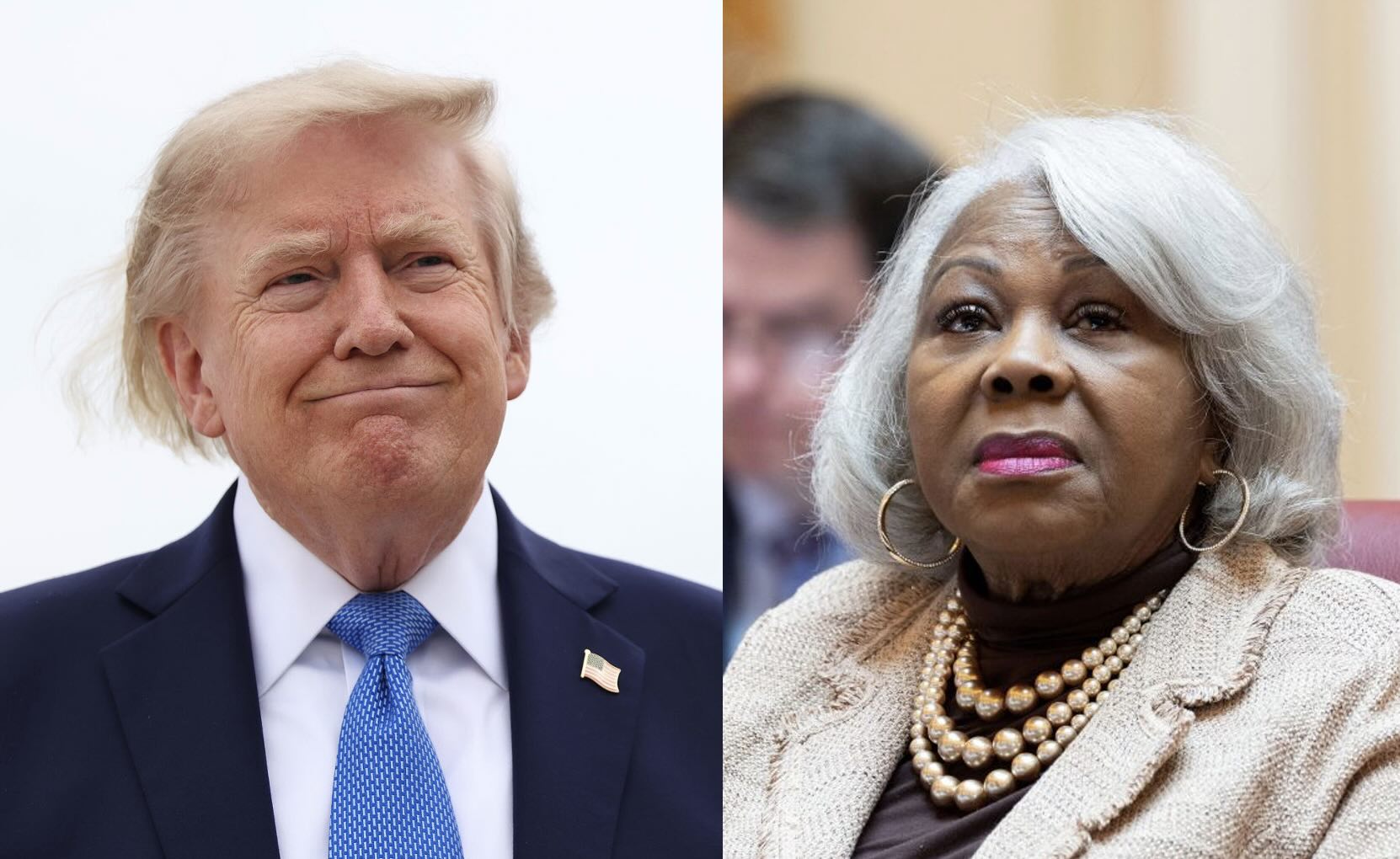
Photo: Emerald Book Image
On October 22, 2026, U.S. Attorney General Todd Blanche and FBI Director Kash Patel stood before cameras to announce the federal indictment of Virginia State Senator L. Louise Lucas—an 82-year-old grandmother, the first Black woman to lead the Virginia Senate, and a political titan in her state. Her alleged crimes? Running a marijuana trafficking operation, money laundering, and using her legislative position to benefit her business.
The timing—just twelve days before the November 3 midterm elections—drew immediate criticism from Virginia Governor Abigail Spanberger, who noted it violated longstanding Department of Justice policies against taking significant investigative steps so close to an election. But the deeper hypocrisy lies not in the timing. It lies in the comparison.
Two Tiers of Justice
Consider what happened to Donald Trump. The president faced multiple federal indictments involving allegations of historic gravity: attempts to overturn a presidential election, mishandling classified national security secrets, and falsifying business records. Special Counsel Jack Smith presented extensive grand jury testimony, phone recordings—including Trump's call to Georgia Secretary of State Brad Raffensperger—and official notes from former Vice President Mike Pence.
In Florida, federal prosecutors documented hundreds of classified files recovered from Mar-a-Lago, using security footage and audio recordings to allege intentional obstruction. In New York, a jury convicted Trump on 34 felony counts.
Yet today, Donald Trump faces no federal criminal consequences. The federal cases were dropped entirely. The Georgia RICO case was dismissed in its entirety in November 2025. The New York conviction resulted in an unconditional discharge—no jail time, no fine.
Meanwhile, Louise Lucas—an 82-year-old state senator accused of cannabis-related financial crimes—surrendered to federal authorities and faces up to 100 years in prison if convicted on all counts.
The Legal Architecture of Impunity
The disparity is built into America's legal framework.
The Department of Justice maintains a longstanding policy that a sitting president cannot be criminally indicted or prosecuted while in office. The rationale: the stigma and distraction of a criminal trial would fundamentally incapacitate the executive branch. This policy is why Special Counsel Jack Smith was forced to drop both federal prosecutions against Trump after his 2024 election victory.
But the protection extends far beyond the DOJ's internal policy. In Trump v. United States, the Supreme Court's conservative majority ruled that former presidents enjoy absolute immunity from criminal prosecution for actions within their core constitutional powers, and at least presumptive immunity for all other official acts. The Court determined that a president must be able to execute the duties of the office boldly and without fear of being prosecuted by future political opponents after leaving office.
No such constitutional immunity exists for state legislators. No such DOJ policy protects governors, mayors, or senators. Louise Lucas, like any other citizen, is fully subject to federal criminal law.
The Evidence Against Lucas—and the Evidence Against Trump
The 45-page federal indictment against Lucas outlines a case built on wiretapped communications, physical seizures, financial paper trails, and witness statements. Prosecutors allege she led a multi-year criminal enterprise alongside family members, trafficked over 220 pounds of marijuana, laundered millions through her dispensary The Cannabis Outlet, and used her role as Chairwoman of the Senate Finance and Appropriations Committee to shield her operation from scrutiny.
The evidence includes:
- Intercepted phone calls where Lucas allegedly said the operation was their "last chance at generational wealth" and that she had "gotten too old to not be greedy"
- Text messages regarding cannabis legislation stating "we can make a lot of money"
- Physical raids on May 6, 2026, recovering bulk marijuana and firearms from her businesses
- Undercover controlled purchases in July 2026 that tested positive for illegal marijuana
- Failure to disclose a $750,000 ownership stake in a shell company on mandatory Statement of Economic Interests forms
The defense argues this evidence is circumstantial and cherry-picked—that "generational wealth" is standard business ambition, that THC concentration variations are compliance errors, and that legislative advocacy for cannabis is legitimate public policy, not corruption.
But compare this to the evidence against Trump. In the classified documents case, prosecutors had security footage, audio recordings, and hundreds of recovered classified files. In the election interference case, they had the Raffensperger call, Pence's contemporaneous notes, and extensive grand jury testimony. A New York jury convicted him on 34 felony counts based on business ledgers, bank transactions, and witness testimony.
By any measure, the evidence against Trump was at least as substantial—arguably more so—than the evidence against Lucas. Yet Trump faced no federal prosecution. Lucas faces up to 100 years.
The Question of Timing and Selectivity
Federal officials insist the Lucas investigation began during the Biden administration, was handled based on evidence, and was approved by independent federal judges who found probable cause. They note the probe originated from a 2022 regulatory investigation into THC labeling accuracy at Virginia cannabis shops and expanded into a broader public corruption case.
Critics point to a different timeline: the involvement of Lindsey Halligan, a Trump ally who briefly served as interim U.S. Attorney for the Eastern District of Virginia before federal judges ruled her appointment unlawful, allegedly pressuring prosecutors to advance the case. The final decision to unseal the indictment was made by Attorney General Todd Blanche and FBI Director Kash Patel—both Trump appointees—just twelve days before an election.
The contrast with Trump's treatment is stark. When Trump faced federal charges, his legal team secured a Supreme Court ruling that fundamentally undercut the cases. When he won the 2024 election, the DOJ dropped the prosecutions entirely, citing the policy against prosecuting a sitting president. The Georgia case crumbled due to prosecutorial controversies. The New York conviction resulted in no punishment.
Trump's defense consistently characterized the prosecutions as politically motivated "lawfare" or "witch hunts"—and the legal system ultimately accommodated that framing, providing him with immunities and procedural protections unavailable to any other American.
Louise Lucas and her attorneys have made the same argument—that the charges are a politically motivated attempt to intimidate her. But no Supreme Court ruling protects her. No DOJ policy shields her. No election victory will make her case disappear.
The Lucas Case as a Mirror
The Lucas indictment forces Americans to confront this contradiction directly. Here is an 82-year-old Black woman, a pioneering politician who rose to the highest ranks of Virginia state government, facing the full weight of federal prosecution for alleged financial crimes related to a cannabis business. The evidence against her is contested, circumstantial in parts, and built on interpretations of ambiguous statements.
Meanwhile, the man who allegedly attempted to overturn a presidential election, obstruct justice, and mishandle classified national security secrets walks free—not because he was found innocent, but because the legal system is designed to protect the presidency from criminal accountability.
Lucas's supporters argue she is being targeted because of her political stature and her race. Federal officials deny this, pointing to the career investigators who began the case and the independent judges who approved the warrants. But even if the Lucas prosecution is entirely legitimate—based solely on evidence and law—the comparison with Trump's treatment remains devastating.
The question is not whether Lucas is guilty. The question is whether the American legal system applies the same standards to everyone. The answer, mathematically and structurally, is no.
What Comes Next
Senator Lucas has vowed to fight the charges and will not back down. Her formal arraignment will be the next major step in a legal process that could take years. If convicted, she faces a maximum of 100 years in federal prison—though her age and lack of prior criminal record would likely reduce any sentence.
But regardless of the outcome, the Lucas case has already accomplished something significant: it has made visible the two-tiered system of American justice. On one tier are ordinary citizens, state officials, and even high-ranking legislators—all fully subject to criminal prosecution. On the other tier is the president, protected by DOJ policy, Supreme Court precedent, and the political power of the office.
America isn't supposed to have kings. No one is supposed to be above the law. Yet the legal architecture has produced a system where the most powerful individual in the country is, in practice, the least accountable.
Louise Lucas's case has exposed a truth that transcends her individual fate: in the United States of America, the law is not applied equally. The president is above it. And that is the definition of a government of men, not of laws.
No Ads. By Us. For Us.
This article was made possible by readers like you. We hope it inspired you to support Emerald Book, so we can continue producing content like this.
We will never show you ads, sell your data, or require a subscription to consume our content. Your gift helps us keep the truth accessible.
Click the Support button to give a gift of any amount today.
Thank you for making this work possible.