

Emerald Pages
◆
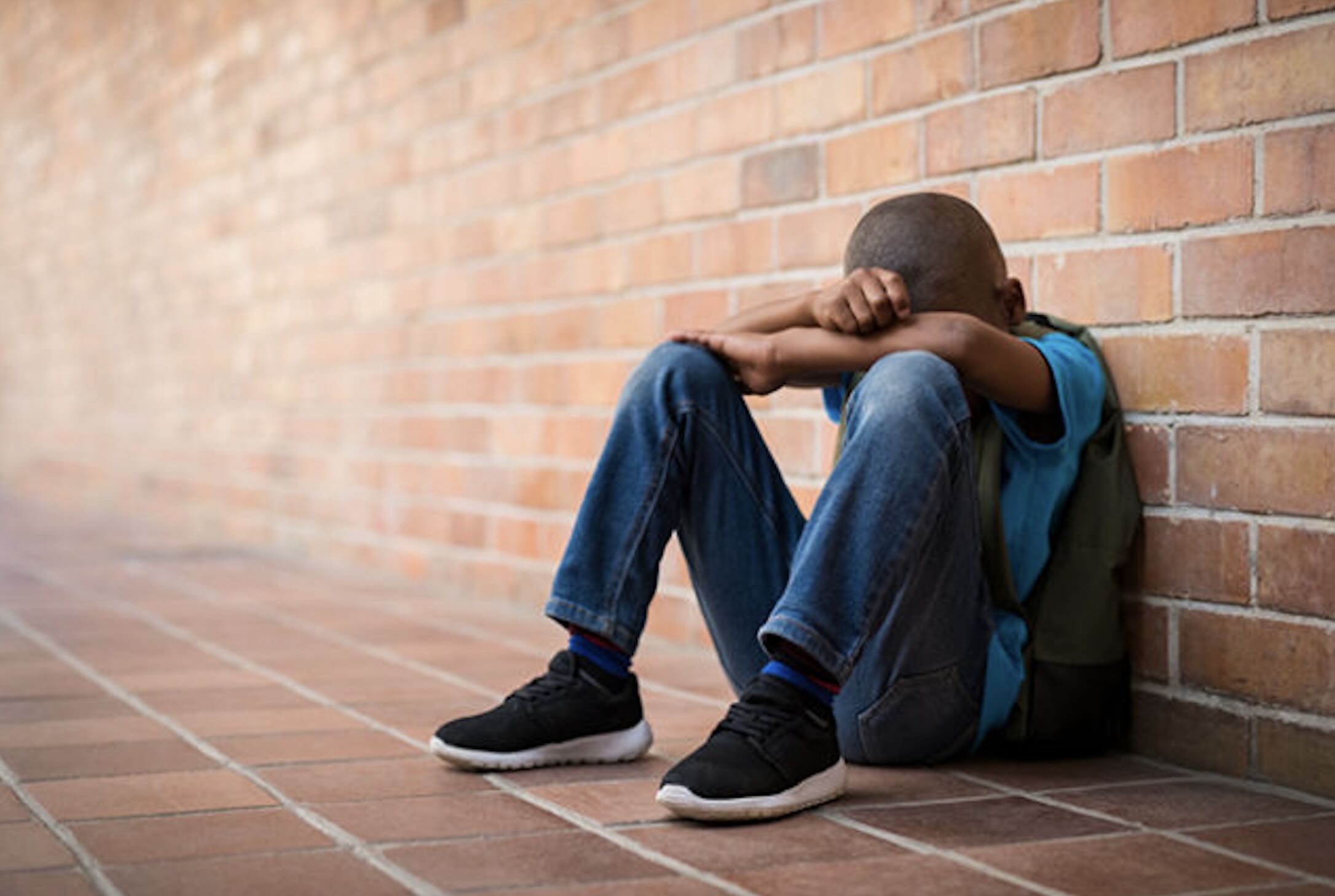
Photo: iStock
For decades, the four-year degree was sold as the great equalizer—the ticket to the middle class, the proof that meritocracy worked. For Black men, that promise has always come with an asterisk. Now, the asterisk has become a full stop.
Black male undergraduate enrollment fell by 22% across all U.S. colleges and universities between 2010 and 2022, according to data compiled by the American Institute for Boys and Men and the National Center for Education Statistics. At Historically Black Colleges and Universities—institutions built specifically to educate Black students—the drop was even steeper: 25%. Black male HBCU enrollment hit a 45-year low in 2023, according to Forbes, with just 28,000 students. Black men now make up roughly 26% of total HBCU enrollment, down from a peak of 38% in 1976. Across many HBCUs, women now account for up to 70% to 75% of the student body.
The conventional explanations arrive quickly: trade schools, financial pressure, the declining ROI of a degree. All of those are real. But they are downstream of something earlier and more fundamental. By the time a young Black man reaches high school graduation, the K-12 system has spent twelve years signaling to him—through discipline referrals, lowered expectations, and a near-total absence of role models who look like him—that academic institutions are places of surveillance, not cultivation.
The decline in college enrollment is not a mystery. It is a predictable outcome.
The Pipeline Starts Breaking in Preschool
The failure begins before academic testing even starts, rooted in how early childhood educators perceive Black male children. Data from the U.S. Department of Education Office for Civil Rights consistently shows that Black boys represent a massive percentage of preschool suspensions. Teachers routinely penalize Black toddlers for normal, high-energy developmental behaviors that are overlooked or normalized in white children.
By elementary school, the pattern is set. Black boys are systematically under-referred to gifted and talented programs. A major study published by the American Educational Research Association found that even when Black boys have the exact same math and reading test scores as white peers, teachers are far less likely to recommend them for advanced tracks—unless the teacher is also Black.
The discipline data is not ambiguous. Black students represent roughly 15% of the total K-12 public school population but receive nearly 39% of all school suspensions, according to the U.S. Government Accountability Office. A longitudinal review published by the Civil Rights Project at UCLA found that two in three Black boys are suspended at least once during their K-12 education, with nearly one in five missing a full month or more of instructional time. The U.S. Department of Education Office for Civil Rights notes that Black boys are nearly twice as likely to receive an out-of-school suspension or expulsion compared to white boys. The GAO confirmed these disparities are systemic, remaining highly disproportionate regardless of school poverty level or whether the school is traditional public or charter.
These disparities are not the result of worse behavior. They are the result of how the same behavior is read differently depending on the race of the child.
The Experiments That Show It
When researchers isolate the variable of race—keeping the behavior, the grades, and the history identical—the bias becomes undeniable.
In a Yale University study, over 1,300 educators were shown identical, standardized 45-second clips of adolescent misbehavior—texting, slamming doors, throwing objects—performed by different actors. The data showed that teachers were 6.6 percentage points more likely to send a Black boy to the principal's office than a white boy for the exact same act. In that same study, researchers tracked the language teachers used. For identical infractions, teachers used significantly more punitive, blame-heavy language for Black boys, attributing the behavior to an internal deficit—"a lack of caring"—while viewing the white boy's identical behavior as just having "a bad day."
A Stanford University study presented teachers with student discipline files. For a first minor infraction, teachers treated all races equally. But when a second identical infraction occurred, teachers dealing with Black-labeled names like DeShawn or Darnell grew significantly more irritated, instantly labeled the student a "troublemaker," and prescribed punishments far more severe than those given to white students like Greg or Jake for the exact same second infraction.
The disparity is concentrated in subjective categories where teachers have personal discretion—"defiance," "disrespect," "insubordination," "disruptive behavior." In classroom observations, researchers found that when white students exhibited these exact same behaviors, teachers were far more likely to show leniency, treat it as a lapse in judgment, or ignore it entirely. For Black boys, teachers quickly adopted an authoritarian approach, treating non-compliance as a malicious threat to their authority.
A study from the University of Illinois found that Black students receive significantly fewer verbal or written warnings than their white peers before a punishment escalates. White students are given multiple opportunities to quietly correct their behavior, while Black boys are fast-tracked straight to office referrals and out-of-school suspensions.
Research from the University of Notre Dame highlights that teachers are more likely to monitor Black boys closely, anticipating trouble and issuing hyper-reprimands for minor actions. Georgetown Law's Center on Poverty and Inequality documented "adultification bias"—educators routinely perceive Black boys as older, more aggressive, and less innocent than white peers of the exact same age.
The Peer Dimension: Conditional Belonging
The hostile climate is not limited to adult authority figures. Research from the UCLA Black Boy Mattering Project found that Black boys frequently experience microaggressions, racial stereotypes, and social isolation from classmates. The study noted that peers often value Black boys conditionally—praising them for athletic ability or entertainment value while actively ostracizing or boxing them out of intellectual, academic, or leadership spaces. In predominantly white or elite academic environments, Black boys frequently report feeling culturally isolated and dealing with peer pushback if they do not conform to narrow stereotypes.
When a student experiences hyper-surveillance from teachers and stereotyping from peers, it results in what sociologists call academic disidentification. To protect their self-esteem from a school environment that feels universally unsupportive, many young Black men mentally check out from the education system entirely.
- Black students are roughly 15% of the K-12 population but receive nearly 39% of all suspensions (GAO).
- Teachers were 6.6 percentage points more likely to send a Black boy to the principal's office for identical misbehavior (Yale).
- Two in three Black boys are suspended at least once during their K-12 education (UCLA Civil Rights Project).
- Black men make up roughly 1.3% of the public teaching workforce nationwide.
The Missing Role Models
The lack of support is worsened by a profound shortage of mentors who share the same lived experiences. Black men make up roughly 1.3% of the public teaching workforce nationwide, down from 6.5% in earlier decades. The vast majority of Black boys will navigate their entire K-12 trajectory without ever having a Black male teacher. They lose out on daily access to an adult figure who can naturally serve as an emotional mirror, a cultural buffer against school bias, and a direct advocate for their success.
The school environment is also documented as uniquely hostile for Black male educators, creating a secondary push-out effect that removes critical role models for Black boys. Instead of being valued for their intellect or pedagogy, Black male teachers are frequently pigeonholed as the designated disciplinarian—expected to use their physical presence or demographic background to intimidate "disruptive" students, particularly Black boys, rather than focusing on their actual curriculum. This extra administrative burden is an uncompensated "invisible tax."
The same racial stereotypes that impact Black boys follow Black men into the faculty lounge. If a Black male teacher advocates strongly for a student, challenges an administrative decision, or expresses frustration, colleagues and administrators often label him as "aggressive," "uncooperative," or "difficult." Their professional insight is routinely ignored, yet they are called upon the moment a behavioral crisis occurs on campus. Being the "only one" in a building creates immense psychological pressure, constant tokenism, and high burnout. Black male educators leave the profession at elevated rates, and the cycle tightens.
When young Black boys observe that the few Black men in their schools are treated primarily as low-status authority figures—hall monitors and disciplinarians rather than celebrated academic leaders—they internalize the idea that formal education is an environment where Black men are meant to be managed, not empowered.
The Good Teachers Don't Offset the Hostile Ones
There are good teachers. There are educators who see Black boys clearly, who advocate, who refuse the script. Their work matters, and the research is clear that a single Black teacher can dramatically change a Black boy's graduation and college enrollment probability. But individual goodness is not a system. When the aggregate data shows that Black boys are suspended at three times the rate of white peers for identical subjective infractions, when controlled experiments show teachers watching Black boys more closely even when no misbehavior occurs, when two in three Black boys are suspended at least once, the good teachers are not offsetting the hostile ones. They are being outvoted by a structure.
Several institutions are fighting to reverse the numbers. Howard University's Men of the Mecca Initiative pairs early recruitment partnerships in public middle schools with mentorship networks. Benedict College bucked national trends with a 7% increase in Black male enrollment by intentionally tailoring student support. Morehouse College, the nation's only all-male HBCU, has seen enrollment growth driven by applicants seeking an environment where they represent the campus majority. These are proof of concept—not scale.
The national trend will not reverse until the pipeline is repaired. That means ending the preschool-to-suspension pattern, diversifying the teaching force and retaining the Black men already in it, replacing deficit-based counseling with college-prep gatekeeping that assumes capability, and treating subjective discipline referrals as the bias indicators they are.
Until then, the enrollment numbers will keep falling. Not because Black boys stopped wanting college—but because schools don't show them they're valuable.
No Ads. By Us. For Us.
This article was made possible by readers like you. We hope it inspired you to support Emerald Book, so we can continue producing content like this.
We will never show you ads, sell your data, or require a subscription to consume our content. Your gift helps us keep the truth accessible.
Click the Support button to give a gift of any amount today.
Thank you for making this work possible.