

Emerald Pages
◆
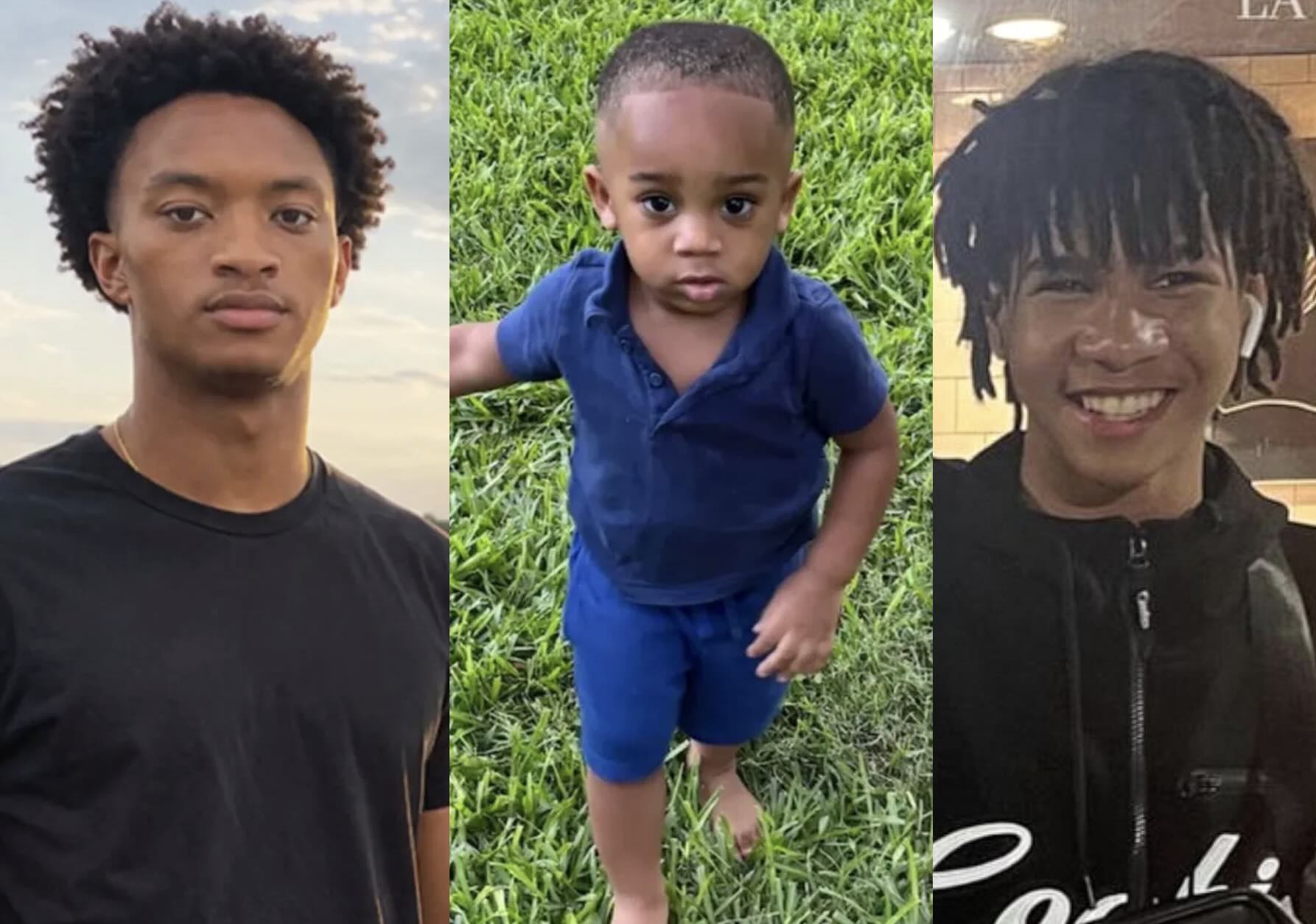
Kohen Wiley (center), Nolan Wells (left), and Cyrus Carmack-Belton (right) | Photo: Emerald Book Image
There is a particular kind of grief that arrives not with a verdict, but with a ruling. In October 2026, the Mississippi Attorney General’s office announced that the fatal police shooting of one-year-old Kohen Wiley was “justified.” The officer who fired into a vehicle in a Walmart parking lot over an alleged shoplifting call regarding diapers and baby clothes would face no criminal charges. The decision was not the end of a legal process—it was a confirmation that the process itself was never designed to protect them.
The case is not an outlier. It is one of three high-profile deaths of young Black males that, within a span of months in 2026, ended with no one found criminally responsible. In June, a South Carolina jury acquitted gas station owner Rick Chow of murder in the 2023 shooting death of 14-year-old Cyrus Carmack-Belton, accepting a “defense of others” argument despite forensic evidence that the teen was shot in the back after a false accusation. In September, a Jackson County, Mississippi grand jury returned a “no true bill” in the death of 18-year-old Nolan Wells, found in the water off Horn Island with unexplained blunt-force trauma to the back of his head, concluding the evidence was consistent with accidental drowning. Three families. Three Black children. Zero convictions.
For decades, defenders of the American legal framework have answered such outcomes with a familiar appeal: due process. The system, they argue, is not designed to deliver cosmic justice or moral vindication. It is designed to determine whether a specific individual violated a specific statute under a rigid set of evidentiary rules. If prosecutors cannot prove guilt beyond a reasonable doubt—or if a grand jury finds no probable cause—the system has followed the law as written. To convict otherwise, the argument goes, would be to surrender the rule of law to public outrage and mob rule.
But that defense collapses under its own weight when examined against the practical reality of how the law is actually administered. The rules are not independent. They are interpreted and applied by judges with immense discretion over what evidence juries may see. They are shaped by prosecutors who decide whether to bring charges at all—and who, in cases of police violence, work daily alongside the very departments they are tasked with investigating. They are leveraged by wealth: a defendant with resources can hire private investigators, forensic experts, and jury consultants, while indigent defendants rely on underfunded public defenders buried under unmanageable caseloads. The ideal of a neutral playing field is not a description of the system. It is a fantasy the system tells itself.
Due Process Is Broken
The deeper problem is one of legitimacy. Legal scholars describe it as procedural justice: the idea that the law’s authority depends on whether people believe the process is fair, neutral, and equally applied. When a community repeatedly witnesses cases where Black individuals die and no one is held criminally responsible, that belief does not merely weaken—it breaks. At that point, appeals to “following the rules of evidence” feel hollow. They are not a shield for the innocent; they are a shield for the status quo. A system that can process the death of a one-year-old child without finding a single legal flaw in how it happened should not exist, let alone be depended upon for justice.
This is why the question “who is responsible for punishment if the state fails?” has no clean answer within the existing framework. Under U.S. law, the state maintains an absolute monopoly on criminal punishment. If a jury or grand jury clears an individual, no private party may lawfully impose prison time or physical harm in response. Families are left with civil lawsuits, which can force financial penalties but cannot convict. They can petition the Department of Justice for a federal civil rights review, a process that is slow, discretionary, and rarely results in charges against local officers. They can push for professional sanctions—the loss of a job or a license—but these are administrative consequences, not justice.
- Kohen Wiley, 1: Shot by a Senatobia police officer; the Mississippi Attorney General ruled the force “justified” in October 2026.
- Cyrus Carmack-Belton, 14: Shot in the back by Rick Chow after a false shoplifting accusation; Chow was acquitted of murder in June 2026.
- Nolan Wells, 18: Found dead with blunt-force head trauma; a Jackson County grand jury declined to indict anyone in September 2026.
- D’Vontaye Mitchell, 43: Pinned face-down by hotel security guards; the four workers charged with felony murder received probation and time served in 2025.
- Ryan Gainer, 15: Autistic teenager shot by sheriff’s deputies within seconds of exiting his home; no criminal charges were filed.
The overwhelming concentration of these outcomes—not spread over decades, but compressed within a single year—has led many to a conclusion that reform-minded advocates still resist: that the system cannot be fixed from within. Incremental measures like body cameras, civilian oversight boards, and increased public defender funding are seen by a growing movement not as solutions, but as superficial fixes to a fundamentally broken system. When the law operates to shield an officer from accountability after a baby is killed, the system is fulfilling its intended purpose: to protect state power at any cost.
The Need for Consequences
For generations, the absence of consequences has been the rule rather than the exception. When courts will not convict, when grand juries will not indict, and when prosecutors will not charge, the message delivered is not justice but permission—permission for the next officer, the next vigilante, the next bystander to act without fear of answer. This is the lesson of 2026: three dead Black children, three legal proceedings, and not a single person held criminally responsible. Harm that goes unanswered does not stay contained; it multiplies, because impunity is an invitation. It is from this long record of consequence-free violence that a radical departure from reform has emerged: a redefinition of justice built not around repair, but around retaliation. Where transformative justice asks who was harmed and what they need to heal, retaliatory justice begins from a different premise—that a community repeatedly denied lawful recourse is entitled to answer harm in kind. If the courts will not convict and the grand juries will not indict, then the ledger of harm and consequence is reopened outside the courtroom, and the community becomes both the injured party and the instrument of its own answer. Retaliation need not mean indiscriminate vengeance; its logic is reciprocity—an eye for an eye, a life for a life, harm answered in proportion rather than absorbed in silence. The appeal is not that this produces healing, but that it produces consequence, the one thing the system has reliably refused to deliver.
Activists often draw a comparison to the United States’ response to the September 11 attacks. After 9/11, the nation spent trillions, mobilized its military, and created an entirely new federal agency to pursue justice for the dead. It could do so because it controlled the treasury, the courts, and the badge. The Black community does not have these resources. It lacks an independent government, police force, or court system. When a Black child is killed, the community must rely on the state’s own prosecutors and investigators to hold the state accountable—a conflict of interest inherent in the structure itself. The resources available to grassroots organizations are a fraction of what the federal government deploys without hesitation when the victims are framed as the nation’s own.
This disparity is the architecture of a system that has always valued some lives over others. The question now facing the Black community is not whether the system can be made to work for them. It is whether they can build something better outside of it. For a growing number of people, the answer is no longer a matter of debate. The system has failed. It cannot be relied upon. The only solution left is to redefine justice entirely—not as something granted by the state, but as something the community builds for itself.
The fight continues. Civil rights attorney Ben Crump is still pursuing independent autopsies and federal reviews. The NAACP and local organizers are demanding the release of body-camera and surveillance footage. Wrongful death lawsuits are moving through civil courts, where the burden of proof is lower and the standard is not guilt but liability. These efforts are necessary, but they are not enough.
The deeper truth is that abiding by the law has always been a choice. The law does not govern by nature; it governs by consent. A constitution is not a force of physics; it is a document, upheld only so long as the people it binds agree to be bound. When the state repeatedly demonstrates that its laws protect the powerful and abandon the vulnerable, that consent is not merely withdrawn in theory—it is withdrawn in practice. The Black community has honored its side of the social contract with patience, with litigation, with federal petitions, and with generations of peaceful protest. The verdicts of 2026 have made one thing clear: if the state will not hold itself accountable, the people it has abandoned will have to find another way. The Black community must take justice into its own hands—not as lawbreakers, but as people who have finally recognized that the law, as written and as applied, was never designed to protect them, and that what the state refuses to answer, the community must answer for itself.
No Ads. By Us. For Us.
This article was made possible by readers like you. We hope it inspired you to support Emerald Book, so we can continue producing content like this.
We will never show you ads, sell your data, or require a subscription to consume our content. Your gift helps us keep the truth accessible.
Click the Support button to give a gift of any amount today.
Thank you for making this work possible.