

Emerald Pages
◆
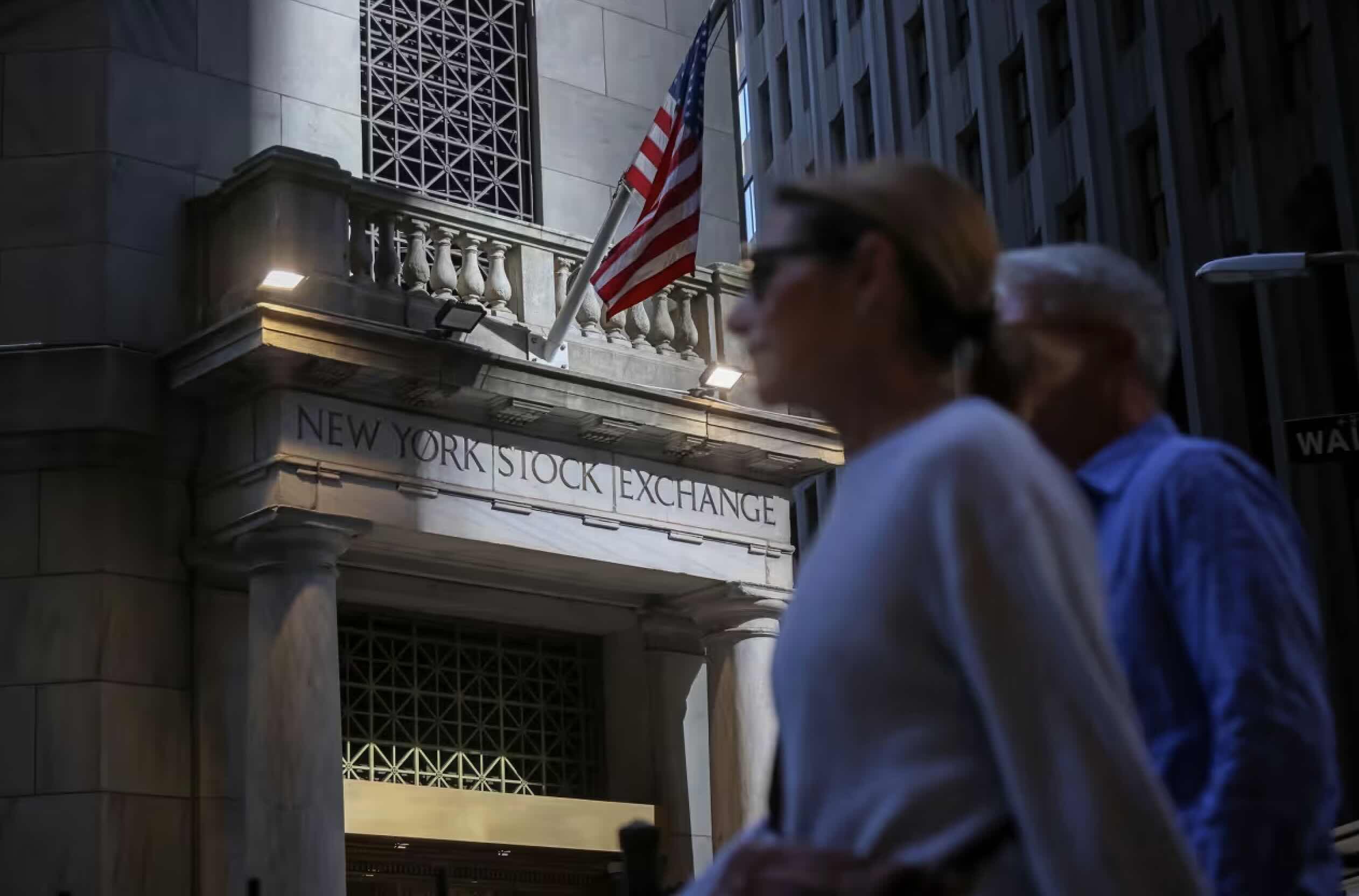
Photo: Bloomberg
The American economy is currently perched on a precipice of unprecedented risk, and the safety nets have been systematically removed. According to Federal Reserve data for end-2025, a record 34% of all U.S. household wealth—nearly $68 trillion—is now tied directly to the stock market. This allocation eclipses even the fevered heights of the 2000 dot-com bubble, when equity exposure peaked at 27%, and the 30% peak from the 2021 meme-stock frenzy. For the first time on record, public equities have overtaken real estate as the largest single component of American household wealth.
But this is not a collective, democracy-wide vote to gamble on Wall Street. It is a highly stratified system of racialized asset hegemony—a structure where one demographic group holds absolute control over the nation's core wealth-generating assets. White households control roughly 87% to 92% of all corporate equities and mutual funds. The top 1% alone controls half of the entire market. The bottom 50% of Americans own just 1% of the nation's stock market wealth. For the median middle-class white household, this represents a massive exposure to volatile assets. For Black households, it represents a different kind of exposure entirely: the systemic fallout of a risk they never signed up for.
The historical trajectory of this concentration is striking. In 1982, following the brutal stagflation of the 1970s, equity exposure hit an all-time low of 9.5%. Most families kept their money in traditional savings accounts, certificates of deposit, and bonds. Fewer than 30% of households owned any stock at all. The 1990s brought a structural pivot: the introduction and widespread adoption of 401(k) plans and IRAs replaced traditional company pensions with individual market accounts. By the peak of the dot-com bubble in 2000, allocation had climbed to 27%. Today, driven by an extraordinary AI infrastructure boom and tech-heavy bull markets, allocation has hit a record 46.7% of total financial assets—translating to roughly 34% of absolute total assets, including real estate.
The AI Bubble: 42 Companies, Two-Thirds of the Gains
The warning signs of a looming recession are no longer whispers in academic corridors; they are front-page news. The International Monetary Fund and the Bank for International Settlements have explicitly warned that the tech-driven boom could turn to bust. The concentration is extreme: just 42 AI-related companies account for roughly two-thirds of the S&P 500's total gains. This means that a 33% to 35% correction in tech stocks could easily drag the rest of the U.S. economy into a recession.
The mechanics of the bubble are increasingly fragile. Global AI-related spending is forecast to hit an ungodly $2.59 trillion, yet an overwhelming majority of that revenue is just "capital expenditure recycling"—tech giants buying chips and cloud space from each other rather than everyday businesses or consumers paying for AI tools. Investors are beginning to realize that the promised profits may never materialize on a scale that justifies current valuations. Meanwhile, a major catalyst for a crash isn't just low demand; it's an explosion of new supply. With private tech companies pushing massive IPOs and locking up capital, a flood of new stock supply is hitting a market where investors are already entirely maxed out on their tech allocations.
Even more alarming is the "sand castle" infrastructure debt. Big Tech companies are burning through their cash so fast that they have actively turned to debt markets to fund data center construction. Private equity firms are repackaging this speculative data center debt and selling it off to pension funds and life insurers. This echoes the subprime mortgage crisis: if the AI boom stalls, the defaults won't just hurt Silicon Valley—they will hit the retirement funds of ordinary citizens. The American Banking Association notes that while rising stock values temporarily prop up overall consumer spending numbers, the extreme concentration of wealth leaves the broader public highly exposed.
The Canary in the Coal Mine
While affluent, asset-heavy households can weather a paper-wealth storm, the pain for wage-dependent households is already arriving. The latest Bureau of Labor Statistics data is flashing red: the Black unemployment rate jumped from 6.0% to 7.0% in a single month, the fastest one-month rise since the 2020 pandemic shock. Black women aged 20 and older saw their jobless rate surge from 5.9% to 7.3%. Youth unemployment within the Black community remains heavily elevated at 14.4%. At 7%, the Black unemployment rate sits at nearly double the 3.6% rate for white workers. While unemployment rates for white, Hispanic, and Asian workers either fell or held steady, Black households experienced immediate, aggressive contractions.
This is a "canary in the coal mine" for the broader American economy. Because of systemic labor market dynamics, Black workers are often the first to feel the impact of a shifting economic tide. A significant portion of this spike was driven by corporate downsizing, AI disruptions, trade pressures, and a massive contraction in the production, logistics, and education sectors. Because Black workers are disproportionately concentrated in administrative, frontline support, production, and public-facing logistics roles—and are statistically younger or have less structural seniority within corporate hierarchies—they bear the brunt of sudden layoffs.
This brings the whole picture full circle. The top 10% continues to pump the stock market to record-high asset values. Corporations cut labor costs to keep profit margins up and satisfy those investors. Black families—who hold just 1% of total stock market wealth—receive none of the upside of the stock market boom, but serve as the immediate shock absorbers when the economy begins to cool down. Labor data shows that Black workers bear a much higher risk of unemployment and sudden layoffs during economic shifts. Because of this persistent labor market volatility, choosing conservative financial options—keeping money in cash rather than volatile stocks—is completely rational. However, this means they miss out on market surges while remaining the most exposed to layoffs when corporations cut costs to protect their stock prices.
- The Math of Over-Exposure: A 34% allocation to stocks means a significant market correction would vaporize trillions in household wealth, triggering a sudden halt in consumer spending among the top 10%—the very households whose spending drives two-thirds of GDP.
- The Contagion Effect: When wealthy households stop spending, businesses lay off working-class employees who had no part in creating the initial market risk. This is systemic contagion—a shock that originates in one narrow sector but spreads to collapse the entire economy.
- The Double Whammy: Black families face inflation rates 10 to 15 basis points higher than the national average, leaving no surplus capital to invest in the first place. During recessions, when stocks are "on sale," white households often have the liquidity to buy the dip; Black households are more likely to be facing income shocks or medical emergencies at the exact same time.
- The Retirement Trap: The shift from corporate pensions to 401(k) plans forced millions of everyday workers to tie their life savings to mutual funds just to outpace inflation, structurally pumping trillions of dollars into Wall Street whether they wanted to take the risk or not.
Who Pays When It Pops?
This creates a profound structural injustice. The institutional players keeping their foot on the accelerator have high-speed data, complex hedging strategies, and deep financial cushions. When the market inevitably turns, they can execute algorithmic sell orders in milliseconds. Meanwhile, everyday wage earners—particularly Black and working-class families who are already bearing the brunt of high daily living costs—are entirely locked out of those escape hatches. They cannot hedge against the systemic fallout, leaving them entirely exposed when the momentum stalls and the economic costs are forced downward into the labor market.
In the initial pop, paper wealth vaporizes for asset-heavy households, but because these families hold diversified assets like home equity, their core survival is rarely threatened. For wage-dependent households, they don't lose much paper wealth because they didn't own the stocks to begin with—but the economic anxiety immediately trickles down. As corporate cost-cutting begins, top executives protect their stock options by ordering mass layoffs to preserve profit margins. Black workers face the highest risk of sudden unemployment. When companies cut "bloat," working-class, administrative, and service-level roles are eliminated first. In the macroeconomic hangover, wealthy households with cash reserves exploit the crash by purchasing depressed stocks and real estate at a massive discount, setting up their next wealth wave. Without emergency savings or safety nets, a prolonged recession forces vulnerable families into high-interest debt just to pay for rent and food, locking in long-term poverty.
This is the definition of financial privilege externalization. In economics, an externality is an unintended side-effect of commercial activity that affects other parties without their consent. Externalizing risk means that affluent market participants push the dangerous side-effects of their high-risk investing behavior onto the broader public. They capture the massive profits during bull markets, but rely on government bailouts, corporate cost-cutting, and mass layoffs of vulnerable workers to absorb the damage when things go wrong.
While Wall Street continues to hit record valuations on paper, the labor report confirms that for millions of families on the ground, the jobs recession has already arrived. The foot remains on the pedal of a speculative bubble, but only the wealthy have airbags. The American economy is not a single ship rising and falling together; it functions as a K-shaped split, where those who own assets are pulled upward while those reliant solely on wages are dragged down by daily living costs. And when the music finally stops, it will be the people who never got to dance who pay the price.
No Ads. By Us. For Us.
This article was made possible by readers like you. We hope it inspired you to support Emerald Book, so we can continue producing content like this.
We will never show you ads, sell your data, or require a subscription to consume our content. Your gift helps us keep the truth accessible.
Click the Support button to give a gift of any amount today.
Thank you for making this work possible.