

Emerald Pages
◆
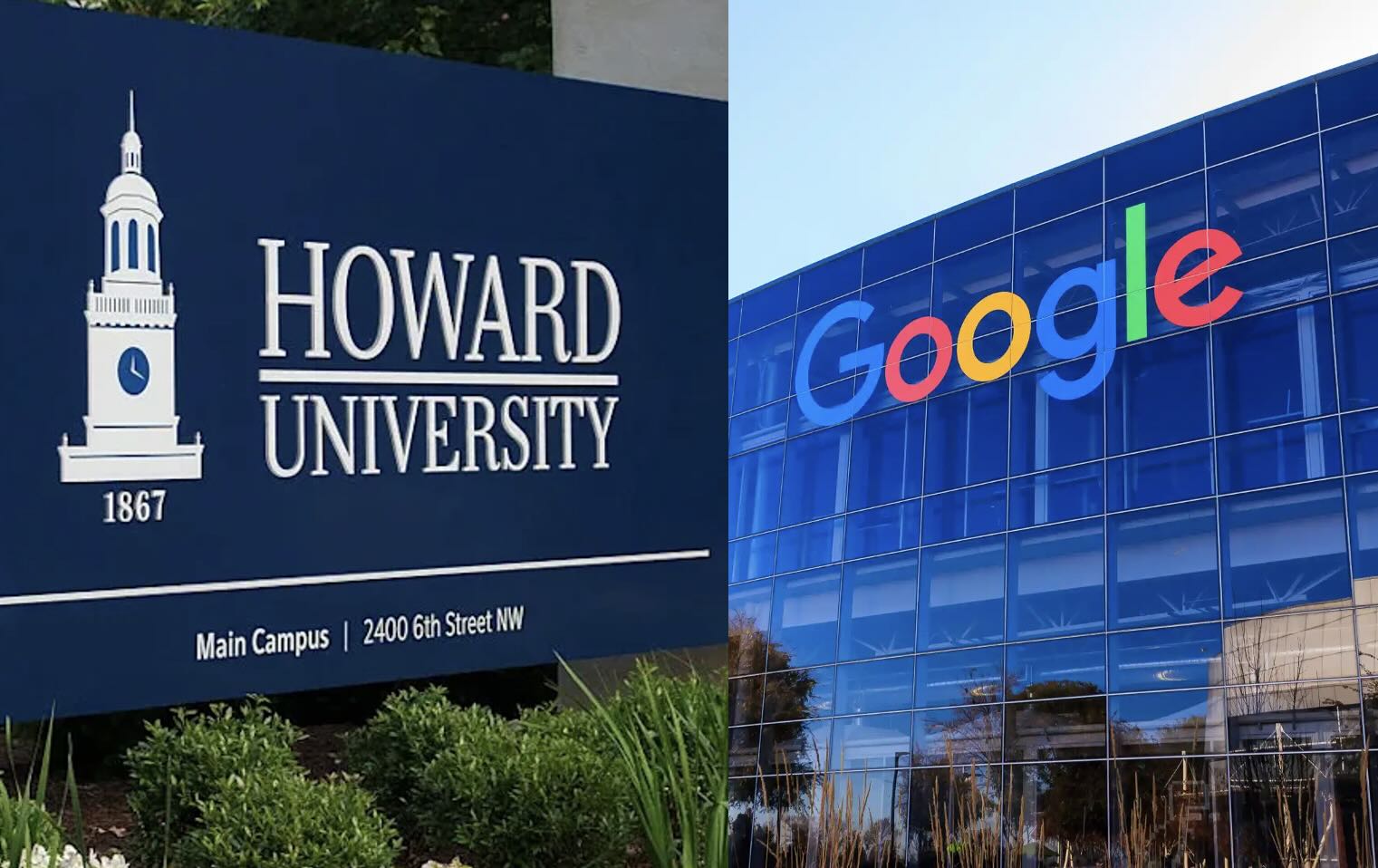
Photo: Emerald Book Image
Howard University and Google Research have released a 600-hour dataset of African American English, gathered from 32 states, under a partnership called Project Elevate Black Voices. Researchers traveled the country recording natural conversation, cataloging dialects, accents, and rhythms. Howard retains ownership of the data. Initial access is restricted to HBCU researchers. On paper, it reads like a win—a prestigious Black institution extracting concessions from a tech giant, protecting a vulnerable language from corporate predation, and forcing Silicon Valley to finally hear Black people correctly.
It isn't. It's the equivalent of inviting one white friend to the cookout—and then handing him the aux cord, the recipes, and the deed to the house. He's polite. He's grateful. He says all the right things about how much he loves the culture. But the moment he leaves, he's going to open a restaurant with your grandmother's recipes, charge admission, and call it innovation. You'll still be at the cookout. He'll be in a boardroom.
The Cookout Problem
When that one white friend shows up, the dynamic shifts in ways nobody asked for. You code-switch in your own space. You explain the culture—the jokes, the references, the rules of engagement—to someone who should just know. You wonder if he's going to take what he saw, misinterpret it, and perform a cringey imitation later to his own friends. You wonder if he understands that the cookout is not an experience to be consumed and repackaged; it is a sanctuary, a place where Black people can exist without the performance, without the scrutiny, without the constant negotiation of white comfort.
Howard is trying to act as the strict gatekeeper at the door—holding the licensing rights, keeping the data out of corporate hands, restricting initial access to HBCUs. But once you let the outsider in to study the space, you can't control what they do with that knowledge once they leave. The data may be licensed; the patterns it teaches are not. Once Google's models ingest those 600 hours, the statistical fingerprints of Black speech are permanently absorbed into proprietary neural networks. Howard cannot claw them back. The genie isn't just out of the bottle; it's been vectorized, embedded, and baked into a multi-trillion-dollar architecture that answers only to shareholders.
The AI systems that will eventually absorb this data were never built to understand Black people. They were built on a foundation of internet text and digitized books that is overwhelmingly white, Western, and corporate—and rife with historical stereotypes. Patching a specialized dataset onto that foundation doesn't rebalance the trillions of words of biased training data already baked into the neural network. It throws a cosmetic quilt over a rotting floor.
A Blanket Over the Bias
The core problem is structural, and it lives in the math. Current AI models break language into numerical fragments called tokens. The tokenizers—the algorithms that decide how text is chopped up and processed—are optimized for standard white English. Research has shown that AAVE requires more tokens to process the same message. That means it is mathematically more expensive, slower, and less accurate for the model to handle. Adding 600 hours of audio doesn't change the tokenizer. It doesn't change how the model segments words, how it assigns probabilities, or how it weighs dialects. It just gives the model more examples of a language it was structurally designed to penalize.
Worse, the systems are policed by safety filters and human annotators trained on white middle-class norms. Those annotators routinely flag perfectly normal AAVE phrases as "aggressive," "toxic," or "low-quality" due to their own implicit biases. Study after study has documented this. AAVE speakers are more likely to have their content removed, their accounts flagged, their expressions misread as hostility. Without retraining the entire human-in-the-loop pipeline and rebuilding the safety architecture from the ground up, the system will continue to misclassify and penalize Black speech—even if it can hear it perfectly.
And here's the contradiction that should stopped Howard cold: an AI can be trained to recognize or even mimic Black speech patterns flawlessly while remaining structurally weaponized against Black people. The algorithm's actual functions—how it evaluates credit scores, filters job applicants, or flags people for surveillance—remain completely unchanged. The familiar voice becomes a mask for predatory behavior. A voice assistant that understands AAVE perfectly can still be used to power predictive policing tools, targeted corporate marketing, or automated benefit-denial systems in Black neighborhoods. The bias isn't just in the interface; it is in the incentives of the entities building and deploying the technology.
Tech critics call this a "veneer fix." The baseline is already set: foundational models are trained on the open internet, which is overwhelmingly dominated by standard Western, white, corporate English and rife with historical stereotypes. Adding a few hundred hours of Black vocal data doesn't rebalance the trillions of words of biased training data already baked deep into the model's neural network. The model might understand what a Black person is saying perfectly, but its underlying logic will still associate their dialect or identity with "high risk," "low professionalism," or "hostility" because of the biased internet data it was raised on. By treating language as merely an audio-processing problem rather than a systemic, conceptual problem, these projects mistake the interface for the architecture. The system remains fundamentally biased—it just becomes much better at understanding the people it is structurally disadvantaging.
The Asymmetry Is Embarrassing
Look at what each side actually walks away with. This is not a partnership between equals. It is a negotiation between a university and a corporation that could buy the university's entire endowment with a rounding error.
- What Black communities get: The hope that voice assistants might misinterpret them less often, and that HBCU researchers will have temporary, exclusive access to academic data. That's it. That's the return.
- What Google gets: Free R&D on a major product flaw. Advanced training data permanently baked into proprietary neural networks. Expanded market reach. And highly valuable public relations capital to shield itself from regulatory pressure—the ability to point at Howard and say, "We're fixing bias," even while its core business models continue to drive automated inequality.
- The loophole: Howard retains ownership of the raw dataset—but the partnership explicitly allows Google to use it to improve its own commercial products. Once the data is internalized into Gemini or Google Assistant, Howard cannot claw it back. Google secures permanent commercial value. Howard secures administrative responsibility.
- The labor: A marginalized community is forced to provide the labor—the language, the cultural knowledge, the trust-building, the 32-state recording effort—to fix a product flaw in software built by a company that has repeatedly been accused of algorithmic discrimination. And then that company sells the fixed product back to them.
This is why critics argue that projects framed as "philanthropy" or "inclusion" are, at their core, highly lucrative data-extraction pipelines for Big Tech. A university cannot compete with the legal, financial, and computing power of a multi-trillion-dollar corporation. The tech giant controls the modern computing infrastructure and the billions of dollars required to train frontier models. This forces academic institutions, including HBCUs, to partner with them if they want their research to have any direct, large-scale application in the real world. It is framed as a collaboration between equals, but the power dynamic hasn't shifted at all. Howard gets the administrative burden; Google gets the compounding value. The community gets the promise of better customer service; Google gets the market.
What a Real Fix Would Require
To truly solve racial bias rather than mask it, AI companies would have to dismantle and rebuild their entire technical and business architecture. This isn't a matter of adding more data. It's a matter of changing the math, the incentives, and the ownership structures that produced the bias in the first place.
First, they would have to retrain foundational models from scratch with new tokenization algorithms that treat multi-dialect systems as distinct, rule-bound languages with equal mathematical weight—not as deviations from a corporate benchmark. Second, they would have to fundamentally restructure their reinforcement learning pipelines, giving culturally competent annotators the institutional power to rewrite the rules of what the AI defines as "safe," "professional," and "appropriate." Third, they would have to move from data extraction to data equity: paying ongoing royalties to communities, granting permanent veto power over how cultural data is deployed, and establishing strict legal firewalls against predatory use. Fourth, they would have to relinquish monopolistic control—actively funding, open-sourcing, and ceding heavy computing resources directly to public institutions, HBCUs, and community-led cooperatives so they can build, own, and govern their own tailored AI systems outside the corporate ecosystem.
None of this is happening. Collecting data is cheap and fast. Retraining a frontier model from scratch costs tens of millions of dollars and months of compute time. That's why commercial tech companies prefer "fine-tuning" and data patches—it lets them claim they're addressing diversity goals without dismantling and rebuilding their entire technical ecosystem. They mistake the interface for the architecture. They put a Black voice on a racist engine and call it progress.
The Alternative Isn't Nothing
Howard's researchers say the alternative—doing nothing—is also harmful. They're right that broken AI causes immediate harm: discarded job applications, inaccurate court transcriptions, failed medical voice-to-text, voice-activated safety features that don't respond during emergencies. These are real consequences, and they fall disproportionately on Black people. The argument for intervention is not unreasonable.
But withholding cooperation to prevent exploitation is also a legitimate defense. Some cultural spaces and language patterns should remain entirely unmapped by corporate or government entities. If a community withholds its linguistic data, it actively prevents tech companies and state entities from weaponizing that data for automated surveillance, voice-tracking, or predatory marketing. Refusing to participate breaks the cycle of digital extraction, where Black cultural capital is turned into proprietary software for corporate profit without providing genuine economic equity to the community. Language can serve as a coded space of safety and community. From this viewpoint, documenting it for an algorithm compromises that sanctuary.
The real question is whether an HBCU can maintain genuine control once a tech giant gets involved—or whether the corporate system always ends up colonizing the data anyway. The answer, historically, is the latter. Once the outsider is in the door, the terms of the relationship are set by whoever owns the infrastructure. And Google owns the infrastructure.
As it stands, this project won't elevate Black voices. It will teach a biased system to sound Black while it's being racist. The familiar voice is the mask. The algorithm underneath never changed. The deal that made it possible is so comically asymmetric it's embarrassing. And the cookout? The cookout is now bugged, wired, and completely accessible to corporate algorithms. The aux cord is gone. The recipes are on a server in Mountain View. And the one white friend is telling everyone he discovered the cuisine.
No Ads. By Us. For Us.
This article was made possible by readers like you. We hope it inspired you to support Emerald Book, so we can continue producing content like this.
We will never show you ads, sell your data, or require a subscription to consume our content. Your gift helps us keep the truth accessible.
Click the Support button to give a gift of any amount today.
Thank you for making this work possible.