

Emerald Pages
◆
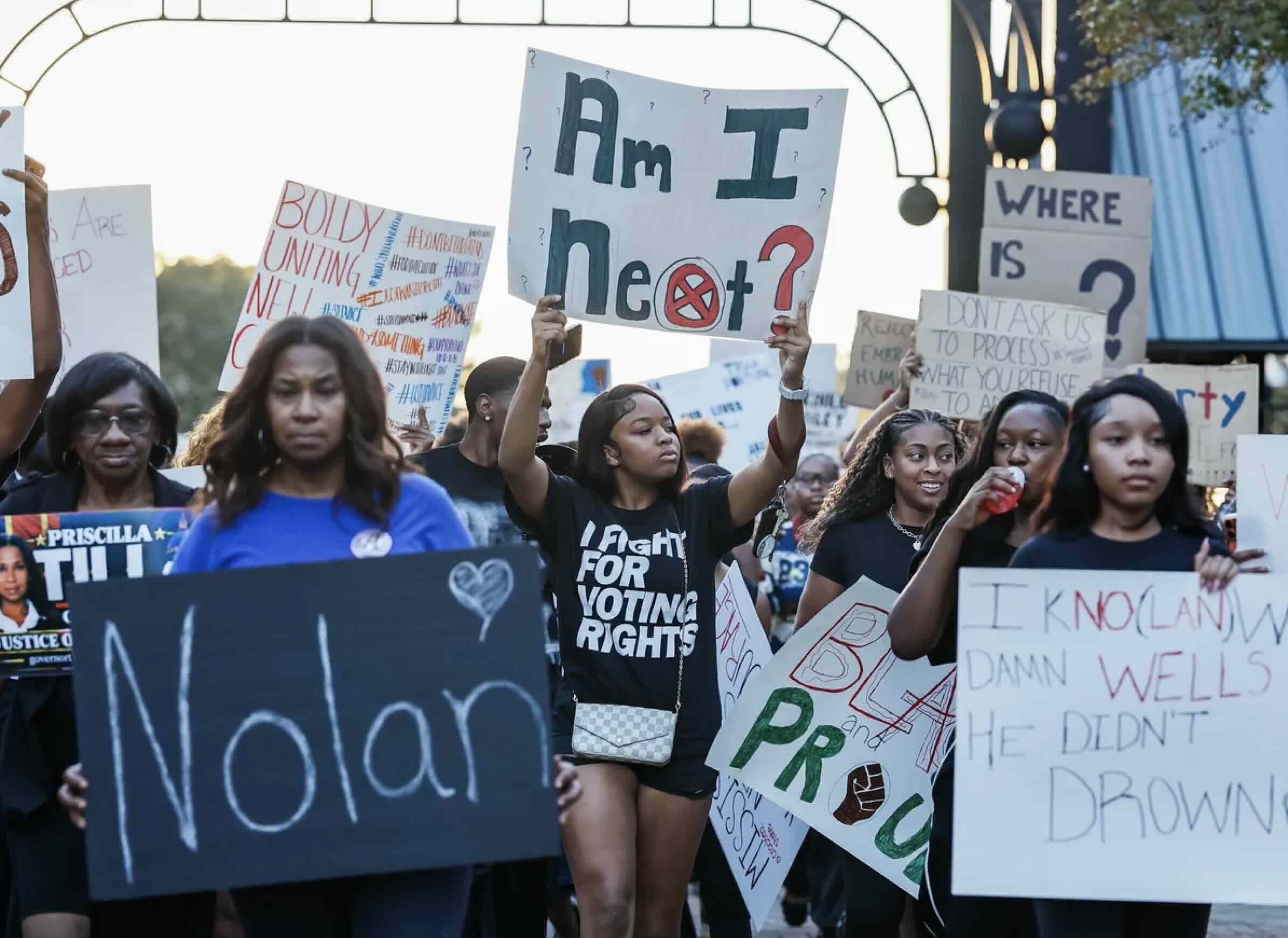
Photo: Getty Images
For the family of 18-year-old Nolan Wells, the phrase "No True Bill" is not a legal technicality. It is a verdict on their son's worth. It is the sound of a system looking at an independent autopsy that found no water in his lungs, at unexplained trauma to his body, at cellphone data that contradicts the official timeline—and choosing to do nothing.
And yet, from Jackson, Mississippi to New York City, from the campuses of Jackson State and North Carolina A&T to the streets of Atlanta and beyond, the response has been unmistakable: we will not stop talking about Nolan Wells. We will not stop protesting. We will not stop reporting. We will not stop fighting for a grave injustice that has been allowed to stand in plain sight.
The Evidence Demands a Federal Review
The family's legal team, led by civil rights attorney Ben Crump, has been unequivocal: the local system failed. The independent autopsy reportedly found no water in Nolan's lungs—a finding that severely undermines the official determination that he drowned. The review noted unexplained physical trauma suggesting a physical conflict occurred before he entered the water. And the digital forensics—cellphone location data and the timeline of Nolan's final moments—do not align with the narrative presented to the grand jury.
This is not speculation. This is the evidentiary foundation of a formal petition to the U.S. Department of Justice's Civil Rights Division, which has the authority to step in when a local jurisdiction fails to properly investigate a potential crime. Under the federal dual sovereignty doctrine, the federal government can prosecute a case even if a state grand jury refused to indict. The DOJ would investigate whether Nolan's civil rights were violated.
But the DOJ does not automatically review local cases. It takes overwhelming public outcry, combined with formal petitions from the family's legal team, to get the federal government to open a preliminary inquiry. That is why the protests matter. That is why the marches matter. That is why every shared post, every conversation, every demand for answers matters.
A Movement Led by Students, Driven by History
The momentum shows a distinct trend: historically Black colleges and universities (HBCUs) are driving a highly coordinated network of demonstrations across multiple states. In October 2026 alone, at least eight distinct major multi-city protests and student-led campus marches have taken place or been organized.
In New York City, hundreds of demonstrators marched through Union Square demanding a full and transparent investigation. In Atlanta, thousands of students representing the Atlanta University Center consortium, Spelman, Clark Atlanta, and Kennesaw State marched through downtown. In Jackson, hundreds gathered on the Jackson State University campus for a rally and plaza march. In Greensboro, students from North Carolina A&T led a march through downtown. In Petersburg, Virginia State University organized a "Unity Walk." In Grambling, student communities mobilized for campus-wide actions. In Jackson County, the Mississippi Rising Coalition continues holding periodic rallies outside the courthouse. And in Akron, Ohio, prayer protest rallies are being organized to extend the movement into the Midwest.
- New York City, NY: Hundreds marched through Union Square demanding a full and transparent investigation.
- Atlanta, GA: Thousands of students from the Atlanta University Center consortium marched through downtown.
- Jackson, MS: Hundreds gathered on the Jackson State University campus for a rally and plaza march.
- Greensboro, NC: North Carolina A&T students led a march through downtown.
- Petersburg, VA: Virginia State University organized a "Unity Walk" to keep Nolan's name in the spotlight.
- Grambling, LA: Grambling State University students mobilized for campus-wide actions.
- Jackson County, MS: The Mississippi Rising Coalition continues holding rallies outside the courthouse.
- Akron, OH: Prayer protest rallies organized to extend the movement into the Midwest.
This is what a coordinated, sustained movement looks like. It is not a moment of outrage that fades when the news cycle moves on. It is a deliberate, strategic campaign to keep Nolan's name in the public eye until the federal government is forced to act.
Why We Must Never Stop Talking
The silence from witnesses—no one who was there has come forward—is precisely the legal grounds that necessitate federal intervention. While witnesses may refuse to speak to local police or community members, a federal grand jury has the power to issue subpoenas that legally compel individuals to testify under oath. Those who lie or refuse to cooperate face severe federal penalties for perjury, obstruction of justice, or misprision of a felony.
But a federal investigation does not happen in a vacuum. It happens because people demand it. It happens because thousands of students march. It happens because high-profile figures like Ben Crump continuously highlight the case. It happens because organizers flood the DOJ's Civil Rights Division with petitions. It happens because the public refuses to let the story die.
The disparity in how the legal system responds is exactly why the outrage is so intense. When the roles are reversed, the legal system historically moves with immense speed, pouring significant resources into securing swift arrests and indictments. But when a young Black man is the victim, families often find themselves forced to march, petition, and wage a massive national public relations campaign just to get the basic facts of the case thoroughly reviewed.
This is a systemic breakdown of accountability. It is a legal system that, too often, does not value Black lives. And it is why the movement for Nolan Wells is part of a larger, ongoing struggle to demand that the justice system treats Black victims with the same urgency, transparency, and thoroughness as anyone else.
What Happens If We Stop?
The answer is simple and devastating: nothing. The case gets quietly buried. The independent autopsy findings are forgotten. The witnesses remain silent. The grand jury's decision becomes the final word. And Nolan Wells becomes another name on a long list of Black Americans whose deaths were deemed unworthy of a full and transparent investigation.
That is what happens when people let up. That is what happens when the momentum fades. That is what happens when the public moves on to the next story and the institutional pressure to look closer disappears.
Sustained conversation is exactly how cases like Nolan's are kept alive. History has shown time and again that when the public refuses to let a name fade, it forces the legal system to respond, even when local officials have closed the door. Every conversation, march, and shared post builds the collective pressure needed to finally bring about federal intervention and accountability.
The Next Steps
The strategic next steps for the movement are focused entirely on transitioning the energy from the streets into official federal legal action.
- Formal submission of evidence to the DOJ: The family's legal team is compiling a comprehensive evidentiary package—including the independent autopsy findings and digital forensics—to submit directly to the Civil Rights Division.
- Transitioning marches into political leverage: Organizers are pushing members of the Congressional Black Caucus and federal representatives from states with active protests to formally demand an investigation. Letters from federal lawmakers directly to the U.S. Attorney General are highly effective at forcing the DOJ to open a preliminary inquiry.
- Escalating the digital campaigns: Mass letter-writing campaigns to flood the DOJ's Civil Rights Division portal. The "Blackout for Nolan Wells" social media initiative—where supporters change their profile pictures to solid black—continues to widen, keeping his name trending and highly visible.
- Preparing for federal subpoenas: If the DOJ opens a preliminary review, the next legal step is the empaneling of a federal grand jury, which can issue subpoenas to compel testimony from individuals who have so far refused to speak to local police.
If you want to take action right now, you can contact your congressional representative to demand a DOJ review. You can submit a request to the DOJ Civil Rights Division detailing the case facts. You can participate in the Blackout for Nolan Wells. You can share the independent autopsy findings and the timeline discrepancies with everyone you know.
Most importantly, you can refuse to be silent. You can refuse to let up. You can refuse to let Nolan Wells' name fade from the conversation.
Because the moment people let up is the moment they try to silence the matter. And the fight for Nolan Wells is not just about one young man. It is about whether we, as a society, are willing to demand that the justice system treat Black lives with the same urgency, transparency, and thoroughness as anyone else's.
We must never stop talking about Nolan Wells. We must never stop protesting. We must never stop reporting. We must never stop fighting for a grave injustice that has been allowed to stand in plain sight.
Because if the roles were reversed, justice would have been served months ago.
No Ads. By Us. For Us.
This article was made possible by readers like you. We hope it inspired you to support Emerald Book, so we can continue producing content like this.
We will never show you ads, sell your data, or require a subscription to consume our content. Your gift helps us keep the truth accessible.
Click the Support button to give a gift of any amount today.
Thank you for making this work possible.