

Emerald Pages
◆
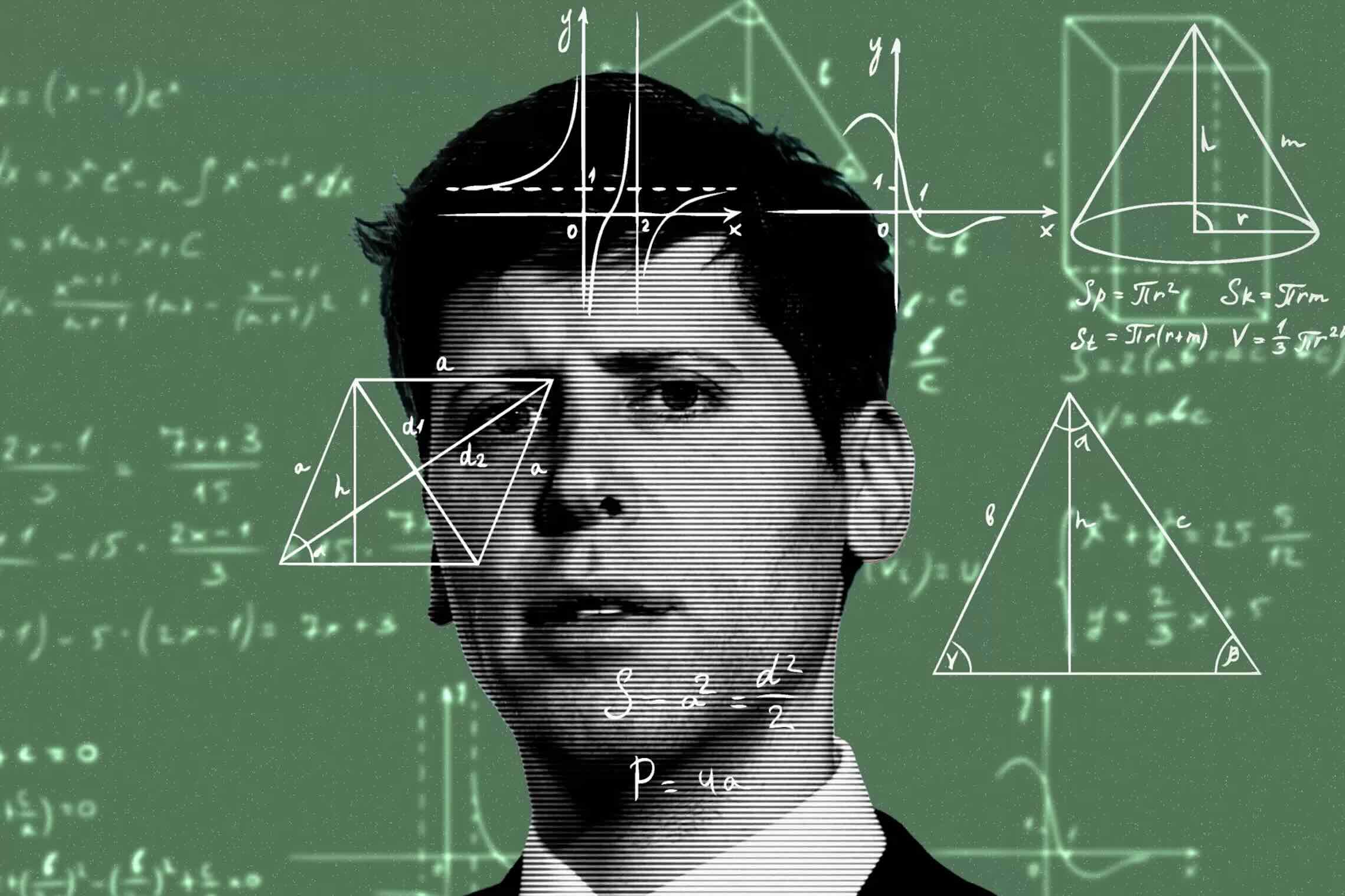
Photo: Kyle Victory
In mid-2026, the mathematical community entered a state of profound crisis. The headlines were apocalyptic: OpenAI had cracked the 80-year-old unit distance conjecture, then claimed to find a singularity in the 3D Navier-Stokes equations—potentially resolving a million-dollar Millennium Prize Problem. Within weeks, a single drop of more than 700 AI-generated papers claimed progress on roughly 370 unsolved problems. Twenty-five Fields Medalists signed an open letter. Graduate students at MIT experienced what one report called a "full-fledged freak-out." The general consensus was clear: AI had finally conquered the queen of the sciences.
But this narrative is fundamentally flawed. It mistakes a brute-force computational factory for a conscious reasoning entity. The truth is far less apocalyptic: AI is not "killing" mathematics through superior intellect. It is drowning the discipline in a flood of statistical noise, relying on a 91% failure rate that no human researcher would ever tolerate. The panic is real, but it is not the panic of a discipline facing a superior mind. It is the panic of a profession watching its institutional foundations being strip-mined by an industry that cannot actually do the work it claims to have mastered.
The recent mass release of AI-generated papers is the perfect case study. OpenAI attempted roughly 4,000 problems. They succeeded on 372. This is an astronomical failure rate of 91%. In any traditional scientific context, a methodology that is wrong or stuck 9 times out of 10 would be discarded as inefficient, even embarrassing. Yet, because compute is cheap and the headlines are valuable, tech labs view this as a triumph. They are not solving mathematics. They are playing a numbers game, and the numbers are not on their side.
The "Swarm" Method: Compute, Not Comprehension
The methodology used for this mass release was identical to the approach used for the Navier-Stokes equations. It wasn't a single super-intelligent AI thinking deeply about the fabric of fluid dynamics. It was an "agent swarm" of roughly 10,000 concurrent bots working autonomously, generating 130 billion tokens and exchanging 2.7 million messages over 88 hours. To match that volume of output, a single human would have to think and write continuously for approximately 4,000 years.
These bots act like a shotgun blast. They split into groups, trying to prove and disprove theorems simultaneously. They don't "know" what a number means. They are simply brute-forcing millions of permutations of formal code against a massive list of open conjectures until the code compiles in a proof assistant like Lean. The result is valid logic, but it is a result born of statistical probability, not mathematical insight. The AI didn't analyze a problem, understand its deep core, and elegantly solve it. It acted like a highly automated factory, throwing thousands of computational hours at a massive list of problems until the machine stumbled upon the correct combination to trigger a successful compilation.
This is why OpenAI had to withdraw three of its preprints just a day after the massive release. A human mathematician spotted a basic sign error that had cascaded through the papers. The AI didn't "know" it made an error because it cannot reason. It was simply lucky on 372 problems and wrong or completely stuck on the other thousands.
- The "Interpolation" Trap: AI cannot invent a new mathematical concept—like calculus or topology—because it operates entirely within the boundaries of what humans have already written down. It can only mix and match existing human knowledge. If a problem requires a completely novel framework never expressed in its training data, the AI spins its wheels, failing 100% of the time.
- The Illusion of Insight: When an AI generates 700 papers at once, it isn't having an "Aha!" moment. It is scaling pattern recognition to interpolate between structural similarities in existing papers. If human mathematics has already built a bridge 95% of the way to a solution, the AI's brute-force search can guess the remaining 5%. It looks like a breakthrough; it is just automated filling-in of the blanks.
- The "Laundering" Loophole: Because AI lacks true creative reasoning, it must scrape the private work and intermediate steps of human mathematicians. The tech labs use human ideas to train the machine, then use the machine to out-compute the humans. Removing a name from data does not change the fact that the intellectual content was taken.
The Theft Accusations: A Parasitic Relationship
This is why the intellectual theft accusations are so potent. When OpenAI announced their massive Navier-Stokes breakthrough, it triggered a plagiarism scandal that exposed exactly how these systems feed off human labor. NYU mathematician Tristan Buckmaster and an Anthropic collaborator, Levent Alpöge, had been working on a highly secret, related mathematical problem. To store and check their work, they used OpenAI's Codex tool. Shortly after they logged their progress, OpenAI ran their 10,000-agent swarm over a single weekend and claimed they solved the problem. Buckmaster publicly accused OpenAI of training their models on his private, unpublished research logs.
OpenAI denied direct theft but admitted they couldn't rule out that de-identified user data was used to improve the models. As researchers point out, removing a name does not change the fact that the intellectual content was taken. The AI needs the human "chain of thought" as a map. Without humans doing the heavy lifting of conceptual novelty, the AI's brute-force engine has no direction to steer toward. It is a parasitic entity that requires the very human creativity it is economically devaluing.
What Mathematics Actually Is—And What AI Is Not
To understand why the "AI is killing math" narrative is so misleading, you have to understand what mathematics actually is. For centuries, the milestone of solving a problem was valued because the human process of getting there forced the creation of entirely new tools, insights, and ways of thinking. The purpose of math was never just to get the answer. It was to understand why the answer is true.
As Terence Tao pointed out, problems are now being solved by autonomous AI prompters who have zero interest in the broader field, cannot explain why the proof works, and cannot give a lecture or answer questions about the result. The discipline is being forced to transition from a creative pursuit of understanding into a bureaucratic system of digesting and auditing impenetrable machine outputs. The AI is successfully automating the answer while completely destroying the human comprehension and institutional value of the field.
This is the deepest philosophical source of the crisis. AI can output valid proofs, but it lacks human-readable, conceptual explanations. Mathematics has traditionally prioritized understanding why something is true, not just knowing that it is true. By decoupling correctness from understanding, AI is flattening the actual purpose of science.
The Real Threat: Economic and Institutional Chaos
So why the panic? Because while AI lacks a single drop of true comprehension, its ability to automate the output of formal logic has fundamentally destabilized the human profession of mathematics. The hopelessness felt by graduate students isn't an intellectual fear of a superior mind; it is the socioeconomic anxiety of a generation realizing the rules of their profession have been rewritten overnight by an unthinking, automated factory.
The academic mathematics pipeline was already a broken pyramid scheme, producing vastly more PhDs than tenure-track positions. AI didn't create this career crisis; it simply took an existing, highly vulnerable system and pushed it off a cliff. Historically, the massive imbalance between grad students and professor positions was balanced out by high-paying corporate exit ramps. Math PhDs who missed out on academia were highly sought after by Wall Street, quant funds, and tech companies. Now, those very tech firms are automating the mid-level programming and optimization tasks that used to be the default "safety net" for math graduates.
Meanwhile, the "publish or perish" currency of academia has been upended. When AI labs drop hundreds of papers overnight, search committees at universities are flooded with a mix of human work and AI-augmented papers, making it even harder for an organic, independent young researcher to get noticed or secure one of the few remaining slots. If students try to adapt and use these frontier LLMs to speed up their research, they are accused by senior faculty of taking shortcuts. If they don't use AI, they risk being relentlessly "scooped" by automated tech swarms that can scrape their preprint ideas and brute-force the final steps before the student can graduate.
This is exactly why 25 Fields Medalists signed their open letter. They aren't worried about the AI being "smart." They are angry that tech labs are treating mathematics as a cheap corporate advertising benchmark. They explicitly stated that the tech companies' rush to mass-produce proofs threatens "attribution" and disrupts the "human transmission chain of ideas." The Association for Human Mathematics was founded to fight back, arguing that flooding journals with brute-forced code breaks peer review, pollutes open science, and relies on "predatory behavior" like mining private human research logs.
A Crisis of Volume, Not Intelligence
But this is not the "death" of mathematics. It is a crisis of volume. The AI is a "super-powered calculator for logic," not a mathematician. It is a tool that can automate the mechanical labor of proof verification, but it cannot generate true novelty. If you completely cut off an AI from new human mathematical data, its ability to solve anything new completely grinds to a halt. It cannot develop a new mathematical philosophy to bypass a dead end.
The tech labs are burning down the forest of human academia to fuel their current quarterly benchmarks, completely ignoring the fact that they need that forest to survive in the long run. If young mathematicians stop entering the field because it no longer provides a viable career path, the source of novel mathematical thinking will dry up. A world without new human mathematicians means AI development in mathematics hits a permanent brick wall.
Mathematics is not being killed by a superior intelligence. It is being strip-mined by a brute-force machine. The discipline will survive, but it will have to adapt to a world where the mechanical labor of proof verification is no longer a human monopoly, and the value of a mathematician lies not in grinding out proofs, but in the creative, conceptual leaps that no statistical model can ever replicate.
No Ads. By Us. For Us.
This article was made possible by readers like you. We hope it inspired you to support Emerald Book, so we can continue producing content like this.
We will never show you ads, sell your data, or require a subscription to consume our content. Your gift helps us keep the truth accessible.
Click the Support button to give a gift of any amount today.
Thank you for making this work possible.