

Emerald Pages
◆
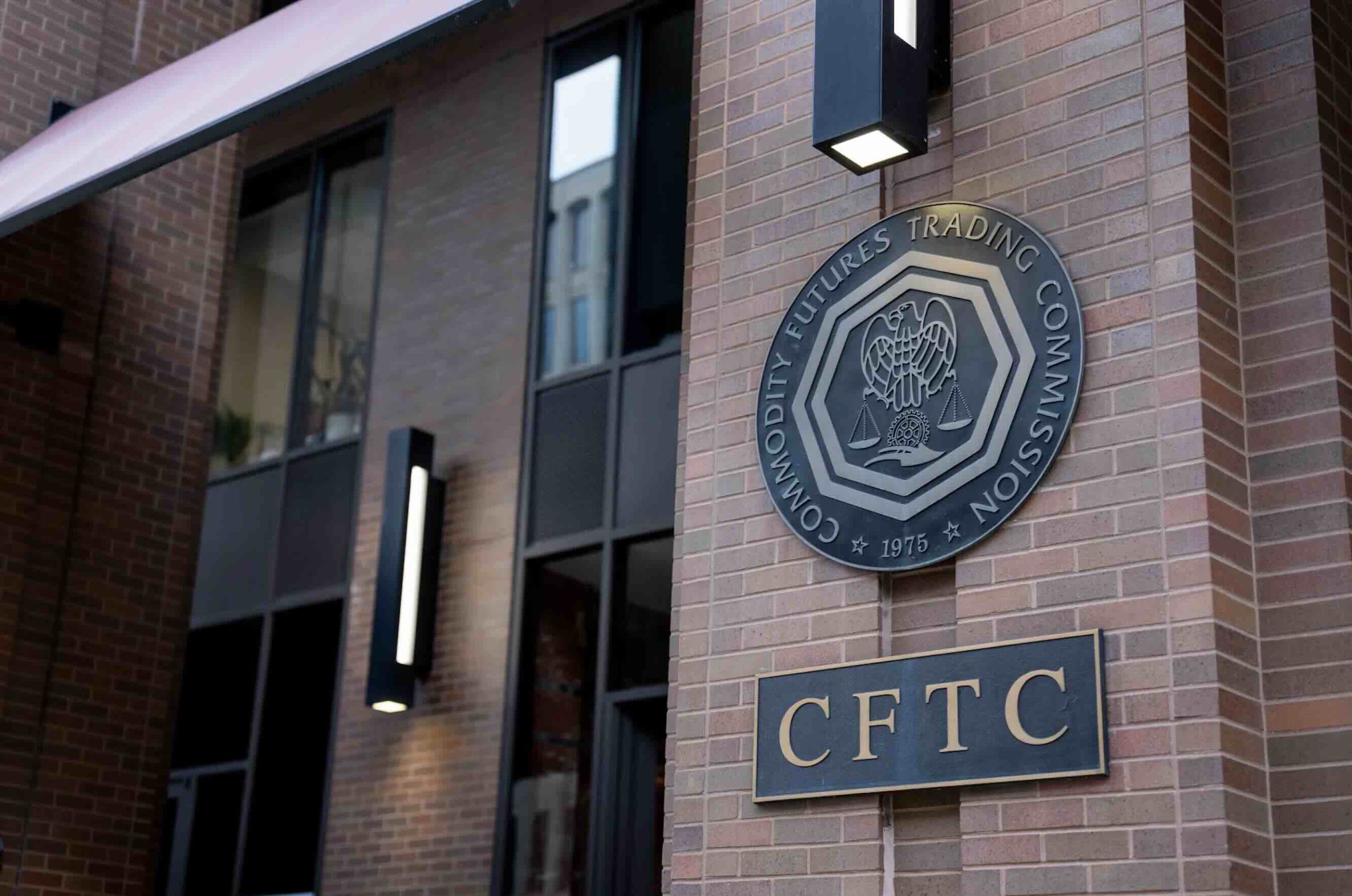
Photo: Bloomberg
On the morning of March 23, something unusual happened in the oil futures market. Between 6:49 and 6:50 a.m. Eastern Time, during a single frenetic sixty-second window, traders shorted approximately $500 million worth of Brent and West Texas Intermediate crude futures. Trading volume in Brent crude spiked to nine times its typical level. Fifteen minutes later, President Trump posted on Truth Social that he was pausing planned U.S. military strikes against Iranian power plants. Brent crude prices plunged by as much as 14 percent. Major stock indices surged. The traders who had placed those bets made a fortune.
Forensic analysts inside the Commodity Futures Trading Commission flagged the trades almost immediately. The timing was too precise, the volume too massive, the profits too perfectly aligned with a policy announcement that had not yet been made public. The analysts generated a referral and sent it to the agency's enforcement division, the standard procedure when data-driven tripwires indicate potential insider trading or market manipulation. That referral never reached the subpoena stage. According to a Bloomberg News report, a senior adviser to CFTC Chairman Michael Selig intervened, instructing a supervisor to pull back and retract the referral before enforcement attorneys could begin identifying the traders behind the bets.
The adviser, Mel Gunewardena, is a veteran of the first Trump administration and a political appointee, not a career civil servant. His intervention halted a process that former enforcement officials describe as unprecedented in the agency's history. The official justification, as reported by unnamed agency officials, was that the initial analysis was too narrowly focused on domestic markets and needed to be expanded into a broader international review. The probe was transferred to a senior executive to examine international futures, swaps, options, over-the-counter activity, and exchange-traded funds. The CFTC's enforcement division says it continues to investigate. The Department of Justice has opened a parallel probe. But the practical effect of the retraction was immediate: enforcement attorneys could not subpoena brokerage records, could not identify the traders, and could not begin building a case.
Aitan Goelman, who served as the CFTC's Director of Enforcement from 2014 to 2017, told Bloomberg that in every previous administration he was familiar with, such an intervention "would not just have been unusual—but never done." The CFTC is an independent regulatory agency, led by a bipartisan five-member commission, designed by Congress to be insulated from political pressure so that the public can trust the markets are not rigged. The intervention by a political appointee to pull back a forensic referral has drawn fierce backlash from Senator Elizabeth Warren and other critics, who have characterized the move as an attempt to shield insider trading tied directly to the President's social media posts.
A Pattern of Perfect Timing
The March 23 trades were not an isolated anomaly. Forensic analysts also flagged another massive cluster of trades on April 7: approximately $950 million in bets predicting falling oil prices, placed just hours before the administration publicly announced a surprise two-week ceasefire with Iran. That announcement also caused oil prices to drop sharply, again rewarding anyone who had bet on a decline. Combined, the two sets of trades totaled roughly $1.5 billion in short positions placed immediately before market-moving foreign policy announcements.
The pattern extends beyond oil futures. Highly lucrative spikes have been documented on prediction platforms like Polymarket immediately preceding other major foreign policy events, including the U.S. military raid involving Venezuelan leader Nicolás Maduro. In that case, a U.S. soldier was accused of making $400,000 on Polymarket using confidential information about the raid. The White House itself acknowledged the systemic risk earlier this year, issuing an internal memo warning staffers that trading on non-public information on prediction markets is a federal crime. The CFTC recently prosecuted a White House staffer and fined them over $100,000 for using access to the President's upcoming speeches to bet on prediction markets.
In those cases, the investigations proceeded normally. When a soldier or a lower-level staffer was suspected of insider trading, career investigators did their jobs, subpoenas were issued, and prosecutions followed. The fundamental difference in the oil futures case is the scale of the trades, the direct connection to the President's own announcements, and the fact that senior political leadership intervened to pull the case back from career investigators before they could identify who placed the bets.
- March 23, 6:49–6:50 a.m. ET: $500 million in Brent and WTI crude futures shorted during a single minute; trading volume spiked to 9x normal levels.
- March 23, ~7:05 a.m. ET: President Trump posts on Truth Social announcing a pause on strikes against Iranian power plants; Brent crude plunges up to 14%, stock indices surge.
- April 7: $950 million in additional bets on falling oil prices placed hours before a surprise two-week ceasefire with Iran is announced.
- The Intervention: Mel Gunewardena, a senior adviser to the CFTC chairman, instructs a supervisor to retract the forensic referral before enforcement attorneys can subpoena brokerage records.
- The Justification: Agency officials claim the retraction was ordered because the initial analysis was strictly U.S.-focused; the probe was expanded internationally and handed to a senior executive.
- The Effect: The domestic investigation was halted at its earliest stage; the identities of the traders remain unknown; the DOJ has opened a parallel probe.
The Other Side of the Enforcement Ledger: A War on Small-Time Fraud
While the CFTC pulled back its analysis of a potential multi-million dollar insider trading scheme, the Department of Justice has been aggressively expanding its pursuit of low-level fraud and street crime. According to a New York Times report, the administration's "war on fraud" has lowered the threshold for federal prosecution. Previously, federal prosecutors typically focused on fraud cases exceeding $500,000 to maximize high-impact deterrence. Under current directives, the DOJ is aggressively tracking lower-dollar infractions, emphasizing that "no fraud is too small to investigate."
The newly organized National Fraud Enforcement Division, led by Assistant Attorney General Colin M. McDonald, issued a brand-new enforcement directive on October 1, 2026. The division has focused its resources on consumer cyber scams, student loan fraud, disaster relief fraud, small business grant manipulation, and tax-return preparer scams. An executive order issued earlier this year created a "Scam Center Strike Force" targeting foreign-backed and domestic criminal networks running phishing schemes and predatory online fraud aimed at draining individual bank accounts. Meanwhile, the administration has funneled over $19 billion into federal law enforcement efforts targeting illegal firearms traffickers, transnational gangs, and local street crime, with federal prosecutors surging into specific cities to try violent local offenders in federal court.
The contrast between the two enforcement postures is difficult to ignore. On one side, a forensic referral on a $1.5 billion trading anomaly tied to the President's own announcements was retracted before it could reach the subpoena stage. On the other, federal prosecutors are actively pursuing cases that would have previously been considered too small to warrant federal attention. The DOJ's explicit mandate for everyday citizens is that "no fraud is too small to investigate," while the CFTC's implicit message to its forensic analysts is that some trading anomalies are too politically sensitive to pursue.
The Retreat from Corporate Enforcement
The shift toward low-level fraud has been accompanied by a systematic pullback from corporate enforcement. According to a comprehensive report published by the consumer advocacy group Public Citizen on October 7, 2026, the current administration has actively canceled 212 enforcement actions inherited from the prior administration. These include 80 closed investigations — 10 of them criminal — and 67 dismissed federal lawsuits against corporations. The rollback has primarily insulated large financial firms, tech corporations, and fintech/crypto companies from federal oversight.
High-profile cases dropped include the Department of Justice's long-running criminal prosecution of Turkish state-owned lender Halkbank for allegedly evading U.S. sanctions on Iran, and criminal charges against Boeing. The DOJ is increasingly relying on Non-Prosecution Agreements that fine companies like Alibaba and EagleBank but spare them from formal criminal charges, while pausing broad enforcement of the Foreign Corrupt Practices Act. The traditional strategy of using the threat of prosecution to force corporations to identify and turn over executives who committed crimes has been largely abandoned. White-collar legal experts reporting to the Wall Street Journal note that the administration is favoring leniency programs that allow companies to pay fines without admitting wrongdoing or turning over individuals.
The new framework narrows the definition of corporate crime. Assistant Attorney General McDonald's October 1 directive explicitly warns prosecutors to guard against "overbroad" corporate enforcement and shifts the focus onto very narrow administration priorities: tariff and trade fraud, national security, immigration violations, and fraud against federal government benefits. The massive $549 million civil customs settlement levied against Perfectus Aluminum Inc. exemplifies the new approach: aggressive targeting of foreign trade adversaries and companies evading U.S. customs duties, while aggressively reducing routine white-collar and regulatory scrutiny for U.S.-based corporations.
Who Benefits from the Enforcement Shift
The demographic reality of who benefits from this enforcement shift is not incidental. According to a 2025 demographic study by the Alliance for Board Diversity and Deloitte, white men occupy 60% of all Fortune 500 board seats and 86% of Fortune 500 CEO positions. Corporate executive suites and boardrooms are overwhelmingly dominated by white men. When the federal government pulls back on white-collar enforcement, it is effectively insulating the demographic that dominates corporate leadership from personal accountability. When it pivots toward low-level fraud and street crime, it is directing the full weight of federal prosecution toward everyday individuals.
Because white-collar crime requires access to high-level financial systems, accounting mechanisms, and corporate authority, it is inherently tied to those who hold institutional power. Sociological and legal researchers have long pointed out a stark double standard in how the justice system treats crime based on demographics. Misconduct that causes widespread economic devastation — wage theft, environmental dumping, predatory financial lending, consumer fraud — is rarely framed as violent or gangster activity, even though its financial damage and human toll can vastly exceed street-level property crimes. When a corporation breaks the law, the legal system often treats the company as an abstract entity. Instead of arresting the executives who signed off on the decisions, the government typically levies a fine, paid using company revenue rather than personal wealth.
Within the legal and social system, immense wealth buys a level of legal protection that ordinary citizens cannot access. Corporate executives can hire elite white-collar defense firms capable of tying up federal regulators in complex litigation for years, often forcing agencies to settle for minor financial penalties rather than pursuing criminal indictments. As federal enforcement shifts toward leniency programs and non-prosecution agreements, the individuals who orchestrate corporate fraud are rarely forced to face personal criminal liability or prison time. The perception that the legal structure protects the status quo of executive power is reinforced with each dropped prosecution and each retracted referral.
The Accountability Gap
Independent agencies like the CFTC were created by Congress precisely to prevent a sitting President from using the power of the executive branch to shield allies or personal financial interests from investigation. The retraction of the forensic referral — an act that former enforcement officials describe as unprecedented — has effectively neutralized that check in a case where the trades are tied to the President's own market-moving announcements. The CFTC's enforcement division says it is still probing the activity, now with an expanded international scope. The DOJ's parallel investigation continues. But the retraction has already accomplished something that a standard investigation would not have: it has delayed the moment when federal attorneys can subpoena brokerage records and begin the work of identifying who placed those trades — and whether they had advance knowledge of the President's plans.
Senator Elizabeth Warren has demanded that CFTC Chairman Michael Selig testify publicly regarding the retracted referral. Congressional committees retain the power to hold public hearings, demand documents, and issue subpoenas. Career civil servants, as seen with the Bloomberg leak, have pushed back against what they perceive as political interference. The federal courts remain a check on any criminal charges that emerge from the DOJ probe. But the structural reality remains: when the person making the market-moving announcements also oversees the agency that investigates the suspicious trading, the system's ability to police itself breaks down.
Meanwhile, the "war on fraud" continues apace. The message is clear: if you are a small-time scammer or a street-level offender, the federal government has never been more interested in your case. If you are trading hundreds of millions of dollars on what appears to be non-public information tied to the President's own announcements, the forensic analysts who flagged your trades may be told to stand down. The two-tiered system is not an accident or an isolated incident. It is the logical outcome of an enforcement strategy that has systematically redirected federal resources away from corporate boardrooms and toward everyday individuals, while independent regulatory agencies are stripped of their ability to investigate the most politically sensitive cases of all.
No Ads. By Us. For Us.
This article was made possible by readers like you. We hope it inspired you to support Emerald Book, so we can continue producing content like this.
We will never show you ads, sell your data, or require a subscription to consume our content. Your gift helps us keep the truth accessible.
Click the Support button to give a gift of any amount today.
Thank you for making this work possible.