

Emerald Pages
◆
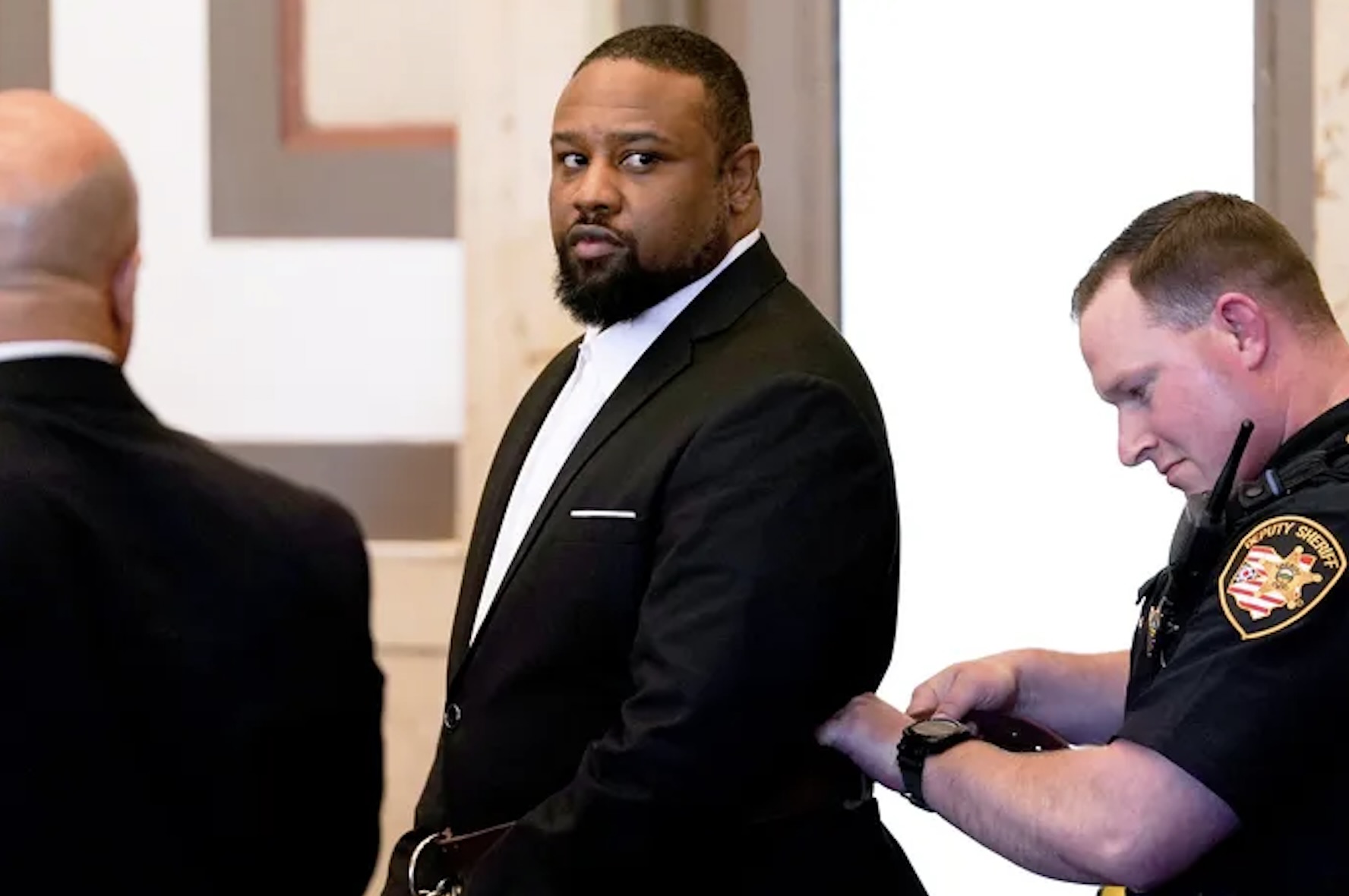
Photo: The Enquirer
On the evening of May 1, 2025, Cincinnati police officers encountered 18-year-old Ryan Hinton and three other young men in East Price Hill. They were investigating a stolen vehicle. Within minutes, Ryan Hinton was dead — shot multiple times by an officer who, according to Hamilton County Prosecutor Connie Pillich, acted in "legally justified" self-defense.
No grand jury was convened. No criminal charges were filed. The officer who fired the fatal shots faced no consequences. Pillich explained her decision with a now-familiar refrain: "He not only had a gun, he pointed it at Officer A. Officer A's split-second decision likely saved his life and the lives of other officers."
But if you watch the body camera footage — the same footage that caused Ryan's father, Rodney Hinton Jr., to suffer a mental breakdown inside a police station hours later — a very different story emerges. It is not a story about fear. It is a story about armed officers aggressively closing the distance on a fleeing teenager and eliminating him the moment he came into view.
Fear does not make a person charge toward a gun. Fear makes a person take cover, create distance, and call for backup. Fear makes a person slow down, reassess, and wait for specialized units. What the footage shows is the opposite: officers advancing, closing the gap, and firing within seconds of a teenager coming into view. These are not the actions of men who feared for their lives. These are the actions of men who were confident they would face no consequences.
The Tactical Contradiction at the Heart of the Case
The Cincinnati Police Department's own foot pursuit policy is explicit about how officers should handle armed suspects. The policy states that officers must assess "whether the suspect is armed" and "whether the risk of pursuit outweighs the benefits of apprehension." If a suspect's identity is known and they pose no immediate threat to the public, officers are instructed to consider terminating the pursuit and apprehending later.
Ryan Hinton was suspected of a stolen vehicle. His identity could be determined. He had not fired at anyone. He was running away. Yet the officers' choice was to continue closing the gap after it was already clear he had a gun — a decision that transformed a property crime investigation into a death sentence.
The prosecutor's office maintains that Ryan Hinton turned and pointed a gun at an officer in what they described as a "bladed position." The family's attorney, Fanon Rucker, and multiple civil rights advocates have disputed this characterization, arguing that the blurry, shaky body camera footage does not clearly show a gun in Ryan's hand or show him pointing a weapon at anyone. What the footage does show, they argue, is an 18-year-old running away.
But here is the question the criminal justice system refused to ask: If the officer truly feared for his life, why did he advance into the open instead of seeking defensive cover? Why did he close the gap on a fleeing child instead of setting a perimeter and waiting for backup? Why did he take no precaution that would have prevented the encounter from ending in death? And most damning of all — why did he literally position himself directly in the line of fire, stepping into the path of a weapon he claimed to believe was about to be turned on him? A person who genuinely fears being shot does not walk into the bullet's trajectory. A person who genuinely fears for their life seeks cover, creates distance, and slows the encounter down. The officer did none of these things. He ran toward the danger, inserted himself into the very space where a weapon would have to be aimed, and then fired the moment the teenager appeared. That is not fear. That is a tactical decision to eliminate a target — and the law called it self-defense.
How the Law Shields the Hunt
The reason officers can hunt and kill without consequence is structural. The criminal justice system is designed to protect the state's agents, not the public they patrol. This is not a conspiracy. It is a feature of the legal framework, embedded in constitutional doctrine and reinforced by decades of court rulings.
Under the standard set by the U.S. Supreme Court in Graham v. Connor, an officer's use of deadly force is judged solely on the "objective reasonableness" of their perception in the exact millisecond the trigger was pulled. Courts deliberately ignore the tactical decisions an officer made before that final frame — even if the officer's own aggressive positioning created the danger.
This is what civil rights attorneys and police-reform experts call "officer-created jeopardy." The officer's lack of fear is demonstrated not by his words but by his actions: he took no cover, waited for no backup, and made no attempt to de-escalate. He hunted. And when the hunt ended with a teenager's death, the state called it justice.
The legal system treats an officer's split-second fear as legally protected self-defense. It treats a parent's grief-driven retaliation — no matter how profound the trauma — as premeditated murder. The officer who killed Ryan Hinton faced no charges. Ryan's father, Rodney Hinton Jr., is currently on trial for aggravated murder, facing life in prison for driving his vehicle into a sheriff's deputy hours after watching the footage of his son's death.
The disparity is not accidental. It is the direct result of a legal framework that grants sweeping latitude to the state's agents while demanding absolute composure from civilians — even in the wake of the ultimate tragedy.
The Double Standard in Armed Encounters
The Hinton case is not an anomaly. It is part of a documented pattern that civil rights advocates have highlighted for decades: Black individuals, particularly young Black men, are far more likely to be viewed by law enforcement as an immediate, existential threat — leading officers to bypass de-escalation tactics and resort to deadly force instantly.
There is widespread frustration over high-profile incidents where white, heavily armed suspects — even those who have just committed mass shootings or actively fired at police — are successfully de-escalated, disarmed, and taken into custody alive. In case after case, white suspects who pose far greater objective threats are given the benefit of the doubt, while Black teenagers fleeing property crime investigations are shot within seconds.
- Dylann Roof — a white supremacist who murdered nine Black churchgoers in Charleston — was taken into custody alive after a traffic stop, despite being armed.
- Robert Bowers — the Tree of Life synagogue shooter who killed 11 worshippers — was taken into custody alive after exchanging gunfire with police.
- Payton Gendron — the Buffalo supermarket shooter who killed 10 Black people — was taken into custody alive.
- Ryan Hinton — an 18-year-old suspected of a stolen vehicle — was shot and killed within seconds of being seen with a gun while running away.
The pattern is not lost on the families left behind. When the system consistently protects officers who kill Black children while demanding perfect compliance from civilians, it creates an environment where standard avenues of justice are viewed as entirely complicit.
No Consequences, No Change
The prosecutor's decision not to charge the officer sends a clear message: as long as an officer can point to a weapon at the final moment, their choice to close the gap and kill will be protected by the state. The officer's lack of fear, his aggressive tactics, and his decision to create the deadly scenario are all scrubbed from the legal analysis.
This is why communities feel the law does not exist to protect civilians from state violence. The legal framework operates as a system designed to rationalize aggressive tactics, ensuring that officers face no consequences for killing civilians as long as they can claim they perceived a threat.
The lack of consequences exacerbates the problem. It teaches officers that aggressive tactics will be rationalized. It teaches communities that their lives are expendable. And it teaches grieving parents that the system has no justice for them — only for the state.
The family's only remaining avenue for accountability is a civil lawsuit. Civil rights attorneys are attempting to bypass the "objective reasonableness" standard by proving that the Cincinnati Police Department has a widespread, unconstitutional custom or practice of training its officers to execute aggressive, hunt-first tactics without facing internal reprimand. This is known as a Monell claim, and it is exceptionally difficult to prove.
Even if the family succeeds, the officer will not go to prison. He will not lose his pension. He will not be held criminally accountable for killing an 18-year-old who was running away. The most the family can hope for is a financial settlement and, perhaps, policy changes that might prevent the next killing.
What Justice Would Look Like
If the criminal justice system were truly interested in justice, it would ask different questions. It would ask why officers chose to close the gap on an armed suspect rather than take cover. It would ask why they chose to pursue a stolen vehicle suspect on foot rather than set a perimeter. It would ask why they took no precautions that would have prevented the encounter from ending in death.
It would ask whether the officer's own tactical decisions created the jeopardy that he then claimed justified lethal force. It would ask whether a white teenager in the same situation would have been shot within seconds of being seen with a gun while running away.
But the criminal justice system does not ask these questions. It isolates the final frame, accepts the officer's claim of fear at face value, and rules the shooting justified. It protects the state's agents under the banner of "split-second safety" while demanding absolute composure from civilians — even in the wake of the ultimate tragedy.
Ryan Hinton was 18 years old. He was running away. He never fired a shot. And the officers who killed him were not afraid — they were confident. Confident that no matter what they did, the law would call it justified.
They were right.
No Ads. By Us. For Us.
This article was made possible by readers like you. We hope it inspired you to support Emerald Book, so we can continue producing content like this.
We will never show you ads, sell your data, or require a subscription to consume our content. Your gift helps us keep the truth accessible.
Click the Support button to give a gift of any amount today.
Thank you for making this work possible.