

Emerald Pages
◆
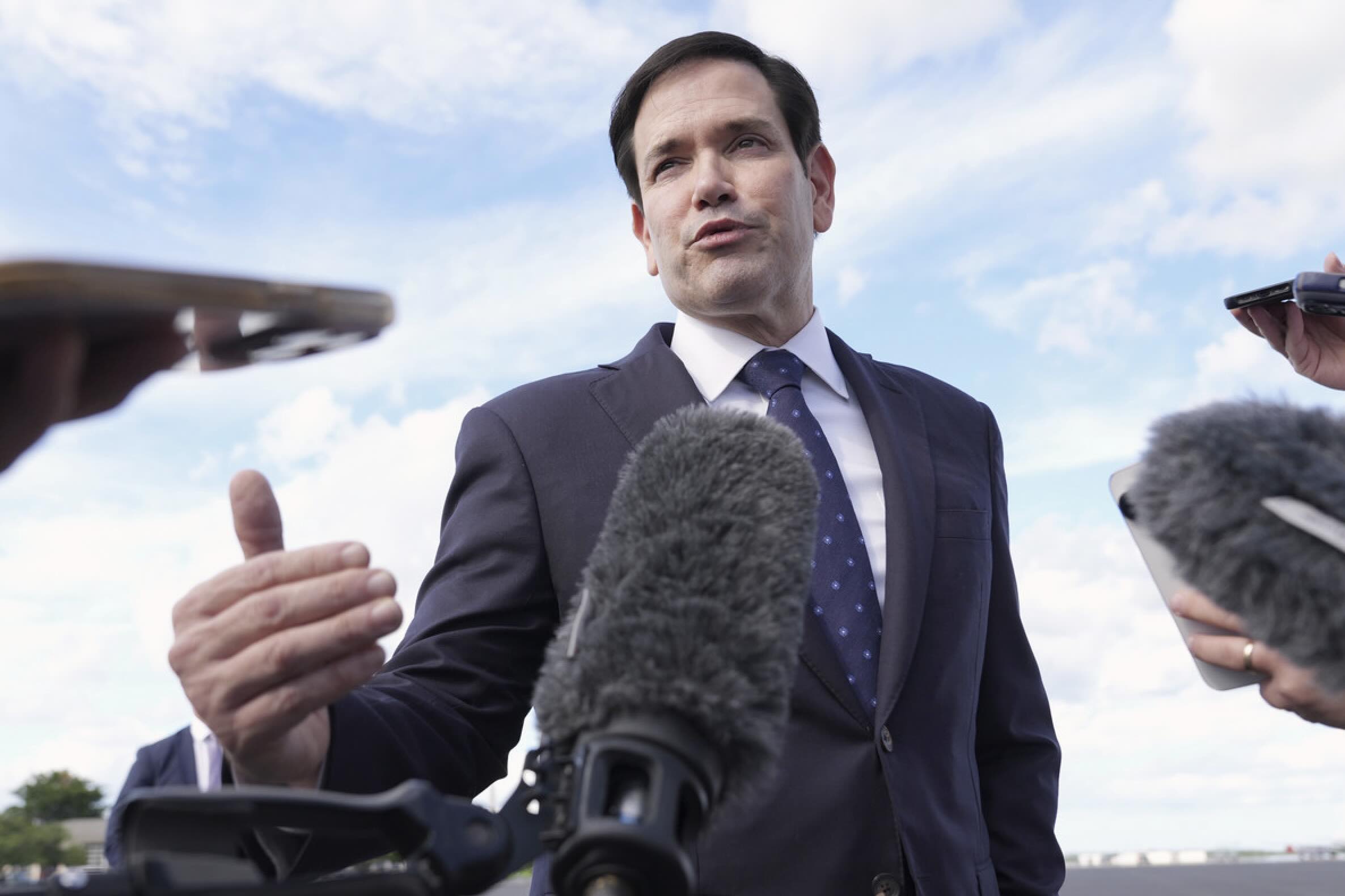
Secretary of State Marco Rubio | Photo: AP
On Friday, October 9, 2026, U.S. Secretary of State Marco Rubio announced sweeping institutional sanctions on the International Criminal Court, vowing to "ban transactions with this rogue court, cutting off their resources and crippling their ability to operate." The timing was telling: the announcement came just hours after former ICC judge Navi Pillay was awarded the 2026 Nobel Peace Prize.
But while the Trump administration frames these measures as a defense of American sovereignty, a closer examination reveals a far more troubling reality. The United States is not protecting itself—it is systematically undermining its own global standing, accelerating the decline of the dollar, and alienating the very allies it needs to counter rising geopolitical rivals.
And it is doing all of this to shield one man: Israeli Prime Minister Benjamin Netanyahu.
The Real Trigger: Netanyahu's Arrest Warrant
The Afghanistan investigation into American service members—often cited by U.S. officials as justification for these sanctions—was effectively shelved years ago. The U.S. took no sweeping institutional action against the court back then. This sudden, total economic warfare is unequivocally about Israel.
The catalyst was the ICC's decision to issue arrest warrants for Netanyahu and former Defense Minister Yoav Gallant over alleged war crimes in Gaza. Because neither the U.S. nor Israel signed the Rome Statute, Washington argues the court has no authority over their citizens. But the U.S. response—an attempt to financially dismantle an institution backed by 125 sovereign nations—represents a dramatic escalation that goes far beyond rejecting jurisdiction.
Bringing up "American service members" and "border patrol agents" is a political tactic. It allows U.S. officials to frame the sanctions as defending American sovereignty rather than admitting they are restructuring global financial policy to shield a foreign leader from international accountability.
The Dollar: America's Most Powerful Weapon—and Its Greatest Vulnerability
The unique power of U.S. sanctions relies on the fact that 85% to 90% of global foreign exchange transactions clear in U.S. dollars. But when Washington aggressively uses this leverage against major allies—European democracies that legally fund and back the ICC—it transforms the dollar from a neutral global utility into a political liability.
The mechanics of the sanctions are designed to financially cripple the Hague-based tribunal:
- Transaction Bans: Barring any U.S. entities or individuals from making transactions with the ICC
- Systemic Isolation: Cutting the court off from essential banking, technology, and insurance services
- Secondary Sanctions: Threatening punitive actions against foreign countries that continue doing business with the court
The message to the world is unmistakable: any nation that honors its treaty obligations to the ICC will face economic consequences from Washington. As prominent economists like Kenneth Rogoff have warned, overusing the "dollar weapon" forces even friendly nations to build parallel financial infrastructure entirely insulated from U.S. regulatory oversight.
European officials are already responding. EU Foreign Policy Chief Kaja Kallas indicated the six-month grace period built into the sanctions "offers a window for dialogue," but Belgium's foreign minister publicly advocated for activating an EU blocking statute—legislation that would make it illegal for European banks and institutions to comply with U.S. mandates.
This is not a hypothetical scenario. During the Iran sanctions era, the European Union developed INSTEX, an alternative payment channel designed to bypass the dollar network. The current push to activate a blocking statute is explicitly designed to legally shield European banks from U.S. dollar mandates. Once those alternative networks are built and perfected, the U.S. permanently loses its most powerful economic lever.
The Fracture of the Western Alliance
The post-WWII global order is built on alliances, shared democratic values, and treaties. The United States frequently relies on international law and global courts to condemn its adversaries—celebrating the ICC's warrants against Vladimir Putin as a triumph of international justice. By aggressively trying to destroy the exact same court the moment it targets an American ally, Washington severely damages its own moral authority.
The hypocrisy is not lost on America's partners. The ICC is not a generic international body; it is an institution founded and funded by the closest U.S. allies. The United Kingdom, France, Germany, Japan, and Canada are all dedicated, treaty-bound member states. When Rubio announced intent to "cripple its ability to operate," he directly placed Washington in opposition to the foreign policy frameworks of these crucial Western democracies.
The structural outcome is an intense diplomatic standoff where America stands strictly on one side, and the overwhelming majority of the democratic international community stands on the other. United Nations Secretary-General Antonio Guterres immediately condemned the U.S. policy, calling the institutional sanctions a "serious blow to our collective pursuit of international criminal justice."
The Court's Structural Resilience
The U.S. strategy does not rely on a legal dissolution of the ICC—which is impossible, given its treaty-based permanence—but rather on functional strangulation. Because global commerce runs on the U.S. dollar, any international bank, IT provider, insurance company, or satellite tracking vendor doing business with the ICC will be completely barred from the U.S. economy.
Yet the court's 125 member states are already responding to protect the tribunal. The ICC leadership has firmly stated it will not back down. Deputy Prosecutor Nazhat Shameem Khan explicitly confirmed that the court's work, investigations, and prosecutions "will continue across all our situations."
Even if the U.S. completely blocks the court's funding, the arrest warrants themselves remain legally valid. The U.S. has no power to erase an ICC warrant. Netanyahu and Gallant will still face the same restrictions: they cannot travel to the UK, Germany, France, Japan, or any of the other 120+ member states without risking arrest by local authorities.
Creating an Opening for Global Rivals
When the United States isolates itself from a mainstream global consensus supported by 125 nations, it leaves a massive vacuum. Countries like China and Russia, or rising economic blocs like BRICS, are already aggressively pitching alternative, non-Western global institutions.
By attacking a court that much of the Global South relies on for international justice, the U.S. hands its adversaries a powerful narrative: that Washington does not care about global rules and operates purely on the principle of "might makes right." Every time the U.S. forces its allies to choose between international treaties and the American banking system, it provides a powerful structural incentive for the rest of the world to innovate away from the U.S. dollar.
The strategic grace period built into the sanctions—six months before the most severe penalties kick in—is a tacit acknowledgment of this risk. It acts as a pressure valve, giving Washington and European capitals time to negotiate a legal compromise before the systemic financial penalties actually disrupt global banking. But the damage to trust is already done.
The Realistic Outcome: Stalemate, Not Victory
The U.S. will likely fail to collapse the court, but it will severely disrupt its ability to function smoothly. The most probable result is not the legal death of the ICC, but a prolonged geopolitical stalemate. The court will almost certainly survive because 125 countries refuse to let it die, but it will be forced to operate in a highly fractured, parallel financial system heavily insulated from the Western world.
Meanwhile, the United States will have:
- Accelerated de-dollarization by forcing allies to build alternative financial infrastructure
- Fractured the Western alliance by prioritizing one ally's protection over the entire post-WWII legal order
- Handed global rivals a powerful narrative about American hypocrisy and unilateralism
- Damaged its own moral authority to invoke international law against adversaries
The administration is betting that the world's dependence on the American market is so absolute that everyone will eventually bow to Washington's terms. But history shows that over-leveraging a monopoly often drives your customers to build a brand new market—and if the world decouples from the dollar and American leadership, the U.S. will have traded its long-term global hegemony just to shield a few politicians from a court with no police force.
The United States is not protecting itself by targeting the ICC. It is engaging in a massive case of geopolitical overreach that could fundamentally backfire—weakening the dollar, alienating allies, and ceding moral authority to rivals. All to protect Benjamin Netanyahu from arrest warrants that will remain legally valid regardless of how many banks the U.S. threatens.
The court will survive. The question is whether American global leadership will survive the attempt to kill it.
No Ads. By Us. For Us.
This article was made possible by readers like you. We hope it inspired you to support Emerald Book, so we can continue producing content like this.
We will never show you ads, sell your data, or require a subscription to consume our content. Your gift helps us keep the truth accessible.
Click the Support button to give a gift of any amount today.
Thank you for making this work possible.