

Emerald Pages
◆
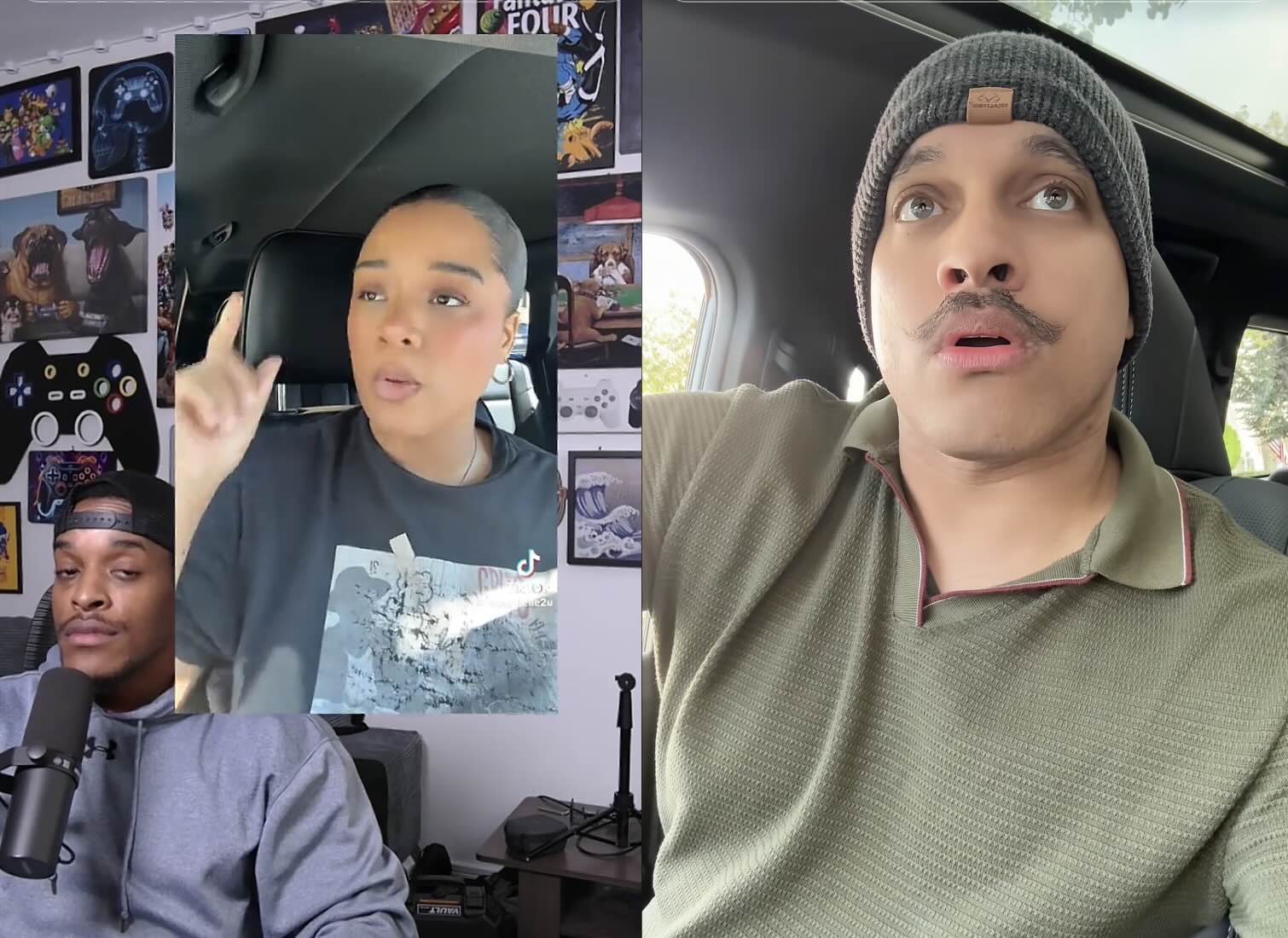
Photo: TikTok
A persistent controversy on TikTok, ignited by creator Danielle (@itsdanielle2u), has resurfaced a fundamental question that has divided the Black online community for months: can a person be considered "pro-Black" if they build a career analyzing white supremacy but choose a white partner in their private life? The debate, which heavily involved creators like @longlivejxdah (Judah, also known as Bofa Deez) and Chris Newman of Farming While Beige, has little to do with who anyone dates. Instead, it reveals a profound ideological confusion at the heart of the creator economy: mistaking the work of anti-racist activism for the inherent value system of pro-Blackness.
Danielle's original critique was not a personal attack but a sociological observation. She pointed to a specific trend among Black male commentators who monetize Black trauma and consciousness online while centering whiteness in their most intimate, legacy-building spaces. The response from those who felt targeted, including Judah and Newman, was to defend their activism—their public record of fighting for the community. But this defense misses the point entirely. Activism is a set of actions; pro-Blackness is an internal value system. One can be an effective activist while failing to practice pro-Blackness in daily life, and the community has grown adept at spotting the difference.
The controversy began when Danielle posted a video critiquing a specific dynamic she observed on the platform: Black male creators who build their entire platforms, brands, and content around analyzing race, white supremacy, and pro-Black culture, yet choose to build their personal lives and romantic relationships with white women. While her critique was general and didn't name anyone specific, viewers immediately began tagging Black creator Judah in her comment section. Judah, who frequently speaks on Black issues and culture, saw the influx of tags and searches, assumed the video was aimed directly at him, and posted a passionate, angry response defending his relationship.
Judah's response fiercely defended his record of advocating for Black people and argued that his personal relationship does not invalidate his dedication to the community, asking his audience: "Are y'all saying white people can't be pro-Black?" This immediately ignited a massive debate across TikTok. Many creators sided with Danielle's broader sociological point about the contradiction of profiting off Black consciousness while centering whiteness in personal life, while others defended Judah's right to love who he wants without having his advocacy stripped away.
The core of the disagreement lies in the definitions. The old framework for measuring a person's alignment with the Black community was based on what they fought against—segregation, discrimination, systemic racism. By that measure, Thurgood Marshall, a legal titan who dismantled Jim Crow and was married to a woman of Asian descent, was a monumental activist. But the new framework, articulated by voices like Danielle's, measures alignment by what a person actively chooses to build, love, and protect when the cameras are off. From this perspective, pro-Blackness is not a résumé of deeds; it is a quiet, default lifestyle of centering Black people.
The Grift of Exceptionalism
When creators like Judah and Newman defend themselves by citing their activism, they often fall back on the same flawed logic: that exceptional public work justifies a private life that contradicts pro-Black values. They may point to historical figures who did immense things for the community while dating or marrying outside their race, using these examples as a shield. But this is a form of decontextualization. Thurgood Marshall fought the American legal system when Black people were legally treated as second-class citizens. Modern influencers are not facing Jim Crow; they are operating in a digital economy where discussing race generates followers, brand deals, and monetization.
This defense mechanism solidifies their confusion. They believe that if their political output is loud or important enough—whether it's a viral video on systemic racism or building a worker-owned agricultural cooperative—they have purchased a hall pass that allows them to center whiteness in their personal lives. They are fundamentally saying that Black liberation is an academic or structural math equation, completely ignoring that it is supposed to be rooted in a collective, shared love for Black people as human beings.
The argument that historical figures like Marshall or Frederick Douglass had interracial relationships misses a crucial distinction: these were people navigating a world where proximity to institutional power often dictated survival, and where the pool of available Black partners was severely limited by systemic forces. They were not content creators building a brand off Black consciousness while choosing to center whiteness in their private refuge. They were fighting for the very right of Black people to exist with dignity.
- Activism (The Job): Analyzing white supremacy, dismantling systemic racism, and providing educational content. It can be academic, political, and highly profitable.
- Pro-Blackness (The Value System): A default, unconditional lifestyle of loving, centering, and prioritizing Black people, culture, and spaces.
- The Contradiction: Monetizing Black consciousness as a content niche while choosing whiteness for one's private refuge, emotional intimacy, and generational legacy.
- The Grift: Using historical exceptions and activist credentials as a shield against accountability for personal choices that contradict public proclamations.
This contradiction is why the community increasingly views these creators as "grifters." It's not that they are bad activists; it's that their public work is a transaction, while their private life is their actual value. They are willing to do the loud, public work of fighting the system, but when the cameras turn off, their personal sanctuary and generational legacy are built outside of the very community that sustains them. They use Black trauma and Black audiences to build fame, credibility, and income, but refuse to invest their private, foundational selves into that same community.
Pro-Blackness as an Inherent Value System
Pro-Blackness is not a correction to a problem. It is not a reaction to white supremacy, an economic strategy, or an online thesis.
True pro-Blackness is an unconditional value system. It is the default, day-to-day state of loving, centering, and prioritizing Black people, Black culture, and Black spaces simply because they are worthy of being valued—not because you are trying to defeat a racist system. By treating pro-Blackness as acts of activism, creators miss the everyday reality of the community they claim to speak for. They have intellectualized something that everyday Black people practice naturally without needing a platform or a policy to justify it.
The vast majority of Black people do not participate in public activism, yet they openly live out their pro-Blackness every single day. Valuing Blackness requires zero cameras, zero platforms, and zero academic theories. It is a quiet, steady commitment to centering, protecting, and choosing Black people as a default way of life. It shows up in who you choose to love and build a family with, in how you mentor young Black people, and in how you intentionally circulate wealth within the community.
There are a multitude of profound, everyday ways people show they value Blackness completely outside of the activism framework:
- Daily Living & Relationship Choices: Centering Black love by choosing a Black partner and building a Black family is a foundational statement of value. It ensures that your private refuge, your emotional intimacy, and your generational legacy are entirely rooted within the community.
- Community & Generational Legacy: Pouring time, wisdom, and care into young Black people—especially Black boys, who navigate an incredibly hostile world—to ensure they know their inherent worth before society tries to tell them otherwise.
- Economic Alignment: Intentionally putting money into Black-owned businesses, banks, and service providers out of a genuine desire to see the community thrive, rather than to make a point on social media.
- Intergenerational Care: Looking out for elders, keeping family histories alive, and maintaining the cultural day-to-day experiences that can only be felt and lived, not learned from a textbook.
Value Cannot Be Faked
The reality is that value cannot be faked. You can script an academic argument, edit a video to sound revolutionary, and build an online brand around dismantling white supremacy. But the intimate choices of your private life are an absolute reflection of what you actually treasure. When the cameras turn off, the algorithms reset, and the monetization stops, a person's real value system is laid bare by a simple question: Who do you choose to center, protect, and build a legacy with when no one is watching?
This is why the predicament for influencers like Judah and Newman is so absolute. They have realized that rhetoric has a ceiling. No amount of historical deflections, intellectual gymnastics, or structural "activism" can fabricate genuine, lived devotion. The community sees the boundary. Black audiences can intuitively sense when their collective trauma and culture are being treated as a profitable content niche or an external "problem to solve," rather than an inherent, cherished gift.
When a creator claims to love, honor, and value Blackness above all else on their public platform, but chooses whiteness for their most intimate personal space, it signals that they do not view Blackness as their ultimate good. To the community, this creates an irreconcilable contradiction. The argument that "white people can be pro-Black too" or that "who I love doesn't affect my advocacy" falls flat because it fundamentally misunderstands what pro-Blackness is. It is not a political stance, a set of policies, or a material project. It is a value system rooted in love, commitment, and the daily choice to center Black people.
True pro-Blackness isn't a political job or an online performance—it is a default, unconditional lifestyle of loving and prioritizing Black people. By attempting to treat it as a brand while centering whiteness in their own homes, these creators didn't just walk into a contradiction; they exposed the reality that their public work is a business, while their private lives are their actual value. And in the end, real value always shows itself. The community is no longer interested in hearing about what you fight against. They want to see who you choose to love, protect, and build with when the lights are off and the cameras are gone.
No Ads. By Us. For Us.
This article was made possible by readers like you. We hope it inspired you to support Emerald Book, so we can continue producing content like this.
We will never show you ads, sell your data, or require a subscription to consume our content. Your gift helps us keep the truth accessible.
Click the Support button to give a gift of any amount today.
Thank you for making this work possible.