

Emerald Pages
◆
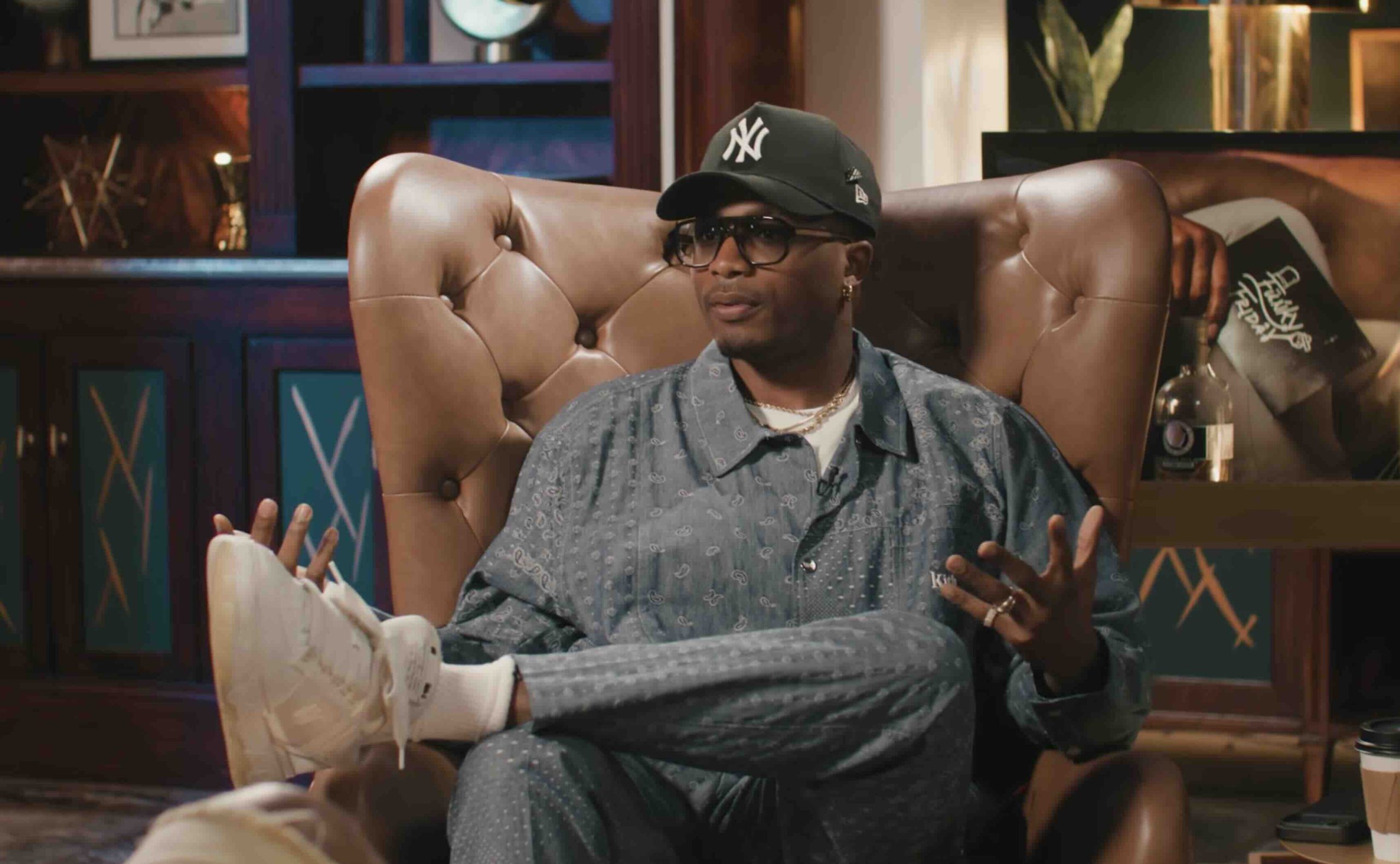
Photo: Funky Friday Podcast | YouTube
Da'Vinchi sat comfortably on the set of Funky Friday, a podcast hosted by Black American football legend Cam Newton, and proceeded to insult the very community that built his career. The Haitian American actor, best known for portraying Terry "Southwest T" Flenory on 50 Cent's hit series BMF, didn't just make a mild critique of American culture. He disrespected Black Americans—explicitly, repeatedly, and with a level of arrogance that has rightfully ignited a firestorm across social media.
When you're answering a question about why Black actors from the UK, Africa, and the Caribbean are being cast in Black American roles, and you pivot to calling the people in that country "incompetent" and "lazy," you're not critiquing abstract American culture. You're talking about Black Americans. And you're doing it on a Black American platform, to a Black American host, about the Black American community that gave you everything you have.
Da'Vinchi's claims weren't just disrespectful. They were demonstrably false. And the truth about Black Americans—and the global diaspora that actually reveres them—exposes his comments for what they truly are: ignorant, divisive, and profoundly ungrateful.
The Disrespect Was Deliberate and Layered
Let's be clear about what Da'Vinchi actually said. During the October 2026 appearance, he claimed that Americans are "just incompetent for a really long time," insisting that adults in their late 20s and 30s can't even do their own laundry. When Cam Newton directly asked if he was calling Americans lazy, Da'Vinchi doubled down, agreeing that the work ethic in America is "very lazy and poor" because convenience has made people soft.
He then validated the toxic stigma that Caribbean, African, and UK Black people believe they are superior to Black Americans—saying "I think that's true"—before adding the caveat, "I don't think it's right."
And if that wasn't enough, he minimized the horrors of slavery by claiming that "white people enslaved white people and Black people enslaved Black people too," implying that Black Americans are somehow "held back" by focusing on historical trauma rather than simply moving on.
The disrespect here is layered and undeniable. He sat across from Cam Newton—a Black American man who built an empire through sheer work ethic—and told him that Americans are lazy. He benefited from the creative vision of 50 Cent, a Black American mogul who created BMF and gave Da'Vinchi his breakout role. He was later cast by Tyler Perry, another Black American entertainment titan. And he used his platform on a Black American podcast to tell the world that "Americans" are incompetent.
Da'Vinchi Was Wrong About Black Americans
Now let's address the substance of his claims. Because beyond the disrespect, Da'Vinchi's assertions are factually bankrupt.
- The "Lazy" Lie: Black Americans built this country's wealth through centuries of unpaid labor, fought in every American war despite being denied basic rights at home, and created entire genres of music—jazz, blues, rock & roll, hip-hop—that generate billions globally. If they were truly lazy, how did they build thriving communities in the face of Jim Crow terrorism and create the Civil Rights Movement that inspired liberation struggles worldwide?
- The "Incompetent" Myth: Black Americans have produced presidents, Supreme Court justices, Nobel laureates, Olympic champions, Fortune 500 CEOs, and legendary artists who have shaped global culture. The idea that adults in their 30s can't do laundry is a bizarre, cherry-picked anecdote that ignores the millions of Black American professionals, parents, and workers who are the backbone of this nation.
- The "Superior Diaspora" Fallacy: The overwhelming majority of Black people from the Caribbean, Africa, and the UK do not look down on Black Americans. In fact, they revere them. Black Americans have historically served as the vanguard for global civil rights and anti-colonial movements—from W.E.B. Du Bois and Marcus Garvey to the Black Lives Matter movement that inspired #EndSARS in Nigeria and racial justice rallies across the UK and France.
The Diaspora Actually Reveres Black Americans
The idea that the global Black diaspora universally looks down on Black Americans is deeply flawed. In reality, Black Americans are immensely revered, studied, and looked up to across Africa, the Caribbean, and Europe for their profound cultural, political, and social contributions.
Architects of Global Political Liberation: Historic Black American intellectuals like W.E.B. Du Bois and political leaders like Marcus Garvey (who moved to Harlem from Jamaica) built the literal foundation of modern Pan-African solidarity. Early African liberation leaders, such as Ghana's first president Kwame Nkrumah and Nigeria's Nnamdi Azikiwe, explicitly stated that they were inspired to fight British colonialism after studying at Historically Black Colleges and Universities (HBCUs) in the United States. Contemporary human rights movements led by Black Americans, such as Black Lives Matter, have been adopted globally—inspiring anti-police-brutality protests like #EndSARS in Nigeria and racial justice rallies across the UK and France.
The Absolute Dominance of Black American Culture: Far from being viewed as "incompetent," Black Americans are recognized as creators of the most influential cultural forces on Earth. From the invention of jazz, blues, rock & roll, and techno to the global powerhouse of hip-hop and R&B, Black American music is the universal blueprint for youth culture worldwide. The aesthetics, slang (AAVE), and street style born in Black American neighborhoods dictate mainstream pop culture in every corner of the globe. Across the diaspora, young people mimic Black American artists not out of superiority, but out of deep admiration and a desire to channel that same sense of unapologetic "cool" and excellence.
A Beacon of Defiance and "Black Excellence": Because the transatlantic slave trade deliberately stripped Black Americans of their original names, languages, and specific tribal lineages, the diaspora views their survival as a miracle of human resilience. Building a global empire of wealth, political power, and artistic genius out of the ashes of chattel slavery and Jim Crow is viewed by continental Africans and Caribbean communities as the ultimate form of resistance. When figures like Barack Obama, Oprah Winfrey, Michael Jordan, Beyoncé, or legendary actors excel, the entire global Black diaspora celebrates their victories as a win for Black people everywhere.
Understanding the Roots of Division
When divisions or negative stereotypes do pop up between Black Americans and foreign-born Black people, sociologists point out that it is rarely organic. Rather, it is a direct byproduct of media conditioning and colonial manipulation.
For decades, Western media exported harmful caricatures of Black Americans (depicting them as criminals or lazy) to African and Caribbean countries. Simultaneously, it fed Black Americans narrow, negative depictions of Africa (depicting it as impoverished and backward). Additionally, immigration systems often foster artificial competition over jobs, housing, and visibility in industries like Hollywood.
When public figures lean into these divisions, they mistake manufactured systemic tension for a lack of mutual respect. In reality, the overriding bond across the diaspora is one of shared history, deep pride, and an undeniable appreciation for what Black Americans have built.
The sentiment of looking down on Black Americans is held by only a small fraction of individuals, and cultural experts agree that it is often rooted in a form of horizontal jealousy or a misguided desire to distance oneself from the specific racial stigmas of the West. It is by no means representative of the broader, millions-strong global diaspora.
The Ongoing Importance of Remembering Slavery
Da'Vinchi's attempt to minimize slavery by claiming that "Black people enslaved Black people too" is not just historically reductive—it's a deliberate deflection from the unique, racialized system of chattel slavery that built the modern world.
Suggesting that Black Americans are "held back" by focusing on history ignores the fact that the economic, legal, and social systems built during slavery created generational wealth gaps that still exist today. Discussing history isn't about being stuck in the past; it is a necessary tool for understanding current systemic inequalities and fighting for a fairer future.
The transatlantic slave trade was a uniquely brutal, race-based system that dehumanized millions, stripped them of their identities, and created a global racial hierarchy that persists to this day. Equating it with any other form of historical servitude is intellectually dishonest and morally bankrupt.
The Backlash
The fallout from Da'Vinchi's comments has been swift and severe—and entirely deserved.
Former friends have spoken out. An actor and artist named Brandon Brown, who was close friends with Da'Vinchi in Los Angeles back in 2017, released a video exposé alleging that Da'Vinchi has a history of "anti-Black" behavior, claiming he used to actively try to distance himself from Black Americans by saying, "I'm not Black. I'm Haitian," and complaining about having to audition for Black roles.
Advocacy groups have officially added him to industry boycott lists, stating that his broad generalizations shouldn't dictate who gets cast in Hollywood roles. And people are pointing out that this controversy is hitting right as he is scheduled to premiere as a series regular on NBC's Chicago Fire.
Da'Vinchi later posted on social media claiming his words were misunderstood, but members of the community have widely rejected the explanation. The general consensus is clear: you cannot enjoy the fruits of a community's labor and culture, and then turn around and generalize that same community as lazy and incompetent on a public stage.
What Da'Vinchi Got Wrong
- He said Americans are incompetent. In reality, Black Americans have fought for and built pathways to success in every field despite centuries of systemic barriers designed to exclude them.
- He said Americans are lazy. In reality, Black Americans have been the backbone of this nation's labor force, cultural innovation, and political progress—often without recognition or fair compensation.
- He validated the idea that the diaspora looks down on Black Americans. In reality, the global Black diaspora respects Black Americans for their resilience, creativity, and leadership in the fight for liberation worldwide.
- He minimized slavery. In reality, understanding the unique horrors of chattel slavery is essential to understanding modern inequality—and remembering it is an act of justice, not weakness.
- He profited from Black American culture while insulting it. In reality, his career was built on Black American stories, Black American creators, and Black American audiences. That's not just hypocrisy—it's betrayal.
Da'Vinchi's words were not a critique of abstract "American culture." They were a direct insult to the Black American community that gave him everything. And they were false.
The truth is that Black Americans are not lazy. They are not incompetent. They are not held back by remembering their history. They are, and always have been, the architects of a culture that the entire world admires, imitates, and benefits from.
The diaspora does not look down on Black Americans. It looks up to them.
And Da'Vinchi? He should be ashamed.
No Ads. By Us. For Us.
This article was made possible by readers like you. We hope it inspired you to support Emerald Book, so we can continue producing content like this.
We will never show you ads, sell your data, or require a subscription to consume our content. Your gift helps us keep the truth accessible.
Click the Support button to give a gift of any amount today.
Thank you for making this work possible.