

Emerald Pages
◆
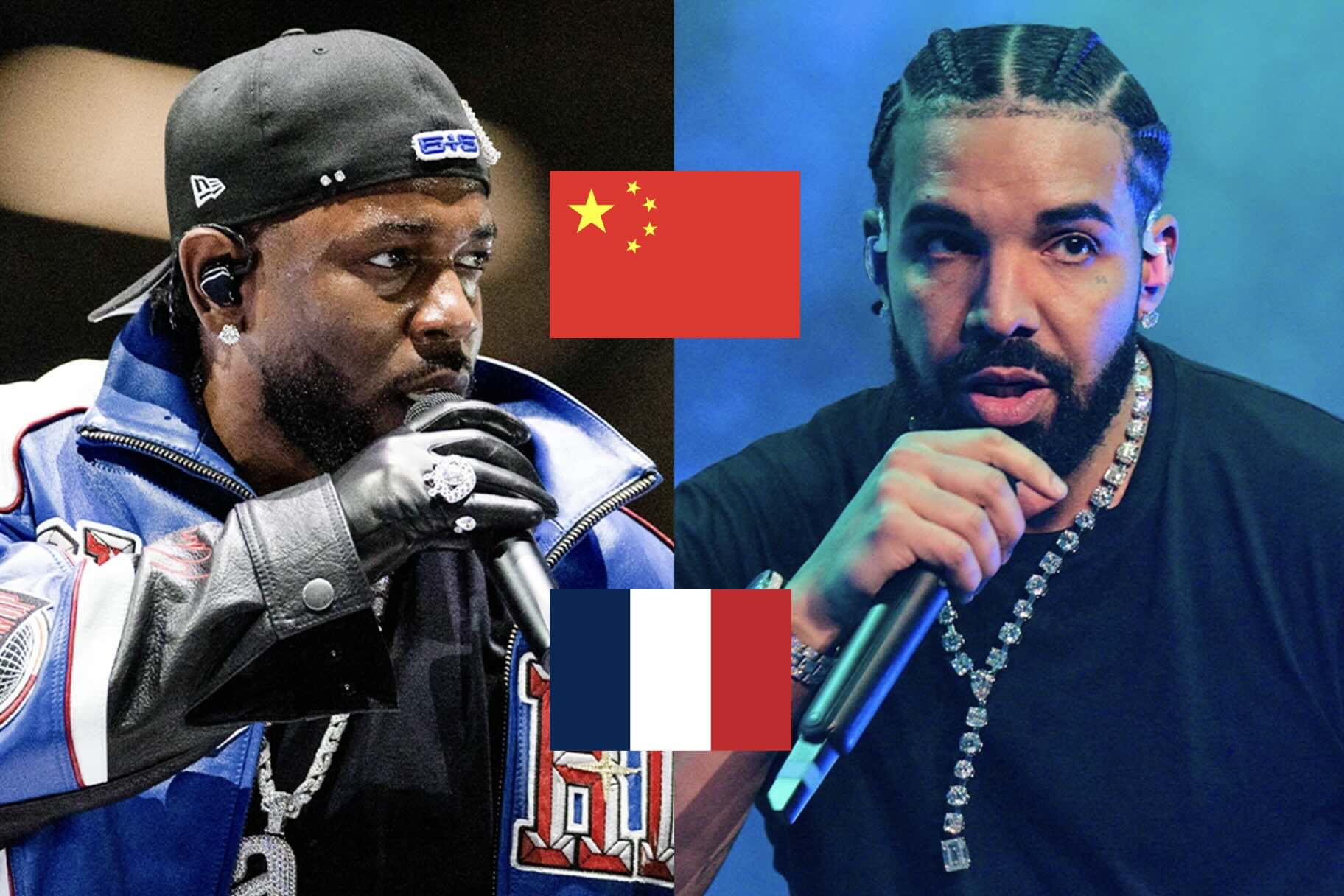
Photo: Emerald Book Image
When Drake and Kendrick Lamar traded diss tracks in 2024, the world watched two of hip-hop’s biggest stars battle for cultural supremacy. But while the artists fought over authenticity and legacy, a quieter financial war was being won in the boardrooms of Paris, Shenzhen, and Wall Street. The real victors of the beef were not the rappers, but the international conglomerates and financial institutions that own the music itself.
Both artists are signed under the massive umbrella of Universal Music Group (UMG), the world’s largest record company. Drake operates through Republic Records via his OVO Sound imprint, while Kendrick partners with Interscope Records through his creative venture, pgLang. Because UMG distributed and profited from both sides of the conflict, the corporate entity became the ultimate beneficiary of the chaos.
But UMG is not a monolith. It is a publicly traded corporation owned by a complex web of international investors. When the diss tracks generated millions in streaming revenue, a massive portion of that money did not stay in America. It flowed directly to two foreign powerhouses—the Bolloré family in France and Tencent Holdings in China—while American Wall Street institutions captured their own substantial share of the profits.
According to Billboard estimates, the six core diss tracks—including Kendrick’s chart-topping “Not Like Us” and Drake’s “Family Matters”—generated over $15.4 million in U.S. revenue alone. Because both artists route their music through UMG-owned distribution networks, UMG took its corporate cut before passing the rest to the artists. Industry standard distribution splits suggest UMG pocketed an estimated $2.3 million to $4.6 million in gross corporate cuts.
The French Connection: The Bolloré Family
The largest single stakeholder in Universal Music Group is the Bolloré family, a French billionaire dynasty led by Vincent Bolloré. They control roughly 28% of the company through direct holdings and their media conglomerate, Vivendi SE. For every dollar of net profit UMG cleared from the record-breaking streams of “Not Like Us” or “Family Matters,” roughly 28 cents flowed back to France.
The Bolloré family’s influence over UMG is not passive. Vivendi originally owned 100% of UMG before spinning it off into a public company, and the family remains the most powerful force behind the label’s corporate strategy. When Drake’s legal team filed a federal defamation lawsuit against UMG—accusing the label of inflating Kendrick’s streaming numbers and weaponizing “Not Like Us” to damage his career—they were effectively targeting an entity controlled by French capital.
- Bolloré Family (France): ~28% ownership stake, largest single shareholder
- Tencent Holdings (China): ~20% ownership stake, largest corporate shareholder
- Bill Ackman / Pershing Square (USA): ~10% ownership stake
- GIC Private Limited (Singapore): ~4.7% ownership stake
- BlackRock (USA): ~3.0% ownership stake
The Chinese Tech Giant: Tencent Holdings
The second-largest beneficiary of the beef was Tencent Holdings, the Chinese tech and entertainment conglomerate based in Shenzhen. Tencent owns a massive 20% stake in UMG, having purchased its first 10% slice in 2020 for over $3 billion before doubling its stake right before UMG went public.
This means that 20 cents of every dollar of UMG’s net profit belongs to Tencent’s shareholders. But Tencent’s profit stream from the beef was even more direct. Tencent also owns Tencent Music Entertainment (TME), which operates China’s largest music streaming apps, including QQ Music, Kugou, and Kuwo. When millions of fans across China streamed the diss tracks on those platforms, Tencent collected advertising and subscription revenue directly from the listeners.
The irony is stark: while Kendrick Lamar and Drake traded deeply personal insults about culture, authenticity, and hometown pride, a significant portion of the profits from their conflict flowed to a Chinese tech conglomerate.
Wall Street’s Slice: American Institutions Cash In
While France and China control the absolute largest corporate slices of UMG, American Wall Street institutions collected tens of millions of dollars from the company’s massive cash flow. The remaining shares of UMG are held by a mix of hedge funds, asset managers, and sovereign wealth funds that treat music royalties as a reliable, recession-proof asset class.
The most prominent Wall Street player in the UMG story is billionaire hedge fund manager Bill Ackman. His firm, Pershing Square Capital Management, holds a direct stake of approximately 4.7% in UMG. Ackman recognized the unmatched power of owning music catalogs early. In early 2026, his hedge fund actually attempted a high-stakes tender offer to aggressively buy out and take over UMG entirely. While UMG’s board of directors rejected the corporate takeover bid—forcing Pershing Square to sell its stake—Ackman remains one of the most prominent American financial voices pushing UMG to maximize the value of its catalog.
Beyond Ackman, some of the largest financial institutions in the world profit from the ongoing streaming revenue of “Not Like Us” and “Family Matters”:
- BlackRock (USA): The world’s largest asset manager owns roughly 3.0% of UMG, meaning everyday retirement funds and index investors indirectly profit from the beef.
- GIC Private Limited (Singapore): The sovereign wealth fund of Singapore holds approximately 4.7% of UMG, capturing a steady stream of royalty revenue.
- Artisan Partners (USA): A major U.S. investment manager holds roughly 3.3% of the company.
- Independent Franchise Partners (USA): A significant institutional holder with a meaningful stake in UMG’s equity.
For institutional investors, a viral hip-hop feud is not art—it is an uncorrelated financial asset class. Wall Street values music catalogs because streaming royalties act exactly like bonds or cash-flowing real estate. Whether the stock market crashes or the economy slows down, millions of fans will still stream music every single day, sending reliable, inflation-resistant micro-payments back to the shareholders.
From Music to Investment Vehicles
Investors and Wall Street firms treat music catalogs exactly like commercial real estate or corporate bonds. To trade these assets efficiently, they transform the rights to song streams and radio plays into structured financial products using a process called securitization.
The blueprint for this strategy was invented in 1997 by rock star David Bowie and financier David Pullman, who launched the first-ever “Bowie Bonds.” Today, Wall Street has supercharged this concept. Investment firms buy the publishing rights or master recordings of hundreds of artists, grouping thousands of songs into a single diversified portfolio. They then partner with an investment bank to issue Asset-Backed Securities (ABS) backed by the future streaming revenue of those songs. Institutional investors—like pension funds and insurance companies—buy these music bonds, and the actual streaming payouts from platforms like Spotify and Apple Music are collected into a trust account and paid out as regular, predictable coupon interest payments.
Private equity firms also raise billions of dollars from wealthy individuals and university endowments to purchase music intellectual property. Specialized firms like Hipgnosis Songs Fund, Round Hill Music, and Primary Wave raise capital specifically to hunt for legacy catalogs, buying them based on a multiple of their Net Publisher’s Share—usually paying anywhere from 15x to 25x the catalog’s annual historical royalty earnings.
For everyday retail investors who cannot afford to buy an entire catalog, Wall Street creates liquid investment vehicles traded on public exchanges. Buying a single share of UMG stock means your portfolio inherently holds a fractional slice of every song they own, including the Drake and Kendrick diss tracks. Thematic Exchange-Traded Funds (ETFs) bundle music, media, and entertainment stocks together, allowing anyone to invest in the financial success of the beef.
The Artists Still Won—But Ownership Pays More
While France, China, and Wall Street won the corporate side, Kendrick Lamar and Drake still walked away with the largest individual paydays. Under modern high-tier partnerships like Kendrick’s pgLang deal and Drake’s estimated $400 million UMG contract, the artists keep the vast majority of their masters and streaming royalties—often 70% to 80% or more. UMG only keeps a smaller percentage for handling distribution and marketing.
However, the long-term math favors the corporate owners. Under current copyright law, a master recording is protected for 95 years from publication. That means UMG and its shareholders—from the Bolloré family to Tencent to BlackRock—will legally hold a monopoly on the commercial use of these 2024 diss tracks until nearly the 22nd century. Every time “Not Like Us” is played at a sports event, licensed for a television show, or streamed on a workout playlist, a new micro-payment flows up the corporate ladder to Paris, Shenzhen, and Wall Street.
This is the hidden reality of the modern music industry. The artists create the cultural value, but the financial vehicles that hold the long-term wealth are often owned by global investment firms. Drake and Kendrick may have won the battle for cultural relevance, but the war for ownership—and the generational wealth that comes with it—was won by the corporations that own the music.
As the streaming era continues to mature, the question of who owns the masters and publishing rights will only become more critical. For now, the biggest winners of the Drake vs. Kendrick beef are not the rappers, but the international investors across France, China, and Wall Street who own the pipeline through which their music flows.
No Ads. By Us. For Us.
This article was made possible by readers like you. We hope it inspired you to support Emerald Book, so we can continue producing content like this.
We will never show you ads, sell your data, or require a subscription to consume our content. Your gift helps us keep the truth accessible.
Click the Support button to give a gift of any amount today.
Thank you for making this work possible.