

Emerald Pages
◆
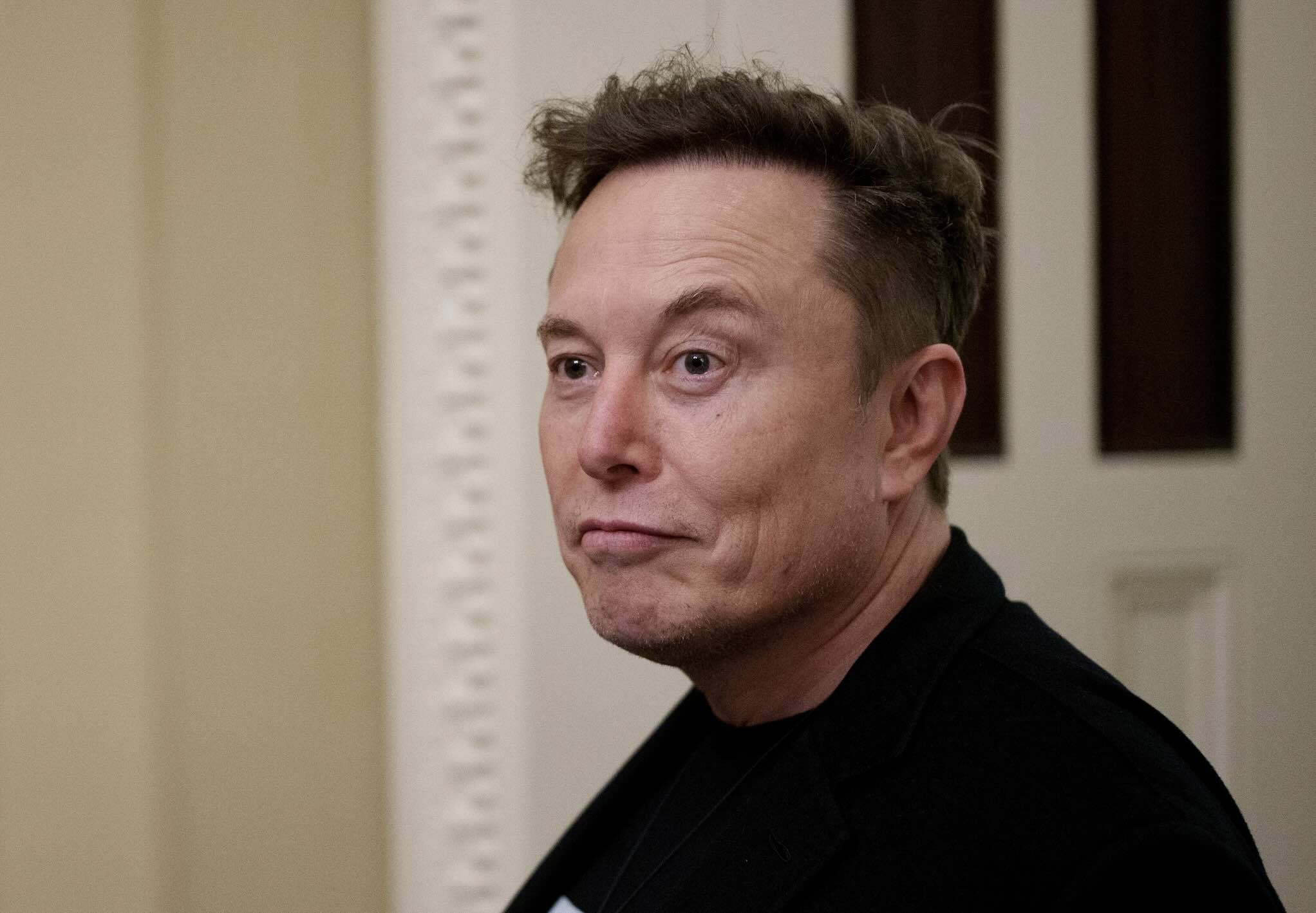
SpaceX CEO Elon Musk | Photo: Getty Images
On November 25, 2026—the Wednesday before Thanksgiving—the Federal Communications Commission granted SpaceX a license to deploy up to one million satellites into low-Earth orbit. These satellites, collectively called "Starmind," are not communications relays. They are solar-powered AI data centers, each generating roughly 175 to 250 kilowatts of compute power. If fully built, the constellation would represent 100 to 175 gigawatts of orbital computing infrastructure—roughly equivalent to the entire installed power capacity of a mid-sized nation.
The decision was praised by FCC Chairman Brendan Carr as a historic step for American AI leadership. Astronomers, aerospace engineers, and rival satellite operators responded with alarm. The American Astronomical Society warned it would devastate astronomical research. Amazon's Kuiper and Viasat petitioned to block the plan. Environmental groups like Earthjustice criticized the agency for finalizing the license without a full National Environmental Policy Act review. And physicists pointed out something the FCC's order never addressed: the laws of thermodynamics do not care about regulatory approval.
Let's Be Clear About What Was Just Approved
This is not a modest experiment. It is not a pilot program. It is a license for one million large, fragile, heat-generating spacecraft—each trailing enormous solar and radiator wings—to be packed into an orbital regime that currently holds roughly 16,000 to 17,000 operational satellites. That is a 60-fold increase in the number of objects in low-Earth orbit, and unlike ordinary satellites, these are power plants with server racks attached. The proposal is not ambitious. It is, by any honest engineering standard, absurd. And the federal government just signed off on it.
What follows is not a debate about whether the idea is bold. It is an inventory of why the idea fails on nearly every axis that matters—thermodynamics, radiation physics, launch mass, industrial capacity, atmospheric chemistry, and basic arithmetic—and why a regulator with any technical spine would have said so.
The Vacuum Is a Thermos Bottle
The fundamental problem with space-based data centers is heat. On Earth, data centers dump waste heat through air convection and water evaporation. Space has neither. It is a near-perfect vacuum, meaning the only way to shed heat is thermal radiation—infrared light. The Stefan-Boltzmann Law governs this process, and it scales with the fourth power of temperature. That sounds promising until you realize silicon chips operate at roughly 60 to 85 degrees Celsius. At those temperatures, radiative cooling is brutally inefficient.
To reject just one megawatt of waste heat in low-Earth orbit—accounting for sunlight and Earth's own infrared glow heating the radiator panels back up—a satellite requires roughly 1,500 to 3,000 square meters of radiator surface area. That is about half a football field per megawatt. For context, the International Space Station generates around 100 to 120 kilowatts and requires massive, complex ammonia-pumped radiator arrays just to stay cool. Scaling that up by orders of magnitude for AI GPUs adds immense mass, plumbing complexity, and micrometeoroid puncture risks.
Elon Musk has claimed that aluminum radiators pointed into deep space can shed roughly 1,300 watts per square meter, arguing that solar panels—not radiators—make up the bulk of each satellite's surface area. But there is a critical flaw: in low-Earth orbit at 500 to 1,000 kilometers altitude, a satellite is not facing 3-Kelvin deep space in all directions. Half of its field of view is blocked by Earth, which radiates heat and reflects sunlight back onto the radiator panels. This slashes cooling efficiency well below Musk's ideal figure. The "easier cooling in space" pitch is, thermodynamically speaking, backwards.
Radiation Destroys Modern AI Chips
Modern AI training relies on cutting-edge semiconductors—3nm or 2nm nodes packed with billions of transistors. In low-Earth orbit, cosmic rays and solar protons constantly slam into silicon, flipping bits and causing silent data corruption during AI training, or permanently frying circuits. Traditional radiation-hardened space chips are generations behind commercial NVIDIA or Google TPUs in compute power. If you launch commercial off-the-shelf AI chips instead, you have to wrap them in heavy aluminum or tantalum shielding—which skyrockets launch mass—and accept high failure rates with no technicians available to swap out dead server blades.
Musk's proposed solution is hardware-software co-design: localized shielding around the central compute core, combined with algorithmic error tolerance. The argument is that large neural networks are naturally resilient to occasional single-bit memory flips. The software layer detects radiation-induced glitches, drops corrupted calculations, and reroutes workloads across neighboring satellites via laser links. Whether this works at scale—with one million satellites, each running commercial GPUs in a radiation environment—remains entirely unproven. Betting a trillion-dollar constellation on unproven error-correction at planetary scale is not engineering. It is hope.
The Launch Mass and Obsolescence Trap
Even if SpaceX brings Starship launch costs down to aggressive targets of $100 to $200 per kilogram, the sheer mass of power generation, batteries, shielding, and giant radiators makes orbital infrastructure vastly heavier per megawatt than a warehouse in Virginia or Texas. But the deeper problem is the refresh cycle. On Earth, AI hardware becomes obsolete every two to three years, and hyperscalers routinely gut and upgrade their server racks while keeping the building, grid connection, and cooling towers. In orbit, you cannot upgrade a satellite. Because cosmic radiation degrades solar panels and GPUs within three to five years, SpaceX must burn up the entire spacecraft in the atmosphere and pay to manufacture and launch a brand-new satellite every few years.
- The replacement treadmill: Maintaining a full one-million-satellite constellation on a five-year replacement cycle requires replacing 200,000 satellites per year—nearly 550 satellites a day.
- The annual bill: Even at an ultra-low $3 million per satellite, simply maintaining the constellation would cost $600 billion every single year in hardware and launches.
- The industrial absurdity: Replacing 200,000 satellites annually means building, testing, and shipping 548 complex, multi-ton spacecraft every single day—more than 22 satellites rolling off the assembly line every hour.
- The launch cadence: At 2.5 metric tons per satellite, replacing 200,000 units requires lifting 500,000 metric tons into orbit every year. Even if Starship achieves a 150-ton payload capacity to sun-synchronous orbit, that requires 3,333 Starship launches per year—roughly 9.1 orbital launches every single day, without a single weather delay or scrubbed launch.
- The atmospheric cost: De-orbiting 500,000 tons of aluminum, silicon, and copper every year means dumping roughly 1,370 tons of vaporized metal into Earth's upper atmosphere every day—thousands of times more than natural meteoroid infall.
The $600 Billion Question
That $600 billion annual replacement bill is precisely why financial analysts and aerospace economists treat the one-million-satellite number as a regulatory placeholder rather than an actual business plan. Spending $600 billion every single year just to replace aging satellites is nearly double the combined annual capital expenditures of Microsoft, Alphabet, Meta, and Amazon—which together spend roughly $300 billion to $350 billion per year on every terrestrial data center, AI chip, office, and warehouse on Earth. It is roughly equal to the entire global semiconductor industry's annual revenue. It is 24 times NASA's entire annual budget.
Independent Wall Street estimates paint an even bleaker picture. Energy consultancy Wood Mackenzie estimates a one-gigawatt orbital data center actually costs around $170 billion upfront—roughly three times the cost of a terrestrial data center—with $100 billion going purely toward satellite manufacturing and launches. Over a 20-year lifecycle, Boston Consulting Group estimates total ownership costs at $660 million to $750 million per megawatt in orbit, compared to $230 million to $300 million per megawatt on Earth. Google's head of data center energy noted in November 2026 that at current launch and space-grade hardware prices, orbital compute can cost up to 100 times more than terrestrial facilities.
Put plainly: the maintenance bill alone exceeds the total annual revenue of the global semiconductor industry. No business plan survives that arithmetic. The only thing keeping the number on paper is the fact that no one at the FCC was asked to check it.
The Pattern of Musk's Promises
Elon Musk has a well-documented track record of missing self-imposed timelines and scaling back his most ambitious promises. Full Self-Driving has been "next year" every year since 2014. The Hyperloop never materialized. Mars colonization timelines have slipped by years. The second-generation Tesla Roadster has been delayed for over six years. Biographers and former executives have noted that Musk uses unrealistic deadlines deliberately as a management and fundraising tool—forcing urgency inside his companies and selling the vision to investors before the foundational technology is proven.
Starmind fits this pattern precisely. By announcing the final, sci-fi scale of the project—one million orbital data centers—years before the foundational tech is proven, Musk attracts capital, talent, and regulatory approvals upfront. The inevitable downsizing later is treated as a normal part of iteration. But in this case, the regulatory approval itself carries external costs: locked-up orbital slots, spectrum rights, and a license that forces competitors to design their networks around a "phantom" constellation that may never exist.
What Actually Happens Next
Even with an FCC license in hand, physics still holds the final veto. Environmental groups like Earthjustice and rival satellite operators are already preparing court challenges over the lack of environmental reviews and collision risks, which could freeze the license for years. If the thermodynamics and unit economics do not work—as most physicists predict—SpaceX will simply miss its mandatory 100,000-satellite milestone in 2035, forfeit its regulatory bonds, and see the license automatically expire without a single massive data center ever operating in orbit.
The deeper question is not whether Starmind will be built as proposed. It almost certainly will not. The question is why a federal agency approved a plan that physicists, economists, and even SpaceX's own SEC filings describe as unproven and possibly unworkable. The answer lies in the structure of American regulatory law: agencies are not venture capitalists, they are not physics peer-reviewers, and they are not required to protect investors from wasting capital on bad ideas. They are traffic cops for spectrum and orbits. And traffic cops do not check whether your destination is real.
But let us not lose sight of the thing itself. What was approved is not a bold bet on the future. It is a proposal to build, maintain, and repeatedly destroy hundreds of thousands of spacecraft a year to run computer chips in a vacuum that cannot cool them, in a radiation environment that corrupts them, on a replacement schedule that costs more than the entire global chip industry, and in an orbital shell already crowded enough that astronomers are sounding the alarm. Calling that "visionary" requires not understanding the first thing about any of the fields involved. The Starmind approval is a case study in what happens when regulatory mandates, political incentives, and hype cycles align—and when no one in the room is willing to say the obvious thing out loud. The physics, the economics, and the environmental consequences were left for someone else to deal with. Whether that someone else is a court, a bankruptcy proceeding, or the atmosphere itself remains to be seen.
No Ads. By Us. For Us.
This article was made possible by readers like you. We hope it inspired you to support Emerald Book, so we can continue producing content like this.
We will never show you ads, sell your data, or require a subscription to consume our content. Your gift helps us keep the truth accessible.
Click the Support button to give a gift of any amount today.
Thank you for making this work possible.