

Emerald Pages
◆
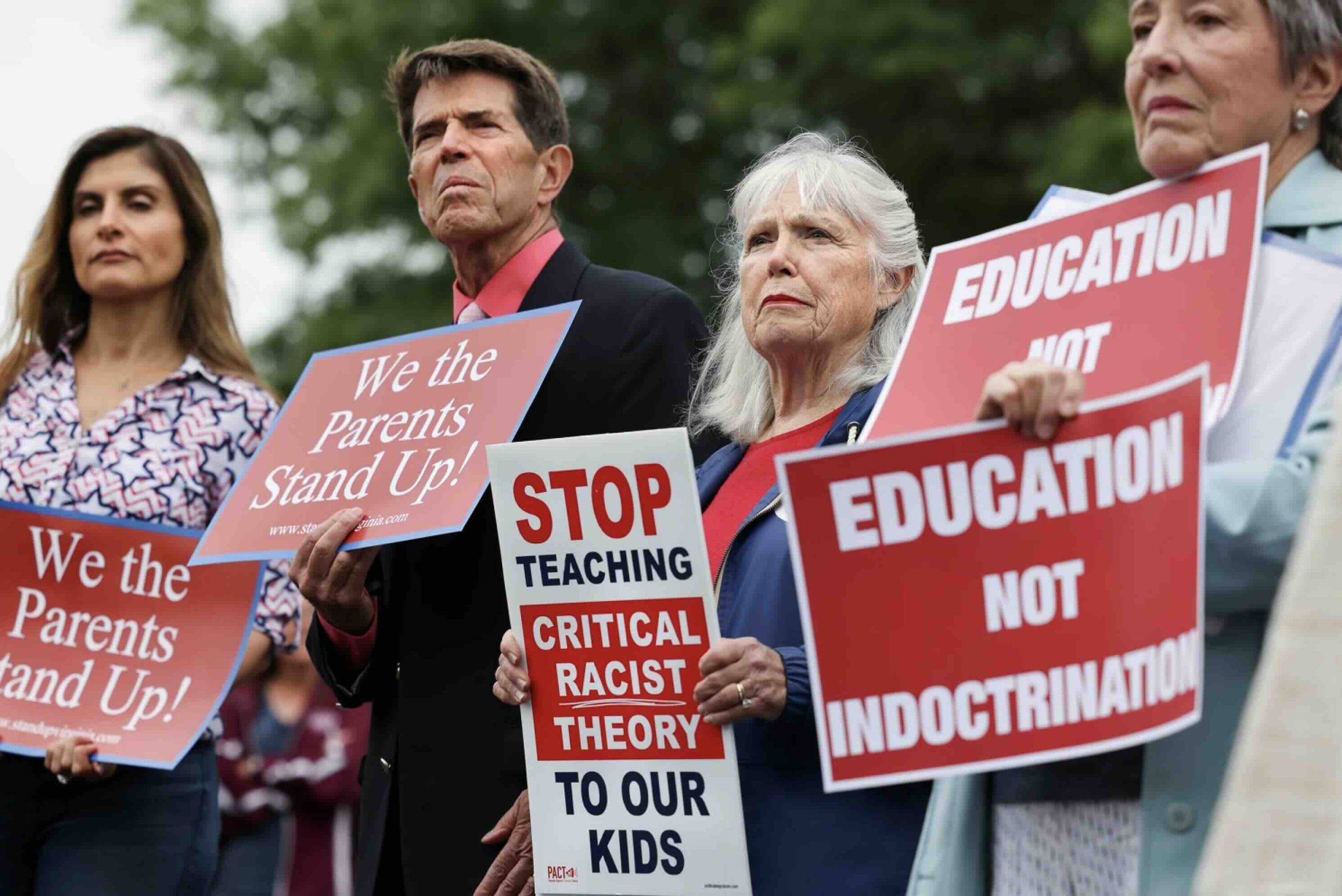
Photo: Reuters
There is a version of American history taught in most U.S. classrooms. It is a story of Thanksgiving friendship, benevolent expansion, a clean end to slavery in 1865, and a nation that spreads democracy abroad. It is not, historians consistently note, an accurate account. It is something closer to a national myth — carefully curated, institutionally reinforced, and emotionally protective.
Sociologists and education researchers have a name for what happens when that myth becomes the permanent baseline for a country's self-understanding. They describe it as contested public memory, hegemonic memory, or — more bluntly — a collective delusion. What they rarely say in academic journals, but what the evidence overwhelmingly supports, is that this sanitized story functions as a collective delusion maintained for psychological comfort, and that it is held disproportionately by white Americans.
The asymmetry is not incidental. It is structural, demographic, and psychological. White Americans — roughly 56–58% of the population — hold approximately 78–83% of school board seats nationwide, make up about 80% of public school teachers, and dominate the state legislatures and textbook publishers that determine what children learn. Meanwhile, more than half of U.S. adults read below a sixth-grade level, and roughly 60% do not hold a four-year college degree. For most citizens, the simplified K–12 curriculum is their only formal framework for understanding the nation's past.
What the Comfortable Story Leaves Out
The omissions are not minor details. They are the load-bearing walls of the myth. Thanksgiving is taught as a peaceful potluck rather than what it was: the celebration of a colonial project built on genocide — millions of Indigenous people dead from disease, slaughter, forced removal, and the deliberate destruction of their cultures and communities — and on a diplomatic truce that preceded centuries of dispossession and violence, rooted in a mutual defense treaty negotiated after European diseases had already devastated the Wampanoag village of Patuxet. Slavery is taught as a strictly Southern institution rather than a system of chattel bondage — the legal ownership of human beings as property solely based on race, enforced through violence, family separation, and the denial of basic humanity — that was legal across all 13 original colonies, with Northern banks, shipping companies, and textile mills profiting heavily from it. Reconstruction, Jim Crow, convict leasing, and the racial wealth gap are rushed through or skipped entirely.
Overseas colonization and intervention by American imperialism are treated as footnotes to a story about "spreading democracy." The 1898 acquisition of Puerto Rico, Guam, and the Philippines; the brutal Philippine-American War; the overthrow of the Hawaiian Kingdom; the Insular Cases; the Banana Wars; and Cold War coups are all minimized or skipped. And state-sanctioned atrocities committed by Americans — the Tulsa Race Massacre, the Wilmington coup, the Red Summer, Sand Creek, Wounded Knee, the California Genocide, the Indian boarding schools, the Ludlow Massacre, My Lai, Tuskegee — are minimized, framed as isolated exceptions, or left out altogether.
Researchers identify a consistent pattern in why these chapters disappear. Nation-building narratives prioritize patriotism and shared progress. Textbook market economics reward publishers who avoid controversy in large state markets like Texas and California. And in recent years, state laws restricting how race and racism can be discussed have led teachers and districts to self-censor. The result is a curriculum that protects the emotional comfort of the dominant group at the expense of historical accuracy.
- Roughly 83% of school board seats nationwide are held by white members; weighted by enrollment, the average student is represented by a board that is about 62% white.
- About 54–56% of U.S. adults read below a sixth-grade level, and roughly 60% have not completed a four-year college degree.
- Around 80% of public school teachers and 89% of superintendents are white, filtering daily history instruction through a predominantly white professional lens.
The Psychology of Not Knowing
Why would a society collectively cling to a story that omits so much? Social psychologists point to cognitive dissonance — the uncomfortable tension that arises when evidence contradicts a person's belief that they belong to a fundamentally good nation. To resolve that tension, people dismiss the evidence, minimize its severity, or reframe atrocities as necessary evils. System justification theory describes a subconscious motivation to defend the social and political systems people live under, because accepting that those systems were built on mass violence feels destabilizing. Belief in a just world — the comforting assumption that good people are rewarded and suffering is deserved — shatters when confronted with unvarnished history.
Philosophers and sociologists have given this dynamic a name: white ignorance. Charles W. Mills and scholars like Robin DiAngelo argue that the dominant racial group in a society naturally constructs a version of history that protects its moral standing and material advantages. Because white Americans have historically controlled the institutions that produce public memory — universities, publishing houses, state legislatures, school boards, Hollywood — their perspective is treated as standard or objective history, while Black, Indigenous, and Latino histories are treated as optional electives. This narrative is maintained both actively, through campaigns like the Lost Cause or modern book bans, and passively, through generations simply repeating what they learned in school.
The comfort comes at a cost. Sanitized history invalidates the lived trauma of marginalized communities and leaves the broader public unprepared to understand the lasting consequences of past events — redlining, labor suppression, foreign interventions — in the present day. It is a shared mythology that makes it harder for the public to recognize ongoing systemic injustices.
Why Black Americans Never Had That Option
For Black Americans, the comfortable lie was never available. Sociologists describe the dynamic as counter-memory — a collective memory maintained by a marginalized group to resist erasure by the dominant culture. While mainstream myths were built to preserve dominant-group comfort, Black counter-history was built for survival, self-worth, and political awareness.
When enslaved people were legally barred from reading and writing, oral storytelling became the primary way families preserved genealogies, resistance strategies, and firsthand accounts of slavery, Reconstruction, Jim Crow terror, and the Great Migration. The Black church served as classroom, community archive, and organizing hub. Historically Black Colleges and Universities and pioneering historians — Carter G. Woodson, who founded Negro History Week in 1926, W.E.B. Du Bois, Ida B. Wells — rigorously documented Black history and lynchings at a time when predominantly white universities promoted racist myths. The Black press — Freedom's Journal, The Chicago Defender, The Pittsburgh Courier — reported the unvarnished truth about racial violence and civil rights organizing that mainstream white newspapers ignored. Music, literature, and art encoded stories of struggle and survival into cultural forms that reached millions regardless of formal education or reading levels.
This knowledge is not academic for Black families. Knowing the history of policing, housing discrimination, medical bias, and legal double standards is practical survival knowledge. The Talk — the rules Black parents pass down about interacting with law enforcement — is rooted in centuries of lived history rather than abstract textbook lessons. Historical memory allows communities to recognize recurring patterns — voter suppression, economic disenfranchisement, scapegoating — even when they appear under new names. Passing down accurate history of resilience and resistance counters internalized racism and equips younger generations with a grounded sense of identity.
The Asymmetry of Forgetting
The contrast is stark. For those insulated from systemic harm, forgetting uncomfortable history is a luxury that preserves emotional comfort and national pride. For those directly impacted by systemic inequities, forgetting is a liability that leaves people unprepared for reality. For many Black families, history is not a distant subject confined to a textbook — it is living memory. Grandparents and great-grandparents who lived through Jim Crow, redlining, or the Civil Rights Movement are part of direct family timelines, making it impossible to treat those eras as closed, irrelevant chapters.
This is why the current battles over school curricula and book bans are so intense. The historical truths preserved by Black scholars and communities are finally entering mainstream classrooms, directly challenging the sanitized narratives that traditional institutions long protected. Data consistently shows that the vast majority of challenged and banned books focus on Black history, Indigenous experiences, and LGBTQ+ themes. Multiple states have passed laws explicitly prohibiting lessons that might cause students to feel guilt or anguish because of their race or sex — codifying the protection of emotional comfort into law.
Historians note that this is not new. During the Red Scare of the 1950s and throughout the 20th century, groups like the United Daughters of the Confederacy successfully lobbied textbook publishers to promote the Lost Cause myth of the Civil War. In each era, the struggle over what children read reflects a deeper battle over which version of the past — and which group's comfort — defines the nation's future.
The uncomfortable conclusion, supported by decades of research across sociology, psychology, and education, is that the United States has produced a national story built for the psychological comfort of its dominant group. It is not a conspiracy in the shadows; it is a consensus maintained by overlapping institutions that reward comforting narratives and sideline uncomfortable truths. And the communities that could never afford that comfort — Black Americans foremost among them — have spent generations preserving the truth our country preferred to forget.
No Ads. By Us. For Us.
This article was made possible by readers like you. We hope it inspired you to support Emerald Book, so we can continue producing content like this.
We will never show you ads, sell your data, or require a subscription to consume our content. Your gift helps us keep the truth accessible.
Click the Support button to give a gift of any amount today.
Thank you for making this work possible.