

Emerald Pages
◆
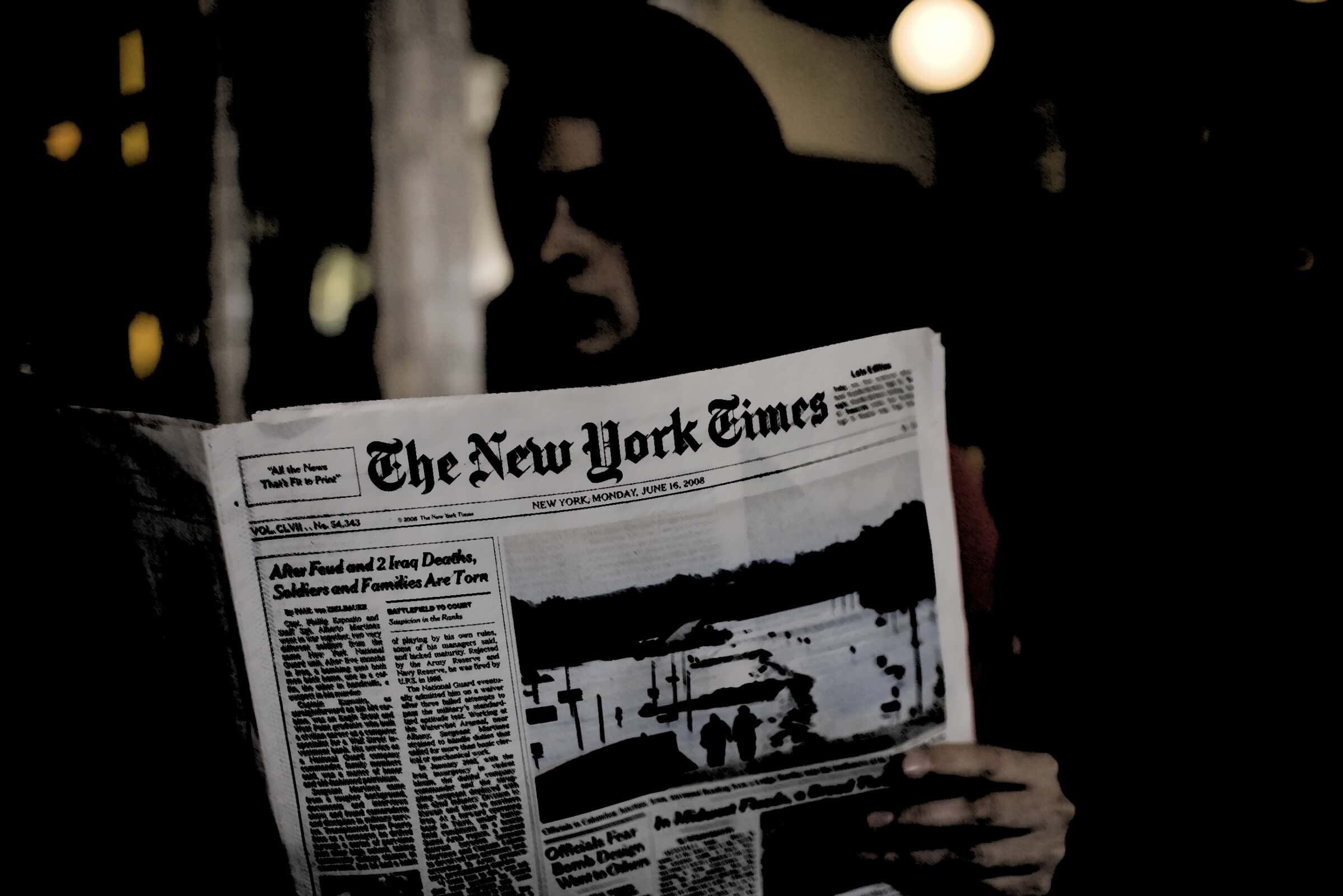
Photo: Emerald Book Image
In 1962, The New York Times published an essay by Harlem-based Black novelist William Melvin Kelley titled "If You're Woke You Dig It." In it, Kelley warned that white mainstream culture routinely takes Black slang, strips away its original meaning, and turns it into something distorted or negative. More than six decades later, the paper has become a case study in the very cycle Kelley described.
The occasion for the latest round of criticism is a wave of 2026 New York Times retrospectives on what some writers have begun calling "Woke 1.0." Triggered in part by viral remarks from Representative Alexandria Ocasio-Cortez quoting a city councilman—"Woke 1 was crazy"—the paper published magazine features and opinion essays looking back at the era. What those pieces consistently do is treat "woke" as a passing linguistic fad or a smug social performance rather than a term with a concrete history rooted in Black American vigilance against racial violence.
The word's origins are not in dispute. Linguists and historians trace "stay woke" to the 1920s and 1930s. Jamaican activist Marcus Garvey urged Black people to "wake up" in 1923, and blues musician Lead Belly famously used the spoken warning "best stay woke" at the end of his 1938 recording of "Scottsboro Boys" to warn Black travelers about racial violence in the Jim Crow South. The term stayed rooted in Black communities for decades, appearing in Kelley's 1962 Times essay and later popularized globally by Erykah Badu's 2008 song "Master Teacher." During the 2014 Ferguson protests, Black activists revived #StayWoke on social media to call for vigilance against police brutality.
From Survival Warning to Lifestyle Buzzword
The problem is not that the Times invented "woke." It is that the paper helped move the term out of its specific context—Black vigilance against police violence and systemic racism—and turned it into a broad, trendy lifestyle and political label for predominantly white liberal readers. During the late 2010s, through style guide changes and heavy coverage of identity politics, the paper helped cement a corporate and academic version of "wokeness" as the mainstream standard. That version prioritized symbolic gestures and language policing over the tangible survival and material justice issues the word originally represented.
Then came the retreat. Once "woke" became politically toxic in the 2020s, the Times analyzed the word's collapse as a natural "euphemism treadmill" or fleeting internet trend. In his 2021 essay "How 'Woke' Became an Insult," linguist and Times columnist John McWhorter argued that while "woke" has a "racial substrate," its trajectory is simply a race-neutral linguistic evolution identical to how "politically correct" fell out of favor. Framing the rise and fall of "woke" as just another linguistic fad—or blaming its downfall solely on conservative "weaponization"—glosses over how mainstream institutions like the Times itself took a serious Black vernacular warning, turned it into a rigid elite orthodoxy, and then walked away once it became unpopular.
- 1923–1938: "Stay woke" emerges in Black American Vernacular as a warning about racial violence and Jim Crow danger.
- 1962: The Times publishes William Melvin Kelley's essay warning that white culture strips Black slang of meaning.
- 2014: #StayWoke is revived during the Ferguson protests against police brutality.
- 2016–2020: Mainstream media and corporations adopt "woke" as a broad progressive label, flattening its Black context.
- 2021–2026: Times retrospectives frame "woke" as a passing fad or linguistic curiosity, erasing the full arc.
The 2026 Retrospectives: A Textbook Example
The specific article at the center of the current critique is Meagan Day's November 20, 2026 New York Times guest essay, "Woke 1 Was Crazy — and It's Still Here." Day—a socialist writer and Jacobin staff writer—traces the origins of what she calls "wokeness" not to Black American history, but to her own experiences at Oberlin College in 2007. She places the origin of the phenomenon at a predominantly white, elite liberal arts college, calling her campus experience "Woke Beta, the soft launch."
That framing is a textbook example of whitewashing the word's history. Instead of acknowledging that "woke" came from Black American communities as a warning about racial violence and injustice, Day collapses a specific Black vernacular concept into generic white progressive campus policing—equating it directly with "political correctness, then call-out culture, then cancel culture and now wokeness." Throughout the essay, "woke" is treated purely as an internal strategic problem for white socialists and the Democratic Party, focused on campus microaggressions, DSA meetings, and congressional posturing, completely detached from the Black communities who actually coined and used the term.
Day's essay is not alone. Nitsuh Abebe's September 10, 2026 New York Times Magazine feature, "Will 'Woke' Go the Way of Scalawags and Mugwumps?", compares "woke" to 19th-century American political insults like "scalawags" and "mugwumps." While the essay briefly notes the word's 1924 Black Houston press origins and Lead Belly's 1938 warning, it pivots to defining modern "woke" primarily as "a smug social performance, not an ideology"—referencing middle-class liberals putting up lawn signs and posting on Instagram. Abebe concludes that "woke" was always just a label rather than a banner, asking where "such an unclaimed word" goes over the next hundred years. Calling "woke" an "unclaimed word" effectively erases the Black communities and activists who originated, owned, and used it for generations before mainstream media co-opted and discarded it.
A Predominantly White Institution Writing Black History
According to the company's own U.S. diversity reports, roughly 60% to 67% of Times employees are white, while people of color make up roughly one-third of the staff. Black employees have historically accounted for around 9% to 12% of the company's workforce. The gap is even wider at the top: over 75% of leadership positions—deputy editors, directors, and executives—have been held by white staffers. The paper is controlled by the Ochs-Sulzberger family, a multi-generational white publishing dynasty, and its corporate board has long been predominantly white. In 2021, the Times released an internal workplace review acknowledging that the paper was "too often a difficult place to work" for people of color, noting higher attrition rates among Black employees and significant gaps in leadership representation.
When a predominantly white institution writes the "official" history of a term born in Black communities, the perspective naturally reflects the institution's own blind spots. When an editorial board or magazine masthead is overwhelmingly white, "woke" is rarely treated as a lived survival mechanism against Jim Crow or police violence. Instead, it is analyzed as an abstract political trend, an online language puzzle, or a debate among white liberals and conservatives. Retrospectives written from within elite, predominantly white newsrooms prioritize how the word made mainstream institutions feel—treating the era as a period of awkward social pressure or political overreach—rather than examining the Black historical roots that were co-opted and discarded along the way.
The Times is not a monolith. Its opinion pages have published sharp indictments of the movement, including columnist Bret Stephens' August 2026 piece, "Yes, Woke 1.0 Was Crazy. Now Where's the Accountability?", which argued that the movement was a system of "social bullying and institutional coercion" that ruined reputations and careers. The paper has also featured progressive and socialist writers criticizing the era's political missteps, such as Day's November 2026 essay, which warned Democrats that "maximalist rhetoric" and obsession with identity politics alienated voters and distracted from economic issues. And many of the Times' own pieces on the history of "woke" were written by Black writers, including McWhorter and Abebe.
But having Black bylines on these retrospectives gives the institution cover—allowing a predominantly white paper to distance itself from the "woke" era while appearing authoritative on a term it helped mainstream and later discard. When Black writers publish in legacy outlets, they are still operating inside an institution whose editors, executives, and core subscribers are predominantly white. As a result, essays often translate Black cultural concepts into language, historical analogies, and frameworks that make sense—and feel comfortable—to that broader audience.
A Centuries-Old Cycle
What happened to "woke" is not new. It follows the exact same trajectory as dozens of other Black American terms. "Politically correct" was originally used within Black civil rights and leftist movements to debate serious commitment to racial and social justice; by the 1990s, mainstream media reframed it entirely as a debate over white college campus speech codes. "Cancel culture" originated in Black music and Twitter culture as a lighthearted way for Black consumers to say they were withdrawing attention from a celebrity; mainstream media transformed it into a heavy ideological battleground over free speech. "Intersectionality" was coined by Black legal scholar Kimberlé Crenshaw in 1989 to describe a specific legal blind spot affecting Black women in employment discrimination cases; mainstream media and corporate culture flattened it into a generic buzzword for overlapping progressive causes.
In each case, the pattern is the same: creation as survival or community expression, mainstream crossover and flattening, weaponization or satire, and finally historical revision—whitewashing. When mainstream outlets look back on the era, they write retrospectives centered on how mainstream culture experienced the buzzword, effectively erasing the Black origins entirely.
William Melvin Kelley's 1962 essay in the Times predicted the exact cycle: mainstream culture borrows a Black term, strips away its original truth and urgency, and leaves behind a distorted version that no longer belongs to the people who created it. The 2026 retrospectives are simply the newest chapter in a very old story—one the paper has been both witness to and participant in.
The question that remains is whether the Times will ever reckon with its own role in that cycle. So far, the retrospectives suggest not. Instead of confronting how mainstream institutions co-opted a Black vernacular concept, turned it into a rigid orthodoxy, and then abandoned it when it became politically inconvenient, the retrospective narrative treats it as something that simply happened on its own—a passing fad, a linguistic curiosity, an "unclaimed word." For the communities who coined it, that is not history. It is erasure.
No Ads. By Us. For Us.
This article was made possible by readers like you. We hope it inspired you to support Emerald Book, so we can continue producing content like this.
We will never show you ads, sell your data, or require a subscription to consume our content. Your gift helps us keep the truth accessible.
Click the Support button to give a gift of any amount today.
Thank you for making this work possible.