

Emerald Pages
◆
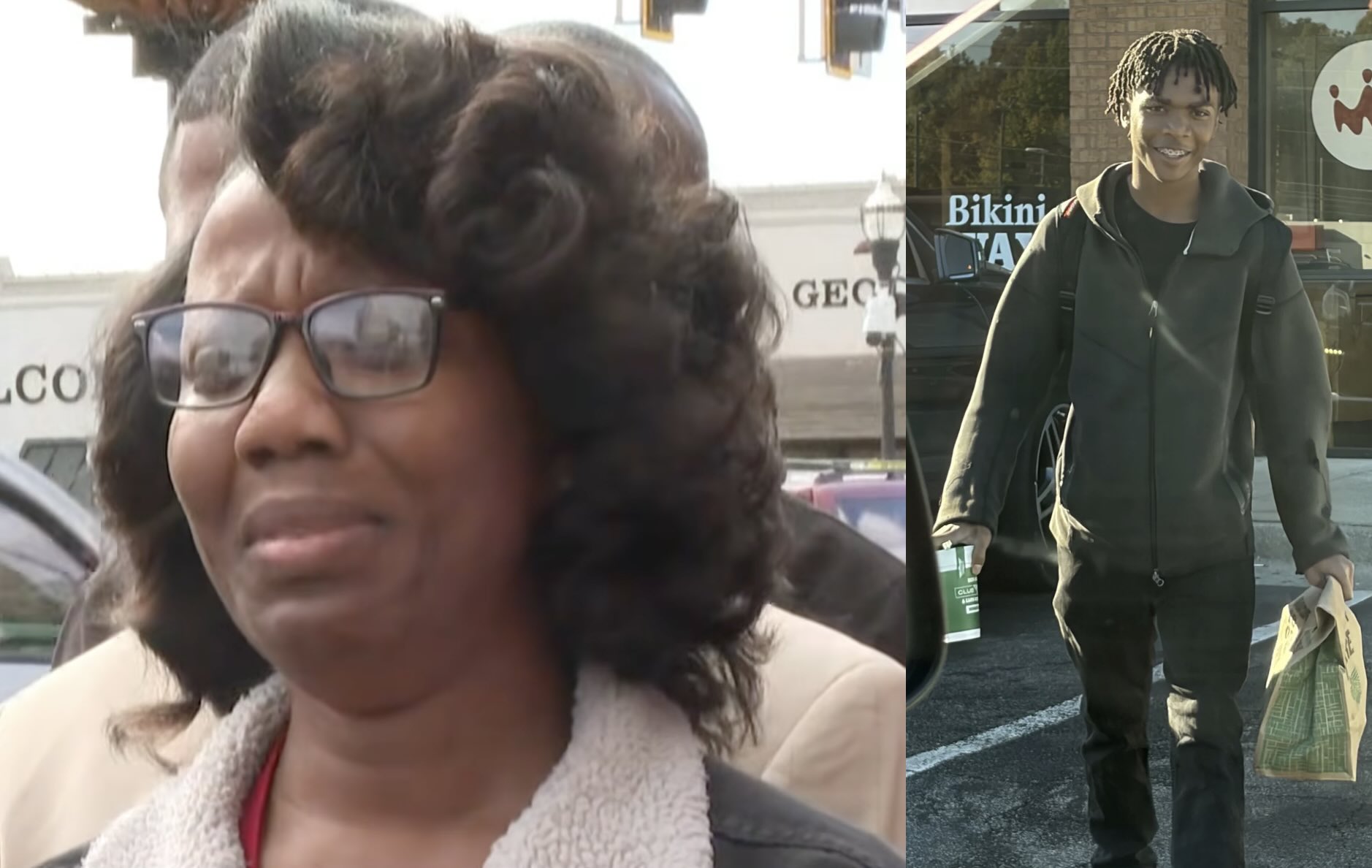
Tyrie Howse and his mother Taneshia Puckett | Photo: Emerald Book Image
On the evening of November 3, 2026, 16-year-old Tyrie Howse was waiting in a Krispy Kreme parking lot in Stockbridge, Georgia, for his mother to pick him up from his little sister's dance class. He was an honor-roll student who worked at Wingstop and dreamed of becoming a pediatric nurse. Within minutes, a Henry County police officer had approached him and a 17-year-old, and Howse was running. He never made it home. According to his family and their attorneys, Howse was shot in the back left side of his head while fleeing—unarmed with abrasions on his hands and face suggesting he was never a threat. The shooting sparked immediate outrage, a viral hashtag, and a press conference on November 19 where his mother, Taneshia Puckett, sat flanked by civil rights attorneys Harry Daniels and Gerald Griggs. And yet, as the grief poured across social media, the national numbers did not move. That is the paradox of the smartphone era: the footage exists, the press conference happened, the attorneys flew in, the hashtag trended—and the next family is already preparing for their turn at the microphone.
More than a decade into the visibility revolution, nearly every contested police killing in America now generates immediate public scrutiny—bystander video, body-worn camera footage, a grieving mother, and a social media firestorm that can reach millions within hours. Yet the data tells a starkly different story: fatal police encounters have not fallen. According to Mapping Police Violence, police killings reached a record high of 1,365 in 2024 and remained elevated at 1,314 in 2025—roughly 3.6 people killed every day. Through late October 2026, the tally stood at 1,087, keeping the year on pace with the previous two. The visibility revolution, in other words, has not produced a prevention revolution.
Each of the tools adopted after 2014—body cameras, viral video, rapid-response press conferences, and aggressive civil litigation—was widely assumed to be a deterrent. Transparency, the logic went, would expose misconduct, shame departments into reform, and force accountability. Instead, the past decade has revealed a persistent gap between exposure and consequence. Body-worn cameras became evidence tools rather than deterrents, documenting the aftermath while rarely preventing split-second uses of deadly force. Civil rights attorneys became extraordinarily effective at securing record settlements, but those payouts come from municipal budgets and taxpayer-backed insurance pools—not from police department budgets or officer pensions—removing any direct financial pressure on the institutions that shape policing. And press conferences, once rare, have become a standardized ritual: a rapid-response playbook designed to counter the police narrative before it hardens, but one that operates entirely outside the legal and contractual structures that actually govern officer conduct.
The numbers bear this out with uncomfortable clarity. Between 2013 and 2022, police killed roughly 1,100 to 1,250 people annually. The 2024 record of 1,365 deaths and the 2025 total of 1,314 represent no meaningful decline from the pre-smartphone baseline—even as overall violent crime and total police-public interactions fell. Black Americans remain 2.6 times more likely to be killed by police than White Americans per capita; Native Hawaiian/Pacific Islander residents face a rate 5.5 times higher, Indigenous residents 3.0 times, and Hispanic residents 1.3 times. Roughly 94% of all victims nationwide are male. And the geography of fatal encounters has shifted in ways that social media has made visible but not safer: research published in the American Journal of Preventive Medicine found that 67% of police shootings occur in rural (45%) and suburban (22%) areas, where sheriff's departments and smaller municipal agencies often operate with fewer crisis-intervention resources and less independent oversight. Tyrie Howse's case is a textbook example: a suburban Henry County parking lot, a department with far less national oversight than a major urban force, and a killing that went viral precisely because social media made the once-invisible visible.
The Press Conference Boom
The proliferation of press conferences is itself a documented phenomenon. Before social media, local newspapers and TV stations almost exclusively printed the police department's initial press release, which often framed the deceased person as an aggressive threat. In Howse's case, the Georgia Bureau of Investigation initially alleged that the 17-year-old handed a handgun to Howse, who ran—a narrative that framed him as armed and fleeing. Over the past decade, a specialized network of national civil rights attorneys—such as Ben Crump, Harry Daniels, and Lee Merritt—institutionalized the rapid press conference as an essential tool to challenge official narratives before they harden in the public mind. On November 19, Daniels and Griggs did exactly that, telling reporters that photographic and physical evidence showed Howse sustained a gunshot wound to the back left side of his head while running away, and that he was unarmed. The strategy serves a dual purpose: it builds political pressure on local district attorneys to pursue criminal charges, and it increases leverage for multi-million-dollar civil wrongful-death settlements. Local TV news stations and social media platforms heavily favor live, emotionally charged press conferences because they generate high engagement at almost zero production cost.
That second wave of viral anger, when it does come, tends to hit even harder. Some of the largest protests and social media firestorms of the past decade—Michael Brown in Ferguson, Breonna Taylor in Louisville, Tamir Rice in Cleveland, Eric Garner in Staten Island—exploded specifically after a prosecutor or grand jury declined to bring charges, rather than right after the initial shooting. The pattern has become so familiar—shooting, sealed bodycam, family press conference, months of delay, no indictment, second press conference, viral outrage—that it reinforces a sense of powerlessness rather than momentum. In Howse's case, the body-worn camera footage has still not been released to the public or to his family; the GBI holds it as part of its independent investigation, and the Henry County District Attorney's Office confirmed it does not yet possess the footage or the case file. Prosecutors control grand jury proceedings behind closed doors, deciding what evidence to show and how to explain the law. Under the Supreme Court's 1989 ruling in Graham v. Connor, grand jurors are instructed to judge whether the officer reasonably perceived a threat in that split second—not whether the person was actually unarmed or whether the officer could have backed off. That low legal bar makes it relatively easy to justify a shooting to a grand jury. Officers are criminally charged in fewer than 2% to 3% of all fatal encounters nationwide.
- 1,365 — Record-high police killings in 2024, according to Mapping Police Violence
- 1,314 — Police killings in 2025, a 5% dip but still above pre-pandemic levels
- 2.6x — How much more likely Black Americans are to be killed by police than White Americans per capita
- 67% — Share of police shootings occurring in rural (45%) and suburban (22%) areas
- <2–3% — Share of fatal encounters in which officers are criminally charged
What Actually Works: Policing the Police
Where fatal police encounters have measurably dropped, it was not because of viral videos or more transparency—it happened when specific cities, states, and insurers stripped away officers' legal and operational discretion to escalate routine encounters. According to Campaign Zero's 2025 analysis, several jurisdictions have achieved steep, sustained reductions: New Jersey cut its police killing rate by 48% below its 12-year average, Rhode Island recorded zero police killings in both 2024 and 2025, and Long Beach, California, dropped from 39 deaths over 12 years to zero in 2025. Across criminology studies and municipal data, five concrete interventions have consistently produced measurable drops in fatalities.
Raising state use-of-force standards above Graham v. Connor—as California (AB 392), Washington, and New Jersey did—requires that deadly force be strictly "necessary," meaning officers must exhaust de-escalation tactics first and cannot shoot at fleeing people who pose no immediate threat to life. Banning low-level traffic stops and high-speed pursuits addresses the most common triggers for fatal shootings and pursuit crashes; cities like Philadelphia, Pittsburgh, and Minneapolis restricted officers from pulling drivers over for minor equipment violations, cutting racial disparities in stops without increasing violent crime. In New Jersey, combining strict statewide use-of-force directives with mandatory, independent Attorney General investigations of every fatal encounter coincided with a nearly 50% drop in police killings. Replacing armed police on non-violent 911 calls removes firearms from encounters involving mental health crises, homelessness, and substance use—situations that account for roughly 1 in 5 fatal police shootings. Programs like Denver's STAR and Eugene, Oregon's CAHOOTS dispatch unarmed medics and mental health clinicians instead of police; in Eugene, civilian teams handled tens of thousands of calls while needing police backup less than 2% of the time, resulting in zero uses of force.
Financial pressure from liability insurers has also proven effective. While big cities self-insure using taxpayer funds, thousands of smaller and mid-sized municipalities rely on private liability insurers or risk pools. When settlements skyrocket, insurers act as de facto regulators—threatening rate hikes of up to 400% or canceling coverage unless departments change their rules. Investigations by The Washington Post and legal scholars found that insurers have successfully forced dozens of departments to ban high-speed chases, mandate de-escalation training, and fire repeat-offender officers—achieving compliance where protests and politicians could not. And stricter state firearm laws matter: research published in the American Journal of Public Health found that states in the top quartile of firearm safety laws had a 51% lower rate of fatal police shootings than states with the weakest gun laws, largely because officers encounter fewer armed civilians during routine calls.
The common thread is that every success relied on removing the opportunity for lethal escalation upfront—keeping armed officers out of non-violent situations, legally barring high-risk pursuits, or attaching direct financial penalties to misconduct. That is the blueprint for a national legal framework that actually polices the police: a federal "necessary force" standard to replace Graham v. Connor's split-second deference; independent investigators and prosecutors outside the local department and its partner district attorney; mandatory release of bodycam footage and autopsy reports within a fixed window; and financial accountability that hits departmental budgets rather than taxpayer general funds. "Policing the police" only works when the entity doing the policing holds real legal, operational, or financial leverage—not just a camera or a public spotlight.
None of that exists nationally today. Tyrie Howse's family is still waiting for the autopsy report, the bodycam footage, and the officer's name; the GBI's file may not reach the District Attorney until February, and even then a local prosecutor will decide charges under the same split-second standard. The hashtag will fade, the feed will move on, and the structures that made his death possible will remain exactly where they were. Visibility scaled up. Fatalities stayed flat. A national framework—independent investigators, necessary-force standards, mandatory transparency, financial consequences—would finally convert visibility into leverage, so the next Black boy's death is prevented by law rather than mourned by hashtag.
No Ads. By Us. For Us.
This article was made possible by readers like you. We hope it inspired you to support Emerald Book, so we can continue producing content like this.
We will never show you ads, sell your data, or require a subscription to consume our content. Your gift helps us keep the truth accessible.
Click the Support button to give a gift of any amount today.
Thank you for making this work possible.