

Emerald Pages
◆
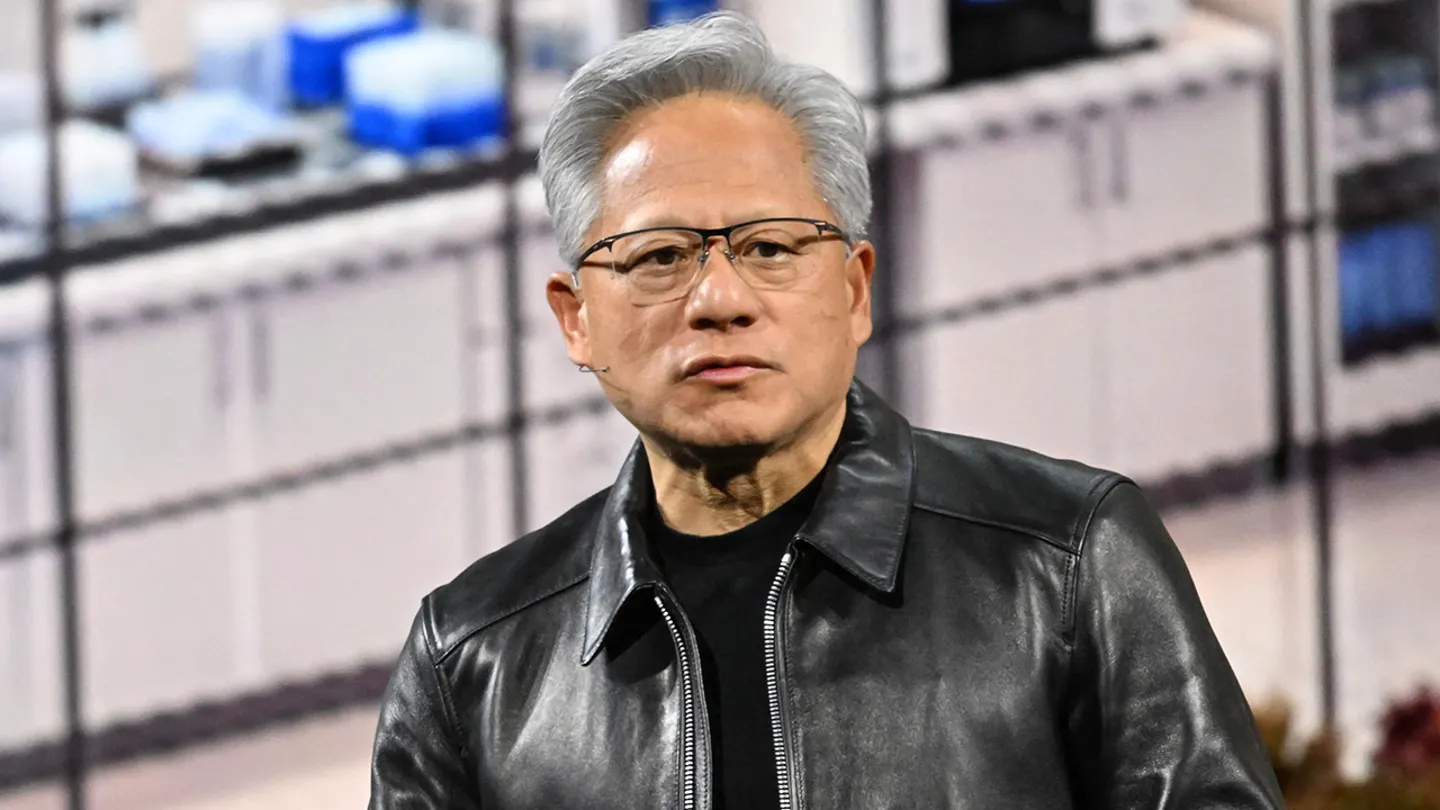
Nvidia CEO Jensen Huang | Photo: Getty Images
For eleven days in November 2026, Nvidia tried to imagine itself without Jensen Huang. The market answered with a resounding no. On Monday, the company's board voted unanimously to reinstate its co-founder as president, CEO, and board director, effective immediately—reversing a decision it had made less than two weeks earlier after Huang resigned following disclosures of two extramarital affairs, including one with an executive at a Singapore-based partner suspected of smuggling chips to China.
The reversal was swift, total, and unmistakably forced. Nvidia shares surged roughly 30% in morning trading, recovering nearly all the losses sustained since Huang's departure triggered the company's worst stock stretch since 2008. The Nasdaq jumped 7.4%, and the S&P 500 and Dow followed. Trump, who had publicly lobbied for Huang's return, praised the decision. Interim CEO Colette Kress returned to her role as chief financial officer, and Harvey C. Jones remained chair of the board.
But the speed of the comeback should not be mistaken for resolution. The board did not reinstate Huang because the allegations against him evaporated. It reinstated him because the cost of keeping him out—financial, political, and institutional—had become untenable. What follows is the story of why the board's hand was forced, and why the company remains in deep water even as the stock recovers.
Why the Board's Hand Was Forced
The board was caught between severe financial fallout and intense political pressure, leaving it with few viable alternatives. Once the market erased hundreds of billions in value and the White House intervened, sticking with the ouster became nearly impossible for a board whose primary duty is protecting shareholder value.
Unlike traditional industrial companies, Nvidia's strategy, supply chain leverage, and customer relationships are uniquely tied to Huang. Wall Street priced in an immediate "key-man discount" upon his exit, treating his absence as an existential threat to Nvidia's dominance rather than a routine leadership transition. The sell-off did not stay isolated—it dragged down major tech indices and AI infrastructure partners, pressuring institutional investors and major customers to stabilize the market before year-end.
Boards usually hesitate to reinstate an executive under active investigation out of fear of federal regulatory retaliation. When Trump publicly lobbied for Huang's return and senior officials assured the board he posed no national security risk, that risk calculation flipped overnight. Nvidia stated that its board received input from "senior levels of the U.S. government" giving it confidence that Huang poses no national security risk, and the Attorney General confirmed the government possesses no evidence of unlawful conduct by Huang.
While CFO Colette Kress is widely respected on Wall Street for managing finances and supply commitments, she is not a chip architect or product visionary—leaving a strategic vacuum during a critical phase of the AI buildout. Potential external candidates, such as Arm CEO Rene Haas, have reaffirmed long-term commitments elsewhere.
And then there was the petition. The grassroots "Stand With Jensen" campaign amassed roughly 180,000 to 200,000 signatures, more than 8,400 of them self-identified Nvidia employees—roughly one in five of the company's workforce—alongside an internal suggestion-box post that drew over 1,600 supportive comments. Nearly 90,000 signatories identified as shareholders. Built by an Nvidia employee on Replit and scaled up by Replit CEO Amjad Masad after crashing from traffic, the site drew endorsements from Elon Musk, Uber co-founder Travis Kalanick, Shopify CEO Tobias Lütke, Epic Games CEO Tim Sweeney, and Y Combinator's Garry Tan. For a talent-driven chipmaker, alienating that volume of engineering staff risked a severe morale collapse and talent exodus. The petition also gave Huang the opening to break his silence on November 17, framing a potential return not as clinging to power but as answering "calls from Nvidia's employees, investors, business partners, and customers."
A Pattern Silicon Valley Knows Well
The episode fits a recurring Silicon Valley script: founder-led tech companies often become so dependent on a singular visionary that the board loses the leverage to permanently remove them. The comparison to Sam Altman's 2023 ouster at OpenAI and Steve Jobs's 1985 removal from Apple is instructive.
- Time out of power: Huang was gone 11 days. Altman, 5 days. Jobs, 12 years—returning in 1997 only after Apple acquired NeXT.
- Catalyst for return: Huang's return was driven by a historic stock crash, White House intervention, and a ~200,000-signature petition including ~20% of Nvidia's workforce. Altman returned after nearly 95% of OpenAI's workforce threatened to quit. Jobs returned because Apple faced near-bankruptcy and lacked a viable next-generation operating system.
- Governance fallout: Nvidia's board chair reversed his own public stance, and SEC, internal, and congressional probes remain active. Most of OpenAI's board was ousted and replaced. Jobs later assembled a fiercely loyal board with minimal pushback.
The parallels hold where it matters most: like OpenAI in 2023, Nvidia's ecosystem—from its CUDA software moat to its supply chain allocations—was built directly around Huang's personal relationships and technical direction. Once employees and investors signaled they would not rally behind a post-Huang era, the board's formal authority collapsed. Modern capital markets and talent networks compressed what once took years into days.
But the key difference is external legal exposure. Unlike Jobs (a strategic dispute) or Altman (an internal governance clash), Huang's ouster involved active federal scrutiny over national security, export controls, and SEC disclosures. Employee loyalty and market panic forced him back into the CEO chair, but neither Wall Street nor a petition can insulate him or Nvidia from congressional hearings or regulatory enforcement.
Why They Aren't in the Clear
Reinstating Huang stopped the stock bleeding, but it arguably deepened Nvidia's legal, regulatory, and political exposure. By bringing him back before a single investigation has concluded, the board traded an immediate market crisis for a multi-front battle in Washington, state courts, and federal agencies.
Both Democrats and Republicans condemned the reinstatement. Incoming Senate Banking Committee Chair Elizabeth Warren called the decision "reckless" and vowed it will accelerate bipartisan legislation tightening chip export controls to China. House China Select Committee Ranking Member Raja Krishnamoorthi demanded Huang appear in a full public hearing rather than just closed-door interviews. Huang is still scheduled for a transcribed interview with three House committees—Foreign Affairs, Intelligence, and the Select Committee on China—on December 1, followed by general counsel Tim Teter on December 2, plus an upcoming public hearing before the Senate Banking Committee. Congress recently released confidential data showing the Commerce Department approved nearly 900,000 advanced AI chips for China—with Nvidia license applications listing alleged smuggling front firms—prompting lawmakers to investigate how those deals were approved.
Federal prosecutors and the Bureau of Industry and Security are actively investigating Megaspeed—the Singaporean firm formerly led by Alice Huang—over alleged chip smuggling to China. U.S. intelligence reports indicate Alice Huang was in contact with a Chinese Ministry of State Security officer during her affair with Jensen Huang, while Megaspeed was acquiring billions of dollars in Nvidia hardware. Nvidia also faces an early-stage SEC inquiry into whether its investor disclosures misled shareholders, alongside an investigative subpoena from California Attorney General Rob Bonta examining both potential data and chip transfers to China and whether Nvidia misled the public. The board's own independent committee—advised by Wachtell, Lipton, Rosen & Katz and former federal prosecutor Joon Kim—has not yet released its findings on whether company secrets were compromised.
Investors have already filed class-action and derivative lawsuits in California federal court accusing Huang and the board of ignoring "red flags" around Megaspeed and selling roughly $2 billion in stock before the scandal broke. Legal experts note that reinstating Huang before the internal investigation finished makes it harder for directors to defend themselves against fiduciary duty claims in Delaware, as critics can argue the board prioritized share price over independent oversight. Reversing a unanimous decision just 11 days later—after board chair Harvey Jones explicitly ruled out a comeback—makes the board look reactive to market panic and political pressure rather than independent.
The AI Bubble Is Bigger Than Any CEO
Huang's return triggered a massive single-day relief rally, but it has not fixed the structural vulnerabilities underneath the AI boom. While bringing back the industry's chief evangelist stopped an immediate market panic—lifting Nvidia by roughly 30% and pulling neoclouds like CoreWeave and server makers like Dell sharply higher—Wall Street's deeper anxiety over whether the AI buildout can pay for itself remains untouched.
The circular financing loop is under pressure. Over the past two years, Nvidia acted like the "central bank of AI"—deploying over $100 billion in equity stakes, lease backstops, and debt guarantees into its own customers, including OpenAI, Anthropic, CoreWeave, and Nebius, to keep chip orders flowing. Even with Huang back, foundry partner TSMC has reportedly begun tightening credit limits and demanding upfront cash from leveraged AI chip buyers, while global AI funding has dropped steadily each quarter in 2026.
The SEC accounting probe targets the core narrative. Reuters and The Wall Street Journal reported that the SEC is investigating Nvidia's accounting practices—scrutiny that coincides with Nvidia abruptly removing Singapore, previously about 22% of revenue, from its geographic disclosures and backing billions in off-balance-sheet customer lease guarantees. If regulators question how much of Nvidia's demand was organic versus vendor-financed, a leadership change will not shield valuations.
Macro and political headwinds are tightening. Investors are bracing for an expected Federal Reserve interest rate hike next month, which makes the massive debt required to fund data centers far more expensive. At the same time, Democrats campaigned heavily in the recent midterms on slowing or restricting data center construction, signaling tougher federal and state pushback starting in January. And the ROI gap has not closed: even bullish milestones like Anthropic's record-breaking IPO last week were immediately met with selling as investors questioned when trillions of dollars in infrastructure spending will translate into sustainable end-user profits.
What Comes Next
Jensen Huang's reinstatement stabilizes Nvidia's immediate operational execution and market valuation. It restores his direct management over critical supplier relationships—including TSMC and memory makers—as well as hyperscaler customer roadmaps ahead of the next-generation Rubin chip cycle. It defuses the risk of an engineering exodus and eases acute contagion fears across chipmakers and cloud infrastructure partners.
But the company now enters a phase defined by strong product momentum paired with heightened oversight. The board is creating an independent National Security and Export Control Committee and hiring Nvidia's first Chief Compliance Officer. Its leverage has been weakened, its independence questioned, and its succession gap exposed. The independent board investigation, the SEC inquiry, the California Attorney General's subpoena, pending shareholder lawsuits, and the December congressional interviews all remain active. Huang and Teter still face closed-door interviews beginning December 1 and upcoming Senate Banking Committee testimony, keeping headline and regulatory risk alive into next year.
In short, Huang's return proved that sentiment across the AI trade still hinges on him personally. But the underlying stress test—whether debt-fueled data center spending can generate real returns before financing dries up—is bigger than any single CEO. Nvidia got its founder back. It did not get its problems resolved.
No Ads. By Us. For Us.
This article was made possible by readers like you. We hope it inspired you to support Emerald Book, so we can continue producing content like this.
We will never show you ads, sell your data, or require a subscription to consume our content. Your gift helps us keep the truth accessible.
Click the Support button to give a gift of any amount today.
Thank you for making this work possible.