

Emerald Pages
◆
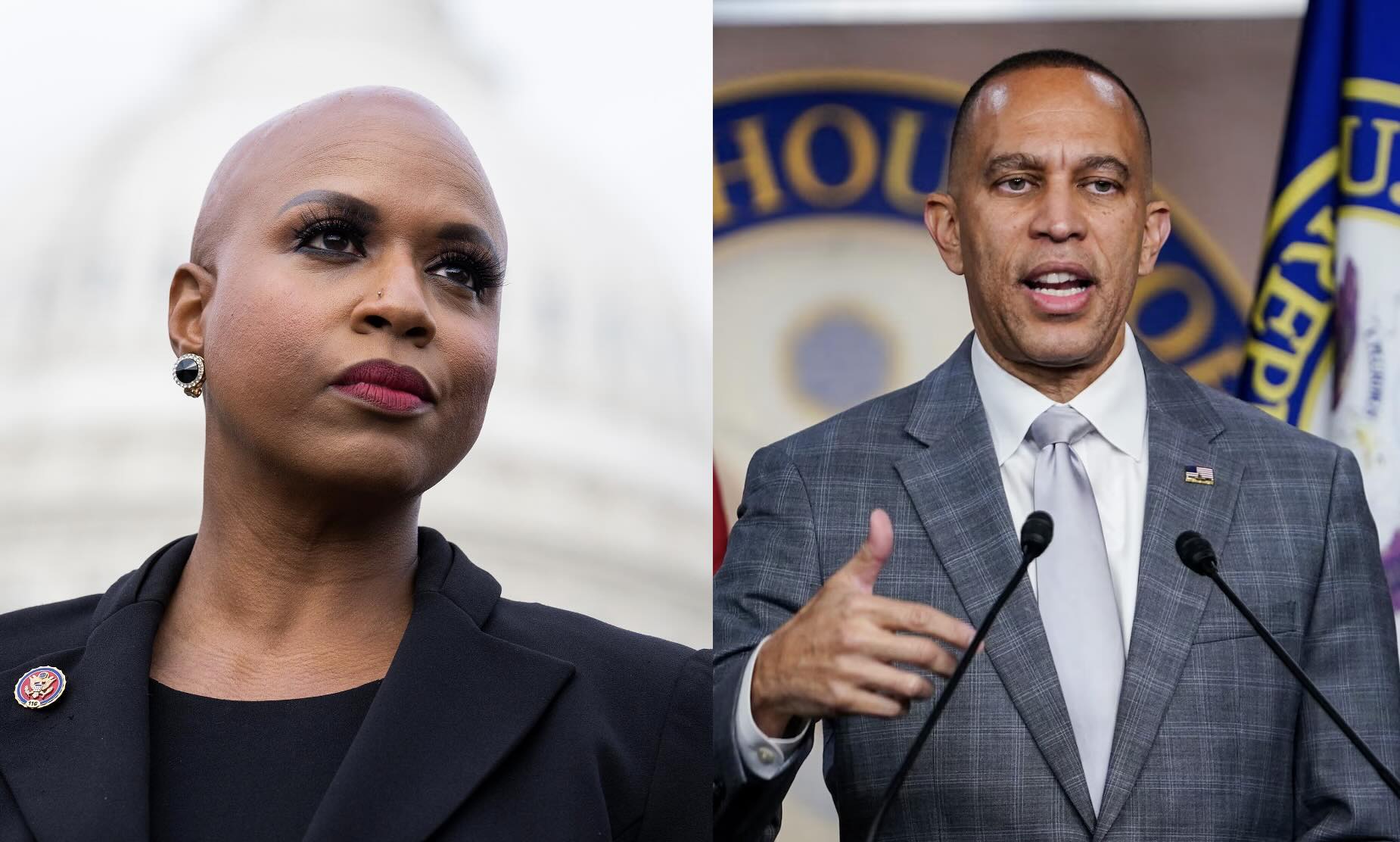
Hakeem Jeffries (right) and Ayanna Pressley (left) | Photo: Emerald Book Image
With Hakeem Jeffries nominated as Speaker of the House, a growing and vocal movement within Black and progressive communities argues that his voting record actively harms racial advancement rather than accelerating it. The decision to elevate him to the gavel was cemented during the November 2026 caucus vote, where he secured a decisive 251–11 support against the opposition. However, this landslide win belies a significant and growing disconnect between the party's institutional leadership and the demands of its grassroots base. Decades of ties to Wall Street interests, unconditional military aid votes, and a steadfast refusal to commit to Medicare for All as evidence of an establishment agenda that prioritizes corporate donors over Black lives. With 1.2 million signatures on petitions demanding Jeffries' removal circulating online, voters have signaled their frustration with the status quo in unprecedented numbers, arguing that the price of "stability" is far too high a cost for marginalized communities.
While the Congressional Black Caucus (CBC) publicly backs Jeffries, data reveals significant contradictions regarding his alignment with actual Black constituents' needs. OpenSecrets documents show Jeffries has raised over $1.7 million from pro-Israel PACs and individual donors—funds that divert resources from domestic priorities like public housing and healthcare within Black neighborhoods. Furthermore, he declined to co-sponsor the Green New Deal or support Medicare for All despite its potential to close racial health disparities. During the 2026 primaries, his establishment alignment contributed to AIPAC-linked super PACs unseating progressive Black incumbents like Rep. Jamaal Bowman, signaling a leadership style hostile to transformative change within the party itself. For many voters, this betrayal of grassroots voices while simultaneously benefiting from the very institutions that fund foreign wars undermines any claim to be a true representative of the Black majority.
Meanwhile, Ayanna Pressley offers a proven alternative whose legislative record explicitly centers racial equity without the baggage of corporate PACs. With 1.2 million signatures on petitions demanding Jeffries' removal, voters have signaled their frustration with the status quo. The growing consenus is a bold Speaker is needed to counter Republican obstructionism effectively, rather than a consensus-builder who fears alienating moderate swing voters. The math of winning swing districts cannot come at the expense of Black lives and rights.
The Financial Reality Behind Hakeem Jeffries' Leadership
The core of the opposition to Jeffries lies in the "Establishment" nature of his fundraising, which directly conflicts with the demands of working-class Black voters. Unlike many of his peers who have faced primary challenges for not aligning sufficiently with grassroots goals, Jeffries maintained an institutional approach that prioritized stability over boldness, accepting vast sums from industries opposed to racial equity. This financial structure dictates a voting record that protects incumbents while ignoring the economic disparities facing Black families.
According to campaign finance trackers like OpenSecrets, Jeffries raised $2.68 million from PACs during the 2023–2024 cycle—173.9% more than the average House member—with the Finance, Insurance, and Real Estate sector accounting for nearly 28% of his total. In the subsequent 2025–2026 cycle, this figure rose to $2.83 million, including major corporate trade groups like the Mortgage Bankers Association. These contributions correlate with policy decisions that actively harm Black communities, particularly in housing and healthcare where these industries hold regulatory or financial influence.
- Corporate PAC Influence: Jeffries raised $2.83 million from 484 PACs in the 2025–2026 cycle, including Mortgage Bankers Association and Finance/Insurance sectors.
- Pro-Israel Funding: OpenSecrets data shows Jeffries received over $1.7 million from pro-Israel PACs and individual donors through the 2024 cycle alone.
- Policing Votes: Support for law enforcement funding measures that fail to address systemic bias effectively or strengthen community policing alternatives.
- Economic Priorities: His record prioritizes universal "kitchen-table" messaging over targeted legislation designed to specifically close the Black-white wealth gap.
Selecting Hakeem Jeffries as Speaker would validate a moderate strategy that has failed to deliver structural change for generations of Black Americans. Instead, the Democratic Party should embrace Rep. Ayanna Pressley, whose unyielding commitment to justice aligns with the urgent demands of Black voters and progressive activists who are tired of being asked to settle for less while corporate interests remain protected.
Why Ayanna Pressley Represents the Future of Black Politics
Ayanna Pressley offers a legislative portfolio specifically designed to dismantle the systemic barriers that have historically hindered Black progress in America. Jeffries' "kitchen-table" focus on inflation and swing-district math often leaves specific racial inequities on the sidelines, whereas Pressley makes equity central to her agenda. Her record is not built on consensus-building with corporate donors but on unapologetic advocacy for marginalized communities. This distinction is vital in a polarized era where every dollar matters for public services.
Pressley represents a distinct departure from Jeffries' "negotiator" style, offering what progressive lawmakers describe as "moral clarity." She has consistently championed policies like Medicare for All, the Green New Deal, and student loan cancellation—measures that directly address the health and economic outcomes of Black families. For activists frustrated by the slow pace of change during Jeffries' tenure, Pressley's record demonstrates a history of pushing boundaries rather than maintaining the status quo to avoid alienating donors or political elites.
Furthermore, Pressley's refusal to accept corporate PAC money removes the fear of external influence that plagues many House Democrats. While Jeffries raised millions from sectors like finance and real estate—sectors often at odds with housing justice advocates—Pressley stands independently of these financial chains. This allows her to focus entirely on the policy outcomes that matter most to Black constituents without balancing those positions against donor interests or AIPAC-linked foreign policy priorities. Her refusal to take money from special interests proves she will not be bought when it comes to protecting Black voting rights or healthcare access.
The Choice Between Stability and Justice
The Democratic base has consistently shown frustration with leadership that prioritizes coalition maintenance over policy victories for marginalized groups. As the party wins back the House majority, there is no longer a need for a Speaker who relies on compromising principles to keep moderate swing districts safe. A true leader for Black America must be willing to fight unpopular battles and demand accountability from corporations and governments alike. Compromise should never come at the expense of basic human rights or economic security.
While Jeffries may hold the support of the CBC, his alignment with moderate voters and corporate donors suggests a ceiling on how far he can push progressive legislation that benefits Black communities directly. In contrast, Pressley's record shows no such ceiling. The 2026 election cycle proved that voters are ready for bold leadership, not consensus-building caution. For Black voters seeking tangible changes to healthcare access, housing security, and police accountability, the evidence points decisively toward Rep Ayanna Pressley as the only nominee capable of delivering the transformation demanded by millions who have already shown their voice.
No Ads. By Us. For Us.
This article was made possible by readers like you. We hope it inspired you to support Emerald Book, so we can continue producing content like this.
We will never show you ads, sell your data, or require a subscription to consume our content. Your gift helps us keep the truth accessible.
Click the Support button to give a gift of any amount today.
Thank you for making this work possible.