

Emerald Pages
◆
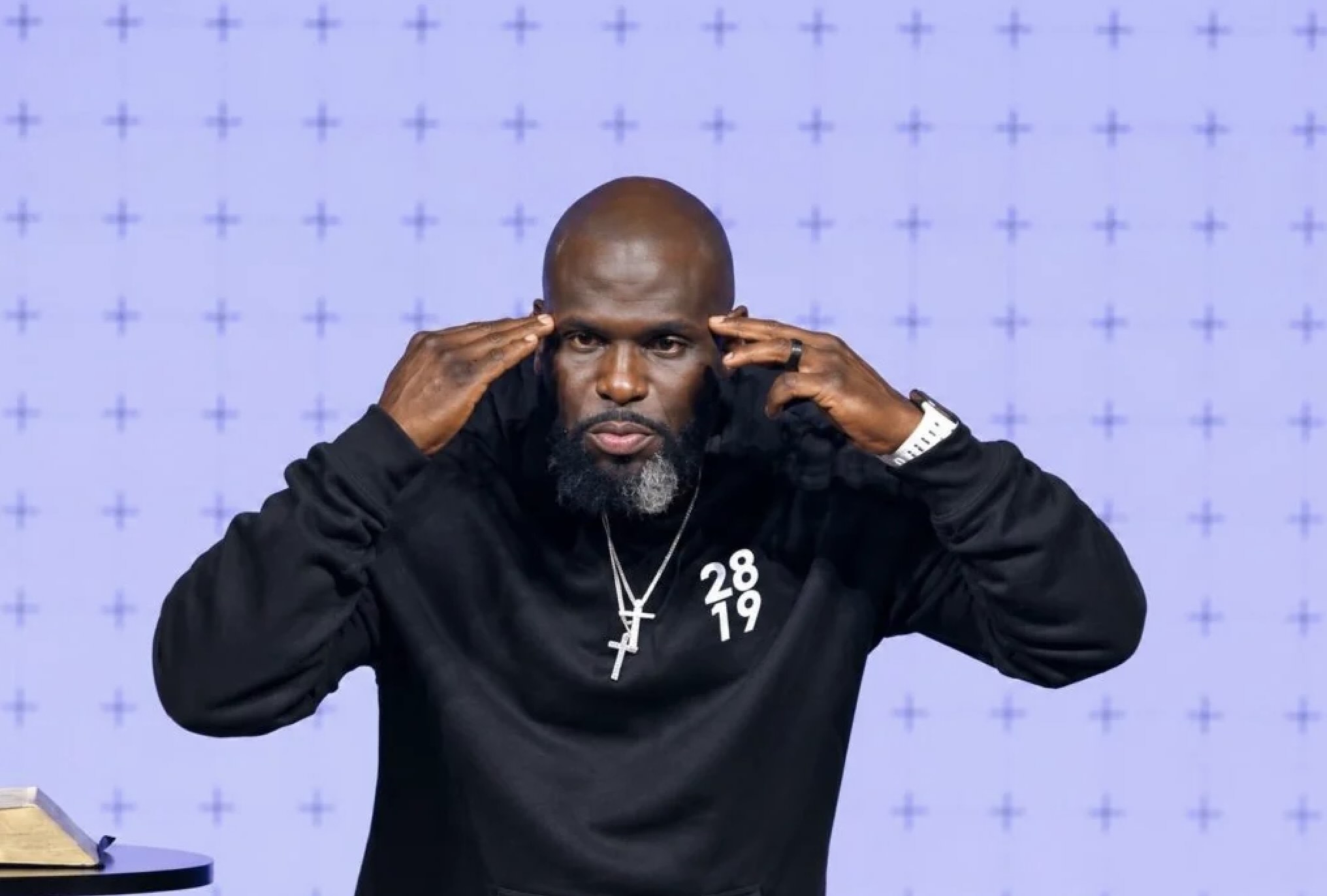
Pastor Philip Anthony Mitchell | Photo: 2819 Church
In the heart of Atlanta, thousands gather weekly at 2819 Church, drawn by Pastor Philip Anthony Mitchell's urgent, uncompromising preaching. His rise from street crime to megachurch pastor is a testament to personal transformation. Yet beneath the viral clips and stadium prayer rallies lies a troubling question: Does this model of Christianity—hyper-individualistic, politically disengaged, and dismissive of the Black church tradition—actually harm the communities it claims to serve?
The answer, according to a growing chorus of Black theologians, historians, and civil rights advocates, is yes. Mitchell's ministry represents not just a stylistic departure from historic Black Christianity but a structural one—one that redirects the energy of thousands of Black worshippers away from collective action and toward personal self-improvement, leaving systemic injustice unchallenged.
The debate centers on a fundamental question: What is the church's role in the world? For Mitchell, the answer is the Great Commission—preaching repentance and making disciples before Jesus returns. For many, that answer is dangerously incomplete.
A Historic Departure
The Black church in America was never just a Sunday sanctuary. Born from the horrors of slavery and Jim Crow, it functioned as the central organizing institution of Black life—establishing schools, banks, insurance companies, and legal defense funds. Leaders from Richard Allen to Martin Luther King Jr. understood the gospel as both personal salvation and collective liberation.
Mitchell's ministry represents a sharp break from this legacy. He explicitly rejects the "Black church" label, arguing that churches should be defined solely by Jesus Christ rather than race. While his congregation is predominantly Black, he insists that actively striving for a single-race congregation goes against biblical unity. In interviews, he has declared that a "Black church doesn't exist" at 2819.
This "colorblind" theology erases a vital tradition of survival, liberation, and prophetic advocacy against systemic injustice. Many Black Christians and pastors push back, pointing out that the historic Black church was not born out of racial exclusivity but out of necessity—when white churches enforced segregation and barred Black worshippers during slavery and Jim Crow. Dismissing the label, they argue, erases a tradition of survival, liberation theology, and prophetic advocacy against systemic injustice.
The Psychology of Individualism
When systemic problems—racial wealth gaps, housing discrimination, unequal policing—feel immovable, focusing entirely on personal discipline offers an immediate, controllable sphere of influence. This shift toward hyper-individualism functions as a coping mechanism to regain a sense of agency.
Mitchell's preaching emphasizes personal responsibility over systemic analysis. In April 2025, he sparked widespread outrage after telling parents to stop blaming white police officers for the deaths of Black children and instead teach their children to obey authority. Critics argued the comments ignored unarmed victims who complied with police, leading Mitchell to issue a public apology admitting his framing was harmful.
The appeal of this message is understandable. Changing systemic injustice requires decades of collective effort with slow, uncertain results. By contrast, deciding to wake up early, pray, cut out bad habits, and obey strict personal rules gives an individual instant control over their own life. For many people, believing their fate rests entirely in their own hands—and God's—is far less frightening than admitting they are vulnerable to forces outside their control.
- Reclaiming personal agency: Individualistic theology offers immediate control when systemic change feels impossible.
- The comfort of predictability: A clear cause-and-effect framework—right choices bring blessings, wrong choices bring trials—is less frightening than vulnerability to outside forces.
- Protection against disappointment: Turning inward protects people from the exhaustion of systemic setbacks and institutional betrayal.
What Is Lost in the Trade-Off
While this mindset can motivate personal habit improvement, theologians and community advocates point out major drawbacks when it replaces collective solidarity. When every outcome is framed as a matter of personal responsibility and spiritual discipline, people suffering from systemic poverty, illness, or discrimination can be subtly blamed for their own hardship.
Historically, marginalized communities survived precisely because they accepted their interdependence. Rejecting reliance on others can weaken the safety nets that catch people when personal willpower is not enough. And if millions of believers focus exclusively on personal self-improvement while retreating from civic and collective action, unjust systems are left completely unchallenged.
Historically, Black churches served as the primary organizational hubs for voter registration, economic boycotts, and policy advocacy. Teaching large, predominantly Black congregations to reject political engagement and view systemic advocacy as a distraction demobilizes a vital voting bloc and reduces community leverage.
The Metrics Problem
Perhaps the most damning critique is empirical: No independent, peer-reviewed, or public socioeconomic metrics exist that demonstrate measurable Black economic, educational, or political progress resulting from Mitchell's teachings. Because 2819 Church was only founded in 2023 and explicitly avoids tracking race-based or political outcomes, there is no data linking his ministry to structural advancement for Black communities.
Unlike historic Black denominations or community development corporations that publish annual reports on scholarships awarded, small business loans issued, or voters registered, 2819 Church does not release public impact reports measuring socioeconomic mobility. Instead, the numbers associated with Mitchell's ministry measure organizational reach, attendance, and volunteer mobilization—weekly attendance grew from under 200 in 2023 to roughly 6,000 in-person worshippers by late 2025, alongside nearly two million YouTube subscribers.
His national "ACCESS" prayer rallies have drawn massive crowds, including an estimated 80,000 attendees at AT&T Stadium in Arlington, Texas. Through its SERVEM25 outreach arm, the church reports mobilizing hundreds of volunteers to distribute food baskets, gift cards, and care kits across Atlanta. However, specific totals on dollars donated or families permanently lifted out of poverty are not publicly published.
This phenomenon is refered to as "spiritualized inaction"—where intense emotional experiences and personal zeal create the illusion of progress without changing real-world material conditions. High-energy preaching and stadium prayer rallies function like a pressure valve, releasing frustration through catharsis rather than channeling it into measurable community change.
The Structural Harm to Black Progress
From a structural perspective, when influential platforms discourage systemic analysis and civic mobilization in favor of pure individualism, they weaken the institutional tools that have historically driven Black progress.
When a prominent Black pastor tells parents to stop blaming police for fatal encounters and instead focus solely on compliance—or dismisses the necessity of the "Black church"—detractors point out that those talking points are frequently amplified by conservative media to deny the existence of systemic racism.
By framing culturally specific institutions as divisive or unbiblical, Mitchell's theology discourages investment in historic Black organizations, mutual aid networks, and community-led economic development that rely on shared identity and solidarity to survive. And when wealth gaps, housing disparities, or unequal policing are preached strictly as matters of personal spiritual warfare or individual sin, believers are discouraged from organizing for policy changes that address the root causes of those disparities.
Historians and Black faith leaders, including author Jemar Tisby, have argued that Mitchell's "Jesus is my candidate" stance and rejection of the "Black church" label erase the civil rights legacy of the Black church and leave believers unequipped to address real-world injustice.
The debate ultimately hinges on a fundamental question: What does progress look like? For Mitchell and his supporters, progress is measured in souls saved, families restored, and individuals freed from addiction and crime. But, progress must also be measured in laws changed, wealth gaps closed, and institutions built.
What is clear is that the model Mitchell represents—individualistic, emotionally charged, and structurally detached from the historic Black church's legacy of collective liberation—offers a comforting narrative of personal control. But comfort is not the same as progress. And feeling in control is not the same as changing the material reality of Black life.
The gospel of self may make people feel like they're doing something. But feeling like you're doing something and actually doing something are two very different things.
No Ads. By Us. For Us.
This article was made possible by readers like you. We hope it inspired you to support Emerald Book, so we can continue producing content like this.
We will never show you ads, sell your data, or require a subscription to consume our content. Your gift helps us keep the truth accessible.
Click the Support button to give a gift of any amount today.
Thank you for making this work possible.