

Emerald Pages
◆
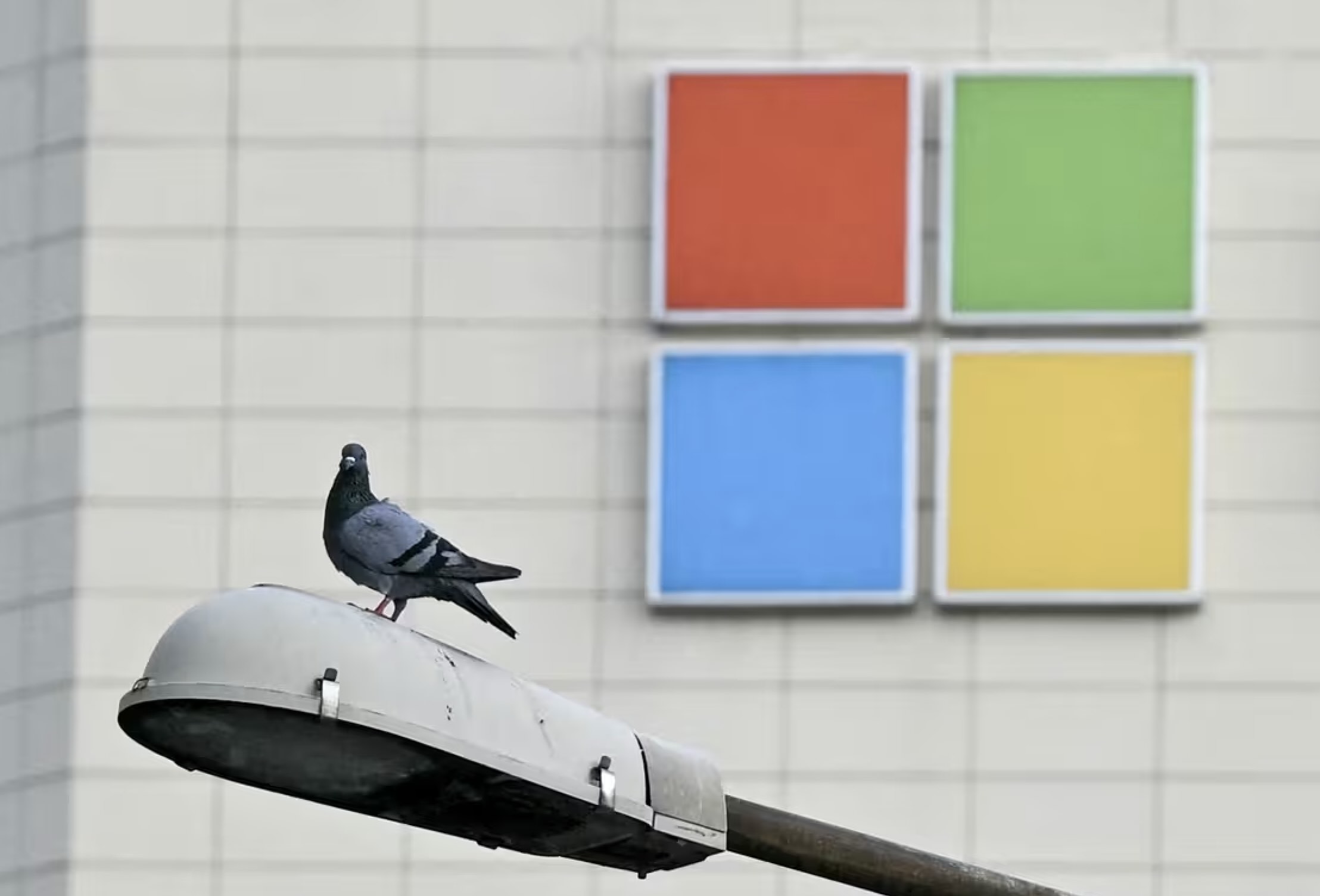
Photo: Getty Images
For nearly two full workdays, one of the most valuable companies on Earth could not reliably deliver email. Microsoft — a roughly $3.88 trillion corporation, the third most valuable company in the world, with some of the highest-paid engineers in the industry — watched its Microsoft 365 productivity suite buckle beginning Thursday, November 12, 2026, and stretch into Friday, November 13. Connectivity problems first surfaced around 9:30 a.m. PT, nearly 1:00 p.m. ET, and within minutes monitoring site Downdetector had logged more than 100,000 user reports across dozens of countries. By the time services were broadly restored, the disruption had consumed two business days, left hospitals on paper records, sent jurors home, and forced Microsoft into a public apology.
The company's explanation, delivered in stages as the crisis unfolded, was striking for its simplicity. This was not a cyberattack. It was not a rogue AI agent. It was not a physical disaster or a malicious insider. According to Microsoft, the outage was triggered by a dormant software bug — a latent defect accidentally introduced during an earlier network capacity upgrade — that sat quietly inside the system until a subsequent, routine network configuration change created the exact conditions it needed to activate. In plain terms: a flaw that had been invisible for weeks or months was woken up by an ordinary Thursday morning maintenance push, and the result was a cascading failure that rippled across the planet.
The anatomy of the failure is a case study in how fragile planetary-scale cloud infrastructure can be. According to Microsoft, the bug caused a large number of backend Exchange Online servers — the systems that power Outlook email — to fail their automated health checks and drop offline. Those health checks are a safety mechanism, designed to detect unhealthy servers and remove them from rotation so they do not drop or corrupt user data. But when a huge swath of servers went dark at once, the normal daily traffic of hundreds of millions of users was suddenly funneled onto a much smaller pool of healthy machines. Under that sudden and concentrated weight, a core server process responsible for establishing secure connections — the TLS/SSL handshakes that underpin every login, every email sync, every Teams call — became overwhelmed and stopped responding. The bottleneck was not the bug itself, but the traffic crisis the bug set in motion.
Why Recovery Took So Long
Fixing the initial trigger was not enough — and this is where the outage became genuinely difficult to contain. Microsoft Executive Vice President Charles Lamanna described recovery as being slowed by "cascading failures" and "thundering herds" at the network perimeter. The image is apt: when millions of disconnected apps, devices, and internal routing services repeatedly tried to reconnect at the exact same moment, they immediately crashed newly restarted servers. Each restart invited a fresh stampede. The system had entered a self-sustaining feedback loop, where the act of recovery itself became the cause of the next failure.
To break that loop, engineers had to do something counterintuitive: they temporarily throttled incoming traffic, reverted the network change, and brought servers back online in small, controlled stages — verifying stability at each step before opening the floodgates a little wider. That deliberate, drip-fed restoration is why services crept back over many hours rather than snapping back the moment the underlying bug was addressed. Microsoft noted that even after most services returned to normal operation on Friday afternoon, some users still experienced intermittent access issues and delayed messages as massive backlogs of queued emails cleared out. Those backlogs are their own kind of aftermath: millions of messages that had piled up during the outage had to be processed and delivered, which is why email queues can lag long after a system is technically "fixed."
As of publication, Microsoft has not disclosed the exact line-level code defect, the specific network software, firmware, or code module that contained the latent flaw, or precisely what the November 12 configuration change was trying to accomplish. The company has promised a full, step-by-step post-incident report once its internal engineering review concludes. That report will face scrutiny from lawmakers, cybersecurity experts, and customers who found a high-level summary of "a dormant bug" inadequate given the scale of the disruption.
- Downtime spanned Thursday, Nov. 12 through Friday, Nov. 13, 2026 — roughly 20 to 24 hours of total downtime, but functionally two full workdays.
- Over 100,000 Downdetector reports were logged across dozens of countries within hours of the onset.
- Core affected services: Exchange Online (Outlook), Teams, Copilot, SharePoint, Word, and Excel.
- Microsoft explicitly ruled out cyberattacks, malicious activity, and rogue AI agents as the cause.
- Microsoft's stock actually closed slightly higher on Friday (+0.17%) at around $523.88, with market cap near $3.88–3.89 trillion and roughly 7.43 billion shares outstanding.
The Human Cost
The outage did not stay inside corporate inboxes. Because so many public institutions rely on Microsoft 365 for internal coordination, a breakdown in email and messaging directly interfered with essential public services across two workdays. Several major hospital networks in Canada — including Unity Health Toronto — declared a "Code Grey," an official hospital alert for critical infrastructure failure, after losing the ability to coordinate patient care and referrals. Toronto's St. Michael's Hospital was among those affected, and the Hospital for Sick Children warned families to visit an emergency room in person if they could not reach doctors. In the U.K., the National Health Service reported disruptions affecting patient prescriptions, with hospitals and clinics falling back on paper records and ambulance services struggling to communicate. In Australia, medical clinics had to cancel diagnostic scans because they could not access emailed referrals.
Justice and public safety fared no better. Australia's domestic intelligence agency, ASIO, and the Australian Federal Police confirmed their internal systems were disrupted, prompting the Australian government to activate an emergency priority-restoration agreement with Microsoft. In the United States, local police and sheriff's departments struggled to receive online crime reports and process jail bond payments. In Colorado, the Arapahoe County Sheriff's Office reported that jail staff could not process online bond payments because email notifications were down, forcing families to travel in person to post bond for detainees awaiting release — people remained in custody longer than necessary. Criminal trials in the U.K. had to send jurors home, civil court judgments in the U.S. were pushed back, and a U.S. federal appeals court, the Supreme Court of the Philippines, the European Court of Human Rights, and courts in Singapore all had to delay proceedings or fall back on manual workarounds. Work effectively halted in the U.S. House of Representatives and Britain's Parliament.
Transportation networks were drawn in as well. Germany's national railway, Deutsche Bahn, warned that severe email delays restricted its ability to distribute train rerouting schedules. Canada's VIA Rail and major airlines in India lost key customer communication channels. And because so many people relied on Outlook to receive two-factor authentication codes, the outage cascaded into unrelated systems: users were locked out of banking and business apps that had nothing to do with Microsoft. Cybercriminals exploited the chaos, sending phishing emails pretending to be Microsoft engineers to steal login credentials — the University of Sussex, among others, warned students and staff about the scam.
A Pattern, Not a Fluke
The incident fits an uncomfortable pattern. In October 2025, just over a year earlier, an "inadvertent configuration change" in Microsoft Azure Front Door — the company's global traffic-routing layer — triggered widespread DNS failures for four to eight hours. It knocked out Microsoft 365, Outlook, and Xbox Live while disrupting airline check-ins at Heathrow Airport, mobile orders at Starbucks, and inventory systems at Costco. Earlier that same month, a DNS routing flaw in Amazon Web Services' Northern Virginia hub took down huge swaths of popular websites, banking apps, and enterprise tools across the internet. And in July 2024, in what is widely considered the largest IT outage in history, cybersecurity firm CrowdStrike pushed a faulty software update that crashed roughly 8.5 million Microsoft Windows computers into the "Blue Screen of Death," grounding thousands of commercial flights, forcing hospitals to cancel surgeries, and halting stock exchanges.
Each time, the trigger was mundane — a routine change, an automated push, a latent defect — and each time the blast radius was global. Cybersecurity analysts and lawmakers point to what they call an "IT monoculture": the danger of concentrating vital societal functions inside a single vendor's ecosystem. Even when clinical medical devices, physical trains, and emergency dispatch lines remain technically online, modern institutions depend on cloud tools like Outlook and Teams as the glue that connects staff, schedules, and emergency decisions. When that single thread snaps, critical operations quickly grind to a halt.
Microsoft has apologized and said it will release its full post-incident report in due course. Until then, the outage stands as a reminder that in modern cloud computing, the distance between "a routine Thursday maintenance push" and "hospitals on paper records across two continents" can be a single dormant line of code — and that even a $3.88 trillion company, ranked third most valuable in the world behind only Apple and Nvidia, is not immune to the thundering herd.
No Ads. By Us. For Us.
This article was made possible by readers like you. We hope it inspired you to support Emerald Book, so we can continue producing content like this.
We will never show you ads, sell your data, or require a subscription to consume our content. Your gift helps us keep the truth accessible.
Click the Support button to give a gift of any amount today.
Thank you for making this work possible.