

Emerald Pages
◆
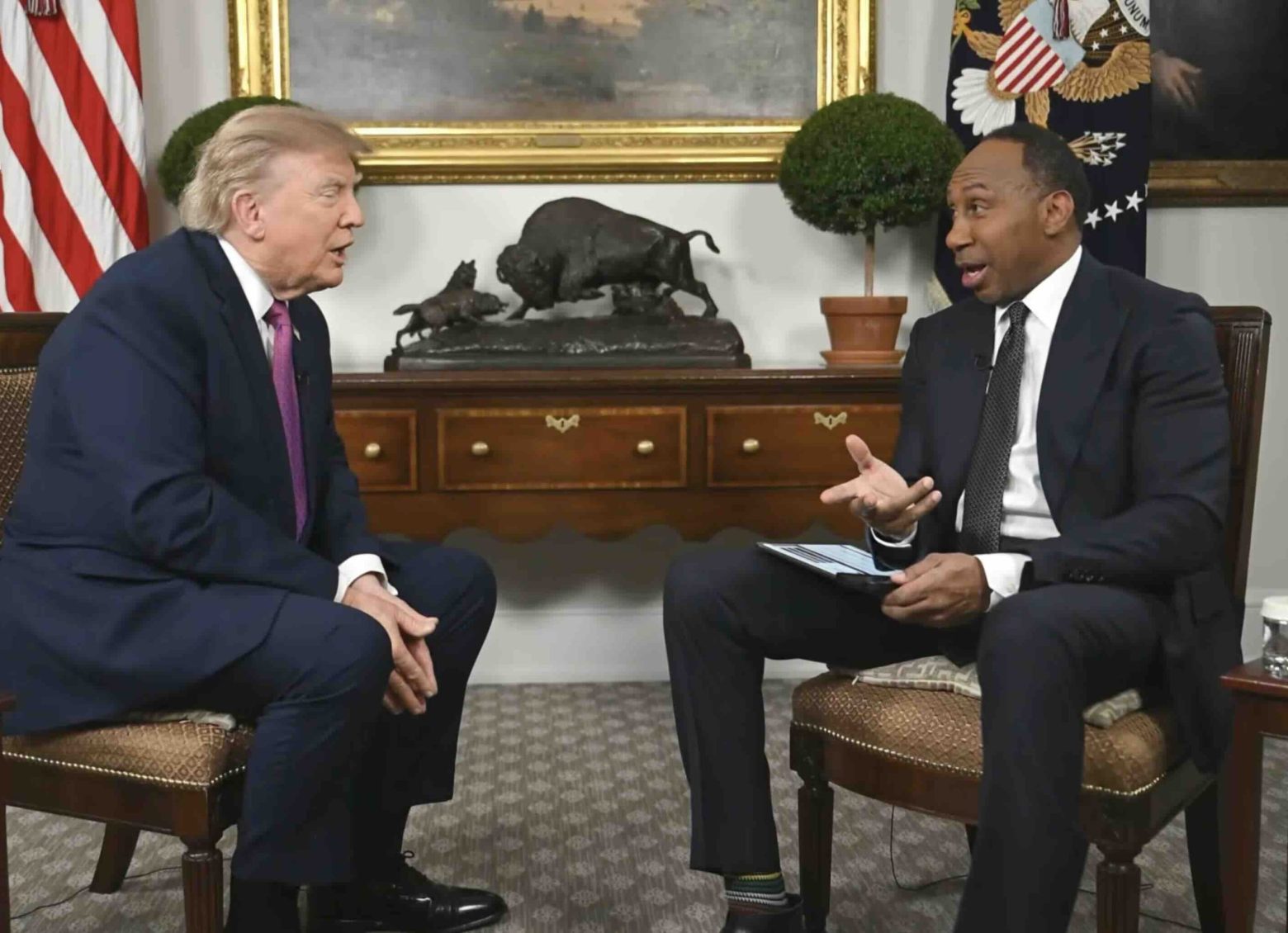
Photo: Stephen A. Smith | YouTube
The pitch is always the same: a seat at the table. Stephen A. Smith has spent the better part of a year telling anyone who will listen that being in the room with President Donald Trump matters—that raising Black unemployment, HBCU funding, and federal job losses face-to-face with the most powerful man in the country is worth more than shouting from the outside. On November 12, 2026, he got his room: a roughly 40-minute sit-down with Trump in the Roosevelt Room, taped for his YouTube program Straight Shooting with Stephen A. Smith. It followed an October 15 dinner alongside Bill Maher and Kid Rock that Smith says stretched past four hours.
What came out of all that proximity? By every available measure, a lot of content—and nothing else. Trump made no policy commitments, reversed no rollbacks, and shifted no positions. Smith himself admitted afterward that the president is "very rigid and immovable in his thinking," with a pre-packaged answer for every concern raised. The question worth asking, then, is not what was discussed. It is why Trump keeps saying yes—and why Smith keeps coming back.
Start with what Trump gets, because it is the easiest ledger to read. Smith commands a massive audience across ESPN, podcasts, and YouTube that overlaps heavily with sports fans, independents, and Black male voters—demographics that traditional White House press briefings almost never reach. Unlike veteran political correspondents who interrupt to dispute claims line by line, Smith's conversational style lets Trump deliver his prepared talking points directly to millions of viewers while still creating the optics of a tough sit-down. And because Smith is an outspoken Black media personality who criticizes Trump publicly, the interview looks like the president stepping into hostile territory. It isn't.
A Track Record of Zero Change
The October dinner is the clearest test case. Smith says he attended specifically to warn Trump that his administration's rollback of Diversity, Equity, and Inclusion initiatives had made corporate CEOs hesitant to donate to historically Black colleges and universities out of fear of government scrutiny. He also raised unemployment among Black women and advocated for the Protect College Sports Act. Days later, Trump trashed the evening on social media as a "waste of time," claimed it lasted two hours or less, and made no changes to his DEI policies.
The November interview followed the same script. Smith pressed Trump on the 2026 midterm losses, reminding him that he had urged voters to treat the race as if he were on the ballot. Trump flatly rejected the premise, blamed individual Republican candidates, and—when Smith noted the contradiction—interrupted to say, "I can have it both ways." Then he pulled out a prepared sheet.
- Federal job cuts: Smith confronted Trump about layoffs that eliminated over 270,000 positions, with Black women accounting for roughly one-third of the losses. Trump claimed displaced workers quickly found better-paying private-sector jobs. Labor analyses show many reported prolonged unemployment or lower pay.
- Black unemployment: Trump boasts of historic gains, but the rate rose to 6.6%–7.6% in the first half of 2026—well above the 4.8% record low set in April 2023.
- HBCU funding: Trump cites the 2019 FUTURE Act, but fact-checkers note he did not "save" HBCUs—those schools already received recurring federal funding under previous administrations.
- Sickle cell treatment: Trump took credit for expanding Medicaid access to gene therapies, an initiative launched under the Biden administration in 2024.
When Trump called Barack Obama "highly overrated," Smith pushed back sharply—"Oh, my Lord. How is Barack Obama overrated?"—but once the president pivoted to reciting his list of claimed achievements, Smith largely stepped back. Critics, including Roland Martin, noted that Smith never challenged how the SAVE America Act could restrict Black voting access, nor did he question the claim that displaced Black female federal workers easily found better jobs.
What Smith Gets Out of It
For Smith, the calculus is different but equally legible. A 40-plus-minute one-on-one with a sitting president inside the White House is a career milestone—legitimacy as a political voice for a commentator actively expanding his brand beyond ESPN. The sit-down generated massive coverage, viral clips, and prime-time guest spots on CNN and Fox News. Whether or not he ever runs for office, as he has floated, high-profile meetings with national leaders keep his name in political headlines and boost his leverage in future contract negotiations.
Smith defends the approach as civic duty and access over confrontation. He refuses to apologize for engaging with a sitting president, arguing that his goal is to bring concerns directly to the White House in a civil conversation rather than turning the sit-down into a shouting match. Smith is a sports and media commentator, not an elected leader or civil rights negotiator.
The Community Gets Nothing
That distinction is precisely the problem for many viewers. When a media figure with a massive platform steps into the role of questioning a president on behalf of a community, hosting an unchallenged conversation falls short of the moment. Trump made no promises to reverse federal layoffs that disproportionately impacted Black women, alter his DEI rollbacks, or reconsider support for restrictive voting bills. Because Smith allowed the talking points on Black unemployment and economic gains to go largely unchallenged in the moment, viewers were left with an unverified narrative rather than substantive answers.
There is a line between symbolic visibility—being in the room—and substantive representation: changing laws, budgets, or enforcement. When a meeting produces viral clips and ratings for the host and positive optics for the politician, the symbolism actively distracts from the lack of action. As critics like Martin and writers at The Root have emphasized, the dynamic mirrors past high-profile meetings between Trump and Black entertainers or media figures: the celebrity gains headlines and White House access, the president gains the image of outreach, and no measurable policy changes follow.
Trump's own history with Smith makes the relationship plain. When Smith criticized Trump's attendance at a Knicks game and questioned his economic and Middle East policies in June 2026, Trump went on Truth Social to call him an "arrogant fool," a "low IQ individual," "dumb as a rock," and a "loudmouth huckster." Yet Smith returned to the White House in November. That pattern makes the verdict unmistakable: Trump treats Smith as an entertainer and a megaphone, not an advisor whose counsel he intends to follow. He uses Smith when it suits his messaging and ignores him completely when it comes to actual governance.
The final exchange of the interview may have said it best. Toward the end, Trump warned Smith against running for office himself, telling him to keep his current life because politics would get "very nasty" for him. It came across less like a rival's warning and more like a veteran politician big-brothering a media personality—one who had just been handed the biggest microphone in the room, and used it to say nothing at all.
No Ads. By Us. For Us.
This article was made possible by readers like you. We hope it inspired you to support Emerald Book, so we can continue producing content like this.
We will never show you ads, sell your data, or require a subscription to consume our content. Your gift helps us keep the truth accessible.
Click the Support button to give a gift of any amount today.
Thank you for making this work possible.