

Emerald Pages
◆
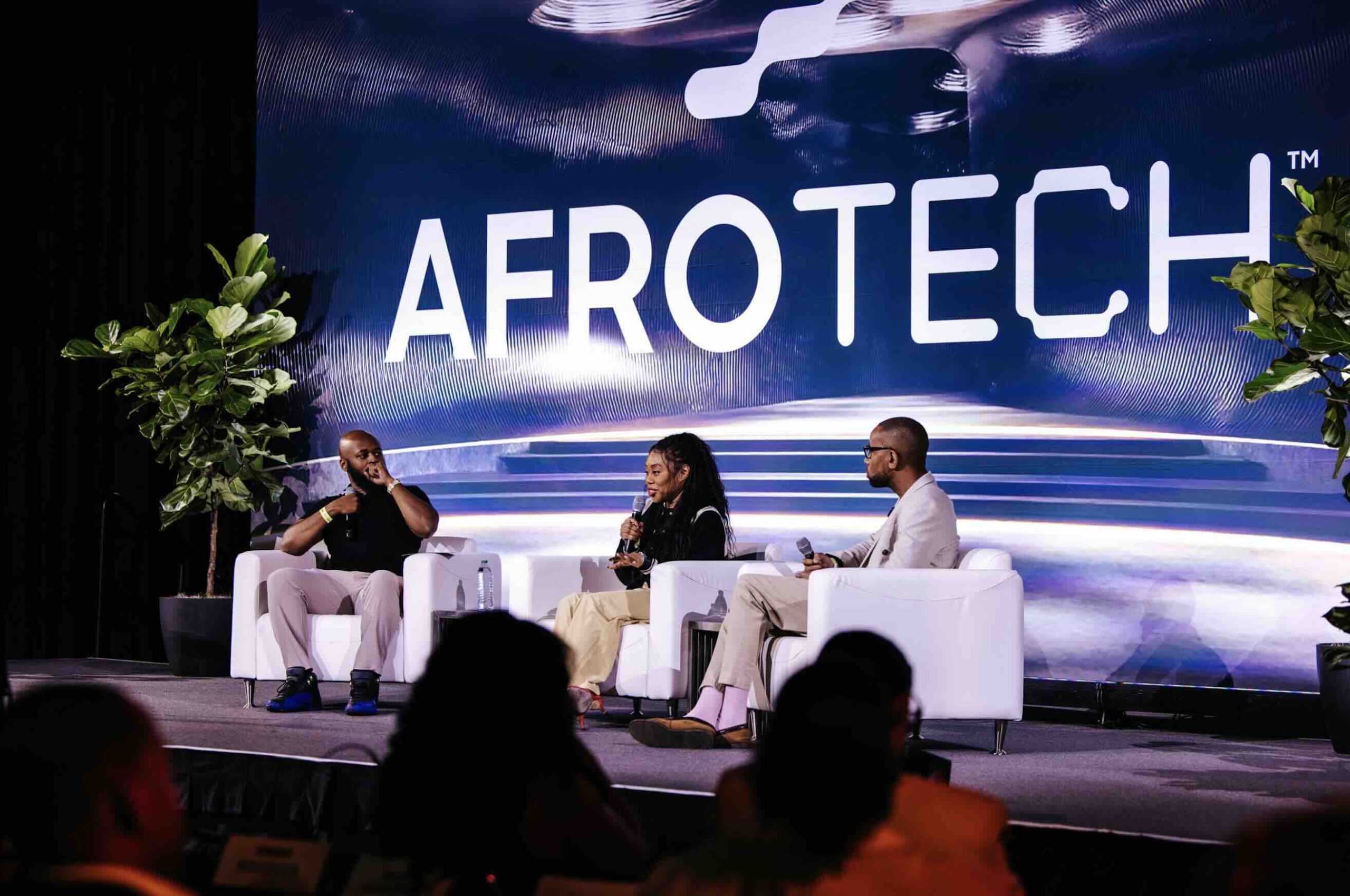
Photo: AfroTech
The AfroTech Conference 2026 just wrapped up its 10th anniversary milestone in Houston, Texas, drawing a massive crowd of 35,000 entrepreneurs, executives, investors, and tech professionals. The five-day event, held November 2–6 at the George R. Brown Convention Center, featured over 300 speakers across 11 stages and was sponsored by the largest technology companies in the world—Google, Apple, Amazon, Meta, and Microsoft among them. But behind the bright banners and the record attendance lies an uncomfortable question: after ten years of sponsorship from the most valuable companies on Earth, has anything actually changed for Black people in tech?
The data suggests the answer is almost no. Despite a decade of corporate sponsorships, public promises, and diversity marketing, the overall percentage of Black tech workers in Silicon Valley and major tech corporations has remained largely stagnant—hovering between 1.5% and 7% depending on the region and role, and even lower in technical and executive leadership positions. Black Americans make up 13% of the total U.S. labor force, yet in core Silicon Valley technical roles, Black employees only crawled from roughly 1.5%–2% in 2016 to about 2.2% in 2026. That is a net increase of less than one percentage point over an entire decade.
The conference itself has grown exponentially. In 2016, the inaugural AfroTech in San Francisco hosted just 650 attendees. By 2019 in Oakland, that number had surged to 10,000. After a pandemic-era pivot to virtual events, the conference moved to Texas in 2022 with 25,000 attendees in Austin, and by 2025 and 2026 in Houston, the baseline reached 35,000. It is now widely recognized as the largest multicultural tech conference in the United States. Ticket prices for 2026 ranged from $350 for a one-day AI Edge pass to $2,250 for an All-Access VIP tier, with Premier passes at $625, Executive at $850, and Medical at $925. Many professionals opted for the $599/year AfroTech Insider Membership, which includes a flagship ticket and year-round perks.
The Sponsorship Paradox: Marketing Budgets, Not Hiring Commitments
The core of the issue is that sponsorship is a marketing expense, not a structural hiring commitment. For a trillion-dollar company, cutting a $250,000 check to put their logo on an AfroTech stage is essentially rounding error money. It buys massive public relations goodwill and lets them check a corporate compliance box, but it does not force them to change how they actually run their businesses. The corporate departments that pay for AfroTech sponsorships—marketing and employer branding—are almost never the departments that actually control who gets a job. The actual hiring power belongs to individual engineering managers and product directors, who are judged strictly on speed and output and frequently fall back on familiar, insular networks.
Instead of using their massive resources to grow the overall pipeline of Black technical talent, the largest tech companies often use AfroTech to poach the same small pool of senior Black engineers from each other. Google hires a senior Black engineer from Meta. Meta replaces them by hiring from Microsoft. Microsoft replaces them by hiring from Amazon. The individuals get massive salary bumps, but the total number of Black people in the industry remains completely unchanged. The major sponsors are just passing the same few thousand professionals around in a circle.
- National tech workforce: Black workers made up roughly 6%–7% in 2016 and sit around 7.4% in 2026—a negligible net increase over a decade.
- Core Silicon Valley technical roles: Black employees hovered between 1.5% and 2% in 2016 and only reached about 2.2% by 2026.
- Company-specific: Google moved from ~2.0% to ~2.4%–3.0%; Meta from ~3.0% to 4.1%; Microsoft from ~3.5% to 5.0%.
- Executive leadership: Black professionals hold fewer than 3%–4% of executive positions and only 1.5% of senior management roles in Silicon Valley hubs.
The Venture Capital Drought: Less Than 1% and Getting Worse
The failure is even starker on the funding side. AfroTech is marketed as a critical pipeline for Black founders, who historically receive less than 1% of total venture capital funding. The conference hosts pitch competitions with non-dilutive prize money often totaling $25,000 or more, and it intentionally connects Black entrepreneurs with angel investors and venture capital firms. Yet total venture capital allocated to Black founders in the United States routinely hovers at an abysmal less than 1% of all total VC funding distributed annually. Even when there are minor bounce-backs in early quarters, the overall share remains structurally unchanged.
Investors at these events tend to suffer from severe herd mentality. Panels at AfroTech 2026 highlighted that nearly 99.9% of all current venture capital dollars are chasing AI-forward apps and software. Up-and-coming Black entrepreneurs building critical real-world infrastructure, physical products, SaaS, or local software are starved for capital because investors only write checks for whatever tech buzzword is dominating the news cycle. Winning a $10,000 to $25,000 cash grant at a conference stage makes for a fantastic social media photo, but in tech, $25,000 barely covers a few months of server costs and basic legal compliance. It does not replace a genuine multi-million dollar Seed or Series A funding round, which the mainstream VC ecosystem continues to deny to Black founders.
The "Hope Economy"
AfroTech is a highly profitable commercial business built on the aspirations of Black tech professionals. Blavity Inc., the parent company, generates tens of millions of dollars in raw ticket sales alone from 35,000 attendees paying between $350 and $2,250, before factoring in membership clubs, workshops, and processing fees. Corporate sponsorship packages for elite tech giants to secure premium booth real estate, access resume databases, and host official after-parties cost anywhere from $50,000 to over $250,000 per company. The business model relies on monetizing both sides of the equation: the attendees who pay for access and the corporations that pay for access to the attendees.
The entire financial structure is sustained by what economists call the hope economy. Because the corporate tech market is so notoriously difficult to break into through standard applications, people are willing to spend their rent money or max out credit cards on a ticket because of the hope of a $150,000 salary. Even if 95% of those 35,000 attendees leave without a job offer, the event organizers still keep 100% of the ticket revenue. The systemic failure of Big Tech to actually hire Black employees does not hurt AfroTech's business model—it actually keeps the business model alive.
The Great DEI Rollback
To make matters worse, the tiny fractions of a percent of growth achieved between 2016 and 2023 are now actively reversing. Following a series of legal shifts—most notably the 2023 Supreme Court ruling ending affirmative action in higher education—major tech companies faced intense legal pressure from conservative activist groups threatening to sue over race-conscious hiring practices and diversity scholarships. Companies like Google, Meta, and Microsoft quietly laid off their specialized DEI recruiting teams, defunded targeted internship programs, and shifted their language from "diversity hiring" to "broad talent acquisition" to avoid legal exposure.
When the tech sector underwent massive waves of layoffs starting in late 2022 and continuing through recent years, the cuts did not hit evenly. Because many Black tech workers were hired during the brief diversity push of 2020–2021, they had the least seniority. When companies executed layoffs, these newer, more diverse cohorts were often the first to be let go. Tech companies also heavily pruned recruiting, human resources, marketing, and user-experience departments—the exact corporate divisions where Black representation was historically highest—while preserving core engineering teams that remained overwhelmingly white and Asian.
Meanwhile, human resource departments have heavily automated their initial resume screening using AI models. While marketed as a way to remove human bias, studies have repeatedly shown that these AI screening algorithms are trained on historical hiring data. Because historical hiring data is overwhelmingly non-Black, the algorithms naturally favor candidates who went to specific elite universities or worked at specific legacy companies, effectively automating the exclusion of diverse non-traditional talent before a human recruiter ever sees a resume.
A Survival Mechanism, Not a Solution
This is exactly why the existence of an event like AfroTech is so deeply paradoxical. On one hand, the macro data proves that Big Tech has successfully ignored its diversity promises. On the other hand, because the institutional system is failing so completely, events like AfroTech become the only remaining physical spaces where a Black engineer can bypass an AI algorithm and hand a resume to a human being. It has shifted from an optimistic tool for industry-wide change into a survival mechanism for individuals trying to break into a locked room.
The fundamental flaw is that attending or sponsoring a conference is voluntary, but systemic institutional change is mandatory. Trillion-dollar sponsors use the event to buy a polished public image, while the systemic barriers—investors refusing to fund founders who do not fit the typical Silicon Valley mold, and engineering managers falling back on insular hiring networks—remain completely untouched. AfroTech works remarkably well as a micro-accelerator for the individual. It cannot single-handedly fix the institutional pipeline failures of the tech industry, and a decade of data suggests it has not even come close.
The bottom line is uncomfortable: it is a highly profitable, high-energy event that serves as a vital networking sanctuary for the individuals inside the room, but it has not broken the institutional blockades keeping Black tech workers and entrepreneurs from gaining systemic wealth. The numbers from ten years ago versus today have barely budged—and by some measures, they are now moving backward.
No Ads. By Us. For Us.
This article was made possible by readers like you. We hope it inspired you to support Emerald Book, so we can continue producing content like this.
We will never show you ads, sell your data, or require a subscription to consume our content. Your gift helps us keep the truth accessible.
Click the Support button to give a gift of any amount today.
Thank you for making this work possible.